Photo: Wikipedia
Strategic Assessment of Gainesville, FL
Meaningful friction. Expect exposure to either population pressure, blast zones, or natural disaster risk. Consider buying a retreat property.
What does the Strategic Assessment tell us?
Our Strategic Assessment grades tactical survivability of an area. Major population centers, military targets, fallout zones, natural disasters, and border exposure all drive risk — lower exposure means a more defensible position in a crisis.
This is heavily inspired by Joel Skousen's Strategic Relocation book. Highly recommended you checkout the book ($)What does this tell us?
Our Strategic Assessment grades tactical survivability of an area. Major population centers, military targets, fallout zones, natural disasters, and border exposure all drive risk — lower exposure means a more defensible position in a crisis.
This is heavily inspired by Joel Skousen's Strategic Relocation book. Highly recommended you checkout the book ($)Strategic Pillars

Key Distances
Regional Safe Places
Below is our recommended "safe zones" in Florida and the surrounding area based on our strategic heuristics. For most people, it's unrealistic to live in a “safe zone” full-time due to work, family or other personal reasons. They tend to be more rural. However, many of these areas are perfect for second homes and retreat properties that double as a vacation home or even a short-term rental.

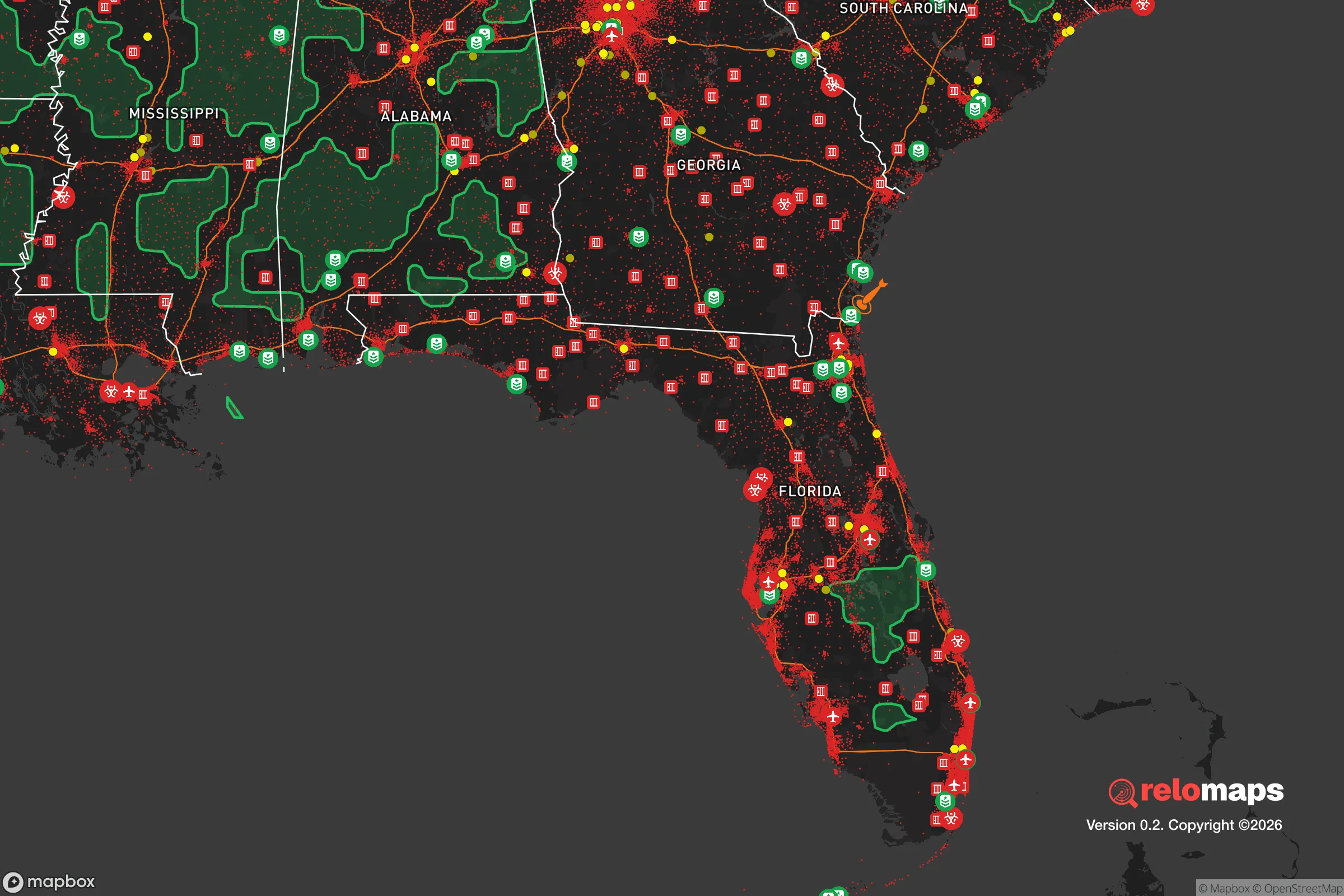


Important Note: For informational purposes only. This does not mean nothing bad ever happens in the green zones. Please use common sense. This is based on public data and modeled with AI. We tried to take a conservative approach but mistakes happen. We update this regularly as new information becomes available.
Solar Generator Recommendations
Backup power matters more here than in safer locations. We've picked three solar generators across budgets and capacity tiers — start with the budget unit if you only need a few essentials, or step up if you want to run a fridge and HVAC for days at a time.

Jackery Portable Power Station Explorer 300
Budget OptionPower on the Go: Weighing only 11 lbs, it's convenient to set up and store with book-sized foldable solar panels

BLUETTI Portable Power Station AC180
Designed for both indoor and outdoor scenarios, AC180 is highly capable as it has a robost capacity and continuous output power.

EF ECOFLOW DELTA Pro Ultra Power Station
Upgraded PickEcoFlow DELTA Pro Ultra is a whole-home energy system designed to grow with your family. Integrated with the Smart Home Panel 2, it scales to meet your evolving energy needs — keeping your home powered, intelligent, and secure through every stage of life.
We earn a commission, at no additional cost to you.
Strategic Assessment Analysis
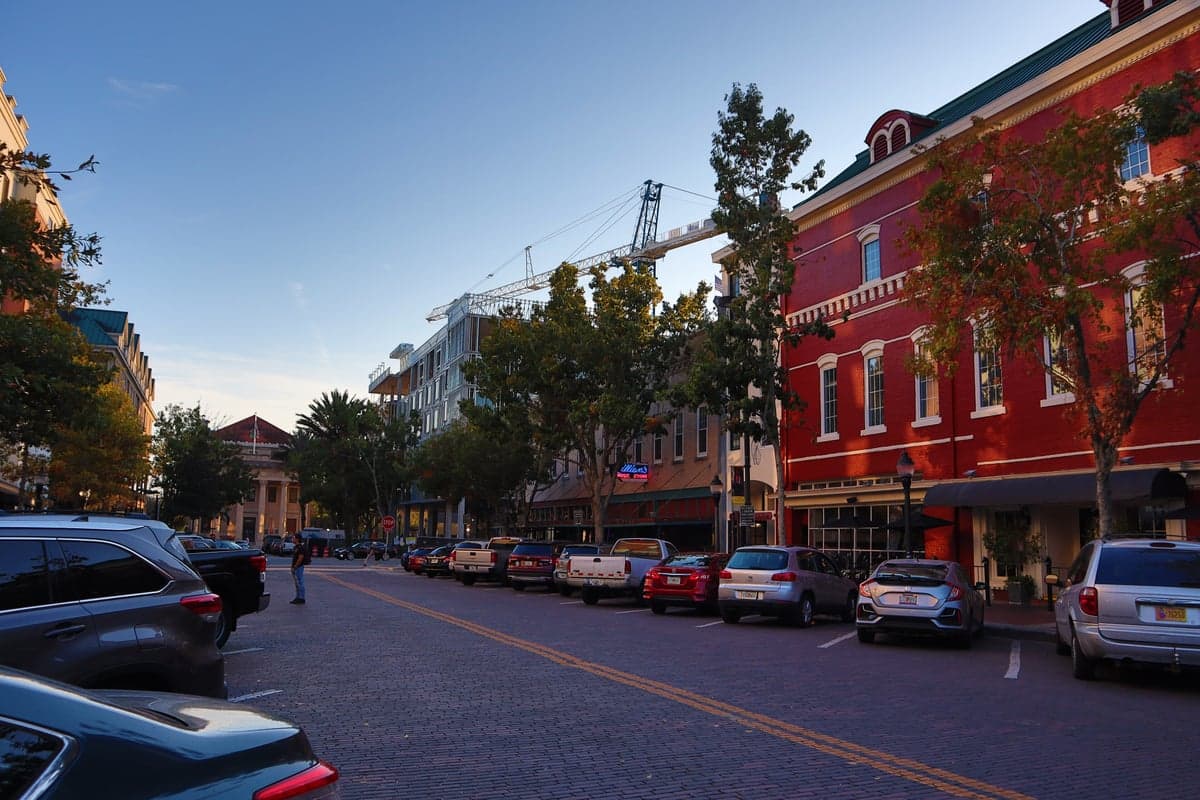
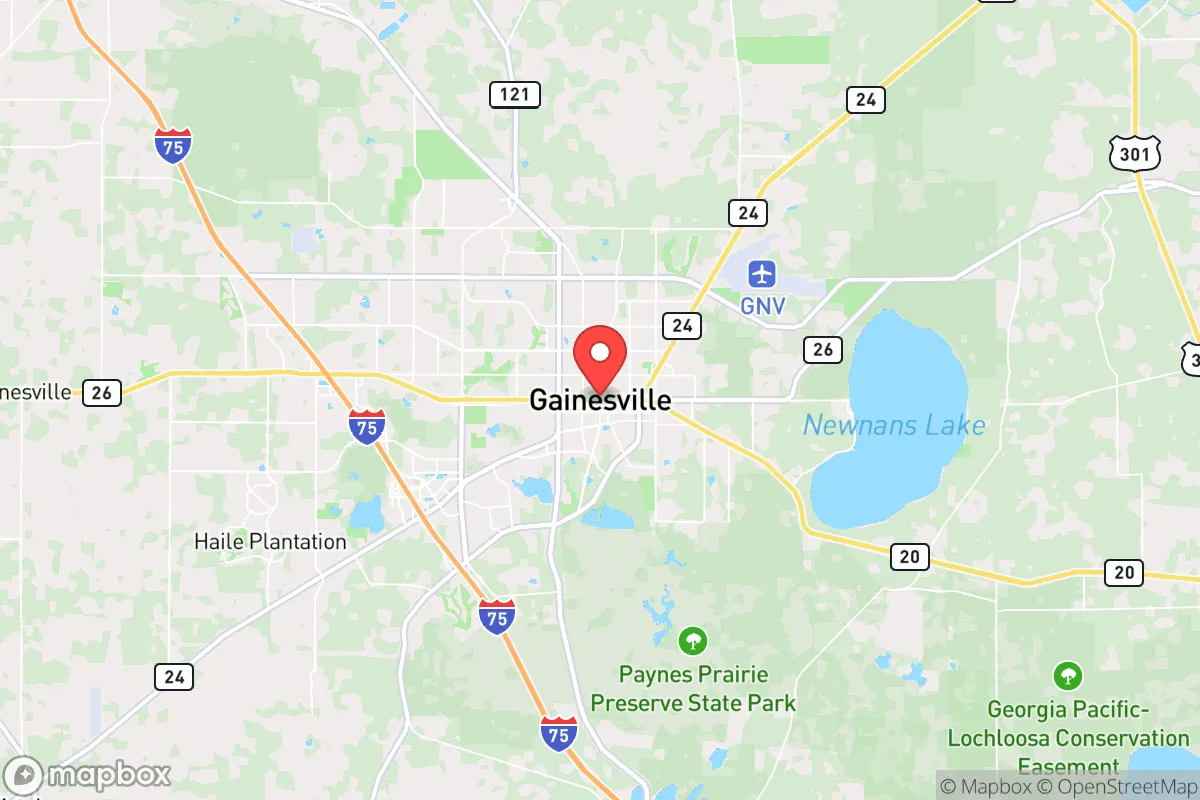
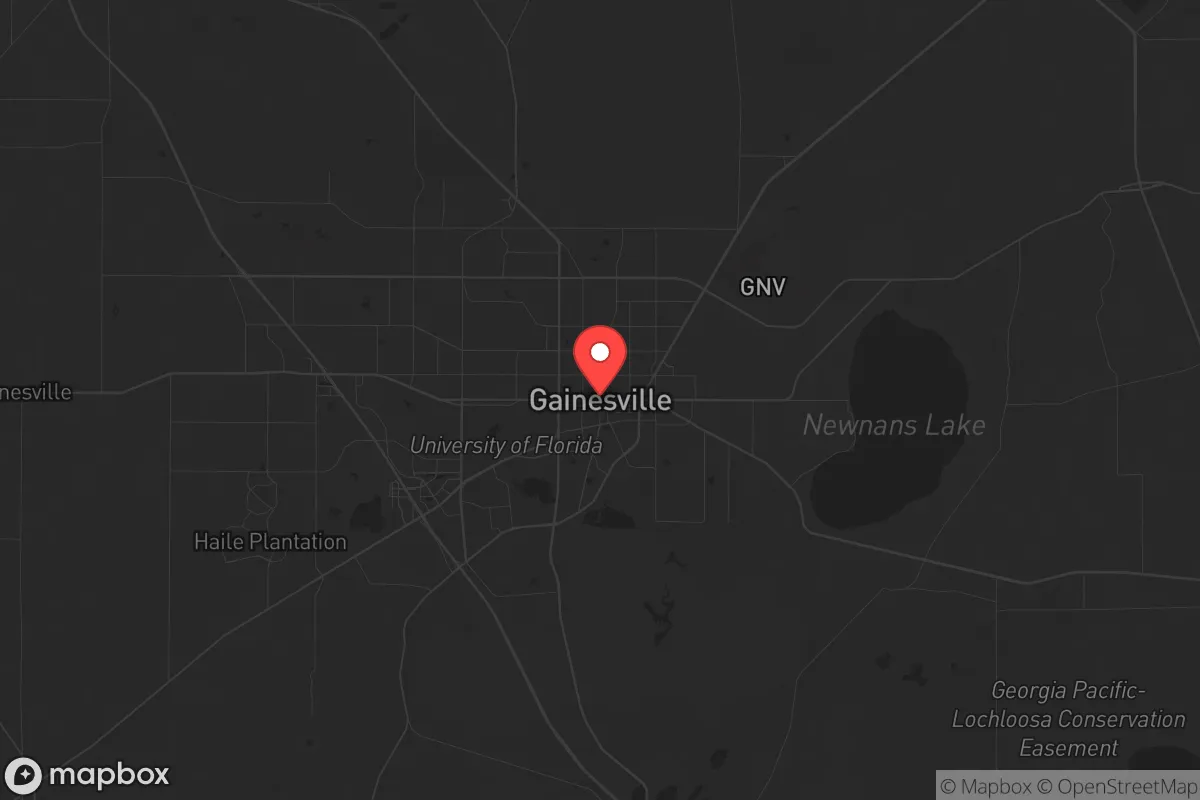
Gainesville, Florida, sits in a strategic sweet spot that many relocators overlook, offering a blend of geographic isolation from the state’s most volatile population centers while retaining access to critical infrastructure. Its position roughly 70 miles southwest of Jacksonville and 120 miles northwest of Orlando places it outside the immediate blast radius and fallout zones of those major metro areas, yet close enough to tap into their supply chains and medical networks when things are stable. The city’s resilience is rooted in its inland location—far from the hurricane-prone coasts that dominate Florida headlines—and its role as a regional hub for education, healthcare, and agriculture. For a conservative-leaning individual or family thinking long-term about civic unrest, natural disasters, or societal breakdown, Gainesville offers a rare combination of defensible geography and functional self-sufficiency that warrants a hard look.
Geographic position and natural advantages for long-term stability
Gainesville’s inland location is its single greatest asset for anyone prioritizing resilience. Unlike coastal Florida cities that face annual hurricane threats, storm surge, and mandatory evacuation orders, Gainesville sits on the Florida Plateau at an elevation of roughly 150 to 200 feet above sea level. This elevation is significant in a state where much of the land is barely above water—flooding risks are minimal, and the city is far enough from the Atlantic and Gulf coasts that even a Category 5 storm loses steam before arrival. The surrounding landscape is a mix of pine flatwoods, hardwood hammocks, and the vast Payne’s Prairie Preserve, which acts as a natural buffer and water retention area. The climate is humid subtropical, with hot summers and mild winters, meaning you can grow food year-round without the freeze risks of northern states. The Floridan Aquifer lies directly beneath the region, providing some of the cleanest, most abundant freshwater in the country—a critical advantage if municipal systems fail. Gainesville’s position also places it within a two-hour drive of three major interstate highways (I-75, I-10, and I-95), giving you multiple egress routes if you need to bug out, but the city itself is not a natural chokepoint that would attract military or refugee traffic during a crisis.
Risks, exposures, and proximity to fallout-relevant landmarks
No location is without vulnerabilities, and Gainesville has a few that demand attention. The most obvious risk is its proximity to the University of Florida (UF), a massive institution with over 60,000 students and staff. In a scenario involving civil unrest or mass casualty events, a university campus can become a focal point for protests, riots, or even targeted attacks—UF has seen its share of demonstrations, and the sheer density of young, often left-leaning populations could create friction for conservative families. The city’s population of roughly 145,000 swells during the academic year, straining resources like hospital beds, police response times, and grocery supply chains. On the fallout front, Gainesville is about 70 miles from the St. Johns River Power Park in Jacksonville and roughly 100 miles from the Crystal River Nuclear Plant on the Gulf Coast. While these are not immediate blast dangers, prevailing winds from the west and southwest could carry radioactive debris toward the area in a worst-case scenario. The city also sits near the intersection of major rail lines and I-75, a north-south corridor that could become a target for sabotage or a conduit for mass migration during a national emergency. The Alachua County Sheriff’s Office is well-funded and professional, but the county’s politics lean blue—the city itself voted heavily Democratic in recent elections—which may create cultural friction for conservative relocators seeking like-minded neighbors and local governance that prioritizes individual liberty.
Practical resilience for a relocator: food, water, energy, and defensibility
For a prepper or survivalist, Gainesville offers a surprisingly solid foundation for self-sufficiency. The water situation is excellent: the Floridan Aquifer is accessible via private wells throughout much of Alachua County, and the city’s municipal water comes from deep wells that are less vulnerable to surface contamination than surface-water systems. You can drill a well on rural property for a few thousand dollars, and the water quality is so high that many residents skip filtration entirely. Food production is viable year-round—the growing season runs from February to November, and with a simple hoop house or cold frame, you can extend it through December. Local soil is sandy but amendable, and there are dozens of small farms, farmers’ markets, and agricultural co-ops within a 30-minute drive. The area is also a hub for hunting (deer, wild hog, turkey) and fishing (lakes, rivers, and the nearby Gulf), providing protein sources that don’t rely on grocery stores. Energy resilience is more mixed: Gainesville Regional Utilities (GRU) is a municipal provider with a reputation for high rates and bureaucratic inefficiency, but the grid is relatively stable compared to coastal areas. Solar potential is good—Florida averages over 230 sunny days per year—and there are no HOA restrictions on solar panels in unincorporated parts of the county. Defensibility is where Gainesville shines for those willing to live outside city limits. The rural areas north and west of town—toward Newberry, Archer, and Alachua—offer acreage, tree cover, and limited road access, making them easier to secure. The city itself is a grid layout with multiple entry points, which is less defensible, but the surrounding countryside provides natural chokepoints like the Santa Fe River and Paynes Prairie that could slow an advancing threat.
The overall strategic picture for Gainesville is one of cautious optimism for the conservative relocator. It’s not a hardened bunker or a remote mountain redoubt, but it offers a realistic balance of access to resources, natural protection, and distance from the most likely flashpoints of societal collapse. The biggest trade-off is cultural: you’ll be living in a blue-leaning college town where your values may not be the majority, but the rural outskirts provide a buffer and a community of like-minded individuals who value self-reliance. The water, soil, and climate give you a fighting chance at long-term sustainability, while the inland location reduces the most common Florida risks. If you’re looking for a place to ride out the next decade with a solid plan and a low profile, Gainesville deserves a spot on your short list—just make sure you buy outside the city limits, drill a well, and get to know your neighbors before the lights go out.

* Values derived from national, state, county, city and local statistics and may differ in a specific area. Last updated: 2026-04-19T06:58:56.000Z
Narrative content on this page is AI-generated and may contain mistakes. Verify any details that matter before acting on them.
ReloMaps may earn a commission from affiliate links at no extra cost to you.

