Photo: Wikipedia
Quality of Life in Gainesville, FL
A high quality of life with strong walkability, manageable living costs, healthy neighborhood signals, and solid amenity access.
What does Quality of Life tell us?
Quality of Life blends cost of living, nearby amenities, socioeconomic signals, and neighborhood character. City-level scores represent the whole municipality; individual neighborhoods can differ.
What does this tell us?
Quality of Life blends cost of living, nearby amenities, socioeconomic signals, and neighborhood character. City-level scores represent the whole municipality; individual neighborhoods can differ.
Cost of Living
4% below national average
The Real Cost of Living in Gainesville, FL for 2026
| Tier | Individual | Family (4) |
|---|---|---|
| Survival | $19k | $36k |
| Comfortable | $46k | $67k |
| Luxury | $82k+ | $128k+ |
| Elite (Top 5%) | $130k+ | $202k+ |
68%
The Area Signal
A metric tracking the socioeconomic signals of the area.


Hobbies
Explore the areaGroceries
5 within 10 miles
Gas
0 within 10 miles
Hospital
3 within 20 miles
Airport
MCO — Orlando International
Post Office
USPS — Gainesville, FL
Critical Amenities
Quality-of-Life Analysis
Gainesville, Florida, presents a quality of life that blends small-town affordability with the cultural and economic energy of a major university city. The area's affluence is moderate, with a cost of living index of 96 (4% below the U.S. average), attracting a diverse mix of University of Florida students, faculty, healthcare professionals from UF Health Shands Hospital, and young families seeking a lower-cost alternative to coastal Florida metros. The median household income hovers around $50,000, reflecting a population that values education, outdoor recreation, and a slower pace than nearby Jacksonville or Orlando.
Cost of living, housing affordability, and how Gainesville compares to nearby cities
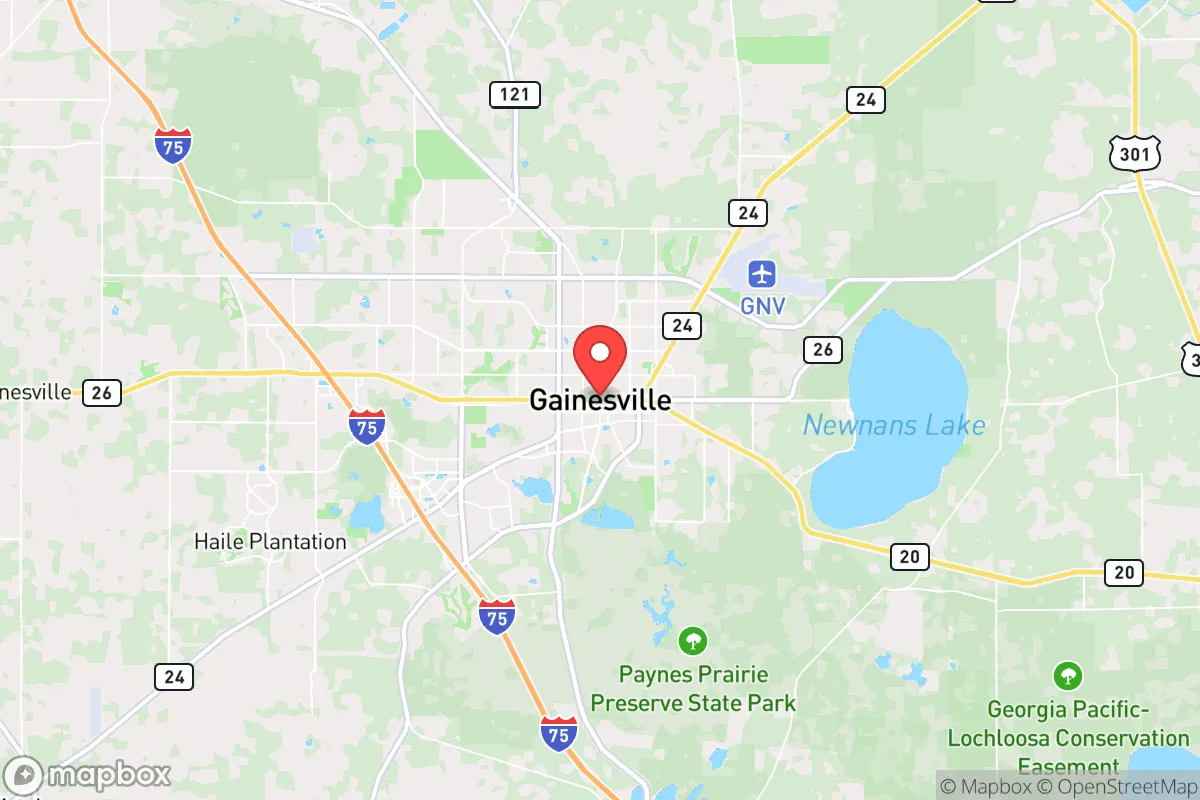
Gainesville's housing market remains one of the most affordable in North Central Florida. The median home value is $235,000, significantly lower than the state median of roughly $400,000, and median rent sits at $1,214—well below the national average of $1,400. This affordability gap is stark when compared to Gainesville's larger neighbors: a comparable home in Jacksonville (about 70 miles northeast) costs roughly $300,000, while Orlando (110 miles south) commands a median above $420,000. The average commute in Gainesville is just 18.4 minutes, far shorter than the national average of 26 minutes, meaning residents spend less time in traffic and more time at home or in the city's many parks. Property taxes are moderate, with a millage rate around 18.5 mills, and Florida's lack of a state income tax further stretches household budgets. However, renters should note that vacancy rates are tight (below 5%), driven by student demand, so securing a lease often requires acting quickly.
What daily life is like for families, students, and professionals: amenities, schools, and recreation
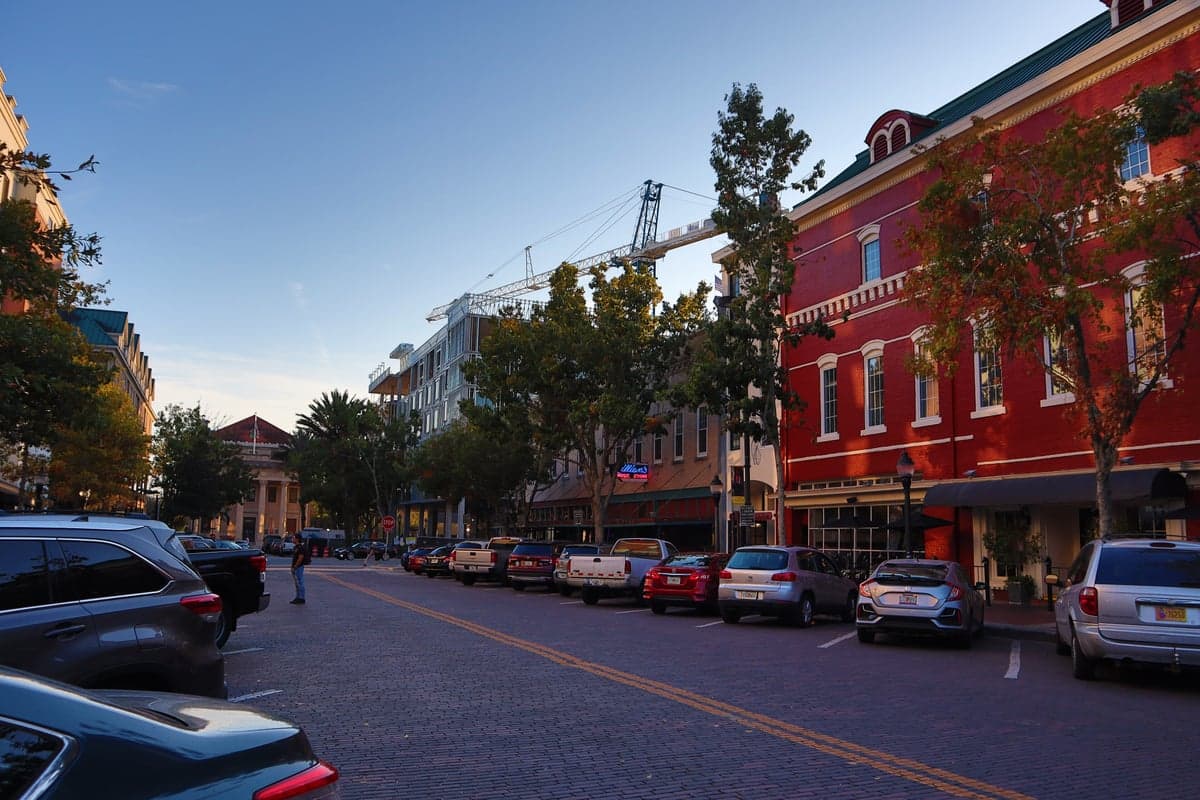
Daily life in Gainesville revolves around the University of Florida campus, which anchors the city's cultural calendar with events like the Gatornationals drag races and the annual Florida Film Festival. The Alachua County Public Schools system includes several high-performing magnet schools, such as Gainesville High School's International Baccalaureate program and P.K. Yonge Developmental Research School, which consistently rank among Florida's top 10%. For outdoor enthusiasts, the 1,500-acre Paynes Prairie Preserve State Park offers hiking, biking, and wildlife viewing (including wild bison and horses), while the nearby Santa Fe River provides tubing and kayaking. The city's downtown area, centered around the historic Hippodrome Theatre and the Bo Diddley Community Plaza, hosts a weekly farmers' market and frequent live music. Healthcare access is robust, anchored by UF Health Shands Hospital, a Level I trauma center and teaching hospital that draws specialists from across the Southeast. The rhythm of life is distinctly seasonal: fall and spring are dominated by Gators football and baseball games, while summers are quieter as many students leave, offering lower restaurant wait times and easier parking.
Gainesville is best suited for those who value a tight-knit, intellectually curious community with easy access to nature and a lower cost of living. Families will appreciate the strong public schools and short commutes; students and academics thrive on the university's resources and social scene; and remote workers or retirees can leverage the affordable housing and mild climate (average highs of 90°F in July, lows of 42°F in January). The city's main trade-offs are a limited nightlife scene compared to larger metros and a job market heavily dependent on education and healthcare. For anyone seeking a balanced, slower-paced life in Florida without the coastal premium, Gainesville offers a compelling, data-backed value proposition.

Crime in Gainesville, FL
Generally safer than 67% of comparable U.S. locations.
Violent CrimeViolent Crime Analysis
Property CrimeProperty Crime Analysis
Crime Analysis
Gainesville, Florida, presents a mixed safety profile where property crime rates significantly exceed national averages, while violent crime remains closer to state norms. The city’s overall crime picture is shaped by its status as a college town and the policies of Alachua County’s justice system, which has adopted progressive prosecutorial approaches in recent years. For prospective residents, understanding these dynamics is critical to evaluating personal risk and neighborhood choice.
Crime in context
Gainesville’s violent crime rate stands at 286.6 incidents per 100,000 residents, which is roughly 18% below the national average of 380 per 100,000 but slightly above the Florida state average of 259 per 100,000. The property crime rate, however, is a more pressing concern at 1,089.9 per 100,000—nearly double the national rate of 1,954 per 100,000 and significantly higher than the Florida average of 1,700 per 100,000. These figures place Gainesville in a higher-risk tier for theft, burglary, and motor vehicle theft compared to similarly sized Florida cities like Ocala or Tallahassee. The elevated property crime numbers are consistent with patterns seen in many college towns, where transient populations and a high density of rental properties create opportunistic targets.
What residents experience
Daily life for Gainesville residents involves a tangible awareness of property crime, particularly in areas near the University of Florida campus and midtown neighborhoods. Bicycle theft, package theft, and vehicle break-ins are common complaints, with police data showing these offenses cluster around student housing complexes and commercial corridors like Archer Road and 13th Street. Violent crime is less frequent but not absent; incidents tend to concentrate in specific corridors, including sections of East Gainesville and the southwest quadrant near apartment complexes. The local criminal justice system, overseen by Alachua County State Attorney Brian Kramer, has drawn criticism for its progressive policies, including diversion programs and reduced sentencing for nonviolent repeat offenders. Critics argue these approaches contribute to a revolving-door effect for property criminals, undermining deterrence and public confidence in safety. While proponents cite lower incarceration costs and second-chance outcomes, the practical result for residents is a higher likelihood of encountering repeat offenders in their neighborhoods.
Neighborhood-level variation in Gainesville is pronounced. The wealthier, more suburban areas of northwest Gainesville—such as the Haile Plantation and Tioga communities—report substantially lower crime rates, with violent crime nearly absent and property crime rates roughly half the city average. In contrast, the 32601 and 32609 zip codes in central and eastern Gainesville experience crime rates two to three times higher than the city mean, driven by concentrated poverty and limited police presence. The area immediately surrounding the University of Florida campus, including the Duck Pond and College Park neighborhoods, shows moderate property crime but very low violent crime, reflecting the protective effect of high foot traffic and campus security. Prospective renters and buyers should consult the Gainesville Police Department’s online crime map and consider that progressive justice policies may have a more pronounced effect on property crime recidivism in higher-density rental zones than in stable, owner-occupied neighborhoods.
* Values derived from national, state, county, city and local statistics and may differ in a specific area. Last updated: 2026-04-19T06:58:56.000Z
Narrative content on this page is AI-generated and may contain mistakes. Verify any details that matter before acting on them.
ReloMaps may earn a commission from affiliate links at no extra cost to you.

