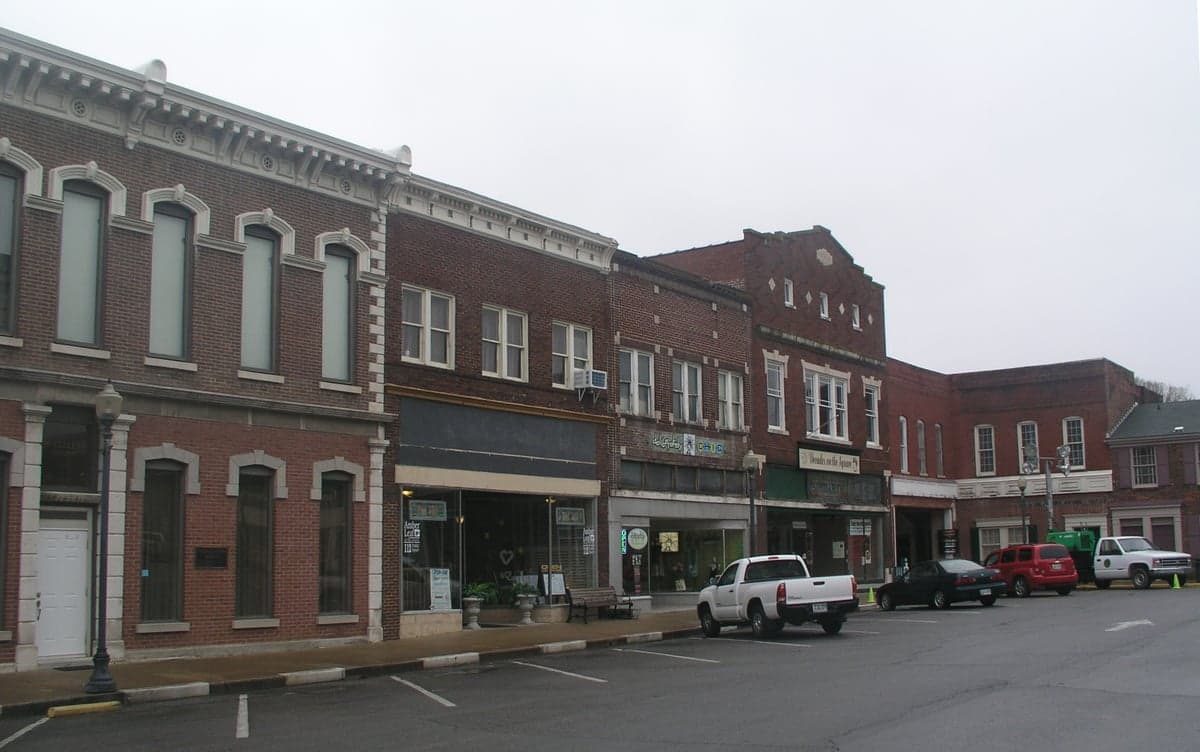
Photo: Wikipedia
Political ClimatePolitical Climate in Gallatin, TN
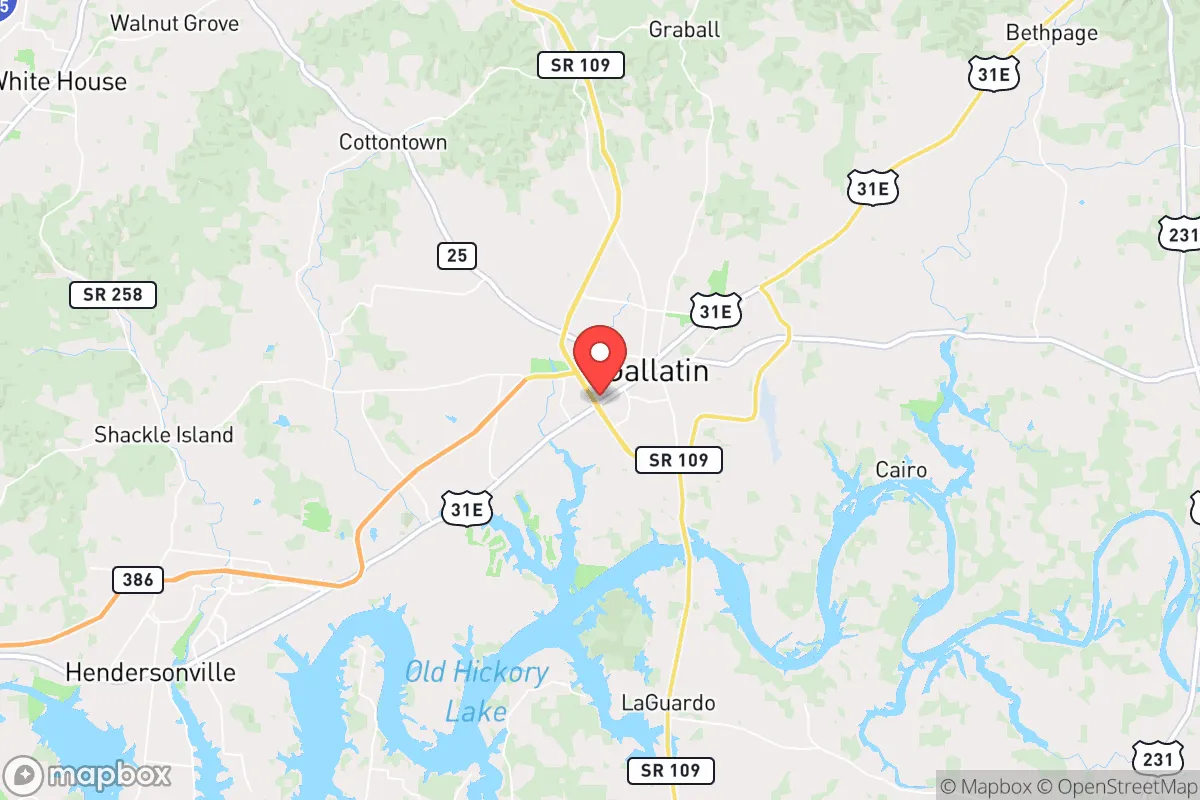
District shown is the primary district for this city’s centroid. Cities may span multiple districts.
Local Political AnalysisPolitical Analysis of Gallatin, TN
Gallatin, Tennessee, sits squarely in deep-red territory, with a Cook PVI of R+17 that reflects a community where conservative values aren't just a preference—they're the baseline. For decades, this town has leaned reliably Republican, and while the surrounding Sumner County has historically been a GOP stronghold, the real story is how Gallatin has held its ground even as Nashville's sprawl creeps north. The 2024 presidential results here were a reminder that this isn't a place that flips easily; Trump carried the county by a comfortable margin, and local races tend to follow suit. But if you've lived here long enough, you've seen the subtle shifts—new subdivisions bringing in folks from blue states, and with them, a slow but steady pressure on local politics.
How it compares
Drive ten miles south to Hendersonville, and you'll feel a slightly different vibe—more transplants, more transplants, more of that "I moved here to escape but brought my old politics" energy. Gallatin, by contrast, still feels like the old guard. Compare it to Nashville proper, just 30 minutes away, and the contrast is stark: Music City is a deep-blue island in a sea of red, while Gallatin is the kind of place where the county commission still debates property rights and Second Amendment issues without apology. Even nearby Lebanon, in Wilson County, leans conservative but has seen more progressive inroads in its school board races. Gallatin's political DNA is more resistant to that drift, partly because its economy is rooted in manufacturing and agriculture—jobs that don't reward the kind of government overreach you see in metro areas. The R+17 rating isn't just a number; it's a reflection of a community that values local control and isn't eager to hand over decision-making to state or federal bureaucrats.
What this means for residents
For the average Gallatin resident, the political climate translates into a government that mostly stays out of your way. Zoning battles are rare, taxes are low (property rates are among the most favorable in the region), and there's a general expectation that your personal freedoms—whether it's how you run your business or what you teach your kids—aren't subject to constant tinkering from above. That said, the growth pressure is real. As more people pour in from California and Illinois, you're starting to see local debates over things like mask mandates in schools or housing density that would have been unthinkable a decade ago. The long-term concern isn't that Gallatin will flip blue—it's that the cultural drift could erode the very independence that makes this place work. If you value a government that respects your rights without micromanaging your life, Gallatin is still a safe bet, but you'll want to keep an eye on city council meetings and school board elections. Those are the front lines now.
Culturally, Gallatin stands apart from its neighbors in a few key ways. There's no city income tax, no overreaching noise ordinances, and a general hands-off approach to property rights that you don't find in more progressive enclaves. The local gun culture is strong, with ranges and shops that cater to a community that takes the Second Amendment seriously. And while you'll see the occasional "Coexist" bumper sticker near the square, the dominant sentiment is still one of personal responsibility over collective mandates. The biggest policy distinction? Gallatin has resisted the kind of "smart growth" zoning that other towns have adopted, which means more freedom for landowners but also more sprawl. For now, that trade-off is one most residents are happy to make. The trajectory is clear: as long as the local economy stays strong and the transplants don't outnumber the natives, Gallatin will remain a place where conservative values aren't just tolerated—they're the norm.

State Political ClimatePolitical Climate in Tennessee
State Political AnalysisPolitical Environment in the State
Tennessee has been a reliably red state for decades, but the political climate here is more layered than a simple partisan label suggests. The state leans solidly Republican at the federal and state level, with Donald Trump winning by 30 points in 2024, but the coalition driving that majority is a mix of rural conservatives, suburban moderates, and a growing number of transplants from blue states. Over the last 10-20 years, the state has shifted rightward on cultural and economic issues, even as its major metros have become more liberal, creating a dynamic where the legislature often outpaces the governor on conservative priorities.
Urban vs. rural divide
The political map of Tennessee is a study in contrasts. The three major population centers—Nashville, Memphis, and Knoxville—each have distinct political flavors. Nashville (Davidson County) has become a deep blue stronghold, driven by a booming economy, a young professional class, and a significant LGBTQ+ community. It voted for Joe Biden by 26 points in 2020 and has only gotten more progressive since. Memphis (Shelby County) is even more Democratic, with a large African American population and a strong union presence, voting for Biden by 50 points. Knoxville (Knox County) is more of a purple-to-light-red city, with a conservative-leaning county that still elects some Democrats locally. The real engine of the state’s red tilt is the vast rural and exurban territory between these cities—places like Cookeville, Jackson, Clarksville, and the sprawling suburbs of Franklin and Murfreesboro. These areas vote Republican by 60-80% margins, and their population growth, especially in Williamson and Rutherford counties, has only reinforced the state’s conservative majority. The 2020 census showed that while Nashville and Memphis grew, the fastest-growing counties were all red-leaning suburbs and exurbs.
Policy environment
Tennessee’s policy environment is among the most conservative in the nation, and it’s been trending that way for a decade. The state has no income tax—only a flat 7% sales tax on most goods and a 1% tax on dividends and interest that is being phased out by 2029. Property taxes are low by national standards, with the median effective rate around 0.67%. The regulatory posture is business-friendly, with a right-to-work law and no state-level minimum wage above the federal $7.25. On education, the state has expanded school choice significantly: the Education Savings Account program, passed in 2019 and expanded in 2023, allows families in Memphis, Nashville, and eventually statewide to use public funds for private school tuition. The state also banned critical race theory in public schools in 2021 and passed a “Parents’ Bill of Rights” in 2022, giving parents explicit authority over their children’s education and medical decisions. Healthcare policy is a mixed bag: Tennessee did not expand Medicaid under the Affordable Care Act, leaving a coverage gap for about 300,000 low-income adults, but the state has also pursued a block grant waiver for its Medicaid program (TennCare) to gain more flexibility. Election laws have tightened: voter ID requirements are strict, early voting is limited to 14 days, and in 2023 the legislature passed a law making it a felony for election officials to send unsolicited mail-in ballot applications. The state also banned all private funding for election administration after the 2020 cycle.
Trajectory & freedom
On the freedom front, Tennessee has been moving decisively in one direction: more liberty on economic and cultural issues, but with some notable exceptions. The state passed constitutional carry (permitless carry) for handguns in 2021, and in 2023 it raised the age for purchasing long guns from 18 to 21 only after the Covenant School shooting in Nashville—a rare restriction that drew backlash from gun rights advocates. The state also passed a law in 2023 prohibiting any local government from enacting gun control measures stricter than state law, effectively preempting Nashville’s attempts to ban assault weapons. On parental rights, the state has been a leader: the 2022 “Parents’ Bill of Rights” (HB 2670) gives parents the right to review all instructional materials and opt their children out of any lessons they object to. The state also banned gender-affirming care for minors in 2023 (SB 1), overriding a veto from Governor Bill Lee, and passed a law requiring public school teachers to notify parents if a student requests to use a different name or pronoun. On medical freedom, Tennessee was one of the first states to ban COVID-19 vaccine mandates for public employees and contractors in 2021, and it passed a law in 2022 prohibiting employers from requiring vaccines as a condition of employment. Property rights are strong, with no state-level rent control and a “takings” law that requires compensation for regulatory actions that reduce property value by more than 20%. The one area where freedom has contracted is on speech: the state has a “campus free speech” law that prohibits public universities from designating “free speech zones,” but it also passed a law in 2023 making it a crime to “incite a riot” in a way that critics say could chill protest.
Civil unrest & political movements
Tennessee has seen its share of political flashpoints, but they’ve been more localized than in some other states. The most visible was the 2023 expulsion of two Democratic state representatives (Justin Jones and Justin Pearson) from the state House for leading a gun control protest on the floor after the Covenant School shooting. The expulsions sparked national outrage and protests in Nashville, but the legislature quickly reappointed both representatives, and the incident actually energized the progressive base in Davidson County. On the right, the “Moms for Liberty” movement has been active in Williamson and Rutherford counties, pushing for book bans and curriculum transparency. The state has also seen a growing “constitutional sheriff” movement in rural counties like Lincoln and Giles, where sheriffs have publicly stated they will not enforce federal gun laws they deem unconstitutional. Immigration politics are relatively quiet compared to border states, but in 2024 the legislature passed a bill requiring local law enforcement to cooperate with ICE detainers, overriding Nashville’s “sanctuary city” ordinance. There have been no serious secession or nullification movements, though some rural counties have passed symbolic resolutions asserting “county supremacy” over state and federal mandates. Election integrity controversies have been minimal; the state’s 2020 election was not seriously contested, and the legislature’s subsequent reforms were more preemptive than reactive.
Projection
Over the next 5-10 years, Tennessee is likely to become even more conservative on cultural issues, but the demographic math is shifting. The state is growing fast—about 1.5% per year—and the new arrivals are disproportionately from California, Illinois, and New York. Many of these transplants are conservative-leaning, but they tend to settle in the Nashville and Knoxville suburbs, which are already red. The real wildcard is Nashville itself: as the city grows denser and more diverse, its political influence in the state legislature will increase, but it will also face more preemption from a Republican supermajority that is unlikely to lose power. The state’s rural population is aging and shrinking, but the exurbs are booming, so the overall partisan balance may hold steady or even shift slightly rightward. The biggest policy fights ahead will likely be over school choice expansion (expect a universal ESA program by 2027), further tax cuts (the income tax phase-out will be completed), and a potential push for a state-level abortion ban (currently a 6-week ban is in effect, but a total ban has been debated). On the freedom front, expect more preemption of local ordinances on everything from housing to environmental regulation, as the legislature continues to see local control as a threat to conservative priorities.
Bottom line for a new resident: If you’re moving to Tennessee for lower taxes, less regulation, and a culture that respects parental rights and gun ownership, you’ll find a state that is actively moving in that direction. The trade-off is that you’ll be living in a state where the legislature is willing to override local control, so if you settle in Nashville or Memphis, you’ll have to accept that state law will often supersede your city’s preferences. The political climate is stable and predictable, but it’s also increasingly polarized between the urban cores and everything else. For a conservative family or individual, the best bet is to look at the suburbs of Franklin, Brentwood, or Collierville—places where the politics match the state’s direction and the schools are strong. Just know that the culture war is real here, and it’s not going away anytime soon.
* Values derived from national, state, county, city and local statistics and may differ in a specific area. Last updated: 2026-05-01T18:05:01.000Z
Narrative content on this page is AI-generated and may contain mistakes. Verify any details that matter before acting on them.
ReloMaps may earn a commission from affiliate links at no extra cost to you.

