Photo: Wikipedia
Demographics of Garner, NC
Affluence Level in Garner, NC
A middle-class area roughly in line with national averages across income, home values, education, and employment.
People of Garner, NC
The people of Garner, North Carolina today form a predominantly native-born, family-oriented community of 32,543 residents, characterized by a solidly middle-class, suburban identity rooted in its historic role as a railroad and agricultural hub. The city is notably more diverse than its surrounding Wake County suburbs, with a population that is 55.2% White, 25.9% Black, 11.9% Hispanic, and 1.2% East/Southeast Asian, alongside a small Indian subcontinent community at 0.4%. Garner’s distinctive marker is its blend of long-standing Southern families and newer arrivals drawn by affordable housing and proximity to Raleigh, creating a community that values local schools, church life, and a slower pace than the nearby capital.
How the city was settled and grew
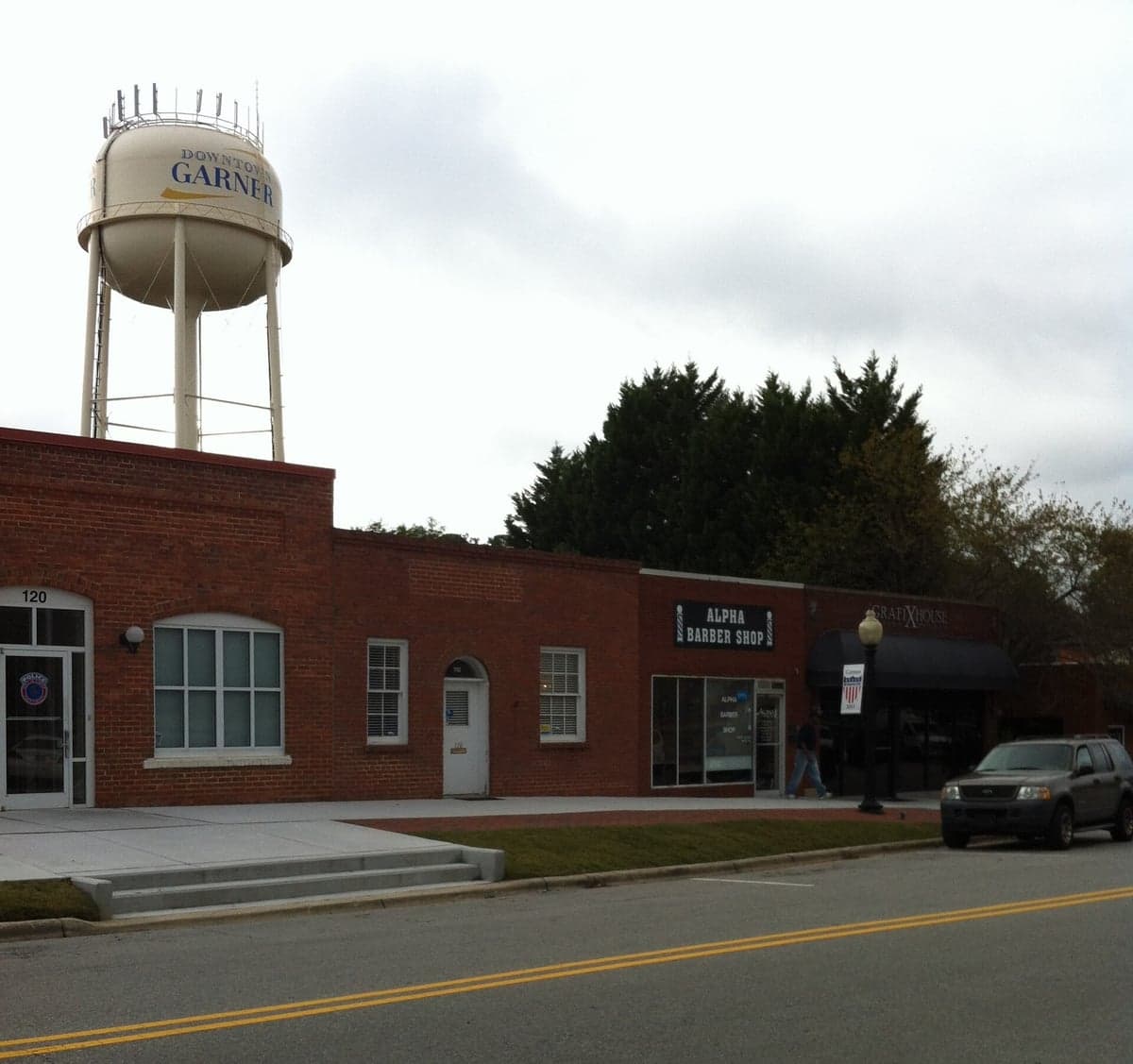
Garner’s human history begins not with colonial settlement but with the arrival of the North Carolina Railroad in the 1850s, which transformed a sparse farming crossroads into a depot town. The original population was overwhelmingly White, drawn from the surrounding Johnston and Wake County farmlands, and they clustered around the railroad tracks in what is now Downtown Garner and the Garner Historic District. These early families—names like Benson, Creech, and Stephenson—built the town’s first churches, general stores, and schools. A second wave arrived in the early 20th century as the town incorporated in 1905, with Black families settling in the East Garner area near the railroad, establishing their own institutions like the Garner Colored School (later East Garner Elementary). The town remained a small, rural service center through the 1950s, with a population under 2,000, defined by cotton, tobacco, and timber.
Modern era (post-1965)
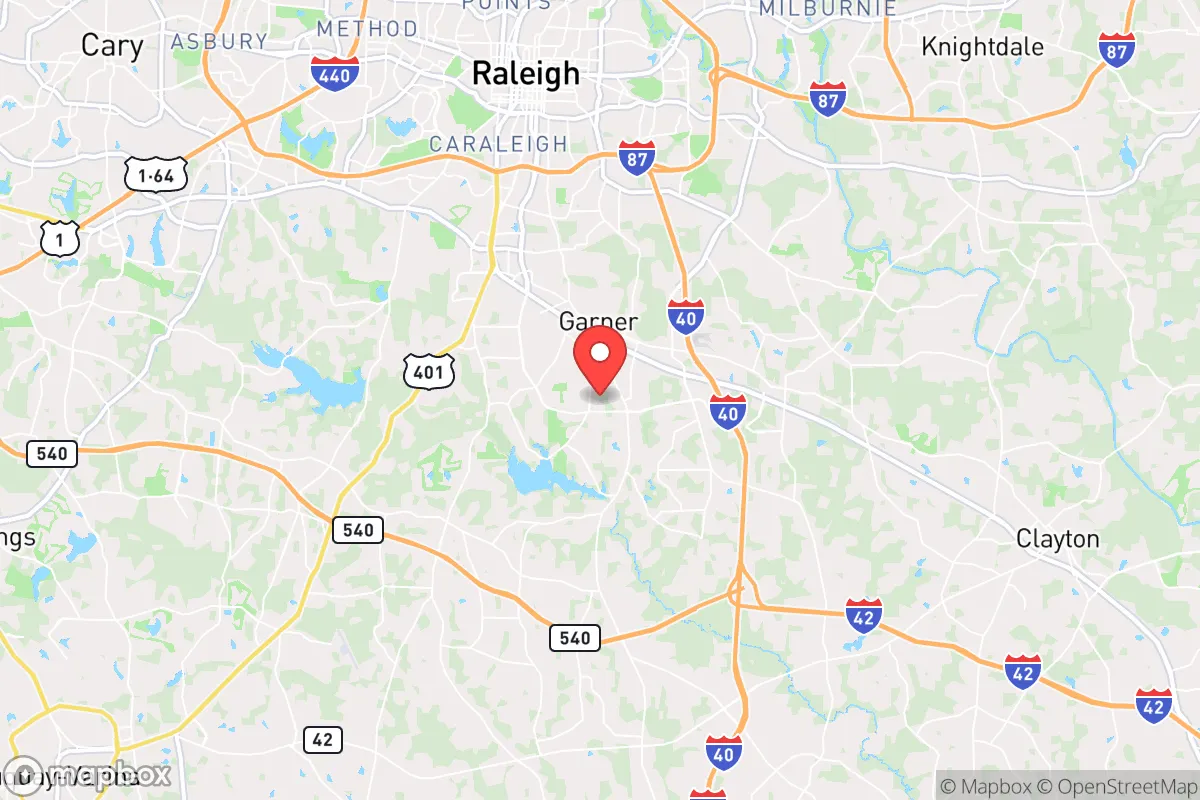
The post-1965 era brought dramatic change as the Immigration and Nationality Act opened doors for new arrivals, but Garner’s growth was driven primarily by domestic in-migration—White and Black families moving from rural eastern North Carolina and, later, from the Rust Belt. The 1980s and 1990s saw explosive suburbanization as Raleigh’s tech boom pushed families south along US 401. New subdivisions like Meadowbrook and White Oak absorbed middle-class White families, while Black families expanded into East Garner and newer developments like Timber Ridge. The Hispanic population began growing noticeably in the 2000s, drawn by construction and service jobs, settling primarily in the Lake Benson area and along the US 401 corridor. Today, Garner’s foreign-born population stands at just 4.9%, well below the national average, meaning the city remains overwhelmingly native-born. The East/Southeast Asian community (1.2%) is small but visible, with families often working in Raleigh’s tech sector and living in newer subdivisions near White Oak. The Indian subcontinent community (0.4%) is even smaller, typically professionals commuting to Research Triangle Park.
The future
Garner’s population is heading toward gradual diversification, but the pace is slower than in Raleigh or Cary. The White share (55.2%) is declining slowly as Hispanic and Black populations grow, but the city is not tribalizing into distinct enclaves—most neighborhoods remain mixed, with the exception of East Garner, which retains a strong Black cultural identity. The Hispanic community (11.9%) is growing steadily, driven by second-generation families and continued in-migration from other parts of North Carolina, but it is not yet large enough to create a distinct ethnic enclave. The East/Southeast Asian and Indian communities are plateauing, as most new Asian arrivals to the Triangle prefer the higher-density suburbs of Cary and Morrisville. Over the next 10-20 years, Garner will likely become more Hispanic and slightly more Black, but it will remain a predominantly White, native-born, family-oriented suburb. The city’s annexation of surrounding rural areas will bring in more conservative-leaning White families from Johnston County, slowing the pace of demographic change.
For someone moving in now, Garner is becoming a stable, moderately diverse suburb where long-time Southern families and newer arrivals coexist without sharp ethnic divisions. It is not a melting pot like Raleigh, nor a homogeneous enclave like nearby Holly Springs—it is a middle-ground community where the population is slowly diversifying but the cultural center remains rooted in its railroad-town past and its present-day identity as a family-friendly, fiscally conservative suburb of the Triangle.

* Values derived from national, state, county, city and local statistics and may differ in a specific area. Last updated: 2026-04-21T17:05:26.000Z
Narrative content on this page is AI-generated and may contain mistakes. Verify any details that matter before acting on them.
ReloMaps may earn a commission from affiliate links at no extra cost to you.

