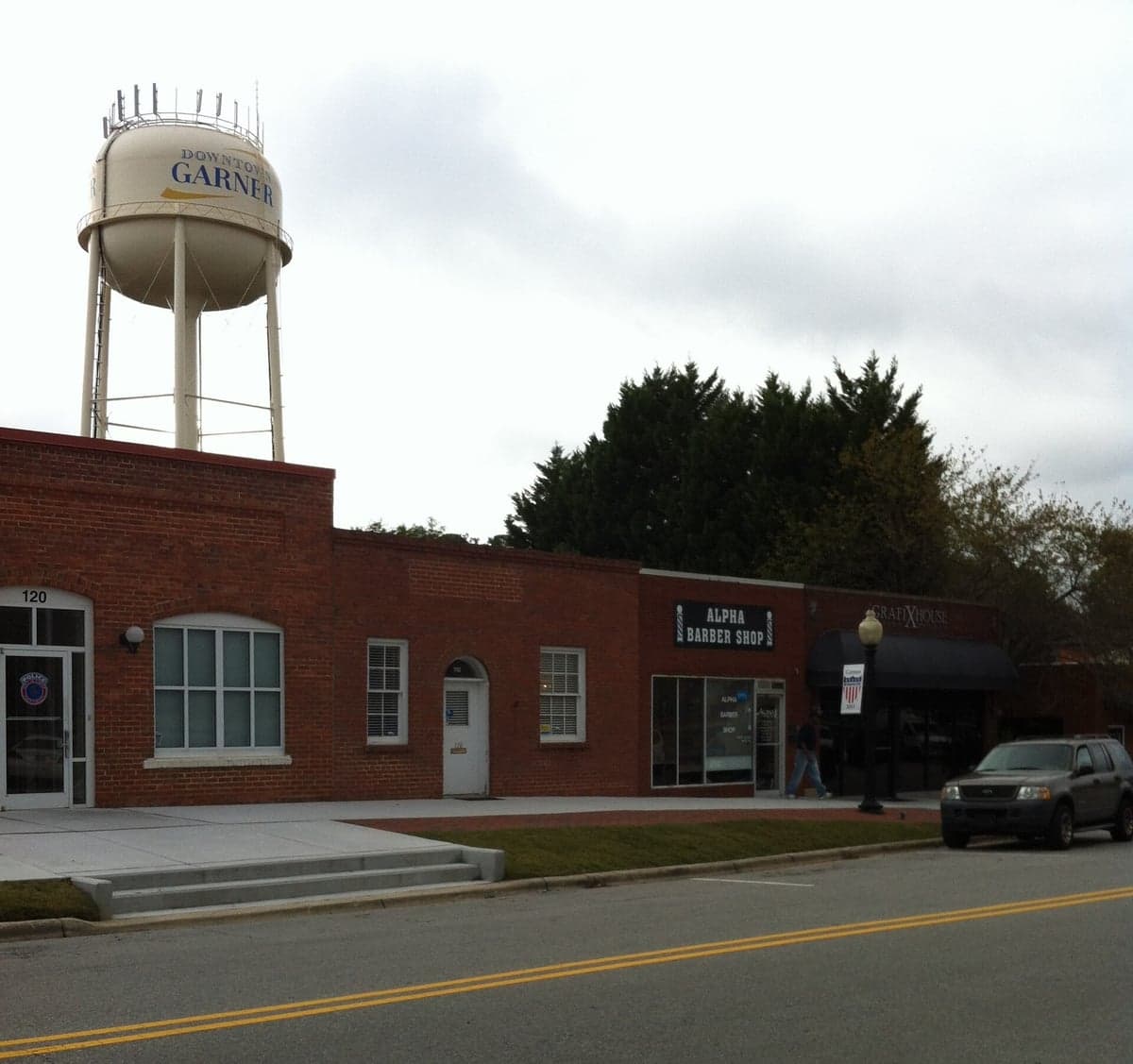
Photo: Wikipedia
Political ClimatePolitical Climate in Garner, NC
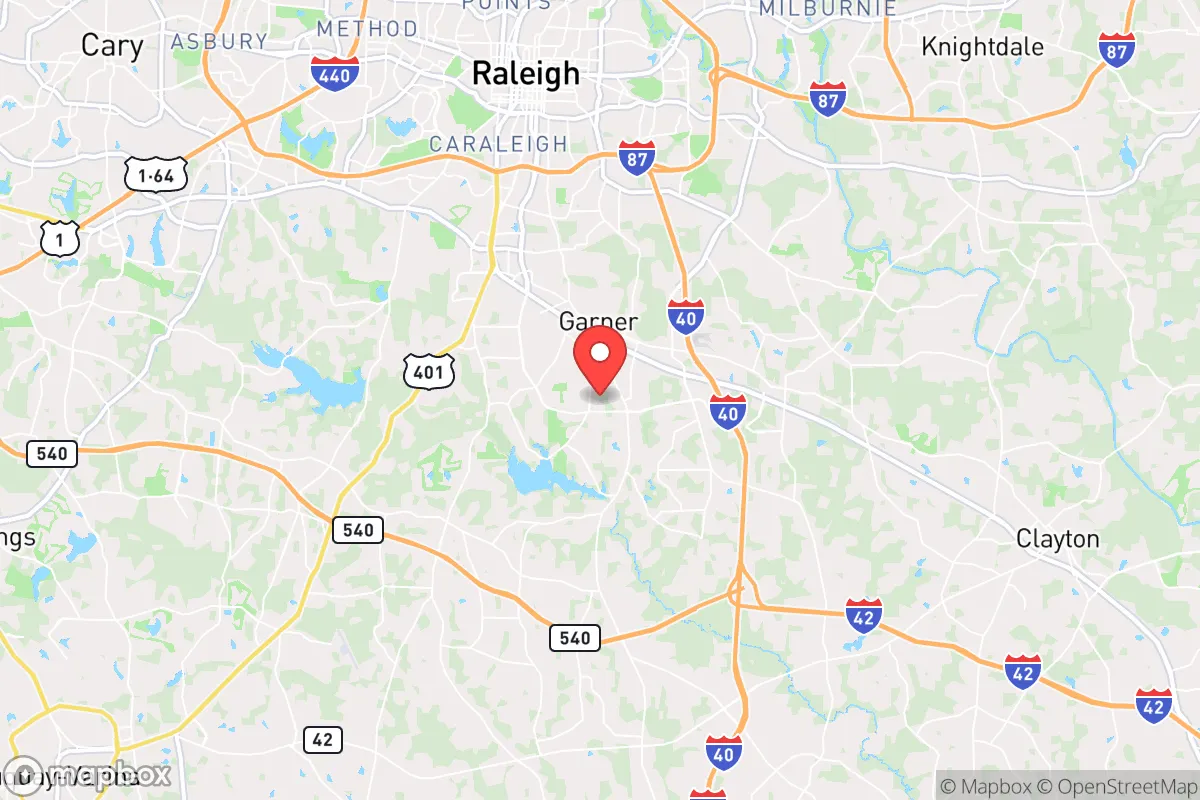
District shown is the primary district for this city’s centroid. Cities may span multiple districts.
Local Political AnalysisPolitical Analysis of Garner, NC
Garner, North Carolina, has a Cook PVI of D+17, meaning it leans heavily Democratic in federal elections, but that number doesn't tell the whole story for those of us who've lived here a while. This used to be a quiet, conservative-leaning town where folks minded their own business and the local government stayed out of your hair. Over the last decade, as Raleigh's growth has spilled south down 401, we've seen a real shift—more transplants, more progressive policies creeping in, and a local political scene that feels less like the Garner I grew up in and more like an extension of the city.
How it compares
Drive ten minutes north into Raleigh proper, and you're in a solidly blue urban core with all the big-city politics that come with it—higher taxes, more regulations, and a city council that's not shy about pushing social agendas. Head west toward Holly Springs or Apex, and you'll find towns that still lean more purple, with a stronger independent streak and a "leave us alone" attitude on things like zoning and school policies. Down south toward Benson or Smithfield, the politics get noticeably more red—lower taxes, fewer mandates, and a general skepticism of government overreach. Garner sits right in the middle, but the D+17 rating reflects that we're increasingly being pulled into Wake County's progressive orbit, which is concerning for anyone who values personal freedoms and local control.
What this means for residents
For those of us who've been here long enough to remember when Garner had its own identity, the biggest worry is how much the county and state governments are starting to meddle in local decisions. You see it in things like zoning fights over new developments that don't fit the character of the town, or school board policies that feel more about social engineering than education. The shift toward progressive ideology means more regulations on small businesses, higher property taxes to fund pet projects, and a general erosion of the "live and let live" culture that made this a great place to raise a family. If you're someone who values the Second Amendment, lower taxes, and not having the government tell you how to run your life, you're going to feel increasingly out of step with the direction Garner is heading.
On the cultural side, Garner still has some of its old charm—the annual Garner Christmas Parade, the small-town feel of Main Street, and a strong sense of community among long-time residents. But the newcomers are changing things. You see more "Black Lives Matter" signs than "Thin Blue Line" flags these days, and the local political discourse has gotten more heated. The town council has been pushing for more "inclusive" policies that sound good on paper but often mean more bureaucracy and less freedom for property owners and business operators. If the trend continues, Garner will look a lot more like Raleigh in ten years—higher cost of living, more government oversight, and a political climate that punishes traditional values. For now, it's still a decent place to live if you keep your head down, but the writing's on the wall.

State Political ClimatePolitical Climate in North Carolina
State Political AnalysisPolitical Environment in the State
North Carolina has long been considered a quintessential swing state, but over the past decade it has settled into a reliably red-leaning posture at the state level, while still hosting competitive federal races. The state voted for Donald Trump in both 2016 and 2024, with the 2024 margin hovering around +3 points, and Republicans have held supermajorities in the General Assembly since 2022. However, the political landscape is far from uniform—the state’s explosive growth, driven by transplants from the Northeast and West Coast, is slowly shifting the ground beneath the GOP’s feet. For a conservative considering relocation, North Carolina offers a mixed bag: solid conservative governance in Raleigh, but a creeping progressive influence in its booming urban corridors.
Urban vs. rural divide
The political map of North Carolina is a textbook case of the urban-rural chasm. The state’s three major metros—Charlotte, the Raleigh-Durham-Chapel Hill Triangle, and Greensboro-Winston-Salem—are blue islands in a sea of red. Mecklenburg County (Charlotte) went for Biden by 20 points in 2020, and Wake County (Raleigh) by 17 points. These areas are growing fast, fueled by tech, banking, and pharma jobs, and they bring in voters who lean left on social issues. Meanwhile, the rural and exurban counties—like Union County (just east of Charlotte), Johnston County (south of Raleigh), and Catawba County (Hickory area)—are deep red, often voting +30 to +40 points Republican. The real battleground is the suburban ring: counties like Cabarrus (Concord) and Brunswick (Wilmington area) have been trending right, while Buncombe County (Asheville) is a liberal mountain outlier. If you’re looking for a conservative community, the exurbs and smaller cities like Mooresville, Hickory, or Greenville are your best bets.
Policy environment
North Carolina’s state-level policy is broadly conservative, but with some notable wrinkles. The state has a flat income tax rate of 4.5%, down from 7% in 2013, and the legislature is pushing toward elimination of the personal income tax entirely. There is no state tax on Social Security benefits, and the standard deduction is generous. Property taxes are low by national standards, averaging about 0.8% of home value. On education, the state has a robust school choice program: the Opportunity Scholarship Program provides vouchers for low- and middle-income families to attend private schools, and the program was expanded in 2023 to cover all income levels. However, the state’s public schools are a mixed bag—rural districts struggle, while Wake and Mecklenburg counties have large, bureaucratic systems that lean left. Healthcare is a sore spot: the state did not expand Medicaid until 2023, and only after a compromise that included conservative work requirements. Election laws are solid: voter ID is required, early voting is generous (17 days), and the state has cleaned up its voter rolls aggressively. The 2024 election saw no major controversies, a stark contrast to 2020’s endless litigation.
Trajectory & freedom
On personal freedom, North Carolina has been a mixed bag over the past five years. The good news: the General Assembly passed a constitutional carry law in 2023, allowing permitless concealed carry for adults 18 and older. Parental rights were strengthened with the Parents’ Bill of Rights (2023), which requires schools to notify parents about changes in a child’s health or well-being and prohibits instruction on gender identity in K-4. The state also banned abortion after 12 weeks in 2023, with exceptions for rape, incest, and fetal anomalies. On the downside, the state’s medical autonomy took a hit: the governor’s executive orders during COVID—mask mandates, business closures—were eventually reined in by the legislature, but the memory lingers. Property rights are generally strong, but local zoning battles in fast-growing areas like Wake Forest and Cornelius have seen homeowners fight high-density developments pushed by county commissions. The biggest red flag for conservatives is the HB2 “bathroom bill” debacle of 2016, which cost the state billions in lost business and sports events—a cautionary tale of how cultural battles can backfire economically.
Civil unrest & political movements
North Carolina has seen its share of political flashpoints. The 2020 protests in Charlotte and Raleigh over George Floyd’s death turned destructive, with looting and arson in Charlotte’s South End and Raleigh’s downtown. The state’s activist left is concentrated in the Triangle, where groups like the NC NAACP and Moral Mondays have organized for years against voter ID, abortion restrictions, and school choice. On the right, the NC GOP and grassroots groups like NC Values Coalition are active, but the most visible movement is the “We the People” election integrity groups that emerged after 2020. Immigration politics are relatively quiet—North Carolina is not a sanctuary state, and local law enforcement cooperates with ICE. The state’s rural counties have seen a surge in Second Amendment sanctuary resolutions, with over 60 counties declaring themselves “sanctuary counties” for gun rights. The most visible flashpoint for a new resident would be the constant battle over school board meetings—particularly in Union County and Cabarrus County, where parents have clashed with administrators over critical race theory and LGBTQ curriculum.
Projection
Over the next 5-10 years, North Carolina is likely to become more purple, not more red. The state is adding about 100,000 new residents per year, and the majority of them are moving to the blue metros—Charlotte, Raleigh, and the Triad. The rural counties are losing population, which means the GOP’s base is shrinking even as its margins grow. The 2024 election showed that Trump’s coalition held, but the suburbs are drifting left: Cabarrus County went from +18 R in 2020 to +12 R in 2024. The state’s congressional map, drawn by the GOP, is likely to be challenged again in court. The biggest wildcard is the state supreme court, which flipped to a 5-2 Republican majority in 2022 and has already upheld the voter ID law and the 12-week abortion ban. If the court stays conservative, the legislature’s agenda will hold. But if demographic trends continue, expect the state to be a true toss-up by 2032. For a conservative moving in now, the practical takeaway is this: you’ll find a friendly policy environment in Raleigh, but you’ll need to choose your county carefully. The exurbs and smaller cities are where the culture and politics align with traditional values; the big metros are increasingly hostile to those views.
Bottom line: North Carolina is a solid bet for a conservative family or individual who wants low taxes, school choice, and gun rights, but it’s not a safe haven. The state’s growth is bringing progressive energy, and the political battles are only going to intensify. If you’re looking for a place where your vote will count and your values are respected, stick to the red counties—Union, Johnston, Catawba, and Brunswick—and keep an eye on the state supreme court. The next decade will determine whether North Carolina stays red or becomes the next Virginia.
* Values derived from national, state, county, city and local statistics and may differ in a specific area. Last updated: 2026-04-21T17:05:26.000Z
Narrative content on this page is AI-generated and may contain mistakes. Verify any details that matter before acting on them.
ReloMaps may earn a commission from affiliate links at no extra cost to you.

