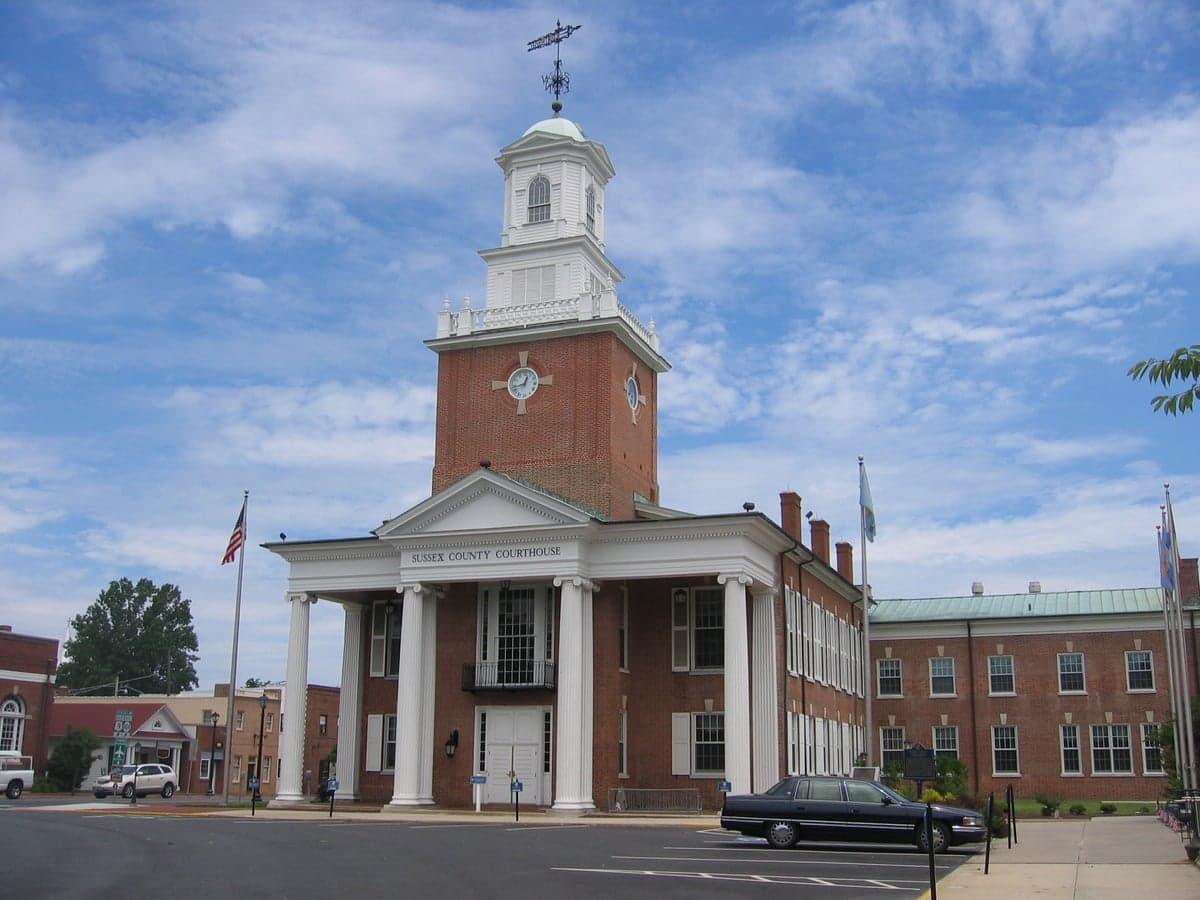
Photo: Wikipedia
Political ClimatePolitical Climate in Georgetown, DE
District shown is the primary district for this city’s centroid. Cities may span multiple districts.
Inherited from parent state — no local data available.
Local Political AnalysisPolitical Analysis of Georgetown, DE
Georgetown, Delaware, has a Cook PVI of D+8, meaning it leans significantly more Democratic than the national average, but that number doesn't tell the whole story for those of us who’ve lived here a while. The political climate has shifted noticeably in the last decade, moving from a quiet, conservative-leaning town—where folks mostly wanted to be left alone—to a place where progressive policies are increasingly the norm. You can feel it in the local ordinances and the chatter at the hardware store; it’s a different place than it was even ten years ago, and the trajectory is concerning for anyone who values limited government and personal freedoms.
How it compares
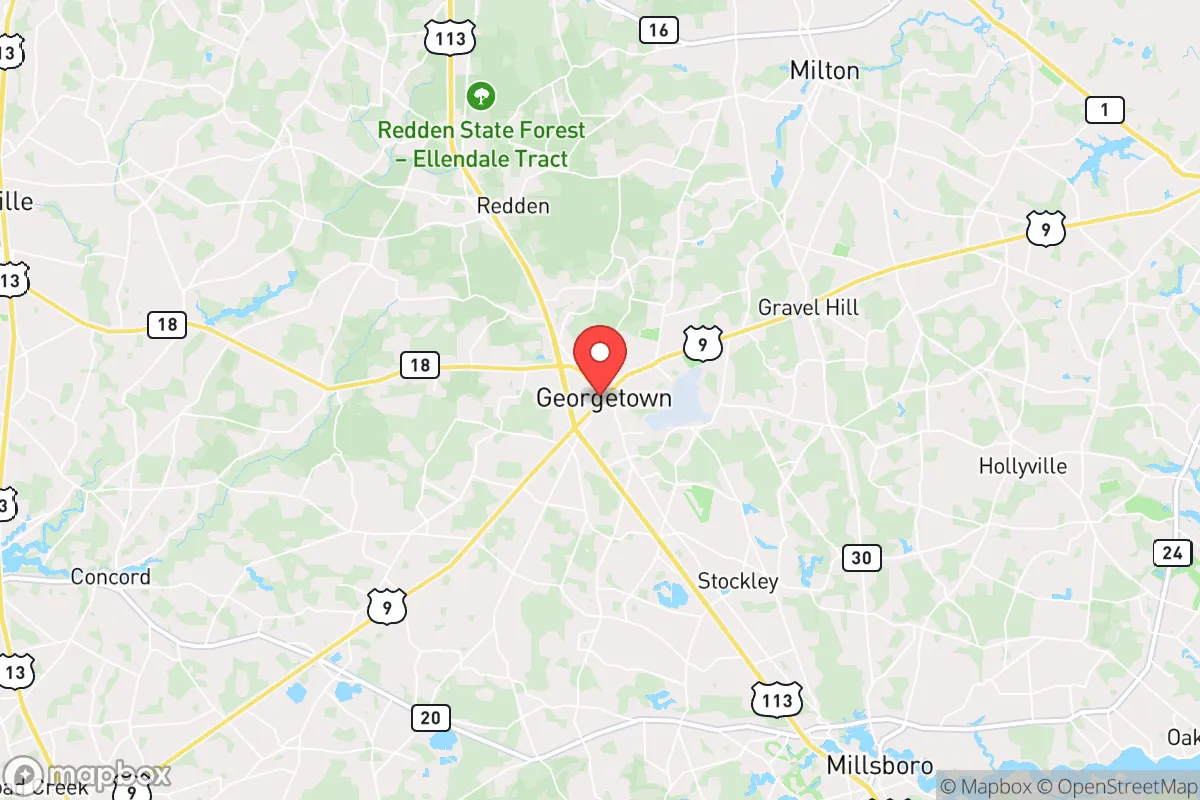
Drive just 15 minutes west to Bridgeville or 20 minutes north to Harrington, and you’ll find a completely different political vibe—those areas still lean heavily Republican, with a strong “live and let live” attitude. Georgetown itself, as the county seat, has become a hub for state and county government workers, which naturally tilts the electorate blue. The contrast is stark: while Sussex County as a whole voted for Trump in 2020, Georgetown’s precincts went for Biden by a solid margin. That D+8 rating masks the fact that the surrounding rural areas are deeply conservative, but the town’s core is increasingly dominated by out-of-state transplants and retirees from more liberal regions, bringing their voting habits with them. It’s a classic story of a small town being reshaped by newcomers who don’t always understand the local way of life.
What this means for residents
For those of us who’ve been here for generations, the biggest worry is how this shift affects daily life. Property taxes have crept up as the town council approves more spending on initiatives that feel disconnected from what most residents actually need—like expanded public transit programs that see little use, or zoning changes that favor dense, multi-family housing over single-family homes. There’s also a growing push for “equity” policies in local schools and town hiring, which many see as government overreach into areas best left to families and private institutions. The town’s leadership has become more willing to impose regulations on small businesses, from stricter noise ordinances to new fees for outdoor seating, which chips away at the entrepreneurial freedom that used to define this area. If you value being able to run your property or business without a lot of red tape, Georgetown is becoming a tougher place to do that.
Culturally, the biggest distinction is the growing divide between the town’s old guard and the new arrivals. The annual Return Day parade and the Sussex County Farm & Horse Show still draw crowds, but there’s a palpable tension at town hall meetings, where debates over mask mandates, vaccine requirements, and even library book selections have become heated. The local government has shown a willingness to adopt state-level progressive policies—like stricter environmental regulations on private wells and septic systems—that feel like an overreach into personal property rights. Looking ahead, if the trend continues, Georgetown could become a place where conservative residents feel increasingly isolated, forced to either adapt to a more regulated, progressive environment or move to the outskirts where the old values still hold. It’s not a crisis yet, but the writing is on the wall for anyone paying attention.

State Political ClimatePolitical Climate in Delaware
State Political AnalysisPolitical Environment in the State
Delaware has historically been a swing state, but over the past 20 years it has shifted decisively left, with Democrats now holding a firm grip on all statewide offices and both U.S. Senate seats. The state voted for Joe Biden (a native son) by 19 points in 2020 and by 7 points for Kamala Harris in 2024, a clear sign that the blue trend is accelerating. The dominant coalition is a mix of northern New Castle County suburbanites, union households, and a growing population of government and corporate employees, while the conservative base is increasingly confined to the rural southern counties of Kent and Sussex.
Urban vs. rural divide
The political map of Delaware is a tale of three counties. New Castle County, home to Wilmington and the sprawling suburbs around Newark and Middletown, is the Democratic engine room — it cast over 60% of the state's total vote in 2024 and went for Harris by a 2-to-1 margin. Wilmington itself is a deep blue urban core, but the real story is the suburban growth corridor along I-95, where transplants from Philadelphia and New York have turned once-purple towns like Newark and Bear into solidly Democratic strongholds. Kent County, anchored by Dover, is a true swing area — it voted for Trump in 2016, flipped to Biden in 2020, and then narrowly went for Harris in 2024. Sussex County, the beach and farming region, is the last redoubt of conservatism: Lewes, Georgetown, and Millsboro all voted for Trump by double digits, but even there, the influx of retirees from blue states is slowly eroding the Republican edge. The rural-urban divide is stark: drive 20 minutes south of Dover and you're in Trump country; drive 20 minutes north and you're in a deep blue suburb.
Policy environment
Delaware's policy environment is increasingly progressive, with a tax burden that ranks among the highest in the nation. The state has a progressive income tax topping out at 6.6%, a gross receipts tax that hits businesses hard, and property taxes that are moderate but rising. Education policy is a flashpoint: the state has embraced Common Core and is moving toward equity-based funding formulas that redistribute resources away from rural districts, which has angered parents in Sussex County. Healthcare is heavily regulated, with a state-run insurance exchange and Medicaid expansion under the Affordable Care Act. Election laws are among the most permissive in the country — no-excuse absentee voting, same-day registration, and automatic voter registration are all in place, which conservatives argue undermines election integrity. The state also has a strict gun control regime: a 2022 law banned the sale of assault weapons and high-capacity magazines, and a 2024 law requires a permit to purchase any firearm. Parental rights took a hit in 2023 when the legislature passed a law allowing schools to withhold information about a child's gender identity from parents, a move that sparked massive backlash in the southern counties.
Trajectory & freedom
Delaware is becoming less free by almost any measure, and the pace is accelerating. The 2022 assault weapons ban and the 2024 permit-to-purchase law are the most visible infringements on Second Amendment rights, but there's more. In 2023, the state passed a law eliminating cash bail for most non-violent offenses, which critics say has led to a spike in repeat offending. Medical autonomy took a hit in 2024 when the legislature overrode the governor's veto to pass a law requiring COVID-19 vaccine mandates for healthcare workers, despite the pandemic being declared over. On the positive side, Delaware has no sales tax, which is a small win for personal freedom, and property taxes remain relatively low compared to neighboring states like Maryland and New Jersey. But the overall trajectory is clear: the legislature is controlled by a supermajority of Democrats who are pushing a progressive agenda with little resistance. The 2023 law on gender identity in schools was particularly galling for parents, who saw it as a direct assault on their right to raise their children as they see fit.
Civil unrest & political movements
Delaware has seen its share of political flashpoints. In 2020, Wilmington experienced several nights of rioting and looting following the George Floyd protests, with businesses boarded up for weeks. The parental rights movement has been the most organized conservative pushback: in 2023, thousands of parents from Sussex and Kent counties bused to Dover to protest the gender identity law, and the movement has since coalesced into a network of local school board candidates. Immigration politics are relatively quiet, but Delaware is a sanctuary state in practice — state law prohibits local law enforcement from cooperating with ICE detainers, which has frustrated conservatives in rural areas who see it as a magnet for illegal immigration. Election integrity remains a sore point: the 2020 election saw widespread use of drop boxes and mail-in ballots, and while no major fraud was proven, the lack of transparency has left many conservatives skeptical. The most visible political movement on the right is the Delaware GOP's "Save Our State" coalition, which is trying to flip the state legislature by focusing on parental rights and gun rights, but they face an uphill battle given the demographic trends.
Projection
Over the next 5-10 years, Delaware will likely become more Democratic and more progressive. The in-migration from New York, New Jersey, and Pennsylvania shows no signs of slowing, and these newcomers tend to vote blue. The retiree influx into Sussex County is the wild card: while many retirees are conservative, a growing number are liberal-leaning and are already shifting the beach towns like Rehoboth Beach and Bethany Beach to the left. The state's economy is heavily dependent on the financial sector (credit card companies like Bank of America and Chase have major operations in Wilmington) and the government sector, both of which lean Democratic. A conservative moving to Delaware now should expect to live in a state where their vote is increasingly irrelevant at the statewide level, but where local control in rural counties still offers some buffer. The best bet for a conservative is to settle in Sussex County — towns like Georgetown or Millsboro — where the county government is still Republican and the school boards are more responsive to parental concerns.
The bottom line for a new resident: Delaware offers low property taxes and no sales tax, which is a real financial benefit, but you'll pay for it with a high income tax and a regulatory environment that is increasingly hostile to gun rights, parental authority, and personal medical freedom. If you're a conservative, you can find a like-minded community in the southern counties, but you'll be fighting a losing battle at the state level. The state is a good fit if you value low property taxes and proximity to the beach, but be prepared for a government that is actively expanding its reach into your life.
* Values derived from national, state, county, city and local statistics and may differ in a specific area. Last updated: 2026-04-23T03:50:32.000Z
Narrative content on this page is AI-generated and may contain mistakes. Verify any details that matter before acting on them.
ReloMaps may earn a commission from affiliate links at no extra cost to you.

