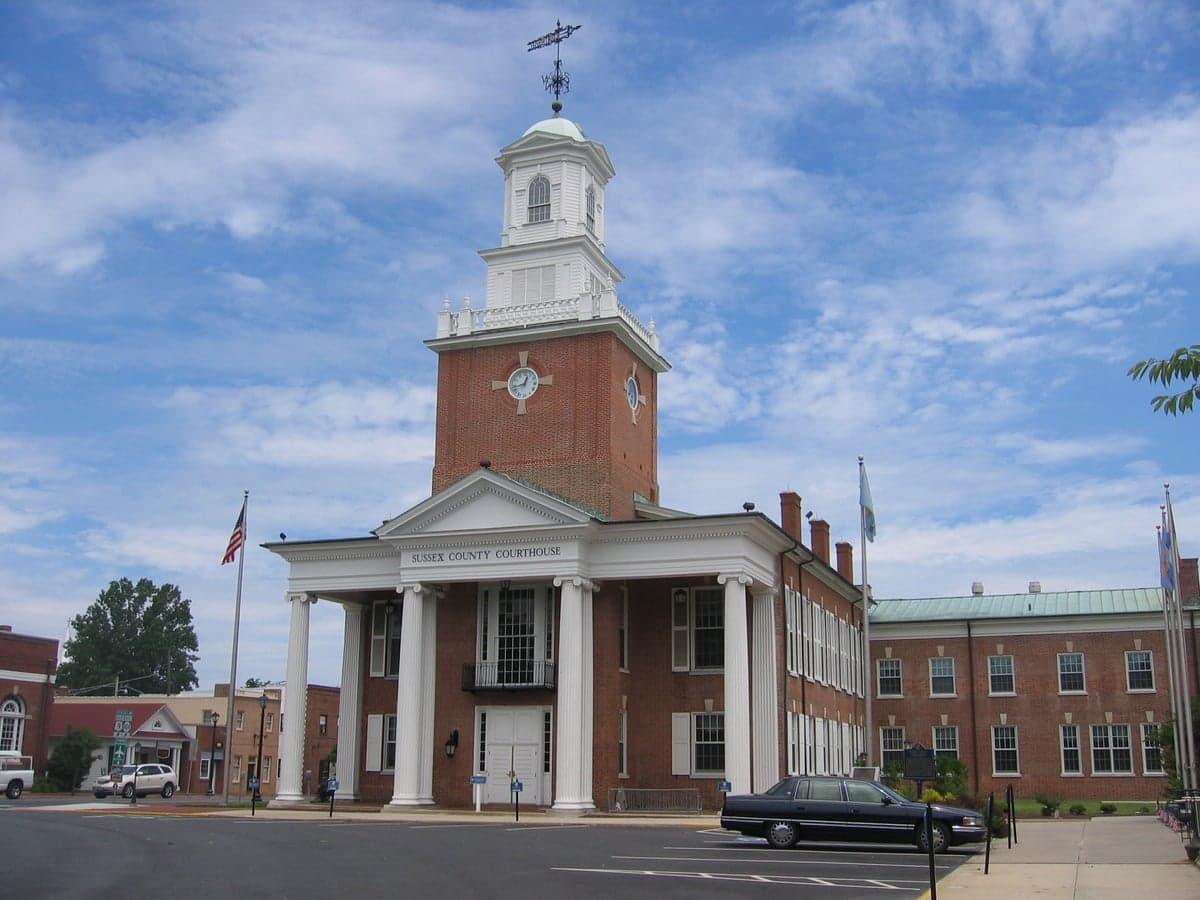
Photo: Wikipedia
Quality of Life in Georgetown, DE
Above-average quality of iife. The area offers a reasonable cost of living, decent mobility, and a mix of neighborhood amenities.
What does Quality of Life tell us?
Quality of Life blends cost of living, nearby amenities, socioeconomic signals, and neighborhood character. City-level scores represent the whole municipality; individual neighborhoods can differ.
What does this tell us?
Quality of Life blends cost of living, nearby amenities, socioeconomic signals, and neighborhood character. City-level scores represent the whole municipality; individual neighborhoods can differ.
Cost of Living
7% above national average
The Real Cost of Living in Georgetown, DE for 2026
| Tier | Individual | Family (4) |
|---|---|---|
| Survival | $20k | $37k |
| Comfortable | $52k | $76k |
| Luxury | $81k+ | $126k+ |
| Elite (Top 5%) | $96k+ | $148k+ |
62%
The Area Signal
A metric tracking the socioeconomic signals of the area.
Hobbies
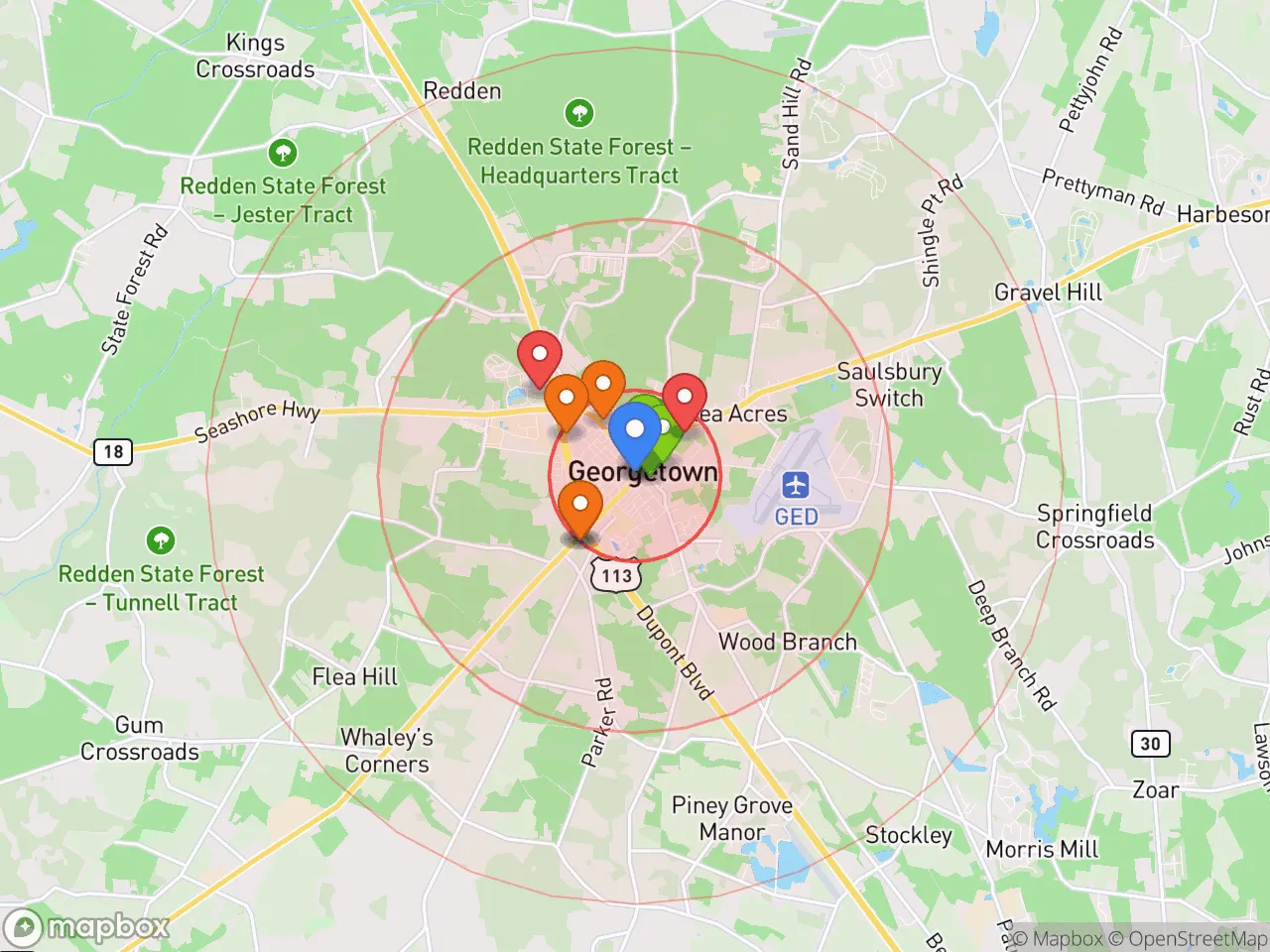
Explore the areaGroceries
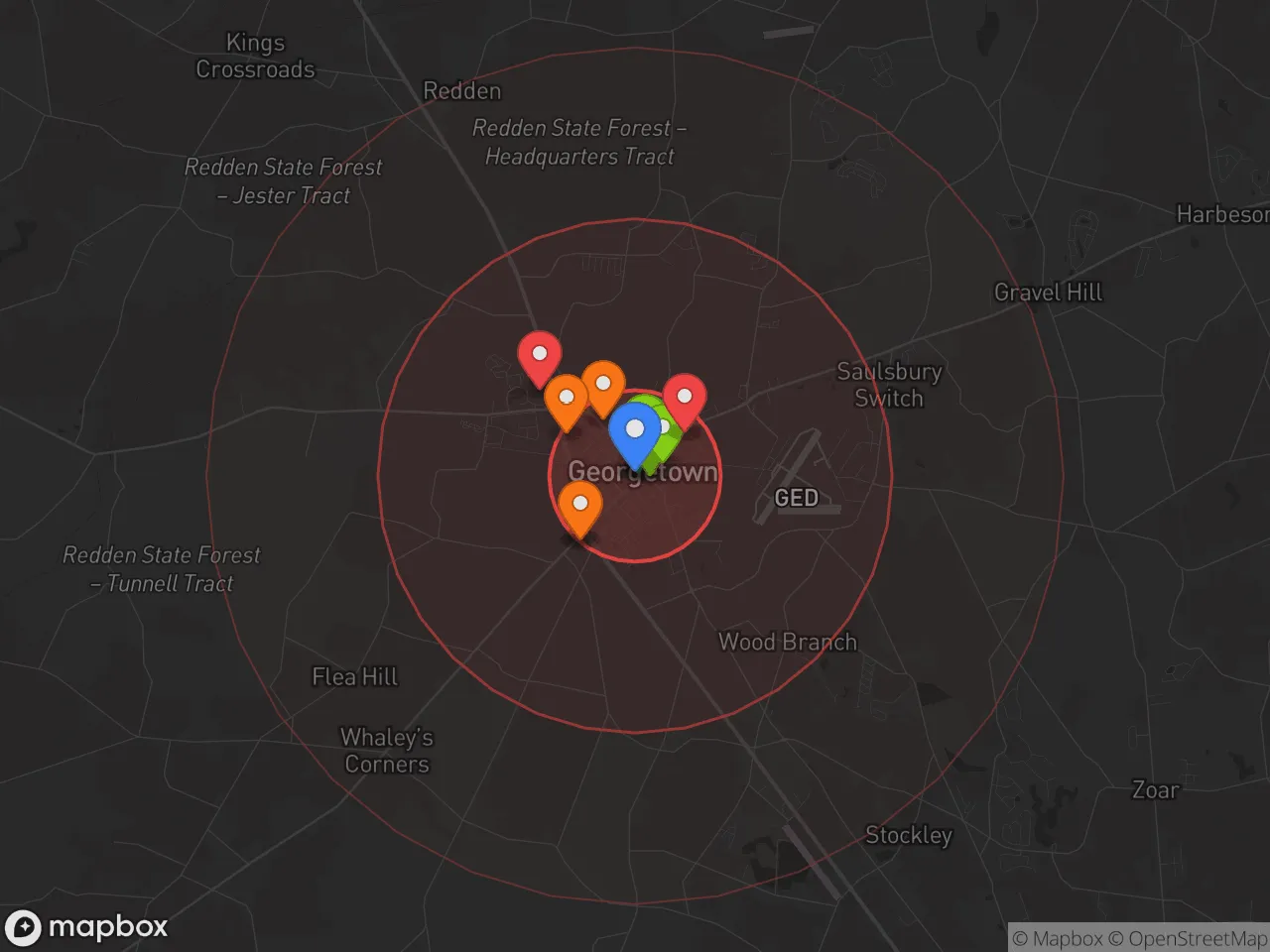
4 within 10 miles
Gas
19 within 10 miles
Hospital
4 within 20 miles
Airport
BWI — Baltimore/Washington International Thurgood Marshall
Post Office
USPS — Georgetown, DE
Critical Amenities
Quality-of-Life Analysis
Georgetown, Delaware, presents a quality of life defined by steady suburban growth and a notably higher cost of living than the national average, attracting a demographic mix of families, retirees, and professionals drawn to its quiet pace and proximity to the Atlantic beaches. With a cost of living index of 107 (where 100 equals the U.S. average), residents pay a premium for the area's relative safety and slower rhythm. The population skews older and more affluent than the state average, with a significant number of second-home owners and retirees who value the town's historic square and access to coastal recreation over urban amenities.
Cost of living, housing affordability, and how Georgetown compares to nearby areas
Housing in Georgetown is the primary driver of its above-average cost of living, though it remains more affordable than the coastal resort towns just 15 to 20 miles east. The median home value sits at $266,100, which is significantly lower than in Lewes or Rehoboth Beach, where comparable homes often exceed $400,000. Median rent is $1,333, a figure that is manageable for dual-income households but can strain single earners. The average commute of 28.2 minutes is slightly longer than the national average of 26 minutes, reflecting the fact that many residents drive to jobs in the larger employment hubs of Millsboro, Seaford, or even Dover. Property taxes in Sussex County are among the lowest in the nation, which helps offset the higher purchase prices for homeowners. Compared to the rest of Sussex County, Georgetown offers a middle ground: cheaper than the beach towns but pricier than inland rural areas like Bridgeville or Greenwood.
What daily life is like for families, retirees, and remote workers
Daily life in Georgetown revolves around its compact historic downtown, anchored by the Sussex County Courthouse and a handful of locally owned restaurants and shops. The town lacks the dense retail corridors of nearby Millsboro, so most residents drive to the Route 113 corridor for grocery shopping and big-box stores. Public schools in the Indian River School District serve the area, with Georgetown's elementary and middle schools receiving average ratings compared to state benchmarks. For retirees, the appeal lies in the low crime rate and the ability to reach Cape Henlopen State Park or the Rehoboth Beach boardwalk in under 30 minutes. Remote workers benefit from improving broadband coverage, though fiber-optic internet is not yet universal in all neighborhoods. The town's social calendar centers on the weekly farmers market on The Circle and seasonal events like the Return Day parade, which reinforces the area's deep civic traditions.
Georgetown is best suited for those who prioritize space, safety, and a slower pace over urban excitement or career density. Families who value a low-tax environment and don't mind a 30-minute commute to work or shopping will find the housing stock affordable relative to the coast. Retirees seeking a quieter alternative to Lewes or Rehoboth will appreciate the lower home prices and the easy access to medical facilities, including Beebe Healthcare's Georgetown campus. Professionals who can work remotely or who are employed in the regional healthcare, education, or agricultural sectors will find the cost-benefit equation favorable. Those who crave walkable neighborhoods, nightlife, or a diverse food scene will likely find Georgetown too subdued and should look instead toward the beach towns or northern Delaware.

Crime in Georgetown, DE
Higher crime rates than 60% of comparable U.S. locations.
Violent CrimeViolent Crime Analysis
Property CrimeProperty Crime Analysis
Crime Analysis
Georgetown, Delaware, reports a violent crime rate of 707.3 incidents per 100,000 residents and a property crime rate of 4,363.5 per 100,000, both significantly higher than national averages. These figures place the town among the more dangerous small municipalities in the state, a reality driven in part by its proximity to the larger Salisbury metro area and the policy environment of Sussex County. Readers should be aware that the progressive judicial philosophy prevalent in many mid-Atlantic metro jurisdictions—including those overseeing Georgetown’s courts—tends to prioritize offender rehabilitation over public safety, resulting in shorter sentences and more criminals returning to the streets. This approach, while sympathetic to offenders, directly undermines justice for victims and the general public.
Crime in context
Georgetown’s violent crime rate of 707.3 per 100,000 is roughly double the national average of approximately 380 per 100,000 and far exceeds the Delaware state average of about 480 per 100,000. The property crime rate of 4,363.5 per 100,000 is also elevated, running about 40% higher than the U.S. average of roughly 2,500 per 100,000. These numbers place Georgetown in the bottom quartile of Delaware municipalities for safety, comparable to Seaford and Laurel. The high rates are partly attributable to the town’s role as the county seat and a regional hub for services, which concentrates transient populations and economic activity in a small geographic area.
What residents experience
Residents report that property crime—particularly theft from vehicles, burglary, and shoplifting—is the most common safety concern in daily life. The downtown commercial district and areas near the Sussex County Courthouse see higher foot traffic and opportunistic crime. Violent crime, while less frequent, includes aggravated assault and robbery, often linked to disputes or drug-related activity. The progressive policies of Sussex County’s judicial system, which emphasize diversion programs and reduced incarceration for non-violent offenders, have been criticized by local law enforcement for creating a revolving-door effect that emboldens repeat offenders. Community policing efforts exist but are stretched thin by the town’s limited police force relative to its crime volume.
Neighborhood-level variation is notable. The historic residential areas west of the railroad tracks and newer subdivisions on the town’s outskirts generally experience lower crime rates than the central core around Market Street and the Route 9 corridor. The area near the Georgetown Circle and the Sussex County Detention Center sees elevated incidents. Prospective residents should examine block-level crime maps and consider that the town’s compact size means safety can change dramatically within a few blocks. Overall, Georgetown requires a higher degree of situational awareness than many Delaware towns of similar size, particularly given the systemic leniency in the local justice system.
* Values derived from national, state, county, city and local statistics and may differ in a specific area. Last updated: 2026-04-23T03:50:32.000Z
Narrative content on this page is AI-generated and may contain mistakes. Verify any details that matter before acting on them.
ReloMaps may earn a commission from affiliate links at no extra cost to you.

