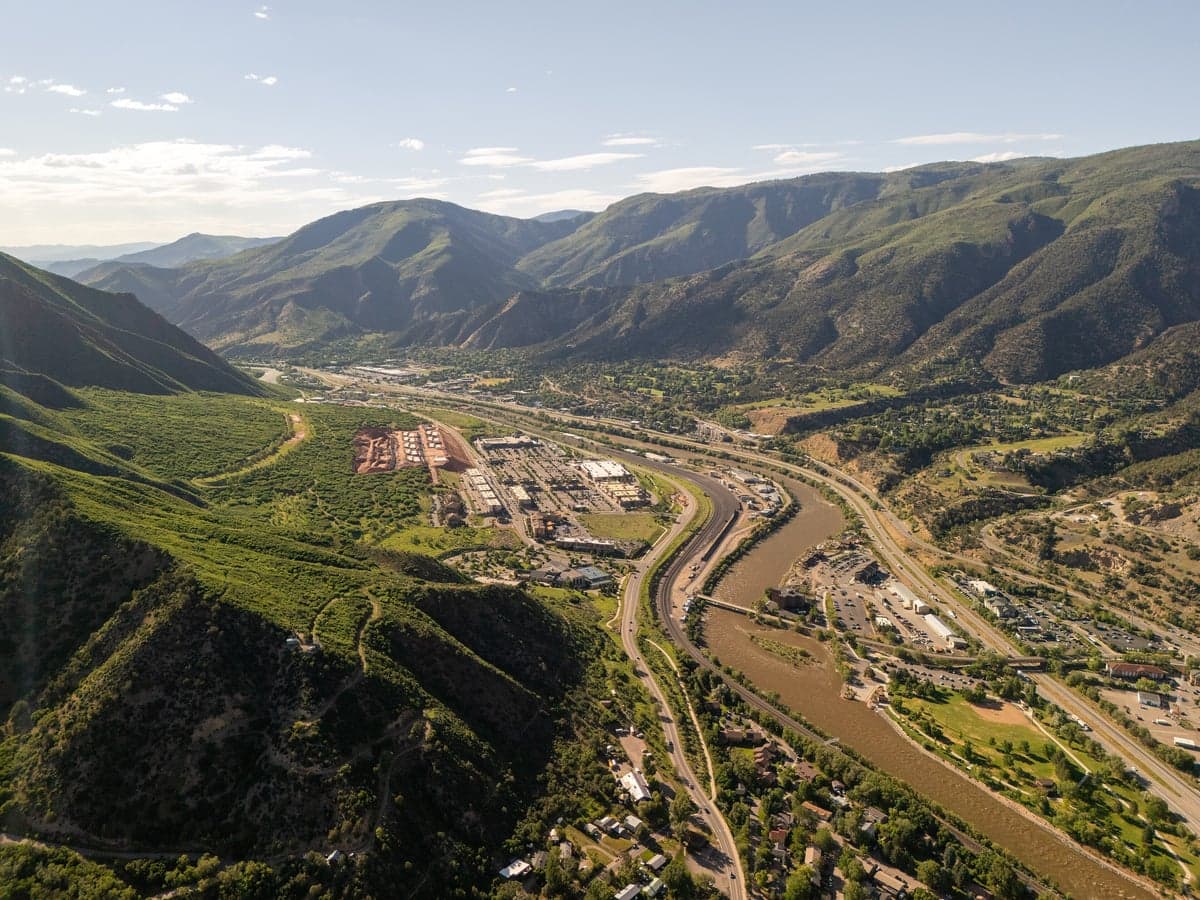
Photo: Wikipedia
Personal Sovereignty in Glenwood Springs, CO
Viable for self-reliance. Generally workable, though some barriers may limit total independence.
What does Personal Sovereignty tell us?
Personal Sovereignty measures your capacity for self-reliance and independence with minimal government friction. Higher scores mean fewer barriers between you and the way you want to live... but it assumes you have the space you need and good neighbors.
What does this tell us?
Personal Sovereignty measures your capacity for self-reliance and independence with minimal government friction. Higher scores mean fewer barriers between you and the way you want to live... but it assumes you have the space you need and good neighbors.
State Policy
Energy independence: Net exporter (110% of energy produced in-state)
Personal Liberty
Homesteading

Personal Liberty Analysis
Glenwood Springs offers a mixed bag for those prioritizing personal sovereignty, sitting in a state where progressive state-level policies often clash with the more independent, rural-minded local culture. While Colorado’s state government has increasingly pushed mandates on health, energy, and land use, Garfield County and the Roaring Fork Valley retain a strong undercurrent of self-reliance, with many residents actively resisting top-down control. For a survivalist or prepper, the area provides a strategic balance of remote mountain access and essential infrastructure, but the legal and regulatory environment requires careful navigation to preserve autonomy.
Tax burden and regulatory posture in Garfield County
Colorado’s state income tax is a flat 4.4%, which is moderate compared to high-tax states, but the real advantage lies in local property taxes. Garfield County’s property tax rate averages around 0.49% of assessed value, significantly lower than many Front Range counties, meaning a $500,000 home would incur roughly $2,450 annually in property taxes. Sales tax in Glenwood Springs is 8.9% (state + county + city), which is noticeable but not crippling. The regulatory posture is where the friction appears: Colorado has some of the strictest energy and environmental regulations in the West, including a 2024 law requiring 100% renewable energy by 2040 for utilities, which could drive up electricity costs and limit off-grid solar installations if net-metering rules tighten. Building permits in Garfield County are enforced but not draconian—unlike Boulder or Denver, you can still build a pole barn or workshop without endless red tape, though septic and well permits require state-level approval. For a prepper, the key takeaway is that while state-level taxes are manageable, the regulatory creep on energy and land use is a growing concern that demands proactive planning.
Self-defense and gun law specifics in Colorado
Colorado is a shall-issue state for concealed carry permits, meaning if you pass a background check and complete a training course (typically 4-8 hours), the sheriff’s office must issue the permit. Garfield County is generally pro-2A in practice, with the sheriff’s office processing permits efficiently and local gun shops like Glenwood Guns & Ammo operating without harassment. However, state law has become more restrictive: magazine capacity is limited to 15 rounds (passed in 2013), and a 2024 law raised the minimum purchase age for all firearms to 21. Private sales between individuals still do not require a background check in Colorado, but the state has a universal background check law for dealer sales. Open carry is legal without a permit in unincorporated Garfield County, but Glenwood Springs city ordinance prohibits open carry in public buildings and parks. For a survivalist, the practical reality is that you can own and carry firearms, but you must comply with magazine restrictions and age limits. The local culture is overwhelmingly supportive of gun rights—Garfield County voted +18 points for Trump in 2024—so you won’t face social stigma for being armed. The biggest risk is future state legislation: Colorado’s Democratic-controlled legislature has introduced “safe storage” and “red flag” bills annually, and a 2025 proposal to require liability insurance for gun owners was narrowly defeated. If you value maximum self-defense autonomy, this is a state where you need to stay politically engaged to protect what you have.
Self-reliance and homesteading viability in the Roaring Fork Valley
Glenwood Springs is surrounded by National Forest land (White River National Forest), which offers abundant public land for hunting, foraging, and firewood gathering, but private land with homesteading potential is limited and expensive. Lot sizes within city limits are typically 0.1 to 0.25 acres, too small for serious self-sufficiency. To find acreage suitable for a homestead, you need to look outside town—areas like Rifle (20 miles west) or Carbondale (10 miles south) offer parcels from 1 to 40 acres, with prices ranging from $50,000 to $200,000 per acre depending on water rights. Zoning in Garfield County allows for agricultural use on parcels over 5 acres, including livestock (chickens, goats, even cattle) and small-scale farming. Off-grid feasibility is mixed: Colorado law requires new homes to be connected to the grid unless you can prove a “net-zero” energy design, and rainwater collection is legal but limited to 3,000 gallons per property under state law (HB 16-1005). Wells are permitted but require a water rights adjudication process that can take months. For a prepper, the biggest challenge is water—the Colorado River Basin is over-allocated, and new well permits in Garfield County are often denied if they would impact senior water rights. The best strategy is to buy land with existing water rights or a deeded well, which adds 20-30% to the purchase price. Overall, homesteading is possible but requires significant capital and legal diligence; this is not a place for cheap, off-grid living.
Personal liberties: parental rights, medical autonomy, speech, and property
Colorado’s state government has been aggressive on medical mandates, including a 2024 law requiring all schoolchildren to receive the HPV vaccine (with a religious exemption available but requiring a notarized form). Parental rights in education have eroded: the state passed a law in 2023 that prohibits schools from notifying parents if a child changes their gender identity or pronouns, overriding local school board policies. Garfield County School District RE-1 has been a battleground, with conservative board members pushing back, but state law preempts local control. Medical autonomy for adults is stronger—Colorado has legalized recreational marijuana and psilocybin therapy, and there are no state-level vaccine mandates for adults. However, emergency use authorization for treatments like ivermectin or hydroxychloroquine is not protected by state law, and doctors can refuse to prescribe off-label. Free speech is protected under the First Amendment, but Colorado has a “bias-motivated crime” law that enhances penalties for speech deemed hateful, which some conservatives view as chilling. Property rights are generally respected, but the state’s 2023 “Right to Repair” law for agricultural equipment was a win for self-reliance, allowing farmers to fix their own tractors. The biggest threat to property autonomy is the Colorado Water Conservation Board’s authority to curtail groundwater use during drought, which has already happened in the Colorado River Basin. For a parent or individual, the sovereignty picture is clear: you have more freedom in the mountains than in Denver, but state-level overreach on education and medical choices is a real concern that requires active resistance through local elections and legal challenges.
Overall, Glenwood Springs offers a moderate-to-high personal sovereignty environment compared to other Colorado mountain towns, but it falls short of the libertarian havens of Wyoming or Idaho. The tax burden is low, the gun culture is strong, and the access to public land is unmatched, but the regulatory creep on energy, water, and parental rights is a persistent drag. For a survivalist or prepper, this area works best if you are willing to fight for your freedoms locally—join the Garfield County Republican Party, attend school board meetings, and invest in legal counsel for water rights. If you want a place where the government stays out of your life entirely, look to Moffat County (northwest) or Rio Blanco County, where population density is lower and state enforcement is weaker. But if you need the infrastructure of a town like Glenwood Springs—hospital, grocery stores, highway access—while maintaining a self-reliant mindset, this is one of the better options in a state that is increasingly hostile to individual autonomy.

* Values derived from national, state, county, city and local statistics and may differ in a specific area. Last updated: 2026-05-16T10:02:27.000Z
Narrative content on this page is AI-generated and may contain mistakes. Verify any details that matter before acting on them.
ReloMaps may earn a commission from affiliate links at no extra cost to you.

