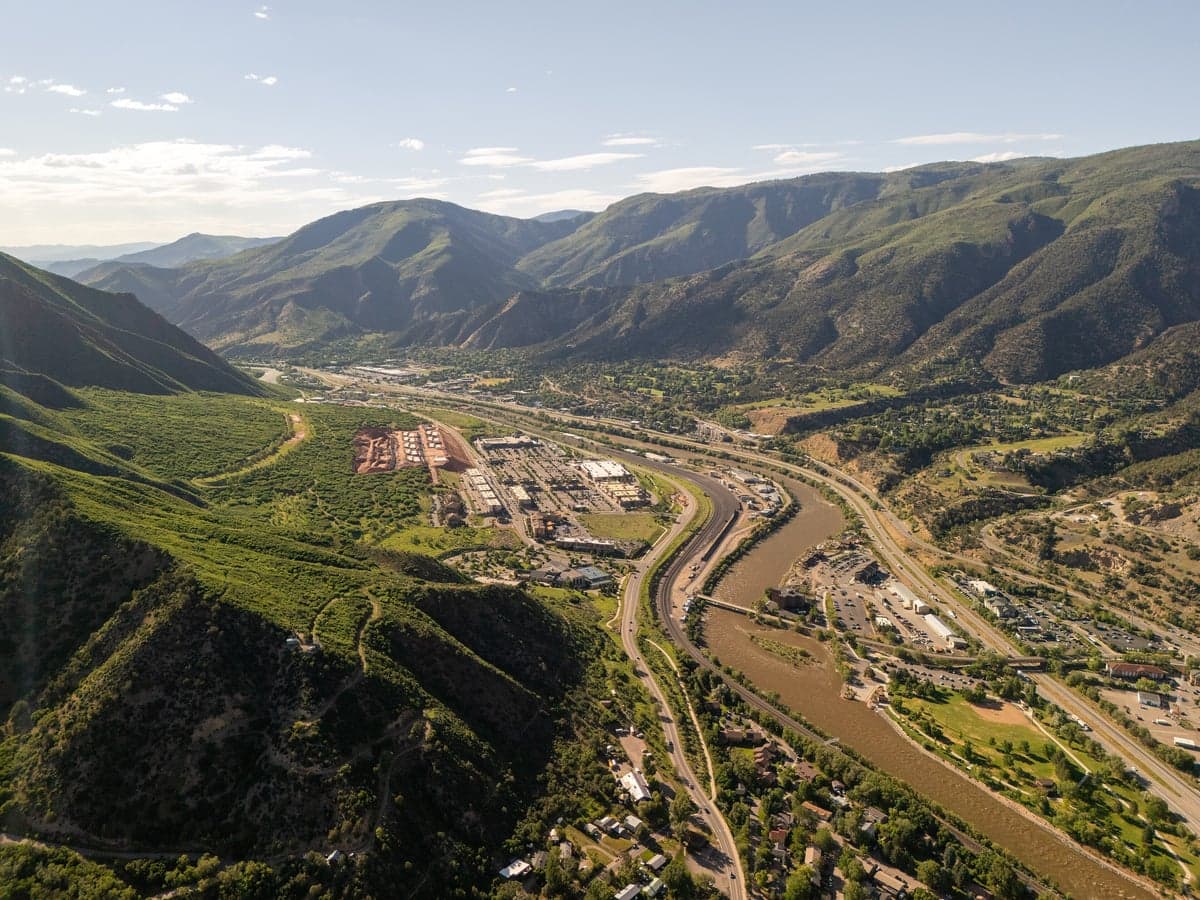
Photo: Wikipedia
Political ClimatePolitical Climate in Glenwood Springs, CO
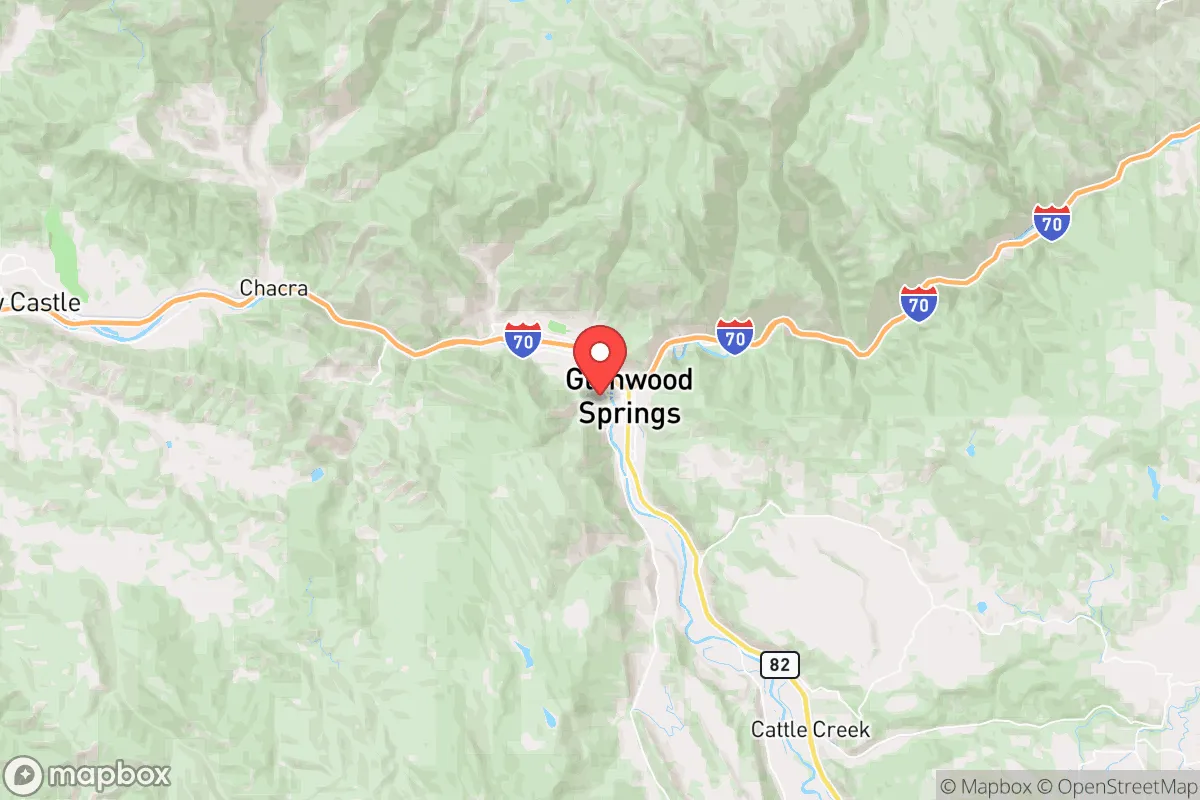
District shown is the primary district for this city’s centroid. Cities may span multiple districts.
Local Political AnalysisPolitical Analysis of Glenwood Springs, CO
Glenwood Springs has long been a conservative-leaning community in a state that’s shifted hard to the left, and that tension is only growing. The area’s Cook PVI of R+5 tells the story—this is a place where folks still value personal responsibility and limited government, even as the rest of Colorado has swung to D+6. If you’ve been around here for a while, you’ve watched the political winds change, and not always for the better. The local culture still holds onto its Western independence, but the pressure from progressive policies coming out of Denver is real and getting harder to ignore.
How it compares
The gap between Glenwood Springs and the state at large is stark. While Colorado as a whole votes reliably Democratic—thanks largely to the Front Range cities like Denver, Boulder, and Fort Collins—Glenwood Springs sits in Garfield County, which has historically been a Republican stronghold. Drive just 30 miles east to Aspen, and you’re in a completely different world, one where progressive taxes and regulations are the norm. Head west to Grand Junction, and you’ll find a more reliably red community, but Glenwood is caught in the middle. The state’s D+6 PVI means that statewide elections are often decided by urban voters who don’t share the same concerns about water rights, land use, or the Second Amendment that matter so much here. That disconnect is a big reason why many locals feel like their voices are being drowned out by the Front Range.
What this means for residents
For those living in Glenwood Springs, the practical impact of this political divide shows up in everyday life. State-level mandates on energy, housing, and even local business regulations often feel like they’re written by people who’ve never spent a winter in the mountains. The push for higher taxes, stricter environmental rules, and more government oversight can chafe against the self-reliant mindset that’s always defined this valley. Many residents worry that the steady influx of out-of-state transplants—especially from blue states—is slowly eroding the community’s character. The local school board and city council races are increasingly contested, with progressive candidates gaining ground, which is a concerning trend for anyone who values fiscal restraint and individual liberty. If you’re thinking of moving here, it’s worth knowing that the political climate is shifting, and not in a direction that favors traditional conservative values.
Culturally, Glenwood Springs still feels like a place where a handshake matters and neighbors look out for each other, but that’s under threat. The hot springs and tourism economy bring in a lot of transient visitors and new residents who don’t always share the local ethos of live-and-let-live. There’s a growing divide between longtime locals and newcomers who want to impose their own vision of what the town should be. Policy-wise, you’ll see this in debates over short-term rental restrictions, water usage, and even how the police operate. The long-term trajectory is concerning—if the state continues its leftward march, Glenwood Springs could find itself fighting to preserve its way of life against a tide of well-intentioned but overreaching government programs. For now, it’s still a great place to raise a family if you value freedom, but keep an eye on the ballot box.

State Political ClimatePolitical Climate in Colorado
State Political AnalysisPolitical Environment in the State
Colorado is a state that has shifted dramatically over the past two decades, moving from a classic purple swing state to a solidly blue one with a Cook PVI of D+6. The dominant coalition is now a progressive urban-suburban alliance centered in the Denver metro, Boulder, and the I-25 corridor, while the Eastern Plains, Western Slope, and southern mountain counties remain deeply red. If you’re looking at Colorado as a potential home, you need to understand that the state’s political center of gravity has moved left, and that trend shows no sign of reversing.
Urban vs. rural divide
The political map of Colorado is a tale of two states. The Front Range—from Fort Collins down through Denver, Aurora, and Colorado Springs to Pueblo—holds about 80% of the population. Denver County itself votes about 80% Democratic, while Boulder County is even further left. These two counties alone generate enough votes to outweigh the rest of the state. Meanwhile, the rural counties tell a different story. Weld County (Greeley) voted +27 R in 2024, El Paso County (Colorado Springs) voted +16 R, and Mesa County (Grand Junction) voted +28 R. The Eastern Plains counties like Yuma, Kit Carson, and Prowers routinely vote 75-80% Republican. The divide is stark: drive 30 minutes east of Denver and you’re in deep red farm country; drive 30 minutes west and you’re in deep blue mountain towns like Nederland or Evergreen. The key battlegrounds have been the suburban counties—Jefferson, Arapahoe, and Douglas—which have all trended blue over the last decade. Douglas County, once a Republican stronghold, voted for Biden in 2020 and Harris in 2024, a seismic shift that cemented the state’s blue status.
Policy environment
Colorado’s policy environment reflects its blue governance. The state income tax is a flat 4.4%, but voters have repeatedly rejected attempts to lower it further. Property taxes are relatively low compared to Texas, but they’re rising fast due to a 2020 law (Proposition EE) that increased taxes on nicotine products and redirected money to education. The regulatory posture is aggressive: Colorado has some of the strictest environmental regulations in the West, including a 2022 law (HB22-1244) that phases out oil and gas drilling near homes and schools. Education policy is dominated by the teachers’ unions; the state has a $10 billion education budget but still ranks near the bottom nationally in reading and math proficiency. School choice exists via charter schools, but they face constant legal challenges from the Colorado Education Association. On healthcare, Colorado expanded Medicaid under the Affordable Care Act and in 2024 passed a public option plan (HB24-1001) that caps hospital prices. Election laws are among the most liberal in the country: universal mail-in ballots, same-day registration, and no voter ID requirement at the polls (though you need ID to register). The state also has an independent redistricting commission, which has produced competitive maps in some districts.
Trajectory & freedom
Colorado is becoming less free by most conservative measures. On gun rights, the state passed a 2023 law (SB23-169) raising the purchase age for all firearms to 21, and a 2024 law (HB24-1348) banning so-called “assault weapons” and large-capacity magazines. These laws are being challenged in court, but they remain in effect. On parental rights, Colorado passed a 2023 law (HB23-1069) that allows minors to access reproductive health care without parental consent, and a 2024 law (HB24-1036) that prohibits schools from notifying parents if a student changes their gender identity or pronouns. This is a major flashpoint for conservative families. On medical autonomy, Colorado legalized psilocybin therapy in 2022 (Proposition 122) and has one of the most permissive medical marijuana systems in the country. On property rights, the state’s 2021 “Right to Rest” law (HB21-1106) effectively decriminalized camping on public property, leading to visible homeless encampments in Denver, Colorado Springs, and Boulder. The state also passed a 2023 law (SB23-184) that limits local governments’ ability to enforce zoning laws, effectively overriding local control on housing density. On taxation, the Taxpayer’s Bill of Rights (TABOR) still provides some protection, but lawmakers have found ways around it—like the 2020 Gallagher Amendment repeal, which removed the residential property tax cap and has led to rising tax bills for homeowners.
Civil unrest & political movements
Colorado has seen its share of political turbulence. The 2020 George Floyd protests in Denver turned violent, with looting and fires in the Capitol Hill neighborhood and a police precinct being burned. The state’s sanctuary policies—Denver is a sanctuary city, and the state passed a 2019 law (SB19-186) limiting cooperation with ICE—have made Colorado a destination for illegal immigration. In 2023, Denver saw a surge of migrant arrivals from the southern border, straining city services and sparking backlash. On the right, the Colorado Republican Party has been fractured between establishment and populist factions, with the state party chair Dave Williams being ousted in 2024 after a controversial primary endorsement. The “Colorado Project” movement, which seeks to flip the state legislature, has gained some traction but remains underfunded. Election integrity concerns persist: in 2020, Mesa County Clerk Tina Peters was indicted for allegedly tampering with voting machines, a case that has become a national symbol of election skepticism. The state’s mail-in ballot system has been criticized for lax signature verification, though no widespread fraud has been proven. Visible flashpoints include the “Let Them Breathe” protests against school mask mandates in 2021, and ongoing clashes at school board meetings over curriculum and parental rights.
Projection
Over the next 5-10 years, Colorado will likely continue its leftward drift. The demographic trends are clear: the state is growing fastest in the blue-leaning Front Range, while rural counties are losing population. In-migration from California, Texas, and the East Coast tends to be younger and more liberal, though there is a counter-current of conservatives moving to Colorado Springs and the Western Slope. The state’s Hispanic population, which is growing rapidly, leans Democratic by about 2-to-1. The state legislature will remain under Democratic control, and the governorship is likely to stay blue. Expect more gun control, more environmental regulation, and more erosion of parental rights. The one wild card is the state’s housing crisis—if affordability continues to deteriorate, it could slow in-migration and shift the political calculus. But for now, the trajectory is clear: Colorado is becoming a solidly blue state, and anyone moving here should expect that trend to continue.
For a conservative-leaning individual or family, the bottom line is this: Colorado offers stunning natural beauty, a strong economy, and a relatively low tax burden compared to other blue states, but you will be living under a government that is increasingly hostile to your values on guns, education, and parental rights. If you’re willing to fight for your freedoms at the local level—in school boards, city councils, and county commissions—you can find a community that fits. But if you’re looking for a state that aligns with your politics, you’ll find more comfort in Wyoming, Utah, or Texas. Colorado is a beautiful place to live, but it’s no longer a conservative one.
* Values derived from national, state, county, city and local statistics and may differ in a specific area. Last updated: 2026-05-16T10:02:27.000Z
Narrative content on this page is AI-generated and may contain mistakes. Verify any details that matter before acting on them.
ReloMaps may earn a commission from affiliate links at no extra cost to you.

