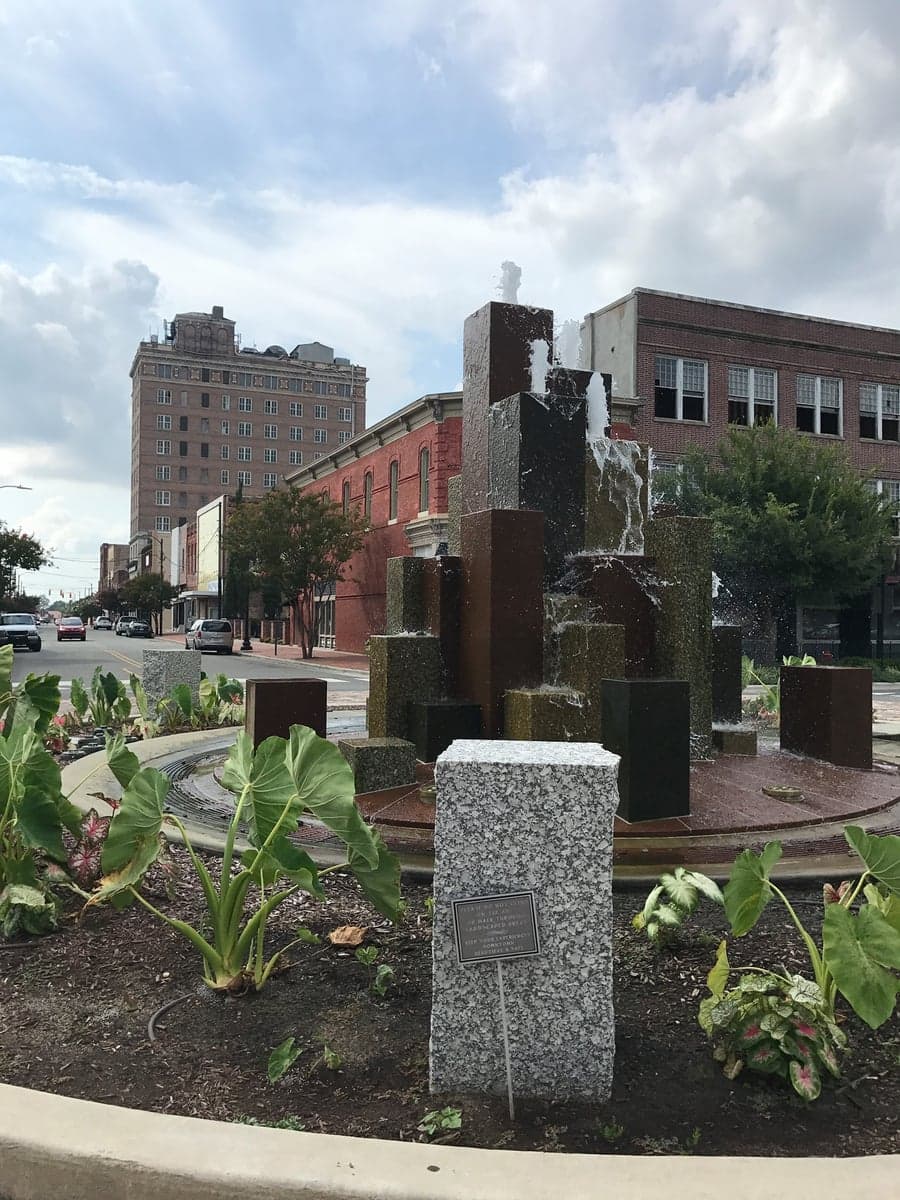
Photo: Wikipedia
Quality of Life in Goldsboro, NC
Above-average quality of iife. The area offers a reasonable cost of living, decent mobility, and a mix of neighborhood amenities.
What does Quality of Life tell us?
Quality of Life blends cost of living, nearby amenities, socioeconomic signals, and neighborhood character. City-level scores represent the whole municipality; individual neighborhoods can differ.
What does this tell us?
Quality of Life blends cost of living, nearby amenities, socioeconomic signals, and neighborhood character. City-level scores represent the whole municipality; individual neighborhoods can differ.
Cost of Living
26% below national average
The Real Cost of Living in Goldsboro, NC for 2026
| Tier | Individual | Family (4) |
|---|---|---|
| Survival | $15k | $29k |
| Comfortable | $34k | $50k |
| Luxury | $85k+ | $132k+ |
| Elite (Top 5%) | $116k+ | $180k+ |
95%
The Area Signal
A metric tracking the socioeconomic signals of the area.
Hobbies
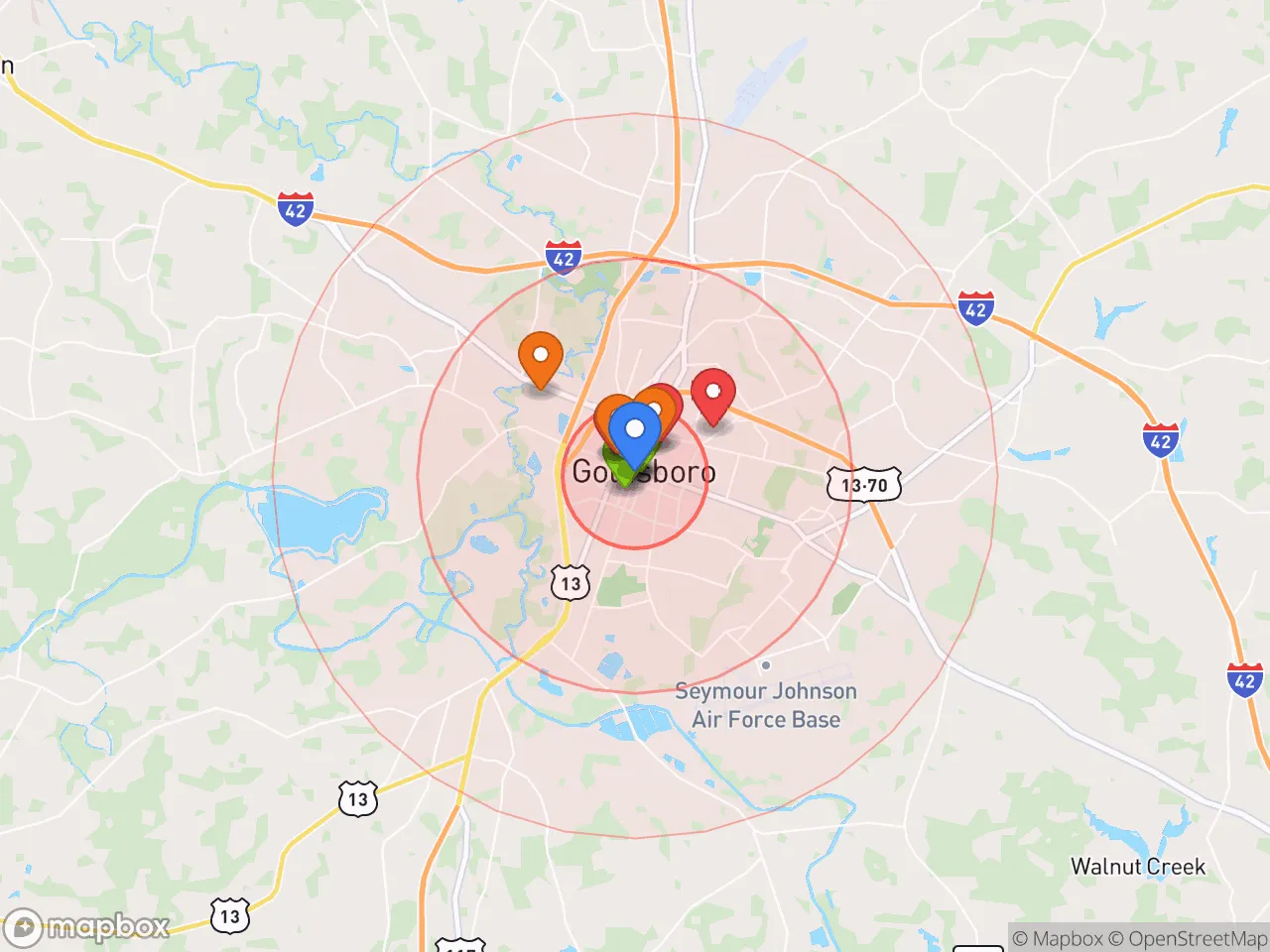
Explore the areaGroceries
8 within 10 miles
Gas
20 within 10 miles
Hospital
2 within 20 miles
Airport
RDU — Raleigh–Durham International
Post Office
USPS — Goldsboro, NC
Critical Amenities
Quality-of-Life Analysis
Goldsboro, North Carolina, offers a notably affordable quality of life that attracts a mix of military families connected to Seymour Johnson Air Force Base, retirees seeking a lower cost of living, and young professionals drawn to the region's expanding healthcare and manufacturing sectors. With a cost-of-living index of 74 (26% below the U.S. average), the area provides a financial cushion that is increasingly rare in the Southeast, though median household incomes trail the national figure. The population skews slightly older than the state average, and the community's rhythm is shaped by the base's presence, local colleges, and a growing emphasis on outdoor recreation along the Neuse River.
How housing costs and everyday expenses compare to nearby cities
Housing affordability is Goldsboro's strongest draw. The median home value sits at $173,700, roughly half the national median and significantly lower than in Raleigh (about $420,000) or Wilmington (about $340,000). Median rent of $956 is similarly competitive, undercutting nearby Greenville by roughly $150 per month. Utility costs and grocery prices also run below state averages, though property taxes in Wayne County are slightly above the North Carolina median at about 0.85% of assessed value. The average commute of 17.5 minutes is a standout advantage—far shorter than the national average of 26 minutes—meaning residents spend less on fuel and vehicle wear. For comparison, a commute from Goldsboro to Raleigh takes roughly 50 minutes one-way, so most workers stay local or telecommute.
What daily life is like for families, retirees, and professionals
Daily life in Goldsboro centers on a mix of military-base activity, community college resources, and modest retail corridors. Wayne County Public Schools serve most families, with Eastern Wayne High School and Spring Creek Elementary receiving above-average state ratings; private options include Wayne Christian School. Healthcare access is solid, anchored by UNC Health Wayne (a 316-bed hospital) and multiple clinics along the Berkeley Boulevard corridor. For recreation, residents use the Neuse River Trail for walking and cycling, the Goldsboro Municipal Golf Course, and the Parks and Recreation Department's eight community parks. Dining options are concentrated around downtown's restored historic district, with local staples like B's Barbecue and Wilber's Barbecue drawing regional attention. The Goldsboro-Wayne County Airport offers limited commercial flights, so most air travel requires a drive to Raleigh-Durham International (RDU), about 75 minutes east.
Who thrives here? Goldsboro is best suited for those who prioritize low housing costs and short commutes over urban nightlife or high-end retail. Military personnel and veterans find a supportive ecosystem with base amenities and a strong VA clinic. Retirees on fixed incomes benefit from the low cost of living and slower pace, while remote workers can stretch their salaries further than in the Triangle. Professionals seeking career growth in healthcare or logistics—such as those at Smithfield Foods or Mount Olive Pickle Company—will find a stable job base, though opportunities in tech or finance are limited. The area's trade-off is clear: significant financial breathing room and a tight-knit community, but fewer cultural amenities and a longer drive to major airports or coastal beaches.

Crime in Goldsboro, NC
Significantly higher crime rates than 86% of comparable U.S. locations.
Violent CrimeViolent Crime Analysis
Property CrimeProperty Crime Analysis
Crime Analysis
Goldsboro, North Carolina, reports a violent crime rate of 1,107.8 per 100,000 residents and a property crime rate of 3,943.6 per 100,000, placing it among the higher-risk communities in the state. These figures indicate that residents face a significantly elevated likelihood of experiencing both violent and property offenses compared to national averages. The city's location within Wayne County, near the larger metro area of Raleigh-Durham, introduces additional dynamics related to regional crime patterns and justice system policies.
Crime in context
Goldsboro's violent crime rate is roughly three times the national average of approximately 380 per 100,000, while its property crime rate exceeds the U.S. average of about 2,200 per 100,000 by nearly 80%. Compared to North Carolina's statewide violent crime rate of roughly 400 per 100,000, Goldsboro's rate is nearly 2.8 times higher. These disparities suggest that crime is a more pressing concern in Goldsboro than in most other communities across the state and country. The presence of Seymour Johnson Air Force Base, a major economic driver, does not appear to insulate the city from broader crime trends affecting similar-sized municipalities in the region.
What residents experience
For those living in Goldsboro, the high crime rates translate into tangible daily concerns. Violent offenses—including aggravated assault, robbery, and homicide—occur at a frequency that makes personal safety a recurring issue, particularly after dark and in certain neighborhoods. Property crimes such as burglary, theft, and motor vehicle theft are common enough that residents often invest in security systems, surveillance cameras, and comprehensive insurance policies. The city's proximity to larger metro areas like Raleigh and Durham means that some criminal activity may be linked to regional networks, and the justice system's approach in those larger, more liberal jurisdictions can have spillover effects. Progressive district attorneys and judges in nearby metro areas who prioritize leniency and diversion programs for offenders can result in more criminals returning to the streets sooner, increasing the risk for Goldsboro residents who may encounter these individuals traveling into or through the city.
Neighborhood-level variation
Crime in Goldsboro is not distributed evenly. Areas closer to downtown and along major corridors like U.S. 70 and Berkeley Boulevard tend to report higher concentrations of incidents, while outlying residential neighborhoods and those near the air base often see lower rates. The eastern and southeastern parts of the city, including sections near the historic district, have historically experienced more property crime. Prospective residents should examine block-level crime maps and consult local police department data to identify safer pockets. Neighborhoods with active homeowners' associations and community watch programs generally report fewer incidents, though the overall citywide risk remains elevated compared to state and national benchmarks.
* Values derived from national, state, county, city and local statistics and may differ in a specific area. Last updated: 2026-05-03T20:26:42.000Z
Narrative content on this page is AI-generated and may contain mistakes. Verify any details that matter before acting on them.
ReloMaps may earn a commission from affiliate links at no extra cost to you.

