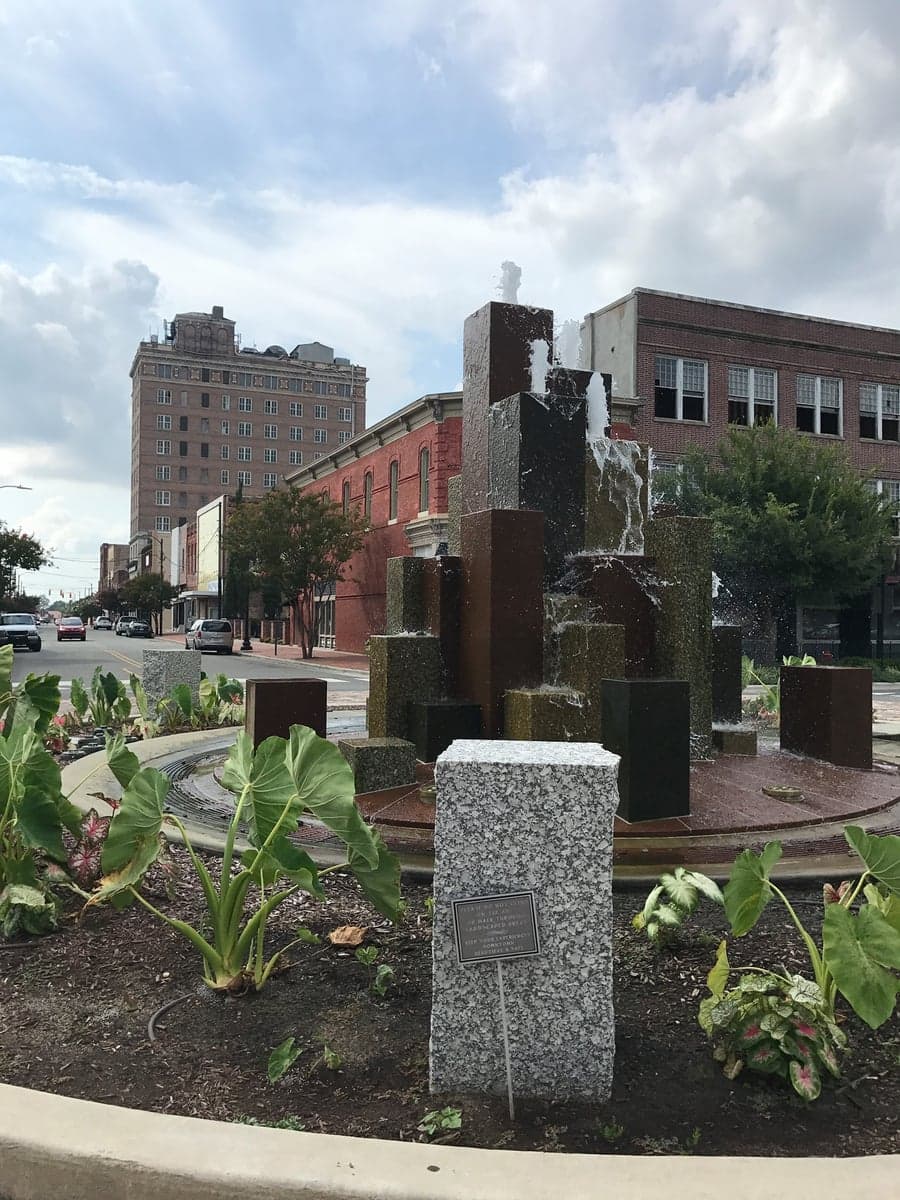

Photo: Wikipedia
Political ClimatePolitical Climate in Goldsboro, NC
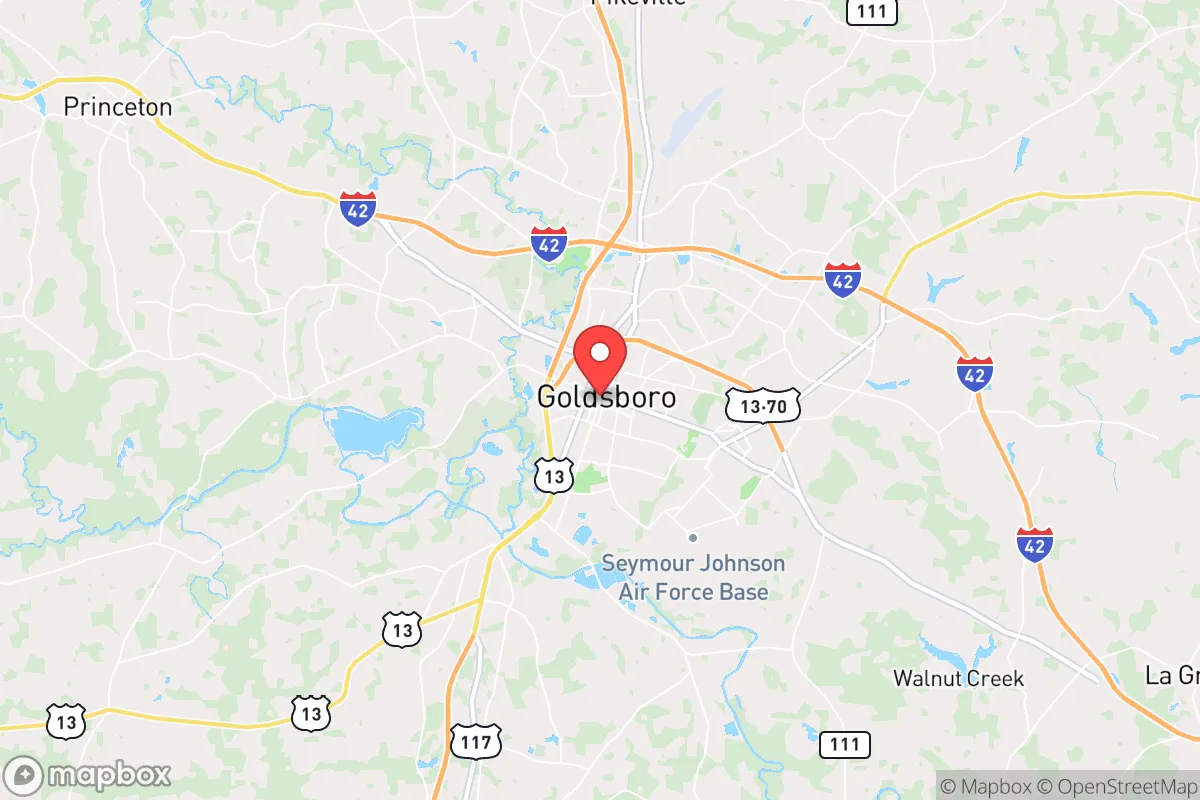
District shown is the primary district for this city’s centroid. Cities may span multiple districts.
Local Political AnalysisPolitical Analysis of Goldsboro, NC
Goldsboro leans conservative, but it’s not the deep-red stronghold you might expect for a mid-sized Eastern North Carolina town. The Cook PVI clocks it at R+1, meaning it’s essentially a toss-up district that’s just a hair more Republican than the nation as a whole. That’s a shift from even a decade ago, when this area was reliably red by a wider margin. The trajectory is concerning if you value limited government and personal freedoms—the kind of live-and-let-live ethos that used to define this part of the state. You’re seeing more progressive influence creeping in from the Research Triangle to the west, and it’s starting to show in local elections and policy debates.
How it compares
Drive 30 minutes west to Raleigh or Cary, and you’re in solidly blue territory—those cities vote Democratic by double digits. Head east to Kinston or south to Fayetteville, and you’ll find communities that lean more conservative but are also wrestling with the same demographic and economic pressures. Goldsboro sits right in the middle, politically and geographically. It’s not as reliably red as, say, rural Wayne County precincts outside city limits, where you’ll see 60-70% Republican votes. The city itself has a sizable military population tied to Seymour Johnson Air Force Base, which tends to lean conservative on national security but can be more moderate on social issues. That mix keeps things competitive, but the trend line is moving left—and that’s something to watch if you’re concerned about government overreach into your daily life.
What this means for residents
For folks who’ve lived here a while, the biggest worry is that Goldsboro’s political drift will bring the same kind of overregulation and progressive social engineering you see in Raleigh. Property taxes have crept up, and there’s more talk about zoning changes and “equity” initiatives that sound good on paper but often mean more bureaucracy and less personal freedom. The Second Amendment is still widely respected here—you won’t see the kind of gun control debates that dominate in urban counties—but the pressure is mounting. School board meetings and city council sessions are where the real fights happen now, with parents pushing back against curriculum changes and mask mandates that feel like federal overreach. If you value the right to make your own choices without a government official second-guessing you, Goldsboro is still a decent bet, but you’ll need to stay engaged to keep it that way.
Culturally, Goldsboro holds onto a lot of what makes Eastern NC special: church potlucks, hunting seasons that dictate social calendars, and a general distrust of politicians who promise to “fix” things. The military base keeps a steady flow of new residents, which brings some diversity of thought, but most of them are here for the mission, not to change the culture. The real policy distinction is that Goldsboro hasn’t yet embraced the kind of progressive tax-and-spend programs you see in larger cities. That could change if the political balance tips further left. For now, it’s a place where you can still live your life without a lot of interference—but you’d better keep an eye on the ballot box if you want it to stay that way.

State Political ClimatePolitical Climate in North Carolina
State Political AnalysisPolitical Environment in the State
North Carolina has long been considered a quintessential swing state, but over the past decade, it has settled into a reliably red-leaning posture, voting Republican in every presidential election since 2012 except for the narrow 2008 Obama win. The state’s political DNA is a mix of traditional Southern conservatism, a booming suburban and exurban base, and a surprisingly resilient rural vote that still turns out heavily for the GOP. However, the rapid in-migration from blue states, particularly into the Research Triangle and Charlotte, has created a growing progressive counterweight that makes the state’s future less certain than its current lean suggests.
Urban vs. rural divide
The political map of North Carolina is a textbook study in the urban-rural split. The three major metros—Charlotte, the Raleigh-Durham-Chapel Hill Research Triangle, and to a lesser extent Greensboro-Winston-Salem—are the state’s blue islands. Mecklenburg County (Charlotte) and Wake County (Raleigh) have been trending left for years, with Wake County flipping from red to blue in the 2010s and now reliably delivering 60%+ Democratic margins. Durham County is the state’s most liberal stronghold, routinely voting 80%+ Democratic. Meanwhile, the rest of the state is deeply red. The rural eastern counties like Robeson, Cumberland, and Edgecombe are historically Democratic but have shifted hard right in the Trump era, driven by cultural conservatism and economic anxiety. The western mountain counties—Watauga, Buncombe (Asheville), and Transylvania—are a mixed bag: Asheville is a progressive enclave, but the surrounding mountain counties are solidly red. The real battleground is the exurban ring around Charlotte and Raleigh, places like Union County (the reddest large county in the state), Johnston County, and Cabarrus County. These areas are growing fast with families fleeing the cities, and they vote Republican by 20-30 point margins. If you’re looking for a place where your vote actually counts, the suburbs of Charlotte and Raleigh are where the fight is happening.
Policy environment
North Carolina’s policy environment is a mixed bag for conservatives, but it’s been trending in the right direction under the GOP-controlled General Assembly. The state has a flat income tax rate of 4.5% (down from 7% in 2013), and the legislature has passed multiple rounds of tax cuts, with a goal of phasing out the corporate income tax entirely by 2030. There’s no state tax on Social Security benefits, which is a big draw for retirees. The regulatory climate is business-friendly, with a right-to-work law and a relatively low minimum wage ($7.25, matching the federal floor). On education, the state has a robust school choice program, including Opportunity Scholarships (vouchers) that can be used for private or religious schools, and a growing charter school sector. The General Assembly also passed the Parents’ Bill of Rights in 2023, which requires schools to notify parents about curriculum changes and medical services. Healthcare is a sore spot: the state only expanded Medicaid in 2023 after a decade of resistance, and the expansion came with work requirements and other conservative guardrails. Election laws are a flashpoint—the state has voter ID requirements, limited early voting windows, and strict absentee ballot rules, all of which have been upheld by courts. The legislature also passed a 12-week abortion ban in 2023, with exceptions for rape, incest, and fetal anomalies, which is a major win for pro-life advocates. Overall, the policy environment is solidly conservative, but the constant legal battles from progressive groups mean nothing is ever settled.
Trajectory & freedom
North Carolina is becoming more free in several key areas, but the fight is ongoing. The most significant recent expansion of liberty was the 2023 Parents’ Bill of Rights, which gives parents the legal standing to challenge school policies on curriculum, library books, and medical care. The Second Amendment is well-protected: North Carolina is a shall-issue state for concealed carry, with no permit required for open carry, and the General Assembly overrode the governor’s veto in 2023 to allow permitless concealed carry for adults 21 and older. Property rights are strong, with no state-level rent control and a relatively low property tax burden (average effective rate around 0.8%). On the downside, the state has seen a creeping expansion of government power in the name of public health. The 2020 COVID lockdowns were aggressive in blue counties like Durham and Wake, but the General Assembly passed a law in 2021 limiting the governor’s emergency powers, which was a win for personal freedom. Medical freedom is a mixed bag: the state has no vaccine mandate for adults, but school vaccine requirements remain in place. The biggest threat to freedom is the influx of out-of-state money and activism, particularly from California and New York transplants who want to import their progressive policies. The fight over critical race theory and gender ideology in schools is ongoing, with the legislature passing laws to ban both in K-12 classrooms. If you value personal autonomy, North Carolina is still a good bet, but you need to be active in local politics to keep it that way.
Civil unrest & political movements
North Carolina has seen its share of political flashpoints. The 2020 protests in Charlotte and Raleigh over the murder of George Floyd turned violent, with property damage and looting in both cities. The state has a strong activist presence on both sides: the left has groups like the NC NAACP and the progressive advocacy group Democracy NC, while the right has the NC GOP, the John Locke Foundation, and grassroots groups like the NC Firearms Coalition. Immigration politics are a hot-button issue, with the state’s growing Hispanic population (now about 10% of the total) concentrated in the eastern agricultural counties and the Charlotte metro. There are no sanctuary cities in North Carolina—the General Assembly passed a law in 2015 requiring all counties to cooperate with ICE, and it’s been upheld. The 2020 election integrity controversy was a major flashpoint, with the state’s narrow 1.3-point margin for Trump leading to multiple audits and lawsuits. The legislature created a bipartisan election integrity committee in 2021, and the state now has some of the strictest voter ID laws in the South. The most visible political movement right now is the school choice and parental rights movement, which has been highly effective at the local level, with parents packing school board meetings in Wake County and Mecklenburg County to protest critical race theory and gender ideology. If you move here, you’ll notice that politics is a contact sport—people are engaged, and the battles are real.
Projection
Over the next 5-10 years, North Carolina is likely to become more competitive, but the conservative advantage is structural and will be hard to dislodge. The in-migration from blue states is real—the state gained over 100,000 new residents in 2023 alone, with the largest share coming from New York, California, and Florida. However, many of these newcomers are conservatives or moderates fleeing high taxes and crime in their home states, not progressive activists. The key demographic shift is the growth of the exurbs: places like Johnston County (southeast of Raleigh) and Cabarrus County (northeast of Charlotte) are growing at 3-4% per year and voting Republican by 30-point margins. The rural vote is shrinking but still reliable, and the GOP has done a good job of turning out the base. The wild card is the Hispanic vote, which is growing and trending more conservative, particularly among second-generation immigrants. The state’s legislative maps are gerrymandered in favor of the GOP, and the state supreme court flipped back to a 5-2 Republican majority in 2022, which means election laws will remain conservative. The biggest risk is that the progressive enclaves in the cities continue to grow and eventually flip the state in presidential elections, but that’s a 10-15 year timeline, not 5. For now, North Carolina is a safe bet for conservatives who want a low-tax, high-freedom environment with a strong cultural base.
For a conservative moving to North Carolina, the bottom line is this: you’ll find a state that largely respects your values, with low taxes, strong gun rights, school choice, and a growing network of conservative communities. But you can’t be passive. The cities are blue and getting bluer, and the fight over schools, taxes, and personal freedom is happening at the local level. If you move to the exurbs of Charlotte or Raleigh, you’ll be in a red stronghold. If you move to the mountains or the coast, you’ll find a slower pace and a more traditional culture. Just don’t expect the state to stay red on autopilot—it’s going to take active citizenship to keep it that way.
* Values derived from national, state, county, city and local statistics and may differ in a specific area. Last updated: 2026-05-03T20:26:42.000Z
Narrative content on this page is AI-generated and may contain mistakes. Verify any details that matter before acting on them.
ReloMaps may earn a commission from affiliate links at no extra cost to you.

