Photo: Made with AI
Strategic Assessment of Golf, FL
Meaningful friction. Expect exposure to either population pressure, blast zones, or natural disaster risk. Consider buying a retreat property.
What does the Strategic Assessment tell us?
Our Strategic Assessment grades tactical survivability of an area. Major population centers, military targets, fallout zones, natural disasters, and border exposure all drive risk — lower exposure means a more defensible position in a crisis.
This is heavily inspired by Joel Skousen's Strategic Relocation book. Highly recommended you checkout the book ($)What does this tell us?
Our Strategic Assessment grades tactical survivability of an area. Major population centers, military targets, fallout zones, natural disasters, and border exposure all drive risk — lower exposure means a more defensible position in a crisis.
This is heavily inspired by Joel Skousen's Strategic Relocation book. Highly recommended you checkout the book ($)Strategic Pillars

Key Distances
Regional Safe Places
Below is our recommended "safe zones" in Florida and the surrounding area based on our strategic heuristics. For most people, it's unrealistic to live in a “safe zone” full-time due to work, family or other personal reasons. They tend to be more rural. However, many of these areas are perfect for second homes and retreat properties that double as a vacation home or even a short-term rental.

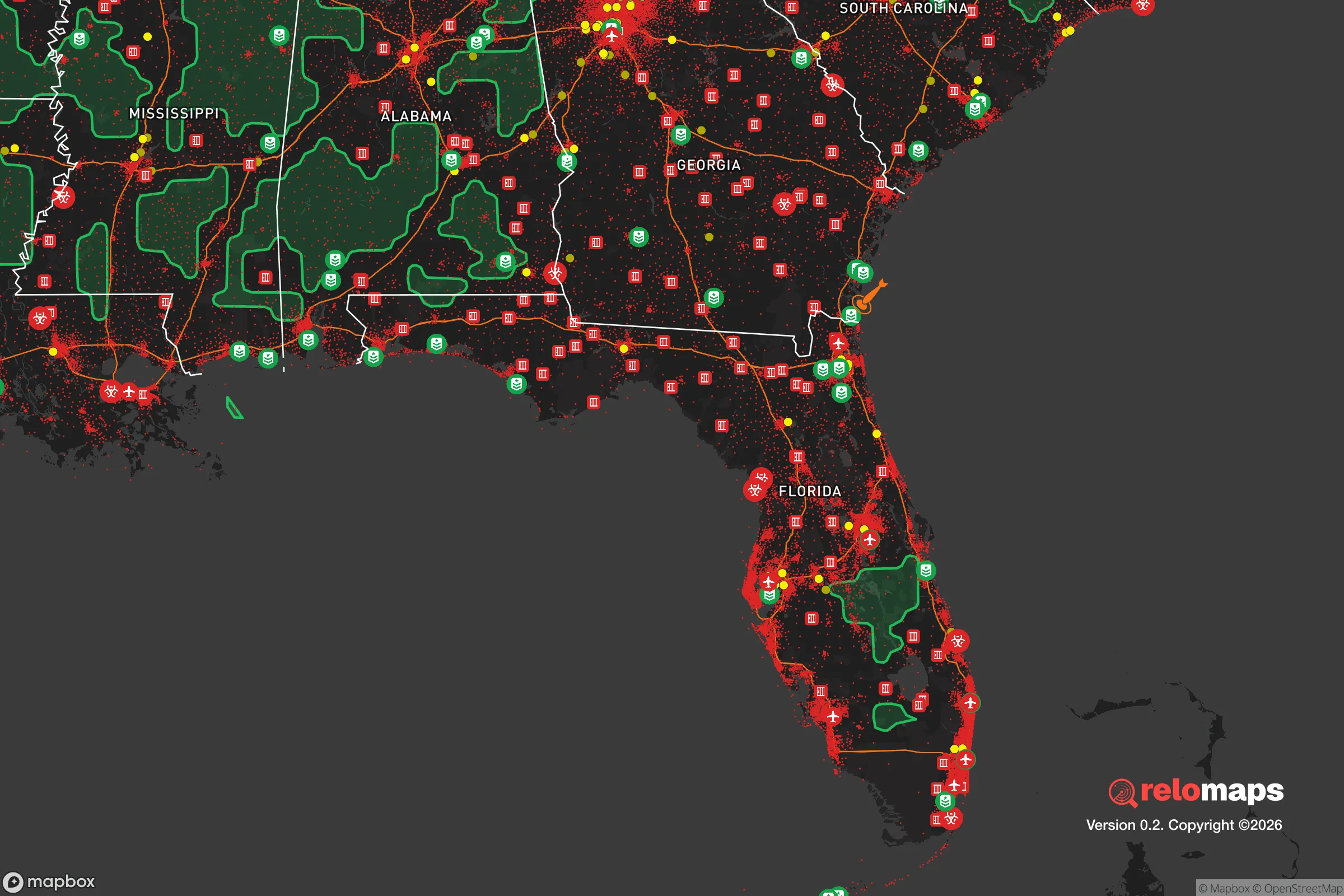


Important Note: For informational purposes only. This does not mean nothing bad ever happens in the green zones. Please use common sense. This is based on public data and modeled with AI. We tried to take a conservative approach but mistakes happen. We update this regularly as new information becomes available.
Solar Generator Recommendations
Backup power matters more here than in safer locations. We've picked three solar generators across budgets and capacity tiers — start with the budget unit if you only need a few essentials, or step up if you want to run a fridge and HVAC for days at a time.

Jackery Portable Power Station Explorer 300
Budget OptionPower on the Go: Weighing only 11 lbs, it's convenient to set up and store with book-sized foldable solar panels

BLUETTI Portable Power Station AC180
Designed for both indoor and outdoor scenarios, AC180 is highly capable as it has a robost capacity and continuous output power.

EF ECOFLOW DELTA Pro Ultra Power Station
Upgraded PickEcoFlow DELTA Pro Ultra is a whole-home energy system designed to grow with your family. Integrated with the Smart Home Panel 2, it scales to meet your evolving energy needs — keeping your home powered, intelligent, and secure through every stage of life.
We earn a commission, at no additional cost to you.
Strategic Assessment Analysis
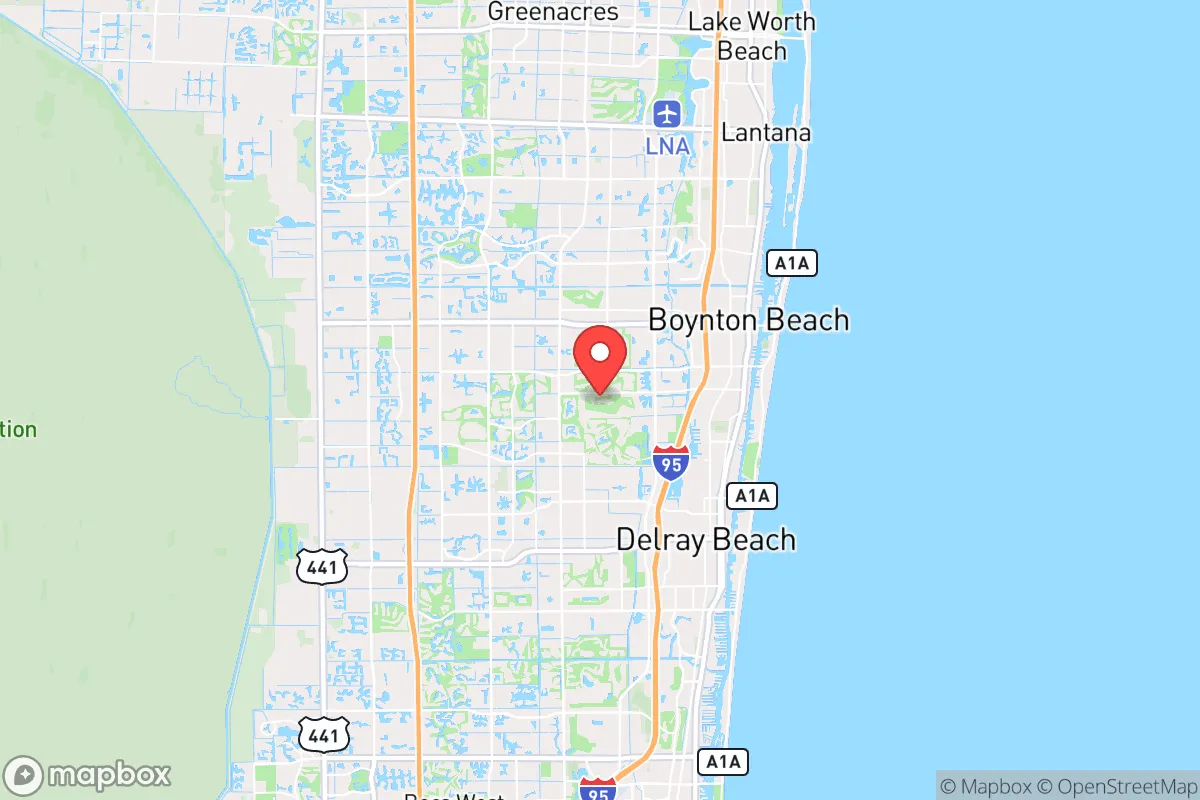
Golf, Florida, offers a surprisingly resilient position for those prioritizing strategic relocation in an uncertain future, blending the seclusion of a small, unincorporated village with the practical advantages of coastal Florida’s geography. Located in Palm Beach County, this tiny community of roughly 250 year-round residents sits on a barrier island between the Atlantic Ocean and the Intracoastal Waterway, providing natural buffers against both urban sprawl and certain types of civil disruption. While its proximity to West Palm Beach and Boca Raton introduces risks, the village’s low population density, limited access points, and established infrastructure create a defensible enclave for those serious about preparedness.
Geographic position and natural advantages for long-term stability
Golf’s location on a narrow barrier island offers a distinct set of natural advantages for a survivalist mindset. The village is bounded by the Atlantic to the east and the Intracoastal Waterway to the west, meaning there are only two road-based entry points via the A1A corridor—one from the north near Palm Beach and one from the south near Manalapan. This limited access makes the area inherently easier to monitor and control during periods of unrest, a feature that cannot be overstated when considering mass casualty events or civic breakdown. The surrounding water bodies also serve as natural firebreaks and barriers against ground-based threats, while the island’s elevation—averaging 10 to 15 feet above sea level—provides a modest but meaningful buffer against storm surge compared to lower-lying inland areas. Additionally, the subtropical climate supports year-round growing seasons for food production, a critical factor for long-term self-sufficiency. The proximity to the Gulf Stream also moderates temperature extremes, reducing the risk of both heat waves and freezes that could disrupt agriculture or strain energy systems.
Risks, exposures, and proximity to fallout-relevant landmarks
No strategic assessment is complete without acknowledging the vulnerabilities. Golf’s primary exposure is its proximity to major urban centers: West Palm Beach lies roughly 10 miles north, Boca Raton about 8 miles south, and the sprawling Miami-Fort Lauderdale metro area is within 50 miles. In a scenario involving civil unrest, mass casualty events, or a breakdown of public order, these population centers—home to over 6 million people combined—could become sources of refugee flow, resource competition, and secondary threats. The village is also within 15 miles of Palm Beach International Airport, a potential target for aviation-related incidents or a staging area for federal response, which could draw unwanted attention. Furthermore, the barrier island’s single evacuation route (A1A) is a double-edged sword: while it limits access, it also creates a choke point that could be overwhelmed during a rapid evacuation or disaster. Hurricane risk is real, with the area experiencing direct hits or near-misses roughly every 5–7 years, though modern building codes and the village’s low-rise, well-maintained housing stock mitigate some structural concerns. For those with a prepper mindset, the proximity to the wealthy enclaves of Palm Beach and Manalapan also means that the area could be a target for looting or organized crime during a breakdown of law and order, though the small population and tight-knit community dynamics offer some counterbalance.
Practical resilience for a relocator: food, water, energy, and defensibility
For a single individual or family serious about preparedness, Golf offers several practical advantages that align with a conservative, self-reliant ethos. Water security is a standout feature: the village sits atop the Biscayne Aquifer, one of the most productive freshwater sources in the country, and many homes have private wells or access to shallow groundwater. With a simple hand pump or solar-powered well system, a relocator could secure a reliable off-grid water supply. Food production is feasible due to the long growing season—temperatures rarely drop below 40°F—allowing for year-round vegetable gardens, citrus trees, and even small livestock like chickens or rabbits, which are permitted under local zoning. The Intracoastal Waterway and Atlantic provide abundant fishing, crabbing, and shellfish harvesting, offering a protein source that requires no industrial supply chain. Energy resilience is moderate: while the grid is reliable in normal times, the area is prone to hurricane-related outages. However, the village’s low density means that solar panel installations face minimal shading issues, and many homes already have backup generators. Battery storage systems are becoming more common, and the proximity to marine fuel docks provides a backup supply for diesel generators. Defensibility is the strongest card: with only two road access points, a small, watchful community, and the natural barriers of water on three sides, a prepared group could effectively secure the village against external threats. The local Palm Beach County Sheriff’s Office has a substation in nearby Palm Beach, but response times during a widespread event could be hours or days, making community self-defense a realistic necessity. The village’s lack of commercial infrastructure—no grocery stores, gas stations, or major retail—means that daily life requires a vehicle and a willingness to travel, but it also means that the area is less likely to attract opportunistic looters compared to denser suburbs.
The overall strategic picture for Golf, Florida, is one of calculated trade-offs. It offers a rare combination of natural defensibility, water security, and agricultural potential that is hard to find in coastal Florida, all within a community small enough to foster mutual trust and cooperation. The proximity to major urban centers is a genuine liability, but for those willing to invest in perimeter awareness, community organizing, and a robust supply chain for non-local goods, the village can serve as a resilient base camp. For the conservative relocator who values self-reliance, limited government interference, and the ability to weather both natural disasters and societal breakdowns, Golf represents a viable option—provided the risks are understood and mitigated. It is not a fortress, but it is a defensible position in a world where such positions are becoming increasingly valuable.

* Values derived from national, state, county, city and local statistics and may differ in a specific area. Last updated: 2026-05-14T01:53:13.000Z
Narrative content on this page is AI-generated and may contain mistakes. Verify any details that matter before acting on them.
ReloMaps may earn a commission from affiliate links at no extra cost to you.

