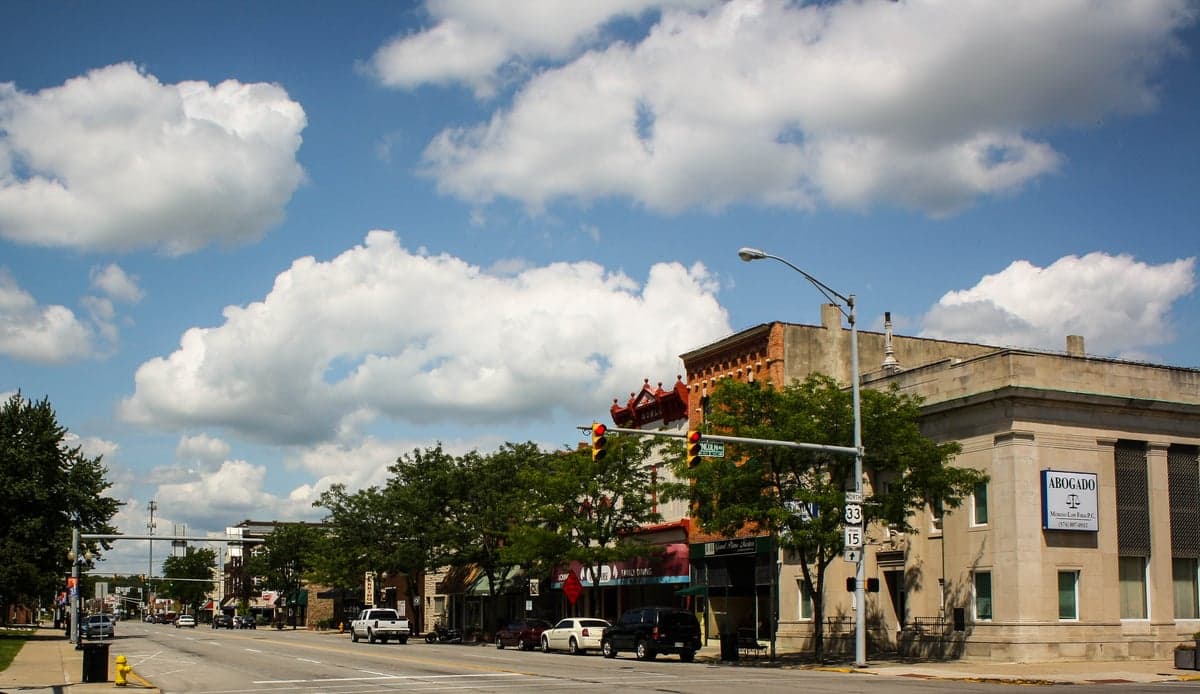
Photo: Wikipedia
Political ClimatePolitical Climate in Goshen, IN
District shown is the primary district for this city’s centroid. Cities may span multiple districts.
Local Political AnalysisPolitical Analysis of Goshen, IN
Goshen, Indiana, sits in Elkhart County, and for a long time, this area has been a solid, dependable conservative stronghold. The Cook PVI rating of R+13 tells you the math is on our side, but numbers don't capture the feel of the place. We've always been a community where folks believe in minding their own business, working hard, and not having the government breathing down your neck about every little thing. That said, like a lot of the Midwest, you can feel the winds shifting, especially as new people move in from places like Chicago or South Bend, bringing with them a different set of ideas about how things ought to run.
How it compares
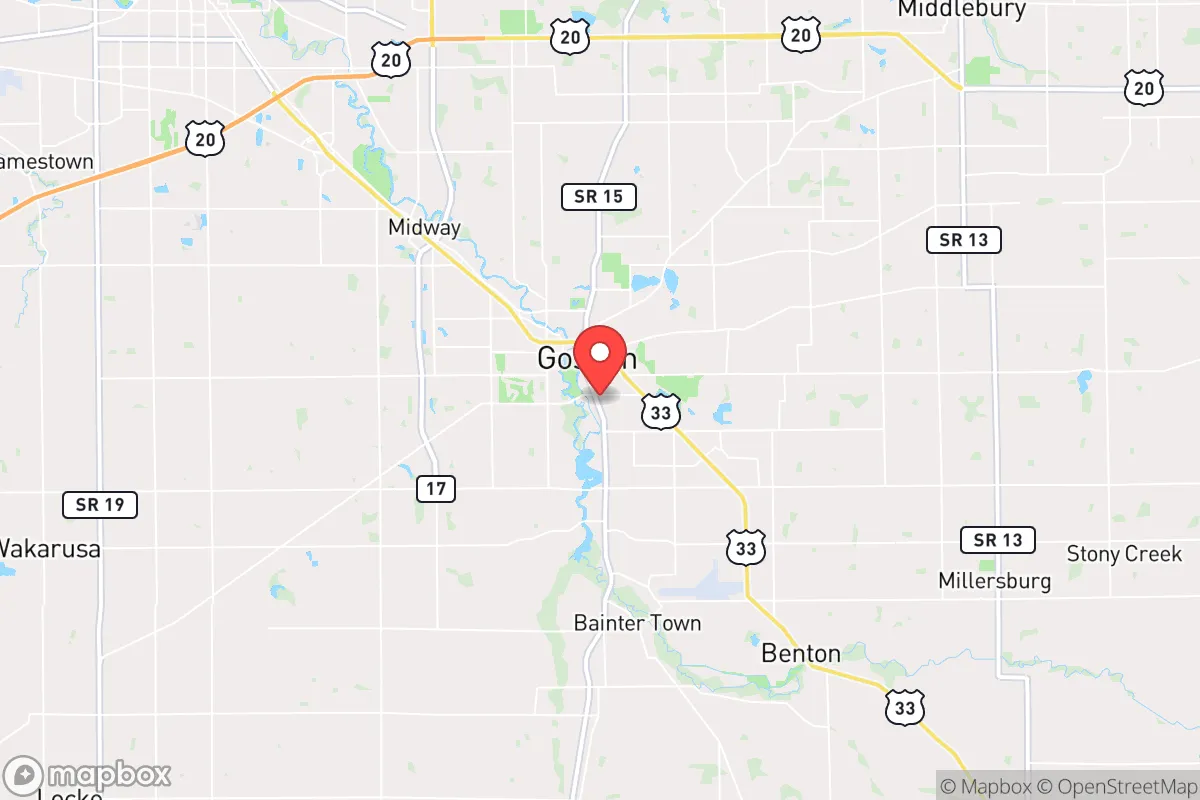
To really understand Goshen, you have to look at the towns around it. Drive ten miles north to Middlebury or Shipshewana, and you're in deep, traditional Amish and Mennonite country—places where the political conversation is still about local control and keeping taxes low. Those communities vote even more conservatively than Goshen does. Then you look south to Elkhart, which is more of a mixed bag, with a bigger industrial base and a more transient population that sometimes leans left. And if you go west to South Bend, you're in a whole different world—a blue city that's been pushing progressive policies for years. Goshen sits right in the middle, but it's historically been closer to the Shipshewana side of things. The concern now is that the progressive influence from South Bend is creeping down the toll road, and you see it in local school board meetings and city council debates about zoning and spending.
What this means for residents
For those of us who've lived here a while, the political climate directly affects daily life. The biggest worry is government overreach—whether it's new regulations on small businesses, property tax hikes disguised as "infrastructure improvements," or mandates that tell you how to run your own household. The conservative majority in Elkhart County has generally kept a lid on that, but you have to stay vigilant. Every election cycle, there's a push from the other side to bring in policies that sound nice on paper but end up costing you more freedom and more money. It means you have to pay attention to local races, not just the national ones. The school board, the county commission, the planning department—that's where the real battles are fought over what your kids learn and how much you pay to keep your own land.
Cultural and policy distinctions
One thing that sets Goshen apart is the strong Second Amendment culture. You don't see a lot of talk about gun control here because it's a non-starter for most folks. Hunting and sport shooting are part of the fabric, and the local sheriff's office has historically been very supportive of lawful carry. Another distinction is the property rights attitude. People here get upset when the county tries to tell them what color they can paint their barn or how many chickens they can keep in their backyard. That independent streak is still alive, but it's under pressure. The long-term outlook depends on whether we can keep that spirit alive as the area grows. If we can hold the line on taxes and personal freedoms, Goshen will stay a great place to raise a family. If we let the progressive wave wash over us, we'll end up like so many other Midwestern towns that lost their character to overregulation and big-government thinking.

State Political ClimatePolitical Climate in Indiana
State Political AnalysisPolitical Environment in the State
Indiana has been a reliably Republican state for decades, but it’s not the deep-red monolith outsiders often assume. The state has voted for the GOP presidential candidate in every election since 2008, with margins ranging from 11 to 19 points, but the coalition is fracturing along familiar lines: a growing urban-suburban progressive bloc in the Indianapolis metro and college towns, versus a deeply conservative, rural, and small-town base that still holds the legislative reins. Over the last 20 years, the state has drifted right on fiscal and cultural issues, but the 2020 and 2024 cycles showed the suburbs around Indianapolis and Fort Wayne are getting more competitive, while the rural counties have only hardened their Republican allegiance.
Urban vs. rural divide
The political map of Indiana is a study in stark contrasts. The Indianapolis metro area (Marion County and its immediate donut counties like Hamilton, Hendricks, and Johnson) is the state’s progressive engine. Marion County itself has voted Democratic in every presidential election since 2008, and Hamilton County—once a GOP stronghold—has shifted from +28 R in 2012 to +12 R in 2024, driven by an influx of educated professionals and tech workers. Bloomington (Monroe County) and West Lafayette (Tippecanoe County) are the other blue islands, anchored by Indiana University and Purdue University. Meanwhile, the rest of the state is overwhelmingly Republican. The rural counties along the Ohio River (like Switzerland, Ohio, and Dearborn) and the Wabash Valley (Vigo, Sullivan) vote R by 30-40 points. The industrial northwest corner, around Gary and Hammond (Lake County), remains a Democratic stronghold, but its population has been shrinking for decades, diluting its statewide influence. The real story is the suburban shift: places like Carmel, Fishers, and Zionsville are now purple-to-light-blue, while the exurbs and small towns like Noblesville, Greenfield, and Franklin are still reliably red but with a growing libertarian streak.
Policy environment
Indiana’s policy environment is broadly conservative, but with some notable exceptions that frustrate the right. The state has a flat income tax rate of 3.05% (down from 3.23% in 2023, with a scheduled phase-down to 2.9% by 2027), and no inheritance or estate tax. Property taxes are capped at 1% of assessed value for owner-occupied homes, which is a major draw for families. The regulatory posture is business-friendly: Indiana is a right-to-work state (though that law was repealed in 2025 by a Democratic governor and a split legislature—more on that below), and it has no state-level occupational licensing for most trades. Education policy is a mixed bag. The state has a robust school choice program (the Choice Scholarship program, launched in 2011, now serves over 60,000 students), but the 2023 legislative session saw a push to weaken parental rights in curriculum transparency, which was ultimately defeated. Healthcare is a sore spot: Indiana expanded Medicaid under the Affordable Care Act in 2015 (the Healthy Indiana Plan), and the state has not passed any meaningful medical freedom legislation, leaving vaccine mandates and mask requirements largely up to employers and schools. Election laws are moderately restrictive: voter ID is required, early voting is available for 28 days, and no-excuse absentee voting was expanded during COVID but then rolled back in 2023. The state does not have automatic voter registration or same-day registration.
Trajectory & freedom
Indiana’s trajectory on personal freedom is a mixed bag, and the trend is concerning for conservatives. On the positive side, the state passed constitutional carry (permitless carry) in 2022, allowing law-abiding adults to carry a handgun without a license. It also enacted a near-total abortion ban in 2023 (Senate Enrolled Act 1), with exceptions only for rape, incest, and life of the mother, which was a major win for the pro-life movement. Parental rights got a boost in 2024 with the passage of the Parents’ Bill of Rights (House Enrolled Act 1134), which requires schools to notify parents of any changes to a student’s health or well-being and prohibits instruction on sexual orientation or gender identity in K-3. However, the state has also seen troubling expansions of government power. In 2025, the Democratic governor signed a bill repealing right-to-work, which was a major blow to economic freedom and union choice. The same year, the legislature passed a law requiring all public schools to adopt a “culturally responsive” curriculum framework, which critics say is a backdoor for critical race theory. Medical freedom took a hit in 2023 when the state banned ivermectin and hydroxychloroquine prescriptions for COVID-19, a move that many conservatives saw as government overreach. Property rights are generally strong, with no statewide rent control and limited eminent domain abuse, but the state’s aggressive use of tax increment financing (TIF) districts in cities like Indianapolis and Fort Wayne has been criticized as a hidden tax increase.
Civil unrest & political movements
Indiana has seen its share of political flashpoints, but the level of civil unrest is lower than in coastal states. The 2020 George Floyd protests in Indianapolis were large and occasionally violent, with looting and fires downtown, but they were contained to the urban core. The state has a small but vocal progressive activist network, centered in Bloomington and Indianapolis, that has organized around abortion rights (the “Indiana Abortion Access” coalition) and racial justice. On the right, the most visible movement is the “Indiana Freedom Coalition,” a grassroots group that has successfully pushed for school board transparency and parental rights. Immigration politics are relatively quiet, as Indiana is not a border state and has a small foreign-born population (about 5%). There are no sanctuary cities, and the state passed a law in 2011 (SB 590) requiring local law enforcement to cooperate with federal immigration authorities. Election integrity has been a hot topic since 2020, with the state’s Republican secretary of state, Diego Morales, launching a controversial “voter roll cleanup” in 2023 that removed over 100,000 inactive voters. This was praised by conservatives but criticized by Democrats as voter suppression. The most visible political flashpoint in recent years was the 2023 walkout by House Democrats over the abortion ban, which shut down the legislature for a week and highlighted the deep partisan divide.
Projection
Over the next 5-10 years, Indiana is likely to become more politically competitive, but the direction of that competition is uncertain. The Indianapolis suburbs will continue to trend left as more white-collar professionals and remote workers move in from blue states, drawn by lower housing costs and good schools. This will put pressure on the GOP to moderate on cultural issues like abortion and LGBTQ rights, or risk losing the suburbs. At the same time, the rural and exurban counties will only get redder, as they are aging and losing population. The net effect could be a state that is still Republican-leaning but with a narrower margin, similar to Ohio or Iowa. The biggest wild card is in-migration: Indiana is seeing a net inflow of people from Illinois, California, and New York, but these newcomers are politically diverse. Many are conservatives fleeing high taxes and crime, but others are liberals seeking affordable housing. The state’s political future will depend on which group dominates. For now, the legislature is firmly in GOP hands (super-majorities in both chambers), but the governorship flipped to Democrat in 2024, and the state’s two U.S. Senate seats are held by Republicans (Todd Young and Mike Braun). The 2028 election will be a critical test of whether the suburban shift is a temporary trend or a permanent realignment.
For a conservative considering a move to Indiana, the bottom line is this: you’ll find a state that is broadly aligned with your values on taxes, guns, and school choice, but you’ll need to be vigilant about the creeping influence of progressive policies in the suburbs and the statehouse. The cities and inner-ring suburbs are where the cultural battles are being fought, so if you want a reliably conservative environment, look to the smaller towns and rural counties like those around Jasper, Huntington, or Franklin. The state is still a net positive for freedom compared to the coasts, but it’s not the libertarian paradise some imagine. Keep an eye on the legislature—the repeal of right-to-work and the push for curriculum mandates are warning signs that the government is not afraid to expand its reach. If you’re willing to engage locally, you can help keep Indiana on the right track. If not, you might find yourself fighting the same battles you thought you left behind.
* Values derived from national, state, county, city and local statistics and may differ in a specific area. Last updated: 2026-04-22T09:11:54.000Z
Narrative content on this page is AI-generated and may contain mistakes. Verify any details that matter before acting on them.
ReloMaps may earn a commission from affiliate links at no extra cost to you.

