Photo: Wikipedia
Demographics of Grapevine, TX
Affluence Level in Grapevine, TX
An upper-middle-class area. Household wealth, education levels, and homeownership run ahead of national benchmarks.
People of Grapevine, TX
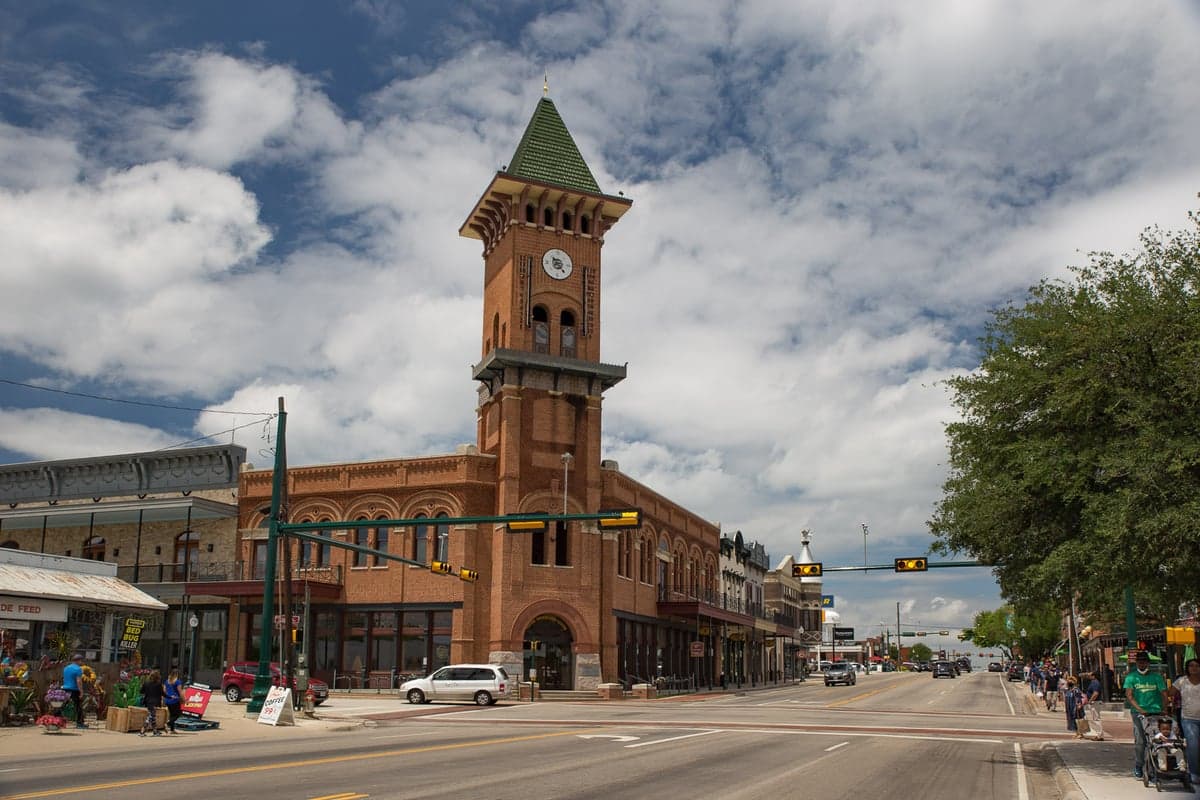
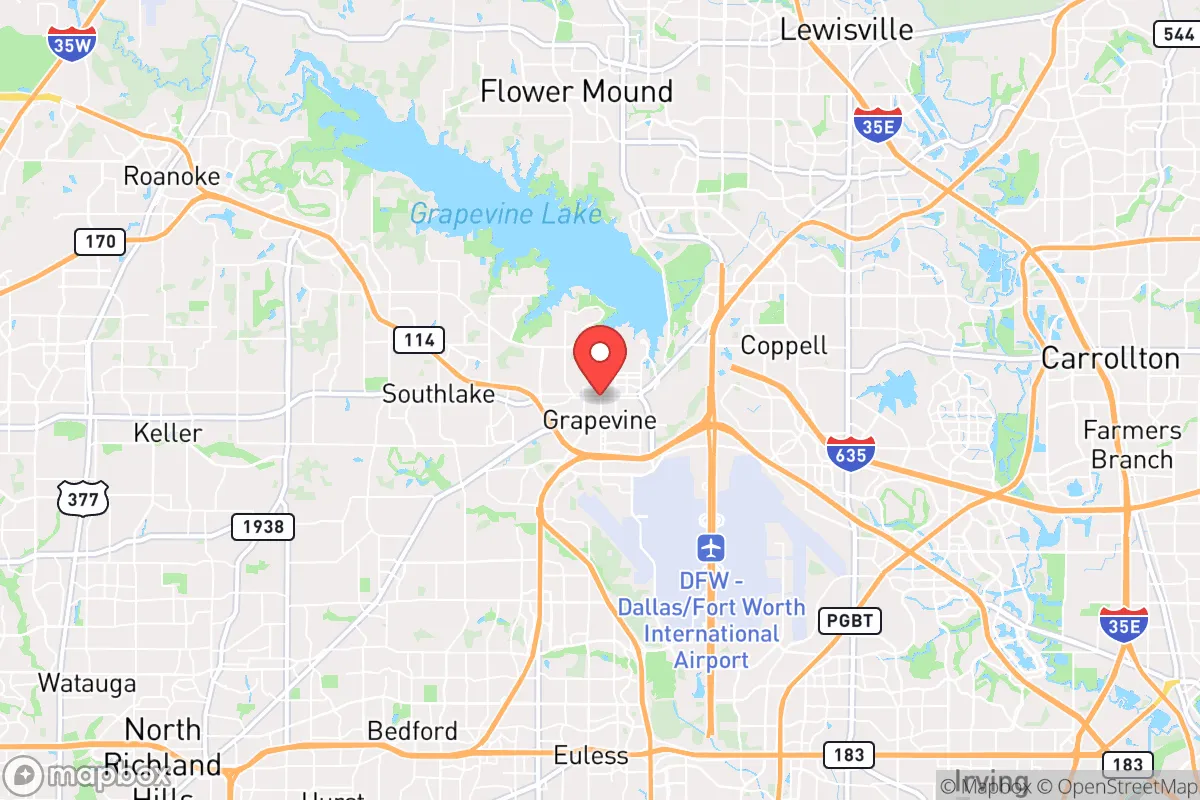
Grapevine, Texas, today is a city of 50,875 residents that blends a historic small-town identity with modern suburban growth. The population is predominantly White (63.3%) with a significant Hispanic community (19.5%), alongside smaller but distinct Black (4.6%), East/Southeast Asian (4.0%), and Indian subcontinent (3.6%) populations. With 57.5% of adults holding a college degree, Grapevine is an educated, family-oriented city where historic neighborhoods near the downtown core contrast with newer master-planned communities. The city’s identity is shaped by its strong sense of place—anchored by Grapevine Lake, the historic Main Street district, and DFW Airport—making it a distinct enclave within the broader Dallas-Fort Worth metroplex.
How the city was settled and grew
Grapevine’s settlement began in the 1840s when the Peters Colony land grant program attracted Anglo-American settlers to the area, primarily from the Upper South and Midwest. The original town, platted in 1854, was named for the wild mustang grapes that grew along the Trinity River bottomlands. Early residents were farmers and ranchers, and the community grew slowly through the late 19th century as a cotton and grain trading center. The arrival of the Cotton Belt Railroad in 1888 spurred modest growth, and the historic Downtown Grapevine district—with its brick storefronts and Victorian homes—became the commercial and social hub for the surrounding rural population. The city remained overwhelmingly White and Anglo through the 1950s, with a small African American community concentrated near the Shady Grove neighborhood, a historically Black settlement established by freedmen after the Civil War. Grapevine’s population hovered around 2,000 until the post-World War II era, when the construction of DFW Airport (opened 1974) and the development of Grapevine Lake (completed 1952) began to transform the area from a farming town into a suburban destination.
Modern era (post-1965)
The 1965 Hart-Cellar Immigration Act and the subsequent expansion of DFW Airport reshaped Grapevine’s demographics dramatically. The airport, which opened in 1974, drew a wave of domestic migrants—primarily White professionals from the Northeast and Midwest—who settled in new subdivisions like Silver Lake and Oak Creek, attracted by the airport’s employment base and the city’s good schools. The Hispanic population began growing in the 1980s and 1990s, driven by construction and service jobs tied to the airport and the expanding hospitality sector. Many of these families settled in the Bellaire neighborhood and along the William D. Tate Avenue corridor, where older, more affordable housing stock provided entry points. The East/Southeast Asian community—primarily Vietnamese and Chinese—arrived in the 1990s and 2000s, often working in technology and logistics roles at nearby corporate campuses, and concentrated in newer developments like Bear Creek and Glenbrook. The Indian subcontinent community, largely professionals in IT and engineering, grew rapidly after 2000, settling in the Homestead and Timarron neighborhoods. Today, Grapevine’s foreign-born population stands at 10.0%, a figure that reflects steady but moderate immigration compared to more diverse suburbs like Irving or Carrollton. The city remains majority White, but the Hispanic share has risen steadily, while Black and Asian populations have plateaued in recent years.
The future
Grapevine’s population is likely to continue its gradual diversification, though at a slower pace than some neighboring cities. The Hispanic share is expected to grow modestly as families age in place and new arrivals from Latin America settle in the Bellaire and Shady Grove areas. The East/Southeast Asian and Indian communities are likely to remain stable or grow slightly, driven by the continued expansion of DFW Airport and the nearby Dallas-Fort Worth tech corridor. However, Grapevine’s high housing costs—median home values exceed $450,000—and limited new construction may slow in-migration from lower-income groups. The city is not tribalizing into distinct ethnic enclaves; rather, neighborhoods like Silver Lake and Timarron are increasingly mixed, with White, Hispanic, and Asian families living side by side. The next 10-20 years will likely see Grapevine become slightly more Hispanic and slightly less White, while maintaining its character as an educated, family-oriented suburb. The city’s historic downtown and lake amenities will continue to attract affluent domestic migrants, while the airport ensures a steady flow of international professionals.
For someone moving in now, Grapevine offers a stable, well-educated community with a strong sense of history and a moderate pace of demographic change. The city is becoming more diverse but remains predominantly White and middle-to-upper-middle-class, with clear neighborhood distinctions that reflect different eras of growth. New residents will find a place where the past is preserved—in the historic downtown and Shady Grove—while the future is being built in newer subdivisions near the lake and airport. It is a city that rewards stability and community involvement, not rapid transformation.

* Values derived from national, state, county, city and local statistics and may differ in a specific area. Last updated: 2026-04-19T07:18:58.000Z
Narrative content on this page is AI-generated and may contain mistakes. Verify any details that matter before acting on them.
ReloMaps may earn a commission from affiliate links at no extra cost to you.

