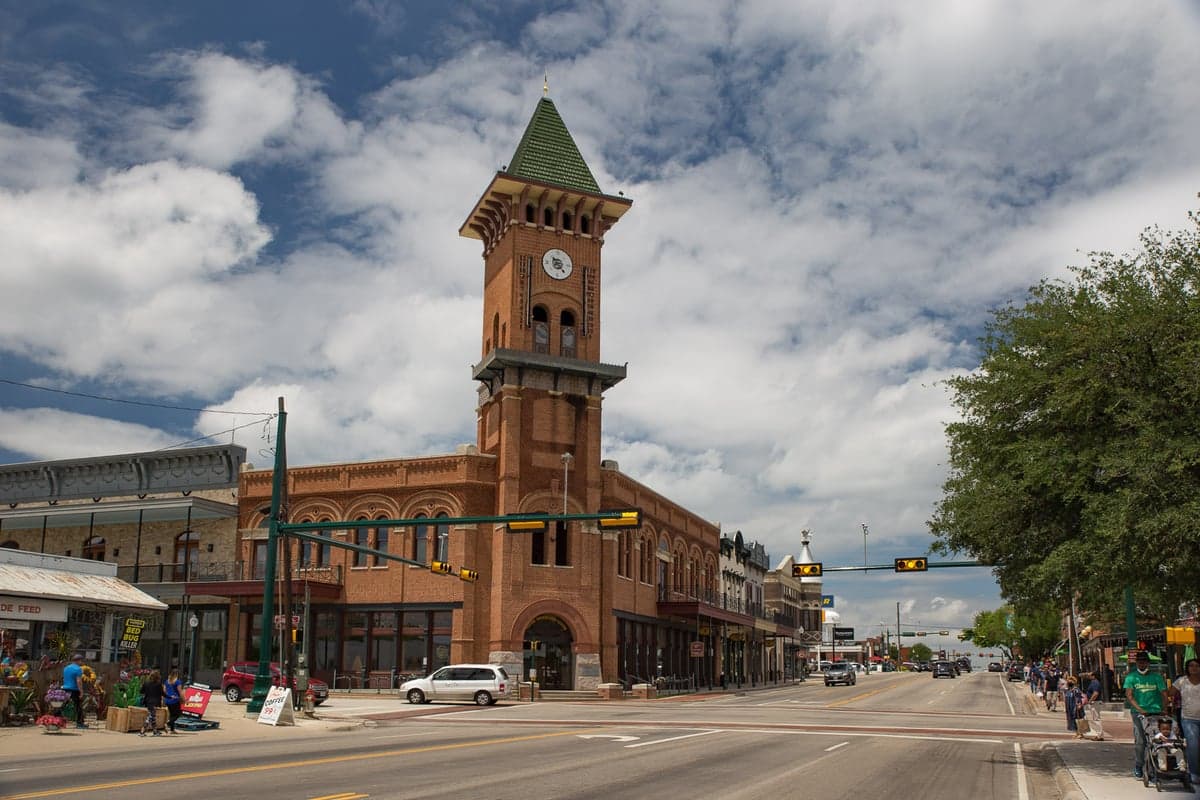
Photo: Wikipedia
Strategic Assessment of Grapevine, TX
Multiple tactical vulnerabilities. Population density, target proximity, or disaster risk are likely compounding. A retreat property and exit planning is required.
What does the Strategic Assessment tell us?
Our Strategic Assessment grades tactical survivability of an area. Major population centers, military targets, fallout zones, natural disasters, and border exposure all drive risk — lower exposure means a more defensible position in a crisis.
This is heavily inspired by Joel Skousen's Strategic Relocation book. Highly recommended you checkout the book ($)What does this tell us?
Our Strategic Assessment grades tactical survivability of an area. Major population centers, military targets, fallout zones, natural disasters, and border exposure all drive risk — lower exposure means a more defensible position in a crisis.
This is heavily inspired by Joel Skousen's Strategic Relocation book. Highly recommended you checkout the book ($)Strategic Pillars

Key Distances
Regional Safe Places
Below is our recommended "safe zones" in Texas and the surrounding area based on our strategic heuristics. For most people, it's unrealistic to live in a “safe zone” full-time due to work, family or other personal reasons. They tend to be more rural. However, many of these areas are perfect for second homes and retreat properties that double as a vacation home or even a short-term rental.

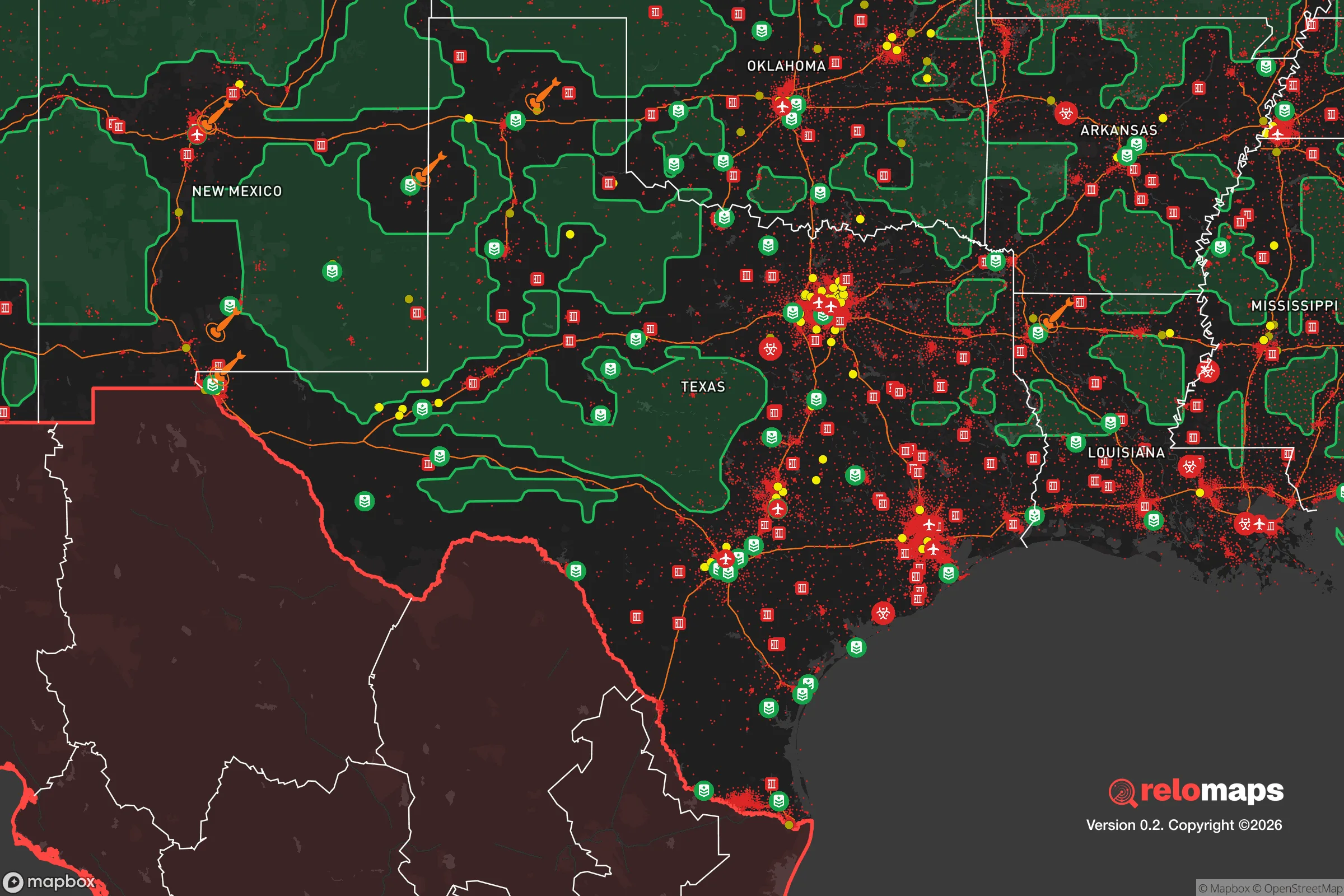


Important Note: For informational purposes only. This does not mean nothing bad ever happens in the green zones. Please use common sense. This is based on public data and modeled with AI. We tried to take a conservative approach but mistakes happen. We update this regularly as new information becomes available.
Solar Generator Recommendations
Backup power matters more here than in safer locations. We've picked three solar generators across budgets and capacity tiers — start with the budget unit if you only need a few essentials, or step up if you want to run a fridge and HVAC for days at a time.

Jackery Portable Power Station Explorer 300
Budget OptionPower on the Go: Weighing only 11 lbs, it's convenient to set up and store with book-sized foldable solar panels

BLUETTI Portable Power Station AC180
Designed for both indoor and outdoor scenarios, AC180 is highly capable as it has a robost capacity and continuous output power.

EF ECOFLOW DELTA Pro Ultra Power Station
Upgraded PickEcoFlow DELTA Pro Ultra is a whole-home energy system designed to grow with your family. Integrated with the Smart Home Panel 2, it scales to meet your evolving energy needs — keeping your home powered, intelligent, and secure through every stage of life.
We earn a commission, at no additional cost to you.
Strategic Assessment Analysis
Grapevine, Texas, sits in a precarious but potentially advantageous position for those prioritizing resilience and preparedness. Its location within the Dallas-Fort Worth metroplex offers economic opportunity, but that proximity to a major urban center also introduces significant risks in a crisis scenario. For a relocator with a survivalist mindset, Grapevine presents a mixed bag: strong local resources and community infrastructure are offset by the very real dangers of being near a high-value target zone. The key is understanding how to leverage the area’s strengths while mitigating its vulnerabilities, especially if you’re planning for civic unrest, supply chain disruptions, or large-scale disasters.
Geographic position and natural advantages for long-term stability
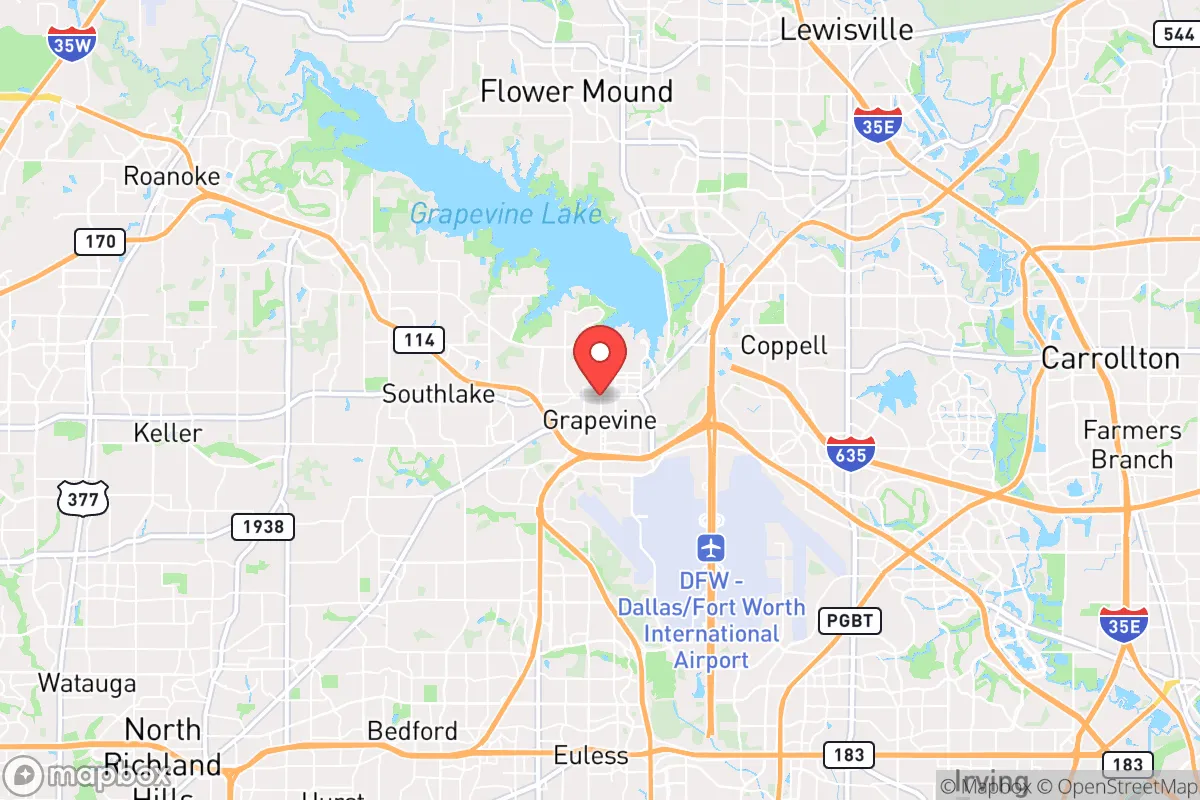
Grapevine’s geography is defined by its location on the edge of the Dallas-Fort Worth metroplex, roughly halfway between the two core cities. This places it within a 30-minute drive of DFW International Airport, a major transportation hub that could become a logistical bottleneck or a target during a national emergency. However, the area’s natural advantages are notable. Grapevine sits on the eastern edge of the Cross Timbers ecoregion, a transitional zone of hardwood forests and prairies that offers decent cover and biodiversity. The presence of Grapevine Lake—a 7,500-acre reservoir—is a critical asset for water security, though it also draws population density. The terrain is relatively flat but punctuated by low hills and wooded areas, particularly around the lake and the northern parts of the city. This provides some natural defensibility, especially if you secure property near the lake’s less-developed fringes. The climate is typical of North Texas: hot summers, mild winters, and periodic severe weather like tornadoes and hailstorms. For a prepper, the lack of major natural barriers (mountains, rivers) means you’re reliant on community and infrastructure rather than terrain for security. The soil is clay-heavy, which complicates gardening but is workable with raised beds and amendments.
Risks, exposures, and proximity to fallout-relevant landmarks
The most significant risk for Grapevine is its proximity to DFW Airport and the broader Dallas-Fort Worth urban core. In a scenario involving civil unrest, mass casualty events, or a national emergency, these areas become primary targets for disruption. The airport itself is a potential chokepoint for evacuation or supply routes, and its presence increases the likelihood of military or federal activity in the region. Additionally, Grapevine is within 20 miles of several major highways (I-35E, I-635, and SH 121) that could become clogged or contested during a crisis. The city is also near the Barnett Shale natural gas fields, which means pipeline infrastructure and drilling operations are present—potential hazards for fire or explosion. On the positive side, Grapevine is not directly adjacent to any known nuclear power plants (the closest is Comanche Peak, about 60 miles southwest), but it is within the fallout zone of a theoretical strike on DFW or a major military installation like Naval Air Station Joint Reserve Base Fort Worth. The city’s floodplain along the Elm Fork of the Trinity River poses a localized risk, but Grapevine Lake’s dam is well-maintained and monitored. For a conservative-leaning prepper, the biggest concern is the sheer density of population in the metroplex—over 7 million people—which could lead to rapid resource depletion and civil disorder if supply chains fail. Grapevine’s own population of roughly 55,000 is manageable, but it’s surrounded by suburbs that could become chaotic.
Practical resilience for a relocator: food, water, energy, and defensibility
For a single individual or family looking to establish a resilient base, Grapevine offers several practical advantages. Water security is strong thanks to Grapevine Lake, which is a reliable surface water source. The city’s water treatment plant draws from the lake, and private wells are possible in some outlying areas, though most residential properties are on municipal supply. For long-term preparedness, investing in a rainwater catchment system or a well on a larger lot is advisable. Food production is feasible but requires effort. The growing season runs from March to November, and community gardens exist, but the clay soil and periodic droughts demand raised beds, drip irrigation, and soil amendments. Local farmers’ markets and co-ops (like the Grapevine Farmers Market) provide fresh produce during normal times, but these will be disrupted in a crisis. Energy infrastructure is relatively stable, with the Texas grid (ERCOT) being a known vulnerability. Grapevine is served by Oncor, and power outages during winter storms (like 2021’s Uri) are a real risk. Solar panels with battery backup are a wise investment, as the area gets ample sun. Natural gas is widely available for heating and cooking, but pipeline disruptions could cut supply. Defensibility is moderate. Grapevine’s layout is typical suburban sprawl, with cul-de-sacs and grid-like streets. The lake provides a natural barrier to the west, but the city is otherwise open. For a prepper, securing a property on a larger lot near the lake’s less-developed northern shore (e.g., near Oak Grove Park) offers better defensibility than a dense subdivision. The local police and fire departments are well-funded and professional, but in a widespread crisis, they’ll be overwhelmed. Building a network of like-minded neighbors is critical—Grapevine has a strong sense of community, with active civic groups and churches that could serve as mutual aid hubs.
The overall strategic picture for Grapevine is one of calculated risk. It’s not a remote bug-out location, but it’s not a high-risk urban core either. For a relocator who values economic opportunity and community infrastructure while maintaining a preparedness mindset, Grapevine can work—if you’re willing to invest in redundancy. The lake provides water, the climate allows for food production, and the suburban environment offers a degree of social stability. But the proximity to DFW Airport and the metroplex’s population density means you must plan for evacuation routes, stockpile supplies for at least 90 days, and establish a communication plan with trusted contacts outside the region. If you’re looking for a place that balances modern convenience with resilience, Grapevine is a solid choice—just don’t mistake its suburban calm for true security. The real test will come when the lights go out, and in that moment, your preparation will determine whether Grapevine is a sanctuary or a trap.

* Values derived from national, state, county, city and local statistics and may differ in a specific area. Last updated: 2026-04-19T07:18:58.000Z
Narrative content on this page is AI-generated and may contain mistakes. Verify any details that matter before acting on them.
ReloMaps may earn a commission from affiliate links at no extra cost to you.

