 Popular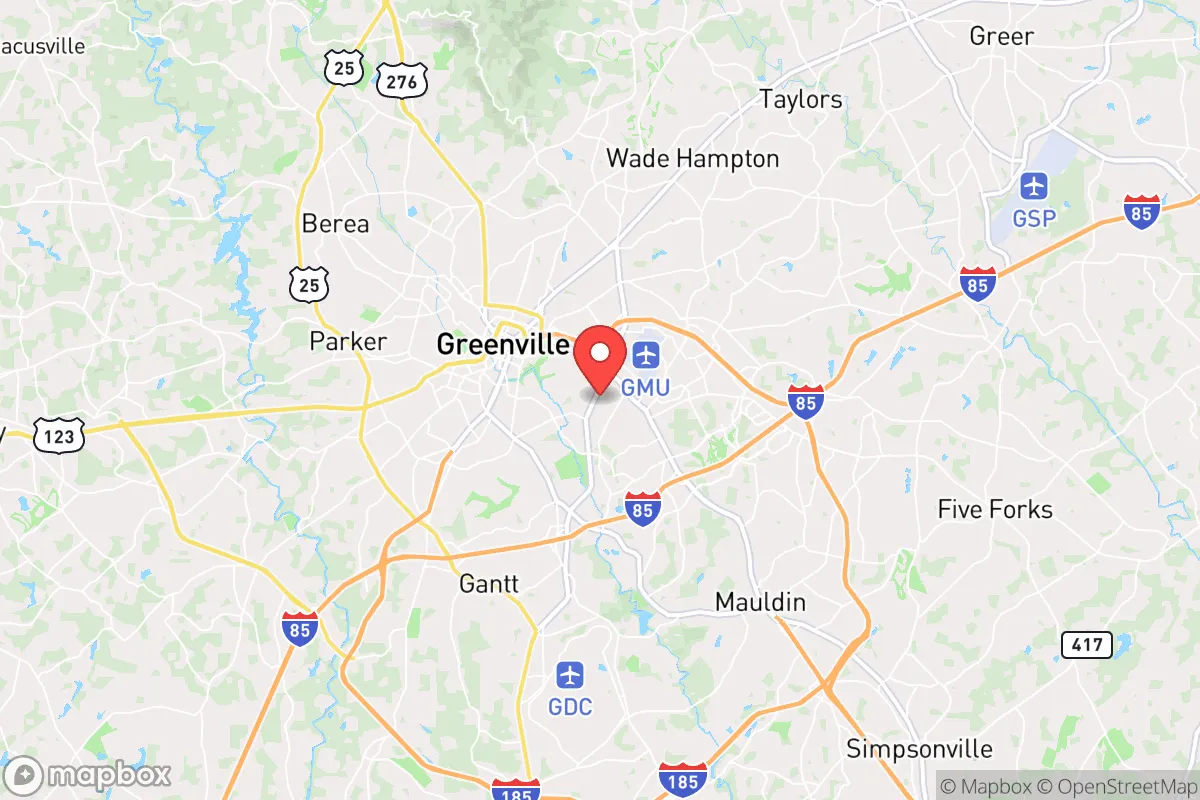
Photo: Wikipedia
Political ClimatePolitical Climate in Greenville, SC
District shown is the primary district for this city’s centroid. Cities may span multiple districts.
Local Political AnalysisPolitical Analysis of Greenville, SC
Greenville, South Carolina, has long been a reliably conservative stronghold, and that hasn't changed much at the ballot box. With a Cook Partisan Voting Index (PVI) of R+11, the area leans heavily Republican, and that's been the case for as long as most of us can remember. But if you've been around here for a while, you'll notice the political climate isn't quite as simple as it used to be. The old guard of rock-ribbed fiscal conservatism and traditional values is still the backbone, but there's a growing undercurrent of progressive influence, especially as new folks move in from places like New York and California. It's not a blue wave, but it's a shift in the air that has some of us watching closely.
How it compares
Compared to the rest of the Upstate, Greenville is actually a bit of a mixed bag. Drive 30 minutes south to Anderson or west to Pickens, and you'll find communities that are even more conservative, with a stronger focus on rural values and less tolerance for government overreach. Those towns vote even redder than Greenville County as a whole. But head east to Spartanburg or north to Asheville, North Carolina, and you'll see a stark contrast. Spartanburg is still conservative but has a more working-class, blue-collar feel, while Asheville is a full-blown progressive enclave. Here in Greenville, the city itself has become a bit of a purple dot in a red county. The downtown core, with its new breweries and tech startups, tends to lean more moderate or even left-leaning on social issues, while the suburbs and rural parts of the county hold the line on traditional values. It's a tension that's playing out in local school board meetings and city council votes, especially around things like zoning and spending.
What this means for residents
For those of us who value personal freedoms and limited government, the trend is a little concerning. The biggest red flag is the creeping influence of progressive policies that feel like they're being imported from outside. You see it in debates over mask mandates, vaccine requirements, and even how local law enforcement operates. The county council has mostly held the line, but the city government has shown a willingness to entertain ideas that feel like overreach—like pushing for more density in neighborhoods without letting residents have a real say, or floating proposals that could restrict property rights. The good news is that the R+11 lean means most elected officials still understand that their job is to protect your rights, not manage your life. But the long-term trajectory depends on who shows up to vote. If the new transplants keep coming and voting in local elections, we could see a slow slide toward the kind of government that tells you what's best for you rather than trusting you to make your own decisions.
Culturally, Greenville still feels like a place where you can raise a family without the constant political noise you get in bigger cities. The churches are full, the schools still teach traditional values for the most part, and the Second Amendment is respected. But there's a noticeable divide between the old-timers and the newcomers, especially on issues like taxes and development. The city has poured a lot of money into beautification projects and attracting tourists, which is fine, but some of us worry that the focus on growth is coming at the expense of the quiet, self-reliant character that made this area great. If you're looking for a place where you can live your life without the government breathing down your neck, Greenville is still a solid bet—but keep an eye on those local elections, because that's where the real fight for your freedoms is happening.

State Political ClimatePolitical Climate in South Carolina
State Political AnalysisPolitical Environment in the State
South Carolina has long been a reliably red state, with Republicans holding every statewide office and commanding supermajorities in both legislative chambers. The state’s overall partisan lean is roughly +18 points Republican in federal elections, a figure that has held steady for the past three cycles. However, the political climate is far from monolithic. The real story is a slow, steady shift in the suburbs and coastal areas, driven by an influx of new residents from the Northeast and Midwest, while the rural interior remains deeply conservative. Over the last 10-20 years, the state has moved from a solidly conservative, establishment-Republican stronghold to a place where the primary political tension is now between traditional, business-friendly conservatives and a growing populist, liberty-minded wing.
Urban vs. rural divide
The political map of South Carolina is a classic tale of two states. The rural Lowcountry and Upstate counties—places like Oconee, Pickens, and Beaufort—vote Republican by margins of 30 to 40 points. These areas are the backbone of the state’s conservative identity, driven by strong evangelical churches, military families, and a deep distrust of federal overreach. In contrast, the urban cores of Charleston, Columbia, and Greenville are the blue dots on the map. Charleston County, for instance, has flipped from a swing county to a reliably Democratic one over the past decade, driven by a booming tech and tourism economy and an influx of out-of-state transplants. Greenville County, once a GOP fortress, is now a battleground, with its fast-growing suburbs like Simpsonville and Greer trending purple as new residents bring more moderate views. The real flashpoint is Richland County (Columbia), which is heavily Democratic and increasingly at odds with the state legislature on issues like education funding and local control. The divide isn’t just about party—it’s about culture. A new resident moving to Mount Pleasant will find a very different political environment than someone settling in Anderson.
Policy environment
South Carolina’s policy environment is a mixed bag for conservatives. On the plus side, the state has no state income tax on Social Security benefits, a flat 6.4% corporate income tax that is being phased down to 5% by 2026, and a relatively low property tax burden thanks to Act 388, which caps owner-occupied residential property tax assessments. The regulatory posture is generally business-friendly, with a right-to-work law and a tort reform system that caps noneconomic damages in medical malpractice cases. However, the state’s education system is a persistent sore spot. South Carolina ranks near the bottom nationally in K-12 outcomes, and the school choice movement has made only incremental gains—a limited Education Scholarship Trust Fund program was passed in 2023, but it’s capped at 5,000 students. On healthcare, the state did not expand Medicaid under the Affordable Care Act, which keeps costs lower for taxpayers but leaves a coverage gap for low-income adults. Election laws are solid: voter ID is required, early voting was expanded to two weeks in 2022, and absentee voting requires an excuse. There is no automatic voter registration, and same-day registration is not allowed. For a conservative, the policy environment is generally favorable, but the education and healthcare gaps are real concerns that drive many families to consider private options or neighboring states like Georgia.
Trajectory & freedom
South Carolina is on a trajectory of expanding personal freedom in several key areas, but with notable exceptions. The most significant recent win for liberty was the 2021 passage of constitutional carry (permitless concealed carry), making South Carolina the 21st state to allow it. This was a major victory for gun rights advocates after years of legislative battles. On parental rights, the state passed the Parents’ Bill of Rights in 2023, which requires schools to notify parents of any changes in a child’s mental, emotional, or physical health, and prohibits instruction on sexual orientation or gender identity in K-5 classrooms. This law has been a flashpoint, with the ACLU filing a lawsuit, but it remains in effect. On medical autonomy, the state passed a near-total abortion ban in 2023 (the Fetal Heartbeat Act), with exceptions only for rape, incest, and the life of the mother. This is a clear expansion of the state’s authority over personal medical decisions, which some conservatives applaud and others see as government overreach. Property rights are generally strong, with no statewide rent control and a relatively straightforward eminent domain process. However, the state’s tax burden is creeping up—the gas tax was raised by 2 cents per gallon in 2023 to fund road repairs, and local sales taxes in counties like Charleston and Richland are pushing 9%. The trajectory is mixed: more freedom on guns and parental rights, but more government involvement in healthcare and a slow increase in the cost of living.
Civil unrest & political movements
South Carolina has seen its share of political activism, but it’s generally less volatile than states like Oregon or Georgia. The most visible flashpoint in recent years has been the Confederate flag debate, which culminated in the flag’s removal from the Statehouse grounds in 2015 after the Charleston church shooting. This issue still simmers, with some rural counties flying the flag on public property and periodic protests from both sides. The Moms for Liberty movement has been very active in the suburbs of Greenville and Lexington, organizing school board takeovers and pushing for curriculum transparency. On the left, the Indivisible network has a strong presence in Charleston and Columbia, organizing around voting rights and abortion access. Immigration politics are relatively quiet—South Carolina is not a border state, and there are no sanctuary cities. The state passed a strict anti-sanctuary law in 2019 (HB 4600), requiring local law enforcement to cooperate with ICE. Election integrity controversies have been minimal, though there was a brief controversy in 2020 over the state’s use of paperless voting machines in some rural precincts, which were replaced by 2022. A new resident would notice that political conversations are more common in the suburbs than in rural areas, and that the tone is generally civil but increasingly polarized along geographic lines.
Projection
Over the next 5-10 years, South Carolina is likely to become more politically competitive at the state level, but not necessarily more liberal. The key driver is in-migration. The state is adding about 100,000 new residents per year, many from high-tax, high-regulation states like New York, New Jersey, and California. These newcomers tend to be more moderate on social issues but are often attracted by the state’s low taxes and business climate. This could push the state toward a more libertarian-leaning Republicanism—less focused on social issues and more on economic freedom. The suburbs of Greenville, Charleston, and Myrtle Beach will be the battlegrounds. If the state legislature continues to expand school choice and keep taxes low, it will retain its conservative edge. However, if the education system continues to underperform and property taxes rise, the state could see a backlash from new residents who expect better services. The biggest wildcard is the national political environment—if the GOP shifts further right on social issues, it could alienate the moderate transplants and flip the state purple. For now, the projection is for a continued conservative majority, but with a more nuanced, freedom-oriented flavor.
Bottom line for a new resident: If you’re moving to South Carolina for the low taxes, gun rights, and parental control over education, you’ll find a state that largely delivers on those promises. But don’t expect a libertarian paradise—the state government is still deeply involved in healthcare and education, and local politics can be surprisingly contentious, especially in the growing suburbs. Do your homework on the specific county and school district, because the political climate in Lexington is very different from Charleston. The state is trending in the right direction on personal freedom, but it’s a slow, steady march, not a revolution.
* Values derived from national, state, county, city and local statistics and may differ in a specific area. Last updated: 2026-05-01T19:57:53.000Z
Narrative content on this page is AI-generated and may contain mistakes. Verify any details that matter before acting on them.
ReloMaps may earn a commission from affiliate links at no extra cost to you.

