
Photo by Justin Aikin on Unsplash
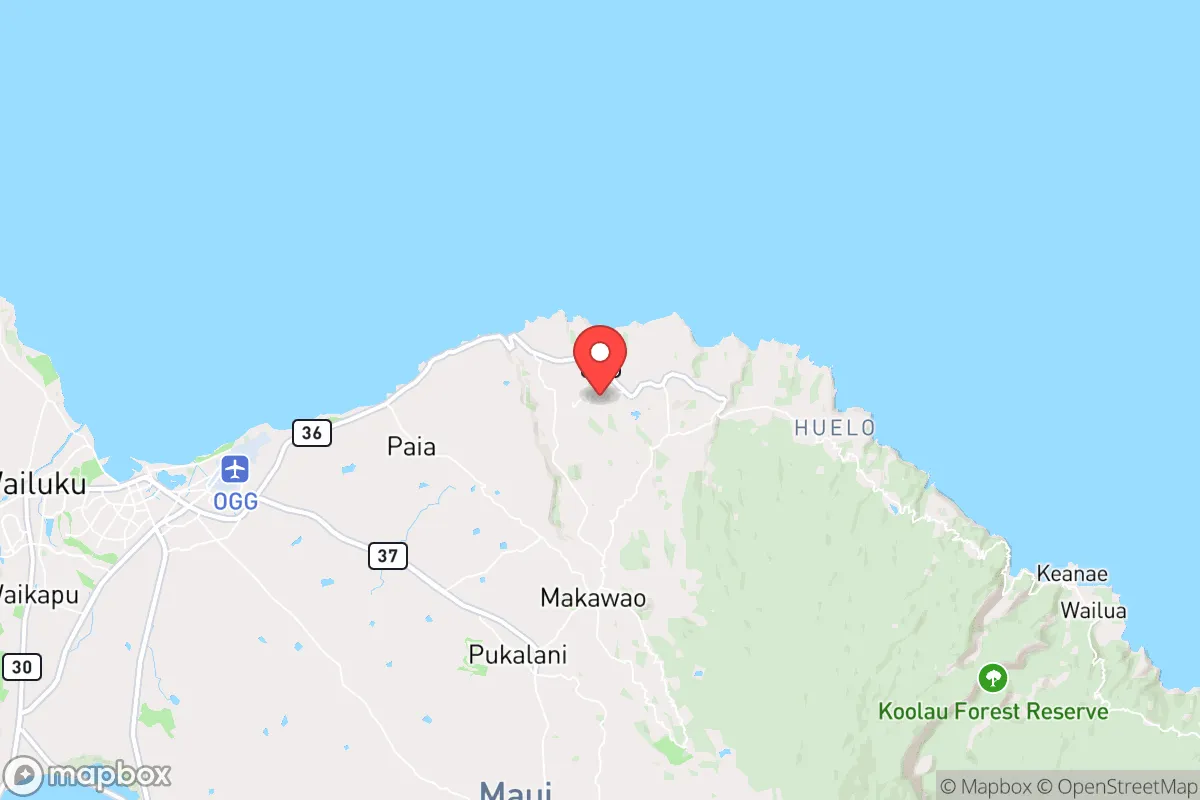
Personal Sovereignty in Haiku Pauwela, HI
Moderate friction. Expect trade-offs in some aspect of personal liberty and independence.
What does Personal Sovereignty tell us?
Personal Sovereignty measures your capacity for self-reliance and independence with minimal government friction. Higher scores mean fewer barriers between you and the way you want to live... but it assumes you have the space you need and good neighbors.
What does this tell us?
Personal Sovereignty measures your capacity for self-reliance and independence with minimal government friction. Higher scores mean fewer barriers between you and the way you want to live... but it assumes you have the space you need and good neighbors.
State Policy
Energy independence: Importer (2% of energy produced in-state)
Personal Liberty
Homesteading

Personal Liberty Analysis
Haiku Pauwela, on Maui’s north shore, presents a paradox for the sovereignty-minded individual: breathtaking natural isolation paired with one of the most administratively dense state governments in the union. For the prepper or conservative seeking to maximize personal autonomy, this area offers a retreat from urban chaos but demands a clear-eyed acceptance of Hawaii’s heavy regulatory footprint. The core tension here is between the physical freedom of remote living and the legal reality of a state that actively manages land use, firearms, and daily commerce. Your personal sovereignty in Haiku Pauwela will be defined less by what you can do and more by how skillfully you navigate the state’s constraints.
Tax burden and regulatory posture: the cost of paradise
Hawaii’s tax climate is a significant drag on personal financial sovereignty. The state imposes a general excise tax (GET) of 4% on nearly all business transactions, which effectively functions as a hidden sales tax that can reach 4.712% in Maui County. This tax applies to everything from your grocery bill to your contractor’s labor, making self-sufficiency projects more expensive. There is no local property tax on real estate for owner-occupied homes, but investment properties face a 0.65% rate, which can complicate building a rental income buffer. Income tax rates are progressive, topping out at 11% for high earners, and the state aggressively taxes capital gains as ordinary income. For the prepper, this means every dollar earned or spent is subject to a higher friction than in a state like Texas or Florida. The regulatory posture is equally dense: building permits, zoning variances, and even minor land alterations require county approval, often with long wait times. The state’s Office of Planning and Sustainable Development enforces strict shoreline setback rules and conservation district restrictions, limiting what you can do with raw land. This is not a jurisdiction where you can quietly build a bunker or expand a garden shed without paperwork.
Self-defense and gun law specifics: navigating a restrictive regime
Hawaii’s firearm laws are among the most restrictive in the nation, directly challenging the right to self-defense. The state requires a permit to acquire a firearm, which involves a background check, fingerprinting, and a 14-day waiting period. Concealed carry is effectively impossible for most residents; the state’s “may-issue” policy means you must demonstrate “exceptional cause” to the county police chief, and approvals are rare. Open carry is prohibited. For the survivalist, this creates a serious vulnerability: your ability to defend your home or property with a firearm is legally constrained. Long guns (rifles and shotguns) are easier to acquire than handguns, but all firearms must be registered with the county police within five days of purchase. Magazine capacity is limited to 10 rounds, and certain “assault pistols” are banned by name. Ammunition sales require a permit and are tracked. The practical takeaway: if self-defense is a priority, Haiku Pauwela is a hostile legal environment. You can own firearms, but the process is burdensome, and carrying them off your property is nearly impossible. This forces a reliance on less-lethal options and hardened home security, which is a compromise many sovereignty-minded individuals will find unacceptable.
Self-reliance and homesteading viability: lot sizes, zoning, and off-grid feasibility
The physical landscape of Haiku Pauwela offers genuine potential for self-reliance, but zoning and utility regulations create friction. Typical residential lots range from 1 to 5 acres, with some agricultural-zoned parcels exceeding 10 acres. The county’s Maui Island Plan designates much of the area as “rural” or “agricultural,” which permits farming, livestock, and accessory dwelling units. However, off-grid living is legally complicated. The state requires connection to the electrical grid if it’s available within 300 feet of your property line, and solar systems must be grid-tied or have a permit for islanding. Rainwater catchment is common and legal, but you must comply with county health department standards for potable water storage and filtration. Composting toilets are allowed under certain conditions, but septic systems require a county permit and percolation tests. For the prepper, the key constraint is that you cannot simply disappear into the bush; the county knows you’re there and expects compliance. The upside is that the climate allows year-round growing, and the local soil (volcanic loam) is fertile. You can raise chickens, goats, and even pigs on agricultural land, but slaughtering animals for meat requires a licensed facility or a mobile slaughter unit. The regulatory burden is high, but the physical capacity for self-reliance is real if you’re willing to work within the system.
Personal liberties: parental rights, medical autonomy, speech, and property
Hawaii’s state government exerts significant control over personal liberties, which is a red flag for those prioritizing autonomy. Parental rights are limited by mandatory vaccination requirements for school attendance (though religious exemptions exist) and a state curriculum that includes comprehensive sex education and social-emotional learning standards. Homeschooling is legal but requires annual notification to the Department of Education and submission of a curriculum plan. Medical autonomy is constrained by strict licensing laws for naturopaths and herbalists, and the state’s health department has broad authority to mandate treatments during declared emergencies. Free speech is protected under the First Amendment, but Hawaii has a history of enforcing “false statements” laws and has a state anti-mask law that could be used to restrict anonymous protest. Property rights are the most concerning: the state’s county planning departments have extensive zoning and land-use authority, and the Hawaii Land Use Commission can reclassify land without owner consent. Eminent domain is used for conservation and infrastructure projects, and the state’s shoreline access laws allow public passage across private property up to the high-water mark. For the sovereignty-minded, this means your land is never fully yours; the state retains significant control over its use and access.
In the broader context of U.S. personal sovereignty, Haiku Pauwela ranks low on legal autonomy but high on physical isolation. You will face a state that taxes heavily, restricts firearms, and regulates land use with a heavy hand. The trade-off is a community that values environmental stewardship and has a strong local food movement, which can support a prepper lifestyle if you’re willing to navigate the bureaucracy. Compared to a place like rural Idaho or Montana, where property rights and gun laws are far more permissive, Haiku Pauwela is a compromise. It is a place where you can live close to the land but not free from the state. For the strategic relocator, the decision hinges on whether the natural advantages of the north shore outweigh the administrative costs. If you can accept the regulatory reality and work within it, the area offers a unique blend of seclusion and community. If you cannot, the constant friction with state authority will erode the very sovereignty you seek.

* Values derived from national, state, county, city and local statistics and may differ in a specific area. Last updated: 2026-04-24T11:44:31.000Z
Narrative content on this page is AI-generated and may contain mistakes. Verify any details that matter before acting on them.
ReloMaps may earn a commission from affiliate links at no extra cost to you.

