
Photo by Justin Aikin on Unsplash
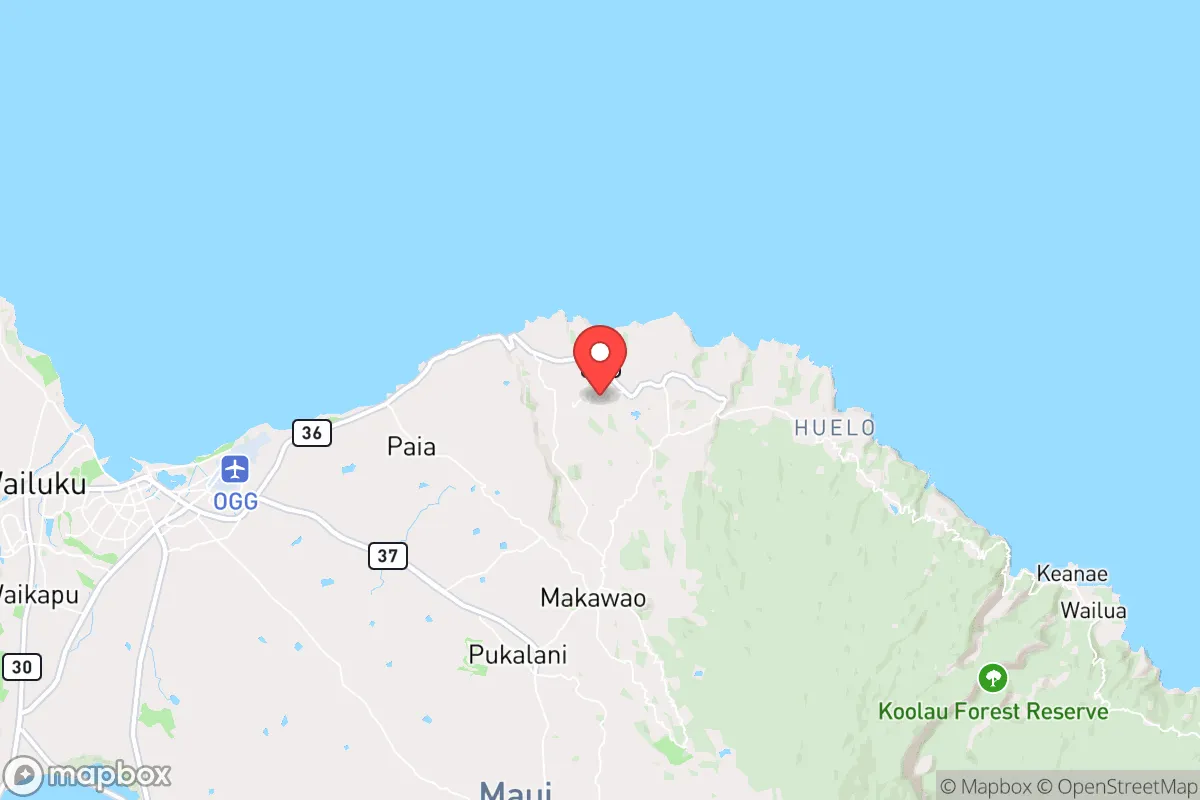
Political ClimatePolitical Climate in Haiku Pauwela, HI
District shown is the primary district for this city’s centroid. Cities may span multiple districts.
Local Political AnalysisPolitical Analysis of Haiku Pauwela, HI
Haiku-Pauwela leans heavily Democratic, with a Cook PVI of D+12 that puts it well to the left of the national average. This isn't a recent shift—the area has been reliably blue for decades—but the intensity of that lean has deepened noticeably since 2020, as progressive activism has become more organized and vocal. For a longtime resident who values personal freedoms and limited government, the political climate here can feel increasingly like an uphill battle, where local policy debates often start from a premise that more regulation and collective action are always the answer.
How it compares
To understand Haiku-Pauwela's politics, you have to look at its neighbors. Drive a few miles west to Makawao, and you'll find a more moderate, ranching-oriented community where fiscal conservatism still has a foothold. Head south to Kahului, and the politics are similarly blue but more working-class and union-driven, less focused on the environmental and social-justice priorities that dominate Haiku-Pauwela's discourse. The contrast is sharpest with upcountry towns like Kula, where property-rights advocates and agricultural families push back against the kind of land-use restrictions that Haiku-Pauwela's progressive majority tends to support. That D+12 rating isn't just a number—it means local elections are effectively decided in the Democratic primary, and candidates who question the party line on issues like housing mandates or renewable energy mandates rarely get a serious hearing.
What this means for residents
For someone who values individual liberty, the practical effect is a steady creep of government into daily life. The county council and state legislature, both dominated by the same political coalition, have passed measures that feel less like public safety and more like social engineering: stricter short-term rental bans that limit how you can use your own property, aggressive plastic and packaging bans that dictate what you can buy, and a push for electric-vehicle mandates that ignore the reality of rural life where a gas station might be 20 minutes away. Property taxes remain relatively low by mainland standards, but the trade-off is a regulatory environment that makes it harder to build a guest house, start a small business, or even replace a septic system without months of permitting. The local school board and neighborhood boards are increasingly filled with activists who see their role as advancing a political agenda rather than just keeping the roads paved and the parks clean.
The cultural tone here has shifted, too. What was once a laid-back, live-and-let-live community now has a more activist edge. Neighborhood social media groups are dominated by calls to report code violations, organize climate protests, or pressure local businesses to adopt specific political stances. If you're the kind of person who believes the government's job is to protect your rights, not manage your choices, you'll find yourself on the defensive more often than not. The long-term trajectory points toward more of the same—tighter land-use controls, higher fees on single-family homes to subsidize transit projects, and a political culture that treats skepticism of government expansion as a character flaw. It's not a hostile place for conservatives, but it is an increasingly lonely one, where keeping your head down and living your life is often the most practical strategy.

State Political ClimatePolitical Climate in Hawaii
State Political AnalysisPolitical Environment in the State
Hawaii has been a one-party Democratic stronghold for decades, but don’t let the blue veneer fool you—the state’s political climate is far more complex than a simple left-right label. The Democratic Party here is a broad coalition, ranging from union-backed progressives in Honolulu to more moderate, culturally conservative Native Hawaiian and local families on the neighbor islands. Over the last 20 years, the state has shifted leftward on social issues, but a stubborn libertarian streak on land rights, gun ownership, and local control persists, especially outside Oahu. For a conservative-leaning individual or family, the key takeaway is that Hawaii offers a unique blend of high taxes and heavy regulation alongside a fierce independence that can feel both freeing and frustrating.
Urban vs. rural divide
The political map of Hawaii is a tale of two worlds. The urban core of Honolulu on Oahu drives the state’s progressive tilt, with its dense population of government workers, tech transplants, and union households. The city consistently votes 70-80% Democratic in presidential elections, powered by districts like Manoa and Kaimuki. In contrast, the neighbor islands—Hilo on the Big Island, Kahului on Maui, and Lihue on Kauai—are more mixed. Rural areas like Waimea on the Big Island and Hanalei on Kauai lean conservative on land use and gun rights, though they still vote Democratic for federal offices. The most politically distinct suburb is Kapolei on Oahu’s leeward coast, a fast-growing master-planned community where many military families and local business owners live; it’s a rare pocket where Republican candidates can pull 40% of the vote. The divide isn’t just about party—it’s about lifestyle: urban Honolulu is dense, regulated, and expensive, while rural Hawaii is more about self-reliance and “keep the government out of my backyard” attitudes.
Policy environment
Hawaii’s policy environment is a mixed bag for conservatives. The state has the highest combined state and local tax burden in the nation, with a general excise tax that hits everything from groceries to rent. Property taxes are relatively low, but the state’s land use commission and county zoning boards wield immense power over what you can build on your own land—a major red flag for property rights advocates. Education policy is heavily centralized; the state runs a single, statewide school district, which means local school boards have almost no authority. Homeschooling is legal but requires annual notification and testing, and parental rights in curriculum have been a flashpoint, with the state Board of Education adopting progressive sex education standards in 2023. Healthcare is dominated by the Hawaii Prepaid Health Care Act, a mandate that employers provide coverage—a policy that predates the ACA and is popular even among conservatives for its stability. Election laws are among the most restrictive for third parties; Hawaii has closed primaries, meaning only registered Democrats and Republicans can vote in their respective primaries, which locks out independents. The state also has universal mail-in voting, which conservatives often criticize for potential fraud, though no major scandals have emerged.
Trajectory & freedom
On the freedom front, Hawaii is trending in two directions at once. On the positive side for conservatives, the state has some of the most permissive gun laws in the country for residents who jump through the hoops. Open carry is banned, but concealed carry permits have become easier to obtain after the 2022 Supreme Court Bruen decision, and the state’s “shall issue” law now requires counties to process permits without subjective discretion. However, the state legislature has pushed back with bills to ban “ghost guns” and raise the purchase age to 21. On the negative side, personal liberty has been eroded by aggressive COVID-19 mandates—Hawaii had the longest travel quarantine and vaccine passport requirements in the nation, which many locals saw as government overreach. More recently, the 2023 Act 2 expanded the state’s “red flag” law, allowing family members to petition for temporary firearm seizure without a criminal conviction. Parental rights took a hit with the 2022 passage of Act 159, which prohibits conversion therapy for minors and has been used to challenge religious counseling. Medical autonomy is limited; Hawaii has strict certificate-of-need laws that make it hard to open new clinics or hospitals, reducing competition. Property rights are under constant threat from the state’s powerful Land Use Commission, which can downzone agricultural land without compensation—a practice that has sparked lawsuits from farmers on the Big Island.
Civil unrest & political movements
Hawaii has a history of civil unrest that is distinct from the mainland. The most visible flashpoint is the Thirty Meter Telescope (TMT) protests on Mauna Kea, which began in 2015 and saw Native Hawaiian activists block construction for years. This movement is a mix of cultural preservation, anti-colonial sentiment, and libertarian distrust of government land deals—a coalition that includes both left-wing environmentalists and right-wing localists. On the immigration front, Hawaii is a sanctuary state in practice, with the Honolulu Police Department refusing to cooperate with ICE, but the issue is less charged than on the mainland because the immigrant population is mostly Asian and Pacific Islander, not Latino. Election integrity controversies have been minimal, though the 2020 election saw a small but vocal group of conservatives in Kailua-Kona on the Big Island protest mail-in voting procedures. The most organized conservative movement is the Hawaii Republican Assembly, a grassroots group that focuses on school board races and county council seats, particularly in Hawaii County (the Big Island), where they’ve won a few seats. Secession rhetoric is rare but not unheard of; some Native Hawaiian sovereignty groups advocate for independence, though this is a fringe position that doesn’t align with mainstream conservatism.
Projection
Over the next 5-10 years, Hawaii is likely to become more progressive on social issues but more divided on economic freedom. The state’s demographic shift is driven by an aging local population and an influx of remote workers from the mainland, many of whom bring progressive politics from California and New York. This will likely push Honolulu further left, while rural areas on the Big Island and Kauai may become more conservative as locals push back against overregulation. The biggest wildcard is housing: the state’s severe housing shortage is creating a backlash against the Land Use Commission, and there is growing bipartisan support for loosening zoning laws. A conservative could find common cause with libertarian-leaning Democrats on this issue. However, expect continued battles over gun rights, parental control in schools, and tax policy. The state’s budget is heavily dependent on tourism, which is volatile, so any economic downturn could trigger tax hikes or service cuts that affect families. For someone moving in now, the realistic expectation is that Hawaii will remain a high-cost, high-regulation state with a unique cultural conservatism that values local control over individual rights—a trade-off that works for some but frustrates others.
Bottom line for a new resident: If you value low taxes, strong property rights, and a government that stays out of your life, Hawaii will test your patience. But if you can navigate the bureaucracy and embrace the local ethos of “talk story” and community self-reliance, you’ll find a place where your vote matters more at the county level than the state level. Focus on winning school board and county council seats in places like Kapolei or Waimea—that’s where the real freedom battles are fought. Just be prepared to pay for the privilege of living in paradise.
* Values derived from national, state, county, city and local statistics and may differ in a specific area. Last updated: 2026-04-24T11:44:31.000Z
Narrative content on this page is AI-generated and may contain mistakes. Verify any details that matter before acting on them.
ReloMaps may earn a commission from affiliate links at no extra cost to you.

