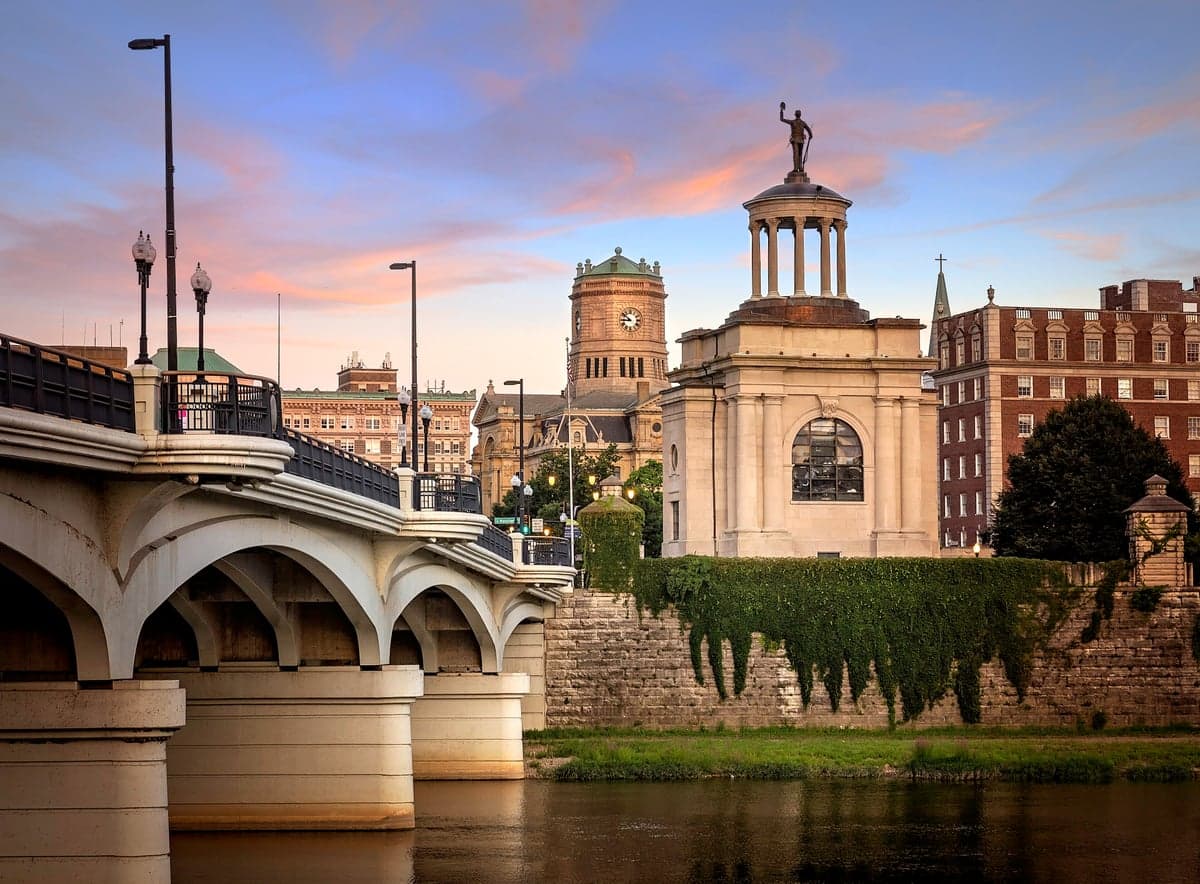
Photo: Wikipedia
Political ClimatePolitical Climate in Hamilton, OH
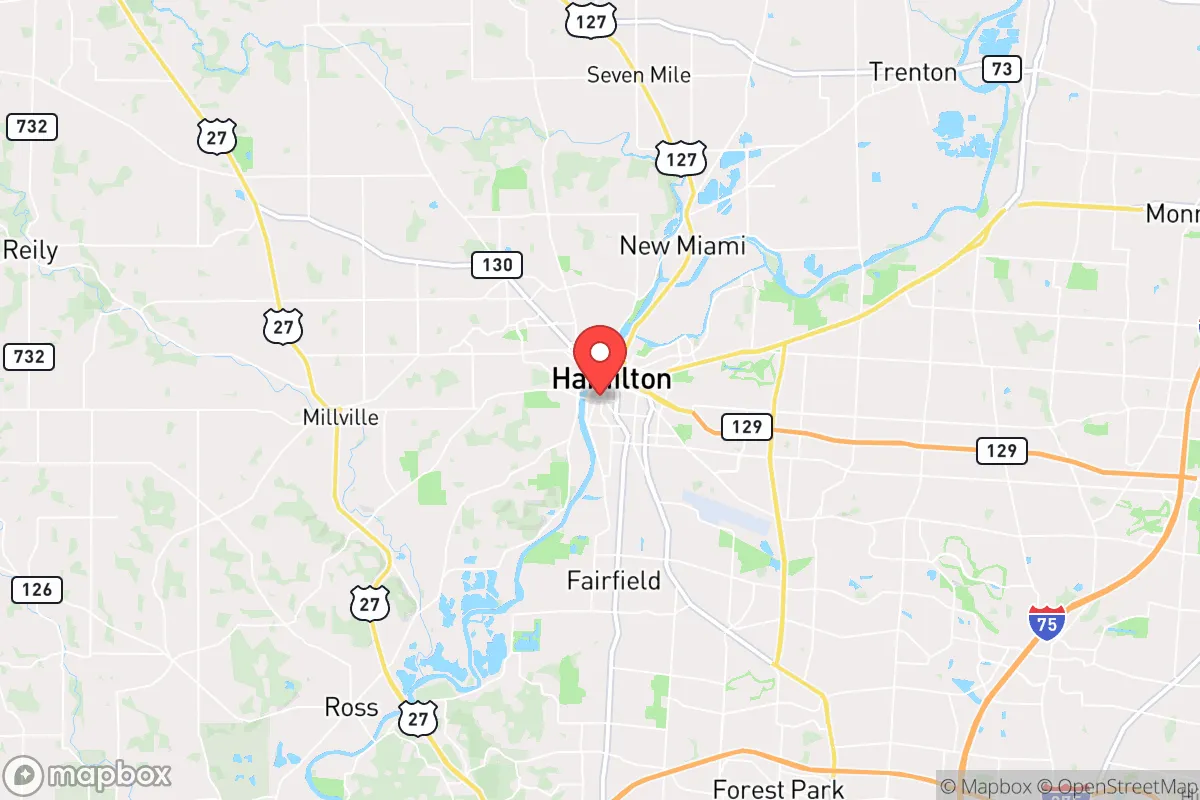
District shown is the primary district for this city’s centroid. Cities may span multiple districts.
Local Political AnalysisPolitical Analysis of Hamilton, OH
Hamilton, Ohio, has long been a reliably conservative stronghold, and for good reason. The Cook PVI rating of R+12 tells you the baseline, but it doesn't capture the full story of a community that values personal responsibility and limited government. While the city itself has seen some demographic shifts, the surrounding Butler County remains deeply red, and the local culture still prizes the kind of self-reliance that built the Rust Belt. You can feel it in the way folks talk about their property, their businesses, and their schools—there's a healthy skepticism of anyone in Columbus or Washington telling them how to live their lives.
How it compares
Drive ten miles east to Oxford, home of Miami University, and you'll find a completely different world—a college town that leans heavily Democratic, where progressive activism is common and local politics often reflect that academic bubble. The contrast is stark. Hamilton, by contrast, has historically been a blue-collar manufacturing hub, and that working-class identity still shapes its politics. Neighboring cities like Middletown and Fairfield share a similar conservative bent, though Hamilton has seen a bit more of a tug-of-war in recent years as new development and some younger transplants have arrived. But the core remains: this is a place where the Second Amendment is respected, where taxes are kept in check, and where the idea of a government telling you what kind of lightbulb to buy or car to drive is met with a well-earned eye roll.
What this means for residents
For the people who live here, the political climate translates into a daily life that feels more free than in many other parts of Ohio. You won't see the same level of overreach you might find in a place like Cincinnati or Columbus. Property rights are taken seriously, and there's a general understanding that your home and your family are your own business. The local government has generally been cautious about adopting the kind of progressive social experiments that have caused headaches in larger cities—things like defunding police or imposing heavy-handed zoning regulations. That said, there have been some concerning trends. A few years back, there was a push for more "equity" initiatives in the school district that raised eyebrows, and some residents worry that as Hamilton tries to attract new businesses and residents, it might start importing the same bad ideas that have driven people out of other places. The key is keeping an eye on city council and school board elections, because that's where the rubber meets the road.
One thing that sets Hamilton apart is its strong sense of local identity, which acts as a buffer against outside pressure. The city has a proud history, and folks here aren't easily swayed by national trends. You'll still find a lot of support for traditional values, and the local churches and civic groups play a big role in community life. The biggest concern among long-time residents is that the recent push for "revitalization" doesn't come with a hidden cost—like new regulations that make it harder to run a small business or a shift in the school curriculum that undermines parental rights. So far, the community has held the line, but it takes constant vigilance. If you're looking for a place where you can live your life without a lot of government interference, Hamilton is still a solid bet—just don't take it for granted.

State Political ClimatePolitical Climate in Ohio
State Political AnalysisPolitical Environment in the State
Ohio is a classic purple state with a distinct red lean that has hardened over the past decade. The state voted for Donald Trump by 8 points in 2020 and by 11 points in 2024, a dramatic shift from its bellwether status in 2012 when it went for Barack Obama by 3 points. The dominant coalition is a mix of working-class voters in small cities and rural areas, combined with suburban conservatives in the outer rings of Cincinnati, Columbus, and Cleveland, who have moved right on cultural and economic issues. Over the last 20 years, Ohio has shed its swing-state identity and now sits firmly in the Republican column, driven by deindustrialization, population loss in Democratic strongholds, and a steady migration of conservative-leaning families from the Northeast and Midwest into its more affordable suburbs.
Urban vs. rural divide
The political map of Ohio is a textbook study in the urban-rural split. The three major metros — Cleveland, Columbus, and Cincinnati — are Democratic strongholds, with Cuyahoga County (Cleveland) delivering 66% for Biden in 2020 and Franklin County (Columbus) hitting 62%. But the rest of the state is deeply red. Butler County (north of Cincinnati) went +26 for Trump, and Delaware County (a fast-growing Columbus suburb) flipped from purple to solid red, voting +18 for Trump in 2024. The rural southeast, including Athens County (home to Ohio University), is an exception — it's a blue island in a sea of red, driven by college-town liberalism. Meanwhile, Toledo in Lucas County is a fading blue city surrounded by red farmland, and Youngstown in Mahoning County has shifted from union Democrat to Trump Republican as manufacturing jobs vanished. The divide isn't just about cities versus farms — it's about which suburbs are growing. The exurbs of Columbus and Cincinnati are swelling with conservative families fleeing higher taxes and crime in blue states, while the urban cores are losing population.
Policy environment
Ohio's policy environment is broadly conservative, with a few notable exceptions that frustrate freedom-minded residents. The state has a flat income tax rate of 3.5% (down from 4.8% in 2020), and the Republican-controlled legislature has been steadily cutting rates, aiming for elimination. Property taxes are moderate, but local school levies can push them up — a point of contention for homeowners. The regulatory posture is business-friendly, with right-to-work laws not on the books but a strong tort reform environment. Education policy is a battleground: the state has a robust school choice program, including the EdChoice voucher system that lets families use public funds for private or religious schools, a major draw for conservative parents. However, the state also has a controversial "science of reading" mandate that some see as government overreach into curriculum. Healthcare is mixed — Ohio expanded Medicaid under the Affordable Care Act, which many conservatives view as a costly entitlement, but the state also has a strong network of faith-based hospitals and crisis pregnancy centers. Election laws are a bright spot: Ohio requires voter ID, has early voting, and purges inactive voters regularly, which conservatives see as integrity measures. The state also passed a constitutional amendment in 2023 enshrining abortion rights, a blow to pro-life advocates, but the legislature has since passed restrictions on late-term abortions and parental consent requirements.
Trajectory & freedom
Ohio is becoming more free in several key areas, but the picture is mixed. On gun rights, the state passed constitutional carry in 2022, allowing permitless concealed carry — a major win for Second Amendment supporters. Stand-your-ground laws are already in place. On parental rights, the legislature passed the "Parents Bill of Rights" in 2023, requiring schools to notify parents about curriculum changes and medical services, and banning transgender procedures for minors. This is a significant expansion of personal liberty for families. On taxation, the flat tax cuts are real — the state is on a path to eliminate the income tax entirely, which would be a massive freedom gain. However, there are concerning trends. The 2023 abortion amendment was a setback, and the state's COVID-era mandates — including business closures and school shutdowns — were among the most aggressive in the Midwest, though those have been rolled back. Medical autonomy is a flashpoint: the state has a restrictive medical marijuana program (no flower, limited conditions) and has not legalized recreational cannabis, despite neighboring Michigan doing so. Property rights are generally strong, but local zoning battles in growing suburbs like Dublin and Mason can be restrictive. Overall, the trajectory is toward more freedom on guns, education, and taxes, but with persistent government overreach in healthcare and local land use.
Civil unrest & political movements
Ohio has seen its share of political flashpoints. The 2020 George Floyd protests in Columbus and Cincinnati were large but largely peaceful, though there were isolated incidents of property damage. More notable is the organized conservative movement: the Buckeye Firearms Association is a powerful lobbying force, and the Ohio Right to Life group has been active despite the 2023 abortion amendment. Immigration politics are relatively quiet — Ohio is not a border state, but there are sanctuary city debates in Cleveland and Columbus, where local officials have resisted cooperating with ICE. The state has no sanctuary laws, but some cities have "welcoming" policies that conservatives view as problematic. Election integrity controversies flared in 2020 and 2024, with Republican Secretary of State Frank LaRose pushing for stricter voter ID and ballot security measures, which Democrats opposed. The most visible flashpoint for a new resident would be the ongoing fight over school curriculum — school board meetings in Delaware County and Butler County have been packed with parents protesting critical race theory and LGBTQ content. There is also a growing secessionist sentiment in rural southeastern Ohio, where some counties have discussed joining West Virginia, though this is fringe. Overall, the political climate is active but not chaotic — the left is concentrated in the cities, and the right is organized and effective at the state level.
Projection
Over the next 5-10 years, Ohio will likely become more Republican and more conservative. Demographic trends favor the GOP: the urban cores of Cleveland and Cincinnati are losing population, while the conservative exurbs of Columbus and Cincinnati are booming. In-migration from blue states like California, New York, and Illinois is accelerating, and these newcomers tend to be conservative-leaning families seeking lower taxes and better schools. The state's flat tax cuts will continue, making it even more attractive. However, there are risks. The 2023 abortion amendment showed that the GOP can lose on ballot initiatives when the left turns out. If Democrats ever mobilize the college towns and urban cores effectively, Ohio could become competitive again. But for now, the trajectory is clear: more school choice, lower taxes, stronger gun rights, and a cultural environment that favors traditional values. A new resident moving in now should expect to find a state that is increasingly aligned with conservative principles, with a government that is responsive to those values — but with persistent blue islands in the cities that will always push back.
Bottom line for a new resident: Ohio is a solid bet for conservatives who want a low-tax, family-friendly environment with strong gun rights and school choice. The political climate is stable and trending in your favor, but you'll need to pick your location carefully — stick to the exurbs of Columbus or Cincinnati, or the rural counties, and avoid the urban cores if you want to live among like-minded neighbors. The state is not perfect — the abortion amendment and lingering COVID-era overreach are concerns — but on balance, it's one of the better options in the Midwest for freedom-minded individuals and families.
* Values derived from national, state, county, city and local statistics and may differ in a specific area. Last updated: 2026-04-30T02:08:18.000Z
Narrative content on this page is AI-generated and may contain mistakes. Verify any details that matter before acting on them.
ReloMaps may earn a commission from affiliate links at no extra cost to you.

