
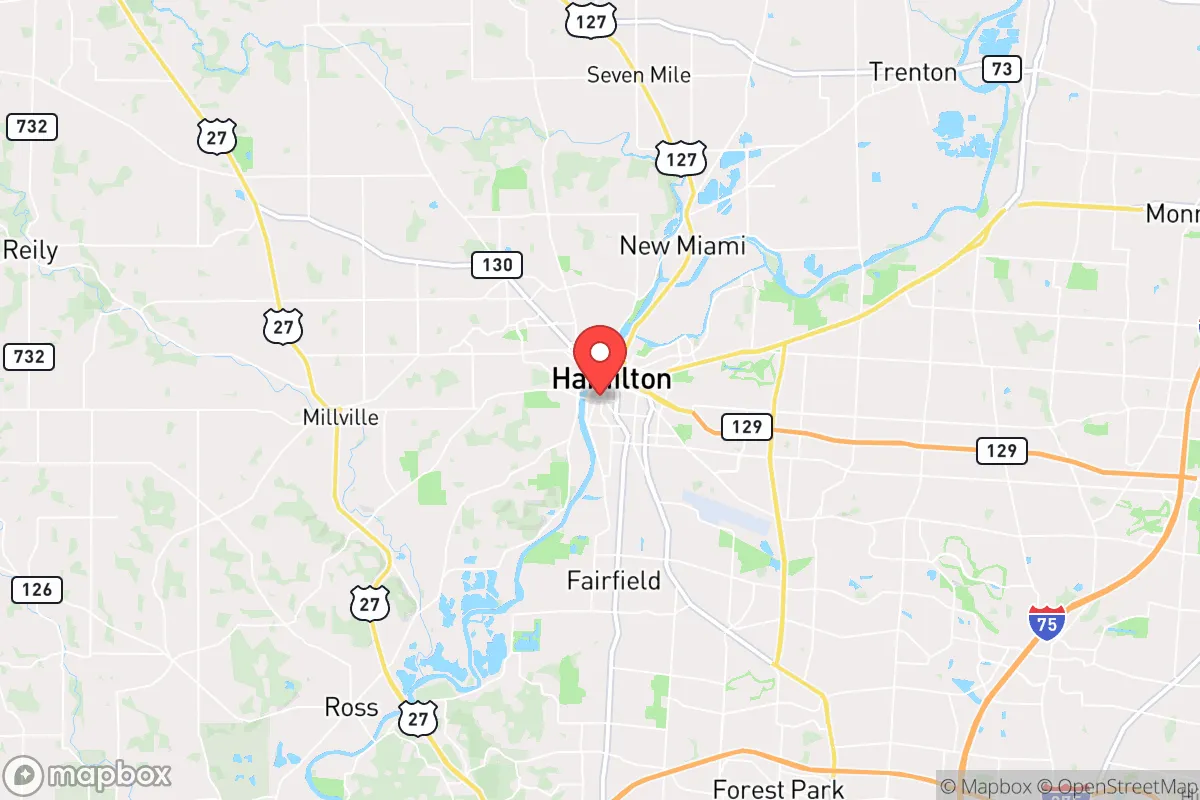
Photo: Wikipedia
Quality of Life in Hamilton, OH
A high quality of life with strong walkability, manageable living costs, healthy neighborhood signals, and solid amenity access.
What does Quality of Life tell us?
Quality of Life blends cost of living, nearby amenities, socioeconomic signals, and neighborhood character. City-level scores represent the whole municipality; individual neighborhoods can differ.
What does this tell us?
Quality of Life blends cost of living, nearby amenities, socioeconomic signals, and neighborhood character. City-level scores represent the whole municipality; individual neighborhoods can differ.
Cost of Living
28% below national average
The Real Cost of Living in Hamilton, OH for 2026
| Tier | Individual | Family (4) |
|---|---|---|
| Survival | $16k | $29k |
| Comfortable | $30k | $43k |
| Luxury | $86k+ | $133k+ |
| Elite (Top 5%) | $101k+ | $157k+ |
125%
The Area Signal
A metric tracking the socioeconomic signals of the area.
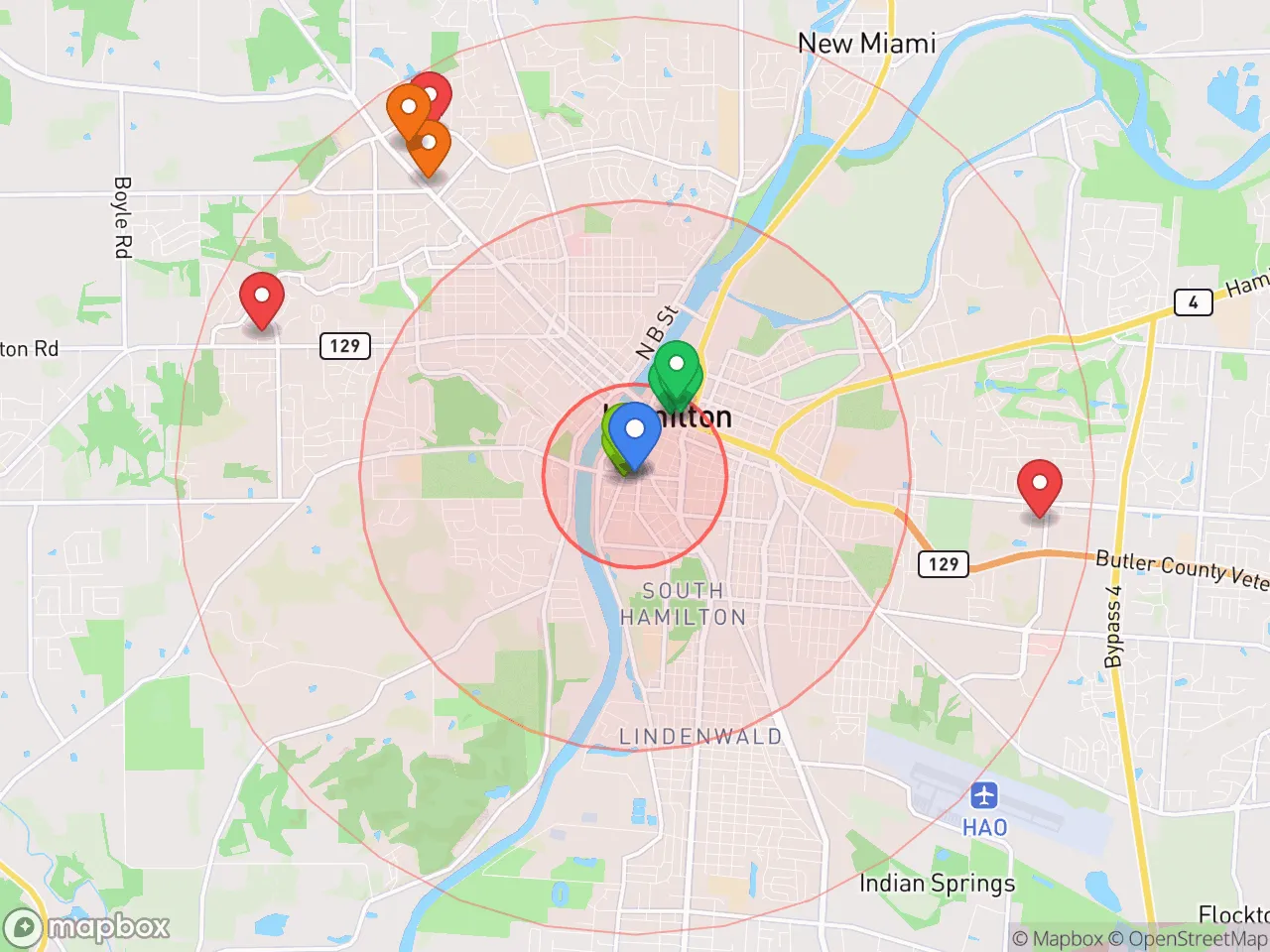
Hobbies
Explore the areaGroceries
5 within 10 miles
Gas
20 within 10 miles
Hospital
20 within 20 miles
Airport
Indianapolis International Airport
Post Office
USPS — Hamilton, OH
Critical Amenities
Quality-of-Life Analysis
Hamilton, Ohio, offers a notably affordable quality of life, with a cost of living index of 72—well below the national average of 100—attracting a mix of young families, skilled tradespeople, and long-term residents seeking economic stability. The city’s median home value of $152,300 and median rent of $974 make it one of the most accessible housing markets in the Cincinnati metro area, drawing workers from nearby Butler County and commuters to Dayton. This affordability, combined with a solid manufacturing and logistics job base, creates a community where middle-class lifestyles are attainable without the financial strain seen in larger urban centers.
Cost of living, housing, and affordability compared to nearby areas
Hamilton’s cost of living index of 72 is significantly lower than the national average, and housing costs are the primary driver. The median home value of $152,300 is roughly half the national median of $350,000, and the median rent of $974 undercuts the national average by about $200 per month. Compared to Cincinnati, where the median home value exceeds $220,000, Hamilton offers a 30% discount on home purchases, while renters save roughly 15% monthly. The average commute of 25 minutes is manageable, with major employers like AK Steel (now Cleveland-Cliffs), Atrium Medical Center, and the Butler County government providing local jobs that reduce the need for long drives. Property taxes in Butler County average around 1.5% of assessed value, which is moderate for Ohio, keeping monthly housing costs predictable for buyers.
Amenities, schools, and what daily life feels like for families
Daily life in Hamilton centers on a revitalized downtown along the Great Miami River, with the Fitton Center for Creative Arts, the Hamilton Mill (a mixed-use development), and the RiversEdge amphitheater offering regular concerts and events. The Hamilton City School District serves roughly 8,500 students, with Hamilton High School offering career-tech pathways in manufacturing and health sciences through partnerships with local employers. For families, the city’s 25 parks, including the 200-acre Joyce Park with its disc golf course and sports fields, provide ample recreation. The median age of 36.5 years and a population of about 62,000 create a stable, family-oriented feel, though the poverty rate of 18% is higher than the national average, reflecting economic challenges in some neighborhoods. Groceries and utilities are 10-15% cheaper than the national average, and the city’s walkability score of 38 means most errands require a car, but the compact layout keeps trips short.
Hamilton is best suited for budget-conscious families, first-time homebuyers, and workers in manufacturing, healthcare, or logistics who prioritize affordability over urban amenities. The city’s low cost of living and short commute times make it a practical choice for those who want a stable, slower-paced life within reach of Cincinnati’s jobs and culture—about a 40-minute drive east. Retirees on fixed incomes also find value here, though the limited public transit and higher crime rate in certain blocks (property crime is 40% above the national average) mean careful neighborhood selection is essential. For anyone seeking a low-stress financial footing in the Midwest, Hamilton delivers a solid, if unglamorous, quality of life.

Crime in Hamilton, OH
Crime rates similar to the national median for U.S. locations.
Violent CrimeViolent Crime Analysis
Property CrimeProperty Crime Analysis
Crime Analysis
Hamilton, Ohio, reports a violent crime rate of 287.1 incidents per 100,000 residents and a property crime rate of 2,307.8 per 100,000, placing it in a middle tier for safety within the Cincinnati metropolitan area. These figures indicate that while Hamilton is not among the most dangerous cities in the region, it faces challenges that require careful consideration, particularly given the broader context of Butler County’s justice system. The city’s proximity to a large metro area means it is subject to the same progressive judicial trends that have raised concerns about public safety in many Midwestern urban centers.
Crime in context
Hamilton’s violent crime rate of 287.1 per 100,000 is roughly 18% below the national average of 380 per 100,000, but its property crime rate of 2,307.8 per 100,000 is about 30% higher than the national average of 1,954 per 100,000. Compared to Ohio as a whole, Hamilton’s violent crime rate is slightly lower than the state average of 295 per 100,000, while its property crime rate significantly exceeds the state average of 1,850 per 100,000. This pattern—elevated property crime with moderate violent crime—is common in smaller cities near large metro areas where economic pressures and transient populations intersect. The presence of progressive district attorneys in nearby Cincinnati and some Butler County jurisdictions has been linked to reduced prosecution rates for property offenses, a factor that may contribute to the higher property crime numbers seen here.
What residents experience
Residents of Hamilton report that property crime—particularly theft from vehicles, burglary, and vandalism—is the most visible safety concern in daily life. Neighborhood watch groups are active in several wards, and the Hamilton Police Department has responded with targeted patrols in high-theft areas. Violent crime, while less common, is concentrated in specific pockets, often tied to drug-related disputes or domestic incidents. The city’s location along major highways like I-75 makes it a transit point for stolen goods and narcotics, a dynamic that local law enforcement acknowledges. Progressive justice policies in the region, including bail reform and diversion programs, have resulted in repeat property offenders cycling through the system quickly, a pattern that frustrates many long-term residents who feel the system prioritizes offender rehabilitation over victim protection.
Neighborhood-level variation is significant. The historic German Village and Riverview areas near the Great Miami River generally report lower crime rates, while sections of the central corridor and areas near the industrial park see higher incident counts. Property crime rates in the city’s eastern neighborhoods can be double those in the western residential districts, a disparity that reflects differences in housing density, lighting, and police response times. Prospective residents should consult the Hamilton Police Department’s online crime map and consider visiting neighborhoods at different times of day to gauge local conditions firsthand.
* Values derived from national, state, county, city and local statistics and may differ in a specific area. Last updated: 2026-04-30T02:08:18.000Z
Narrative content on this page is AI-generated and may contain mistakes. Verify any details that matter before acting on them.
ReloMaps may earn a commission from affiliate links at no extra cost to you.

