Photo: Wikipedia
Demographics of Hawaiian Paradise Park, HI
Affluence Level in Hawaiian Paradise Park, HI
A middle-class area roughly in line with national averages across income, home values, education, and employment.
People of Hawaiian Paradise Park, HI
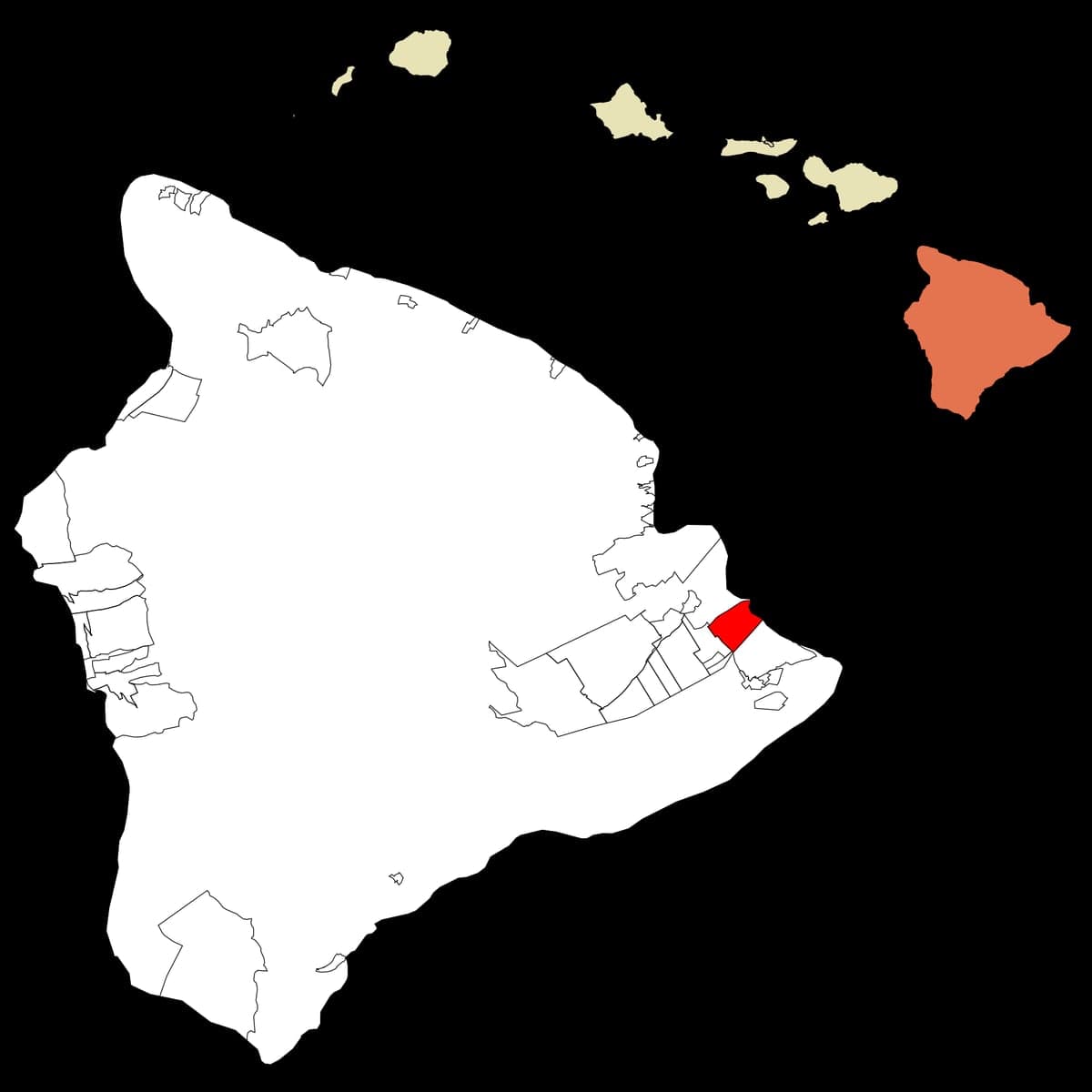
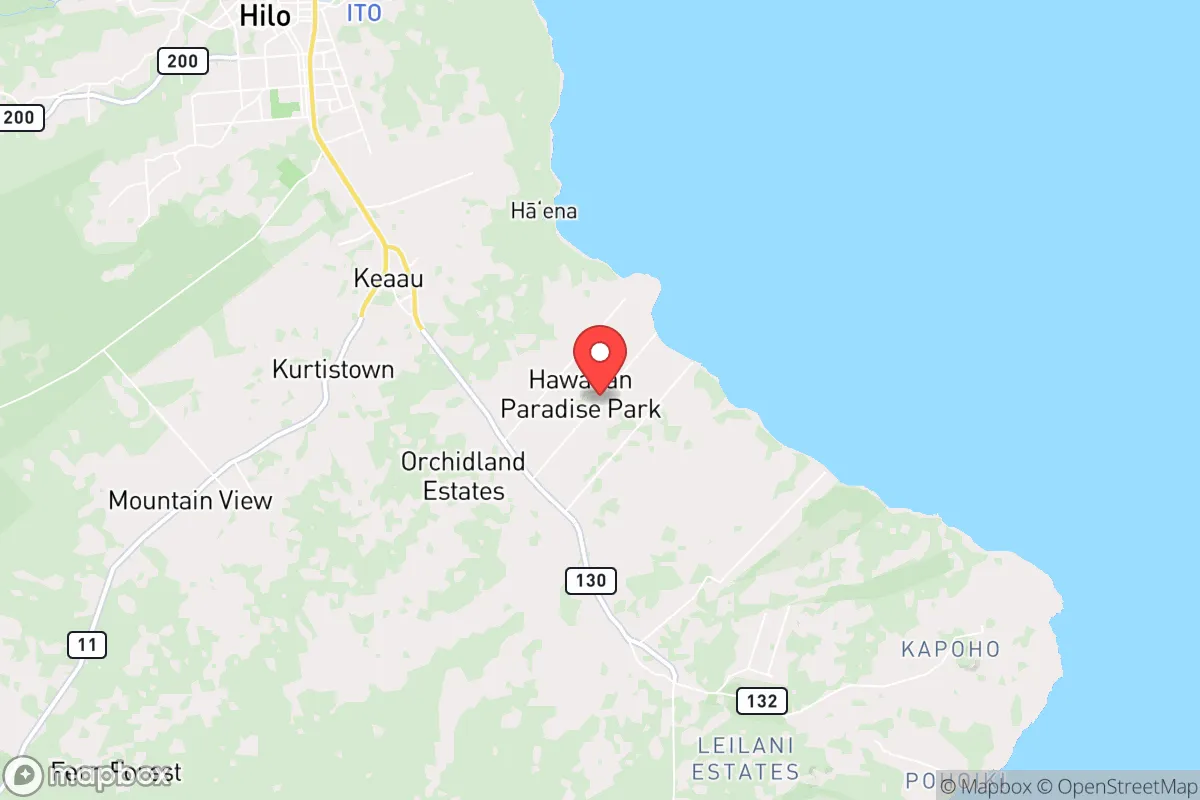
Hawaiian Paradise Park is a census-designated place (CDP) on the Big Island’s Puna district, home to roughly 13,273 residents as of the latest estimates. Its population is notably diverse, with a White plurality at 25.3%, a large East and Southeast Asian community at 21.6%, and a significant Hispanic presence at 13.6%. The area is characterized by a low-density, semi-rural layout of lava-rock lots and ohana housing, with a distinctive identity as a working-class, multiethnic enclave that values privacy and self-sufficiency over resort-style amenities.
How the city was settled and grew
Hawaiian Paradise Park was not a historic plantation town or a pre-contact Hawaiian settlement. It was created as a post-1960s subdivision, carved out of former lava flows and agricultural land in the Puna district. The original population was drawn by the promise of affordable land—lots were sold cheaply in the 1960s and 1970s, often sight unseen, to mainland buyers and local families seeking an escape from Honolulu’s high costs. The first wave of settlers were a mix of White mainlanders (often counterculture or retirement-minded) and local Hawaiian families from other parts of the island. No historic neighborhoods exist from the plantation era; instead, the subdivision was platted into numbered blocks and named sections like Paradise Park itself, Hawaiian Beaches, and Nanawale Estates. These areas were built out slowly, with many lots remaining vacant for decades. The lack of centralized water and sewer systems meant early residents relied on catchment tanks and septic, reinforcing a do-it-yourself ethos that persists today.
Modern era (post-1965)
After the 1965 Hart-Cellar Act, immigration patterns shifted Hawaii’s demographics, but Hawaiian Paradise Park’s growth was driven more by domestic in-migration than by new foreign arrivals. The foreign-born share is just 4.3%, well below the state average. The major demographic story since the 1990s has been the influx of East and Southeast Asian families—primarily Filipino and Japanese—who moved from Oahu and Hilo for cheaper land. These groups concentrated in the Hawaiian Paradise Park core and the adjacent Ainaloa subdivision. The Hispanic population, at 13.6%, is largely of Mexican and Central American origin, many working in agriculture or construction, and they have clustered in the Orchidland Estates and Fern Acres areas. The White population, while still the largest single group at 25.3%, has seen relative decline as Asian and Hispanic households have grown. The Black population remains tiny at 1.4%, and the Indian subcontinent population is effectively zero (0.0%). The college-educated share is 23.8%, reflecting a mix of remote workers and locals with associate degrees from Hawaii Community College–Pāhoa.
The future
The population of Hawaiian Paradise Park is likely to continue its slow, organic growth, driven by spillover from Hilo and from mainlanders seeking low-cost, off-grid living. The area is not homogenizing; rather, it is tribalizing into distinct enclaves along ethnic and lifestyle lines. The East and Southeast Asian community, especially Filipino families, is growing steadily through chain migration and higher birth rates, while the White population is aging and plateauing. The Hispanic enclaves in Orchidland and Fern Acres are expanding, though at a slower pace. The next 10-20 years will likely see a continued increase in Asian plurality, with the White share dropping below 20%. The area will remain a low-density, working-class suburb of Hilo, with little new commercial development and a persistent reliance on catchment water and septic systems. New arrivals will find a community that is ethnically diverse but socially segmented, where neighborly interaction is limited by large lot sizes and a culture of privacy.
For a conservative-leaning individual or family considering a move, Hawaiian Paradise Park offers affordable land and a hands-on lifestyle, but it is not a place of rapid assimilation or civic cohesion. It is becoming a patchwork of ethnic and lifestyle enclaves—Filipino, White, Hispanic, and Hawaiian—each maintaining its own social networks. The practical takeaway: expect a quiet, self-reliant existence in a multiethnic but not deeply integrated community, with the trade-off of lower housing costs and fewer services.

* Values derived from national, state, county, city and local statistics and may differ in a specific area. Last updated: 2026-04-24T14:29:44.000Z
Narrative content on this page is AI-generated and may contain mistakes. Verify any details that matter before acting on them.
ReloMaps may earn a commission from affiliate links at no extra cost to you.

