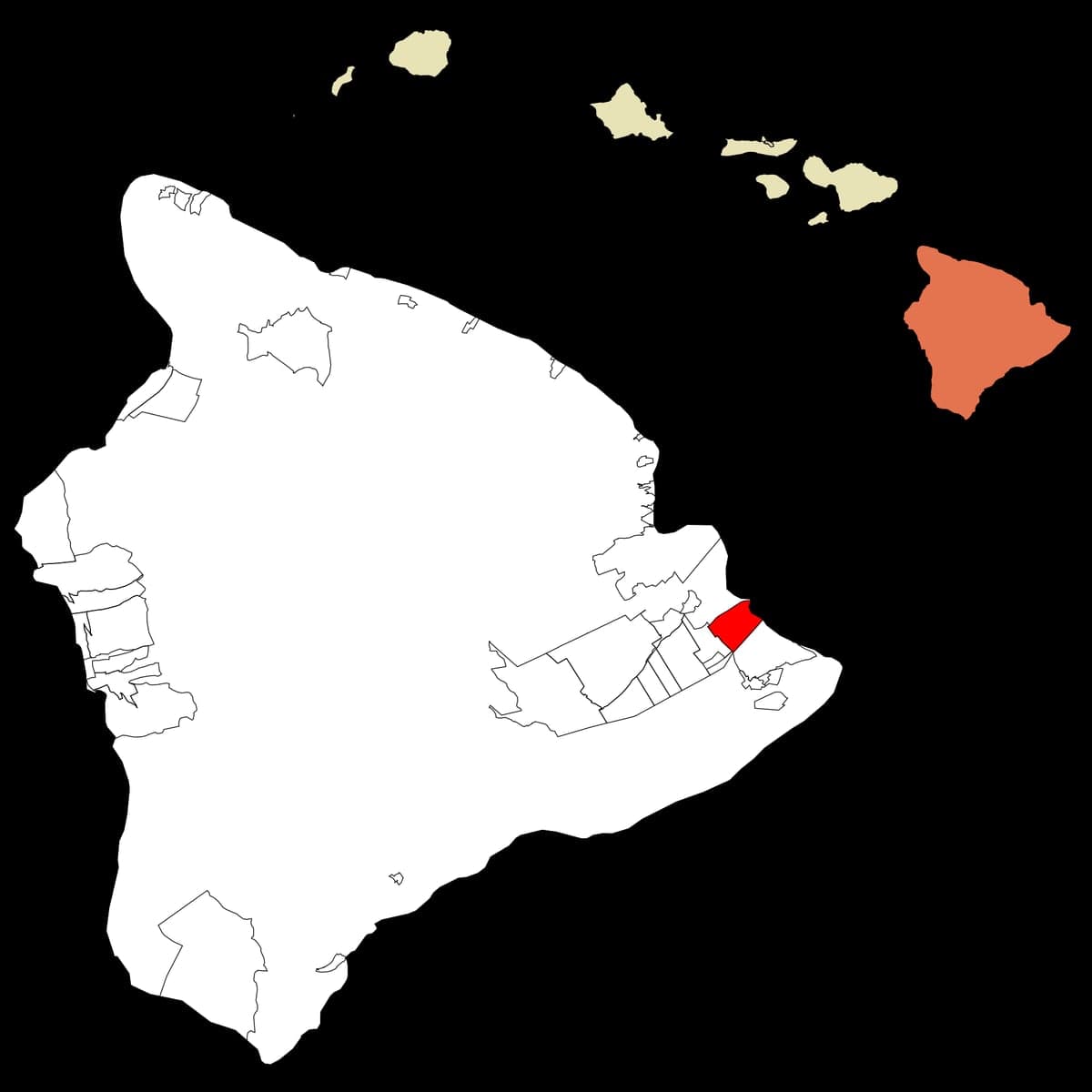
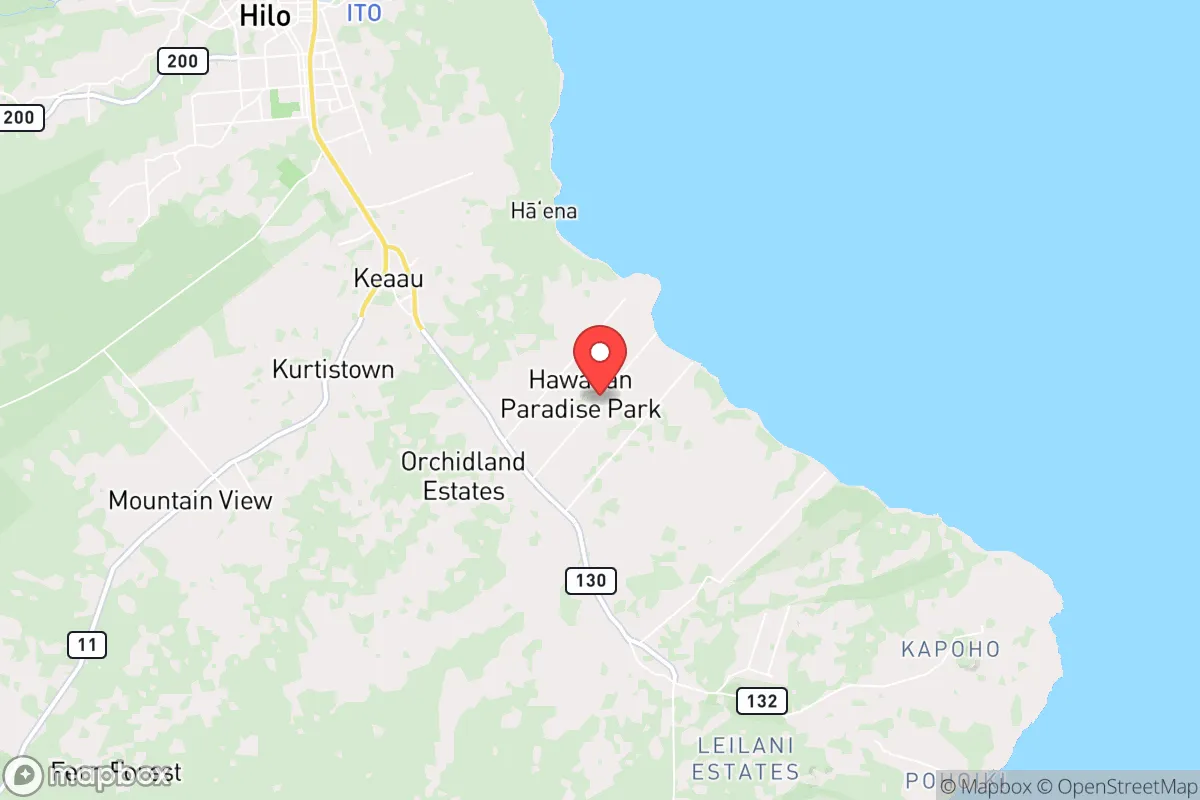
Photo: Wikipedia
Quality of Life in Hawaiian Paradise Park, HI
A high quality of life with strong walkability, manageable living costs, healthy neighborhood signals, and solid amenity access.
What does Quality of Life tell us?
Quality of Life blends cost of living, nearby amenities, socioeconomic signals, and neighborhood character. City-level scores represent the whole municipality; individual neighborhoods can differ.
What does this tell us?
Quality of Life blends cost of living, nearby amenities, socioeconomic signals, and neighborhood character. City-level scores represent the whole municipality; individual neighborhoods can differ.
Cost of Living
23% above national average
The Real Cost of Living in Hawaiian Paradise Park, HI for 2026
| Tier | Individual | Family (4) |
|---|---|---|
| Survival | $20k | $38k |
| Comfortable | $80k | $118k |
| Luxury | $135k+ | $209k+ |
| Elite (Top 5%) | $158k+ | $245k+ |
69%
The Area Signal
A metric tracking the socioeconomic signals of the area.
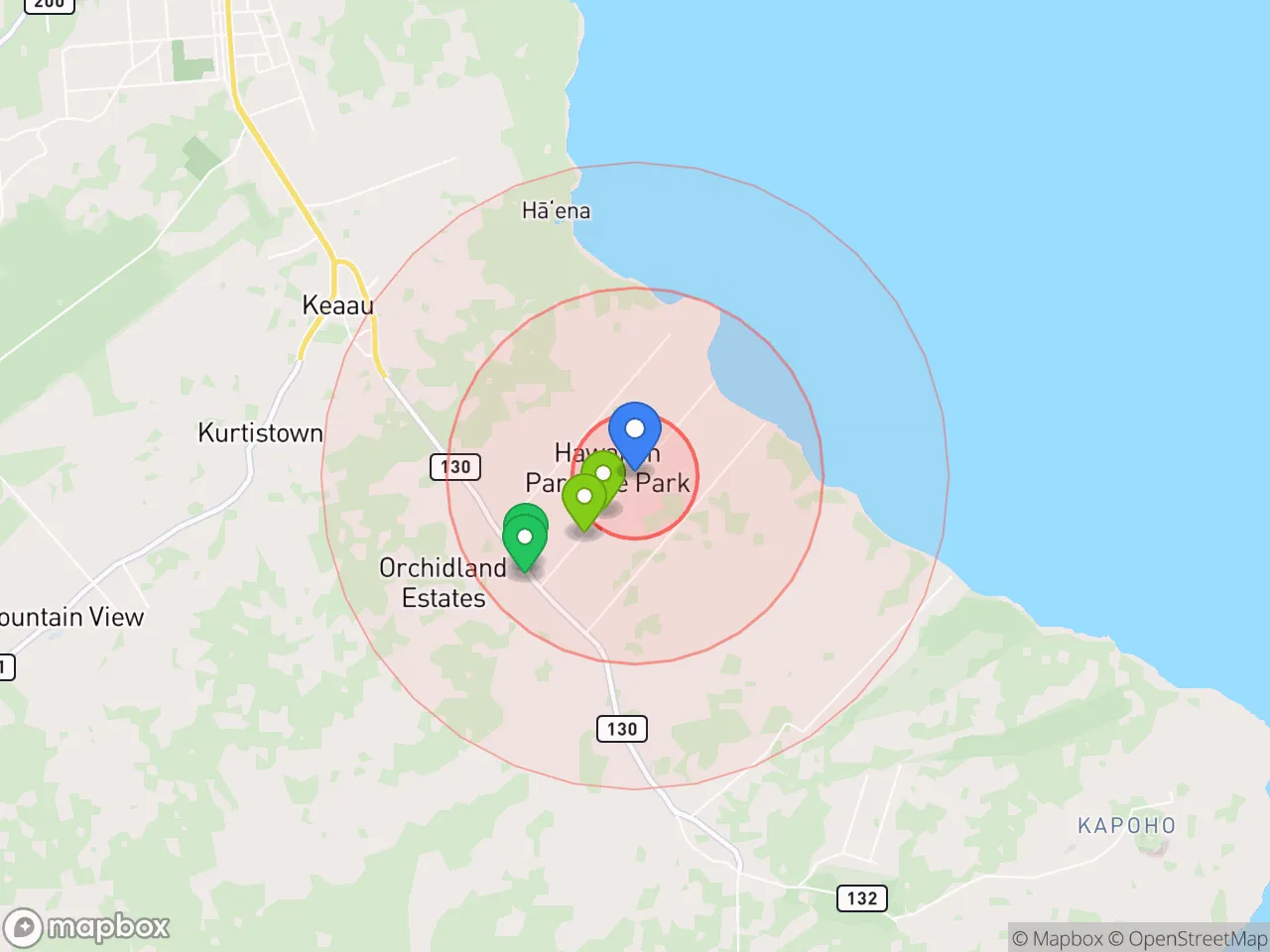
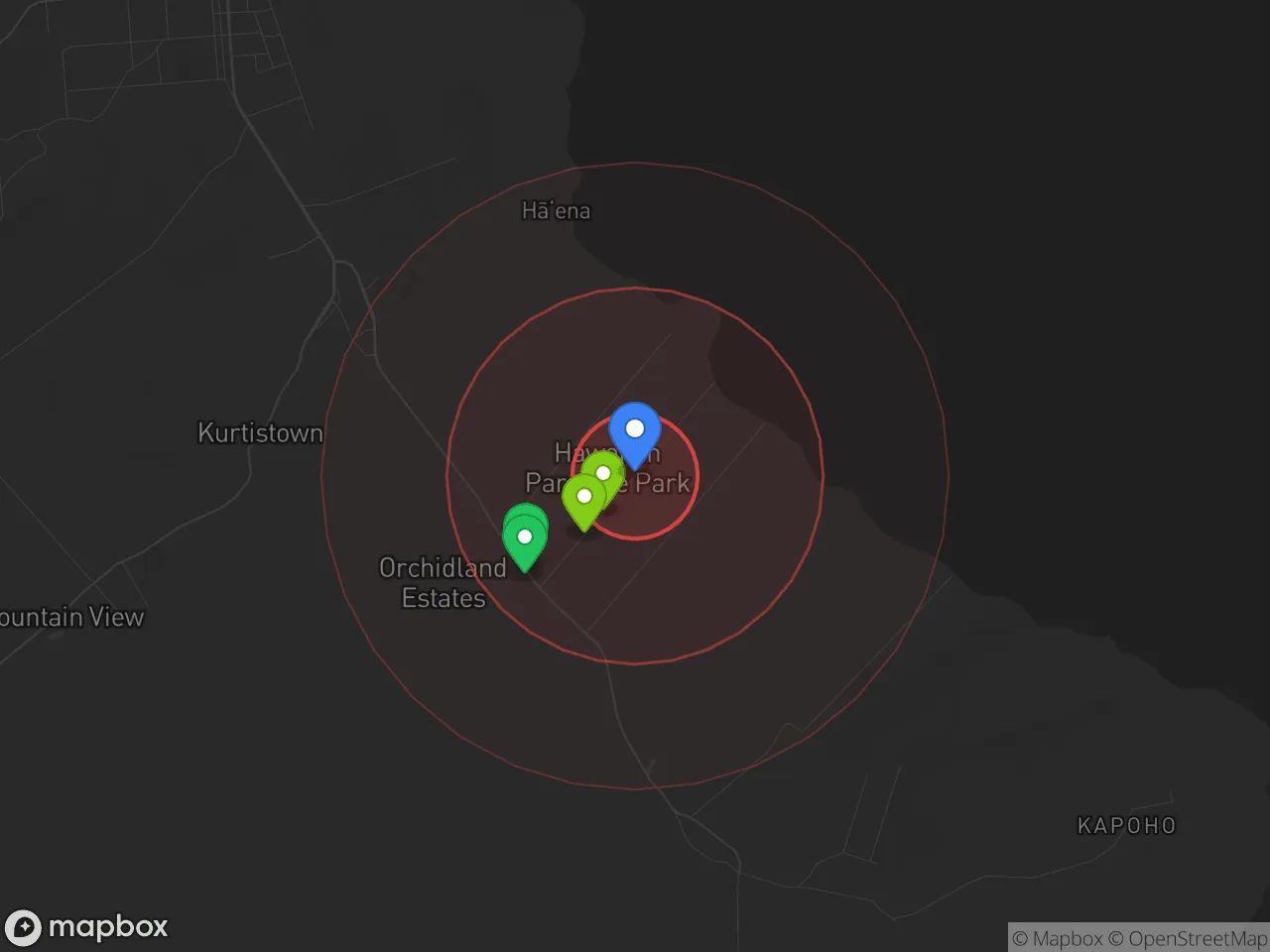
Limited data for this area
Limited data for this area
Hobbies
Explore the areaGroceries
0 within 10 miles
Gas
8 within 10 miles
Hospital
1 within 20 miles
Airport
Daniel K. Inouye International Airport
Post Office
USPS — Pahoa, HI
Critical Amenities
Quality-of-Life Analysis
Hawaiian Paradise Park offers a distinctly rural, affordable slice of life on the Big Island, attracting a mix of remote workers, retirees, and families seeking space and lower costs compared to Hilo or Kona. With a cost of living index of 123 (23% above the U.S. average), it is notably cheaper than many other Hawaiian communities, yet still more expensive than mainland averages. The area's population is a blend of long-time local families, recent transplants from the mainland, and those drawn by the promise of a quieter, more self-sufficient lifestyle on large, often forested lots.
Cost of living and housing affordability compared to Hilo and Kona
Housing is the primary driver of affordability in Hawaiian Paradise Park. The median home value of $413,800 is significantly lower than the Hawaii statewide median of roughly $650,000, and far below the $800,000+ averages seen in Kona or Honolulu. Renters also benefit, with a median rent of $1,253, which is about $300–$500 less per month than comparable units in Hilo or Kailua-Kona. However, the trade-off is that many homes in the subdivision are older, on larger lots (often 1–3 acres), and may require significant maintenance or off-grid utilities like catchment water and septic systems. The average commute of 33.5 minutes reflects the area's distance from major employment hubs; most residents drive into Hilo (about 20–25 minutes) or Pahoa (10 minutes) for work, groceries, and services. While gas and groceries are pricier than the mainland, the lower housing costs can offset these expenses for many households.
Schools, amenities, and the daily rhythm of life
Daily life in Hawaiian Paradise Park revolves around the nearby town of Pahoa, which provides basic services like a grocery store, hardware store, and a few restaurants. For more extensive shopping, medical care, and dining, residents drive to Hilo, which offers two hospitals, a community college, and a wider retail selection. The area's schools are part of the Hawaii Department of Education, with Keonepoko Elementary School serving the subdivision directly; high school students typically attend Pahoa High & Intermediate School. The subdivision itself has no centralized amenities like parks or community centers—most recreation happens on private land or at nearby beaches like MacKenzie State Recreation Area and Isaac Hale Beach Park. The rhythm of life is slow and self-directed, with many residents gardening, raising animals, or working from home. Internet access is generally available via cable or fixed wireless, but speeds can vary by street, making it essential for remote workers to verify connectivity before moving.
Hawaiian Paradise Park is best suited for those who value space, privacy, and a lower cost of entry into Hawaii living, and who are comfortable with a semi-rural, self-sufficient lifestyle. It is less ideal for those seeking walkable neighborhoods, nightlife, or immediate access to white-sand beaches. Remote workers, retirees on fixed incomes, and families who prioritize a large lot over proximity to urban conveniences will find the area a compelling, affordable alternative to the more expensive and crowded parts of the Big Island.

Crime in Hawaiian Paradise Park, HI
Generally safer than 64% of comparable U.S. locations.
Violent CrimeViolent Crime Analysis
Property CrimeProperty Crime Analysis
Crime Analysis
Hawaiian Paradise Park, a large residential subdivision in the Puna district of Hawaii County, presents a mixed safety picture that diverges significantly from the rest of the state. The community’s overall crime rate is elevated compared to both Hawaii’s statewide averages and national benchmarks, driven primarily by a high volume of property offenses. While violent crime is notably lower than the national average, the prevalence of theft, burglary, and vehicle break-ins creates a persistent concern for residents, particularly given the area’s remote, rural character and limited police presence.
Crime in context
Hawaiian Paradise Park’s violent crime rate of 200.2 incidents per 100,000 residents is well below the U.S. national average of roughly 380 per 100,000, but it is slightly above Hawaii’s statewide violent crime rate of approximately 250 per 100,000. Property crime, however, is a more acute issue: the subdivision’s rate of 1,586.9 per 100,000 far exceeds both the national average (around 1,954 per 100,000) and the Hawaii state average (roughly 2,800 per 100,000). This means that while a resident’s risk of being a victim of a violent crime is relatively low, the likelihood of experiencing theft, burglary, or vandalism is substantially higher than in most other parts of the Big Island. The data reflects a community where opportunistic property crime is a routine hazard, not an anomaly.
What residents experience
Daily life in Hawaiian Paradise Park is shaped by the need for proactive security measures. Many homes are set back from paved roads on long, unpaved driveways, and the subdivision’s dense vegetation provides cover for would-be thieves. Vehicle break-ins and package theft are the most commonly reported property crimes, with residents frequently noting that leaving a car unlocked or a visible item in a driveway invites trouble. Burglaries of unoccupied homes, particularly those used as vacation rentals or left vacant for extended periods, are also a recurring issue. The Hawaii Police Department’s Puna patrol district, which covers the subdivision, has historically been understaffed relative to call volume, meaning response times can be slow—often 30 minutes or more for non-emergency property crimes. This reality pushes many residents to rely on neighborhood watch groups, private security cameras, and community social media pages to share alerts about suspicious activity.
Neighborhood-level variation within Hawaiian Paradise Park is significant. The subdivision is divided into numbered “parks” (e.g., Park 1, Park 2), and crime tends to cluster in areas closer to the main highway (Highway 130) and near the subdivision’s commercial nodes, such as the Keaau-Pahoa corridor. Properties deeper in the subdivision, especially those on unpaved roads with limited through traffic, generally experience lower rates of property crime, though they are not immune. The presence of transient populations and unpermitted vacation rentals in certain pockets also correlates with higher incident reports. For prospective residents, consulting local crime maps and speaking with long-term neighbors in a specific park is essential to understanding the true risk profile of a given street.
* Values derived from national, state, county, city and local statistics and may differ in a specific area. Last updated: 2026-04-24T14:29:44.000Z
Narrative content on this page is AI-generated and may contain mistakes. Verify any details that matter before acting on them.
ReloMaps may earn a commission from affiliate links at no extra cost to you.

