Photo: Wikipedia
Strategic Assessment of Hawaiian Paradise Park, HI
Strong survivability profile. Good buffer from population centers, with manageable environmental and tactical risks.
What does the Strategic Assessment tell us?
Our Strategic Assessment grades tactical survivability of an area. Major population centers, military targets, fallout zones, natural disasters, and border exposure all drive risk — lower exposure means a more defensible position in a crisis.
This is heavily inspired by Joel Skousen's Strategic Relocation book. Highly recommended you checkout the book ($)What does this tell us?
Our Strategic Assessment grades tactical survivability of an area. Major population centers, military targets, fallout zones, natural disasters, and border exposure all drive risk — lower exposure means a more defensible position in a crisis.
This is heavily inspired by Joel Skousen's Strategic Relocation book. Highly recommended you checkout the book ($)Strategic Pillars

Key Distances
Regional Safe Places
Below is our recommended "safe zones" in Hawaii and the surrounding area based on our strategic heuristics. For most people, it's unrealistic to live in a “safe zone” full-time due to work, family or other personal reasons. They tend to be more rural. However, many of these areas are perfect for second homes and retreat properties that double as a vacation home or even a short-term rental.

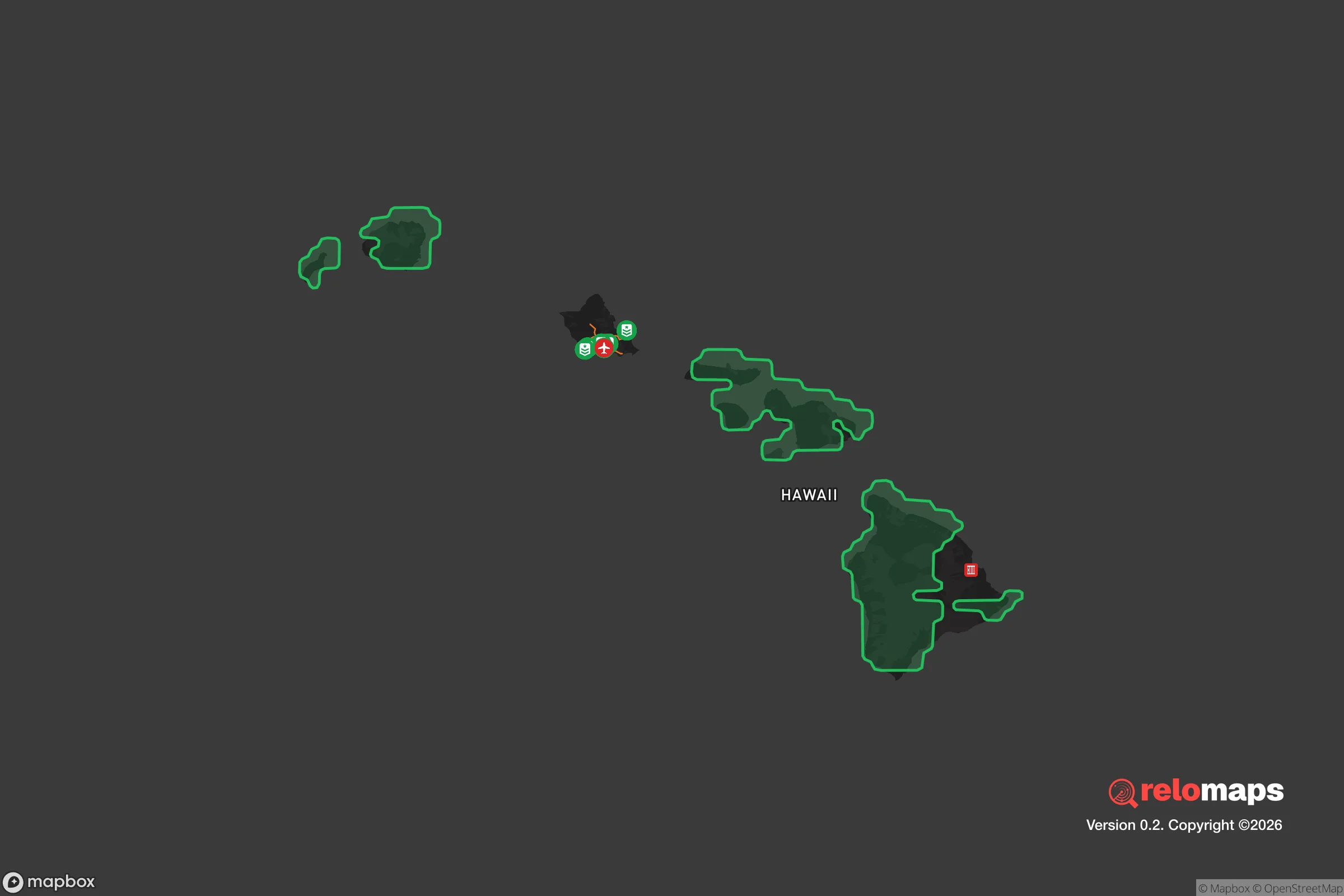


Important Note: For informational purposes only. This does not mean nothing bad ever happens in the green zones. Please use common sense. This is based on public data and modeled with AI. We tried to take a conservative approach but mistakes happen. We update this regularly as new information becomes available.
Solar Generator Recommendations
Backup power matters more here than in safer locations. We've picked three solar generators across budgets and capacity tiers — start with the budget unit if you only need a few essentials, or step up if you want to run a fridge and HVAC for days at a time.

Jackery Portable Power Station Explorer 300
Budget OptionPower on the Go: Weighing only 11 lbs, it's convenient to set up and store with book-sized foldable solar panels

BLUETTI Portable Power Station AC180
Designed for both indoor and outdoor scenarios, AC180 is highly capable as it has a robost capacity and continuous output power.

EF ECOFLOW DELTA Pro Ultra Power Station
Upgraded PickEcoFlow DELTA Pro Ultra is a whole-home energy system designed to grow with your family. Integrated with the Smart Home Panel 2, it scales to meet your evolving energy needs — keeping your home powered, intelligent, and secure through every stage of life.
We earn a commission, at no additional cost to you.
Strategic Assessment Analysis
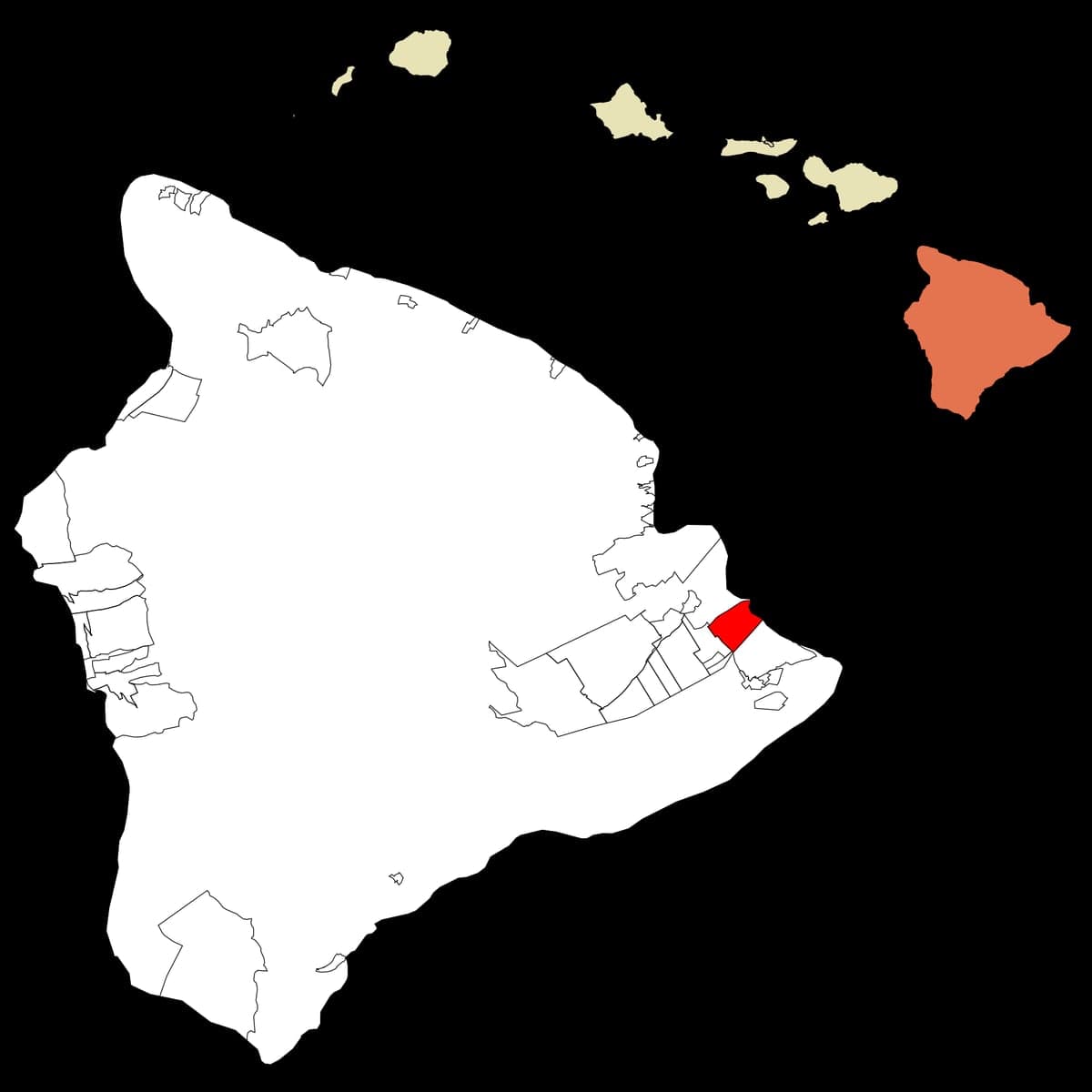
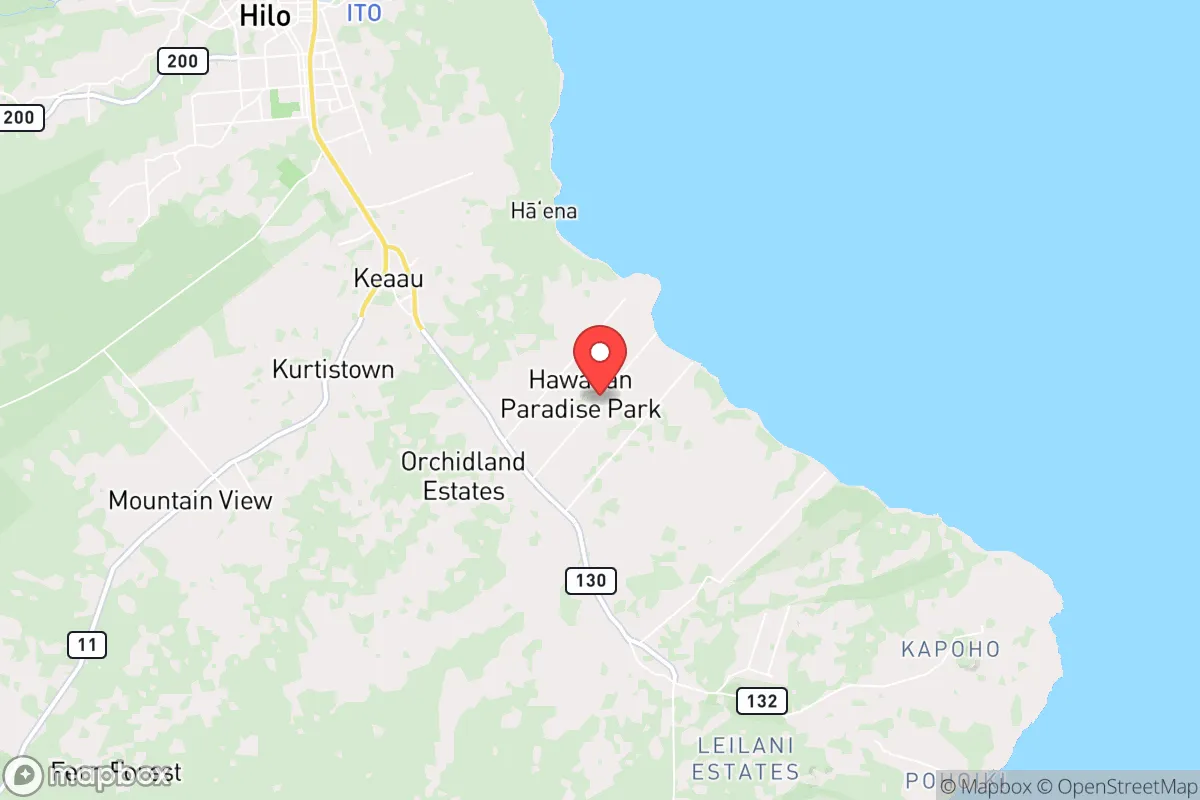
Hawaiian Paradise Park on the Big Island offers a unique strategic position for those prioritizing resilience and self-sufficiency, but it comes with significant trade-offs that demand careful consideration. Located in the Puna district, roughly 20 miles south of Hilo, this unincorporated community of about 11,000 residents sits on the eastern rift zone of Kīlauea volcano, placing it far from the major population centers of Honolulu and the mainland’s urban corridors. For a relocator with a survivalist mindset, the key advantage is geographic isolation—the nearest major city, Hilo, is a 30-minute drive away, and the rest of the state is separated by ocean, providing a natural buffer against cascading societal collapse scenarios. However, this isolation is a double-edged sword, as the area’s volcanic activity, limited infrastructure, and distance from supply chains create vulnerabilities that must be weighed against its defensive benefits.
Geographic position and natural advantages for long-term survival
Hawaiian Paradise Park’s location on the Big Island’s eastern side provides a mix of defensive and resource-based advantages that align with prepper priorities. The community is situated on a 5,000-acre lava flow from the 1960 eruption, which means the terrain is rugged and largely undeveloped, offering natural concealment and limited road access—only a few paved roads connect it to Highway 130, the main artery to Hilo. This low population density (roughly 2.2 people per acre) reduces the risk of mass panic or resource competition during a crisis, unlike denser areas like Honolulu or Kailua-Kona. The surrounding rainforest and volcanic slopes provide abundant rainfall—averaging 120 inches annually—which supports off-grid water collection and subsistence gardening, a critical advantage for food security. The area’s elevation, ranging from 100 to 800 feet above sea level, keeps temperatures moderate (70–80°F year-round), reducing energy needs for heating or cooling. For a relocator, the ability to harvest rainwater, grow tropical crops like taro and breadfruit, and rely on solar power (given consistent cloud cover but ample diffuse light) makes this a viable long-term homestead location, provided you can secure a parcel with a catchment system and a well.
Risks, exposures, and proximity to fallout-relevant landmarks
The most glaring vulnerability of Hawaiian Paradise Park is its location on an active volcanic rift zone, which poses a direct threat to life and property. The 2018 Kīlauea eruption destroyed over 700 homes in the nearby Leilani Estates subdivision, just 3 miles west of Paradise Park, and lava flows can cut off Highway 130, the only evacuation route to Hilo. For a survivalist, this means any long-term setup must account for the possibility of sudden evacuation or total loss—a risk that outweighs the defensive benefits for many. Additionally, the area is within 30 miles of the Puna Geothermal Venture plant, a potential industrial target during civil unrest, and 40 miles from Hilo’s port and airport, which could become chokepoints for supply chains or targets in a broader conflict. The Big Island’s distance from Oahu (200 miles) and the mainland (2,500 miles) means that in a national emergency, resupply from the outside would be severely delayed, and the island’s own resources—food, fuel, medical supplies—are limited. The Hawaii Volcanoes National Park, 10 miles to the southwest, is a major tourist attraction that could become a liability if large numbers of people flee there during a disaster, straining local resources. For a conservative-leaning relocator concerned about societal breakdown, the proximity to these landmarks—combined with the island’s dependence on imported goods (85% of food is shipped in)—makes this a high-risk, high-reward proposition.
Practical resilience for a relocator: food, water, energy, and defensibility
Self-sufficiency in Hawaiian Paradise Park is achievable but requires significant upfront investment and a willingness to adapt to the local environment. Water is the strongest asset: the area’s high rainfall allows for reliable catchment systems, and many homes already have 10,000–20,000-gallon tanks, which can provide months of supply with proper filtration. However, the volcanic soil is acidic and nutrient-poor, so food production demands raised beds, composting, and imported soil amendments—a long-term project that won’t yield results quickly. Energy is a mixed bag: solar panels work, but the frequent cloud cover reduces efficiency by 20–30% compared to sunnier parts of the island, so a backup generator or wind turbine (given the trade winds) is essential. Defensibility is moderate—the community’s layout is a grid of unpaved roads and dense vegetation, making it easy to set up perimeter alerts and hard for outsiders to navigate, but the lack of a centralized law enforcement presence (the Hawaii County Police Department has limited coverage in Puna) means you must rely on yourself and neighbors. The nearest hospital is in Hilo, 30 minutes away, and the local clinic in Keaau is small, so medical self-sufficiency—stockpiling supplies and learning basic trauma care—is non-negotiable. For a single individual or family, the key is to secure a property with a catchment system, solar array, and defensible access point (e.g., a gated driveway), and to build a network with like-minded locals through the Puna Preppers group or similar meetups.
Overall, Hawaiian Paradise Park presents a strategic paradox for the survivalist relocator: it offers genuine isolation and natural resources that could sustain a long-term retreat, but the volcanic risk and logistical fragility of island life create vulnerabilities that may outweigh the benefits for those prioritizing absolute security. For a conservative-leaning individual or family willing to accept the geological hazard and invest heavily in off-grid infrastructure, this area provides a viable option for riding out societal collapse, especially if you can establish a self-sufficient homestead before a crisis hits. However, the dependence on imported goods, the single evacuation route, and the proximity to potential fallout zones like the geothermal plant and Hilo’s infrastructure mean that this is not a location for those seeking a low-maintenance bug-out spot—it’s a full-time commitment that demands constant vigilance and adaptation. If you’re looking for a place where you can truly disappear and live off the land, with the ocean as a moat and the volcano as a wildcard, Hawaiian Paradise Park fits the bill, but only for those who understand that the price of that isolation is a constant dance with nature’s most unpredictable forces.

* Values derived from national, state, county, city and local statistics and may differ in a specific area. Last updated: 2026-04-24T14:29:44.000Z
Narrative content on this page is AI-generated and may contain mistakes. Verify any details that matter before acting on them.
ReloMaps may earn a commission from affiliate links at no extra cost to you.

