 Popular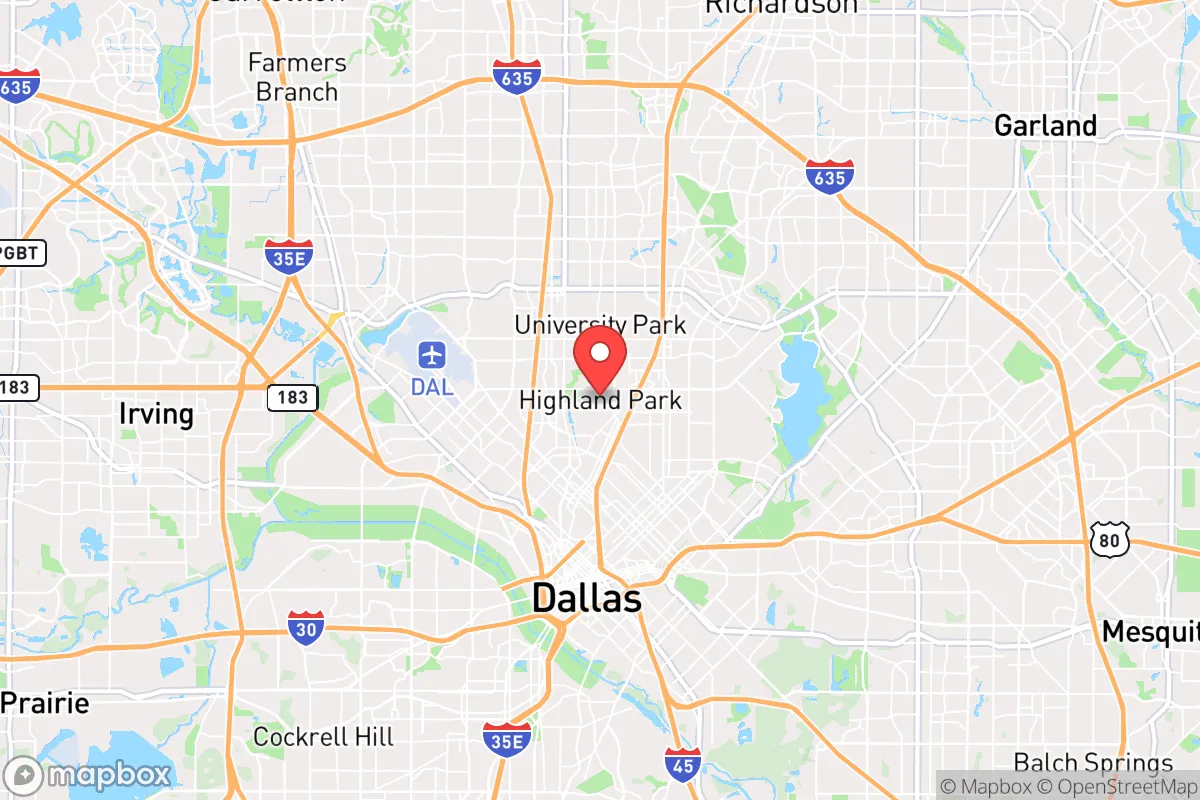
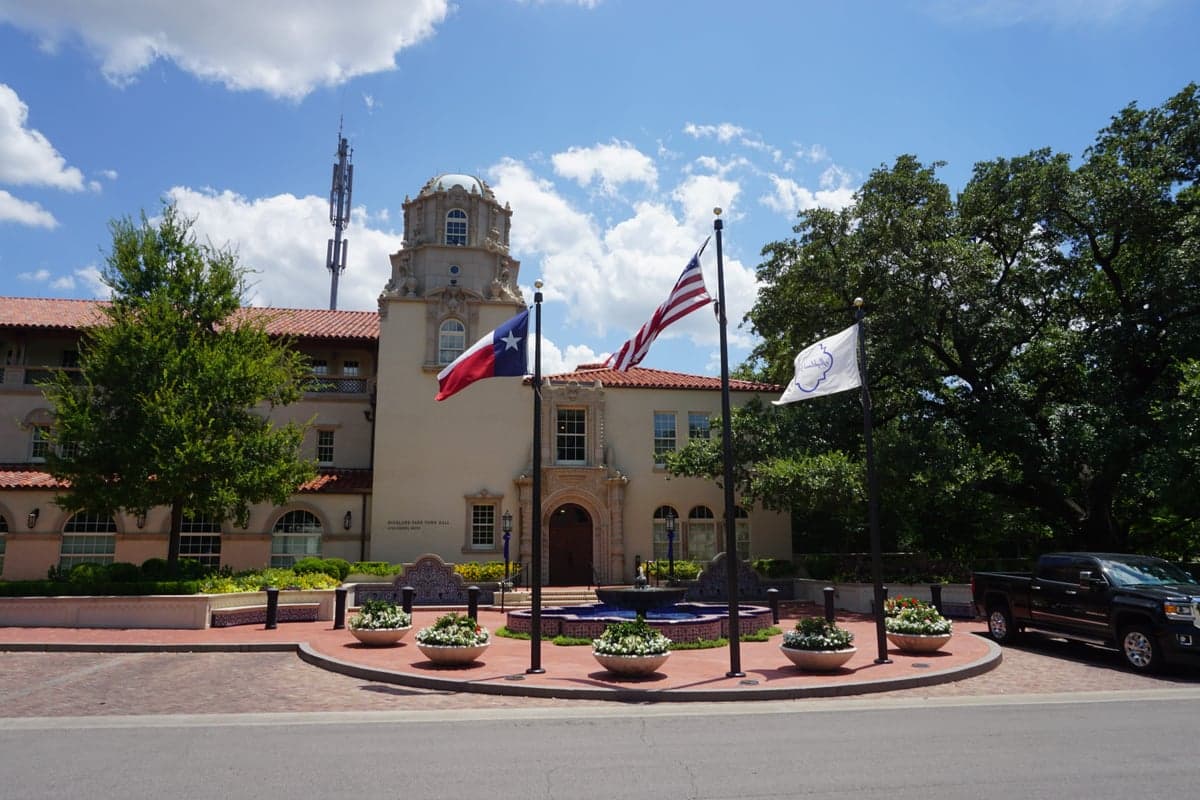
Photo: Wikipedia
Strategic Assessment of Highland Park, TX
Multiple tactical vulnerabilities. Population density, target proximity, or disaster risk are likely compounding. A retreat property and exit planning is required.
What does the Strategic Assessment tell us?
Our Strategic Assessment grades tactical survivability of an area. Major population centers, military targets, fallout zones, natural disasters, and border exposure all drive risk — lower exposure means a more defensible position in a crisis.
This is heavily inspired by Joel Skousen's Strategic Relocation book. Highly recommended you checkout the book ($)What does this tell us?
Our Strategic Assessment grades tactical survivability of an area. Major population centers, military targets, fallout zones, natural disasters, and border exposure all drive risk — lower exposure means a more defensible position in a crisis.
This is heavily inspired by Joel Skousen's Strategic Relocation book. Highly recommended you checkout the book ($)Strategic Pillars

Key Distances
Regional Safe Places
Below is our recommended "safe zones" in Texas and the surrounding area based on our strategic heuristics. For most people, it's unrealistic to live in a “safe zone” full-time due to work, family or other personal reasons. They tend to be more rural. However, many of these areas are perfect for second homes and retreat properties that double as a vacation home or even a short-term rental.

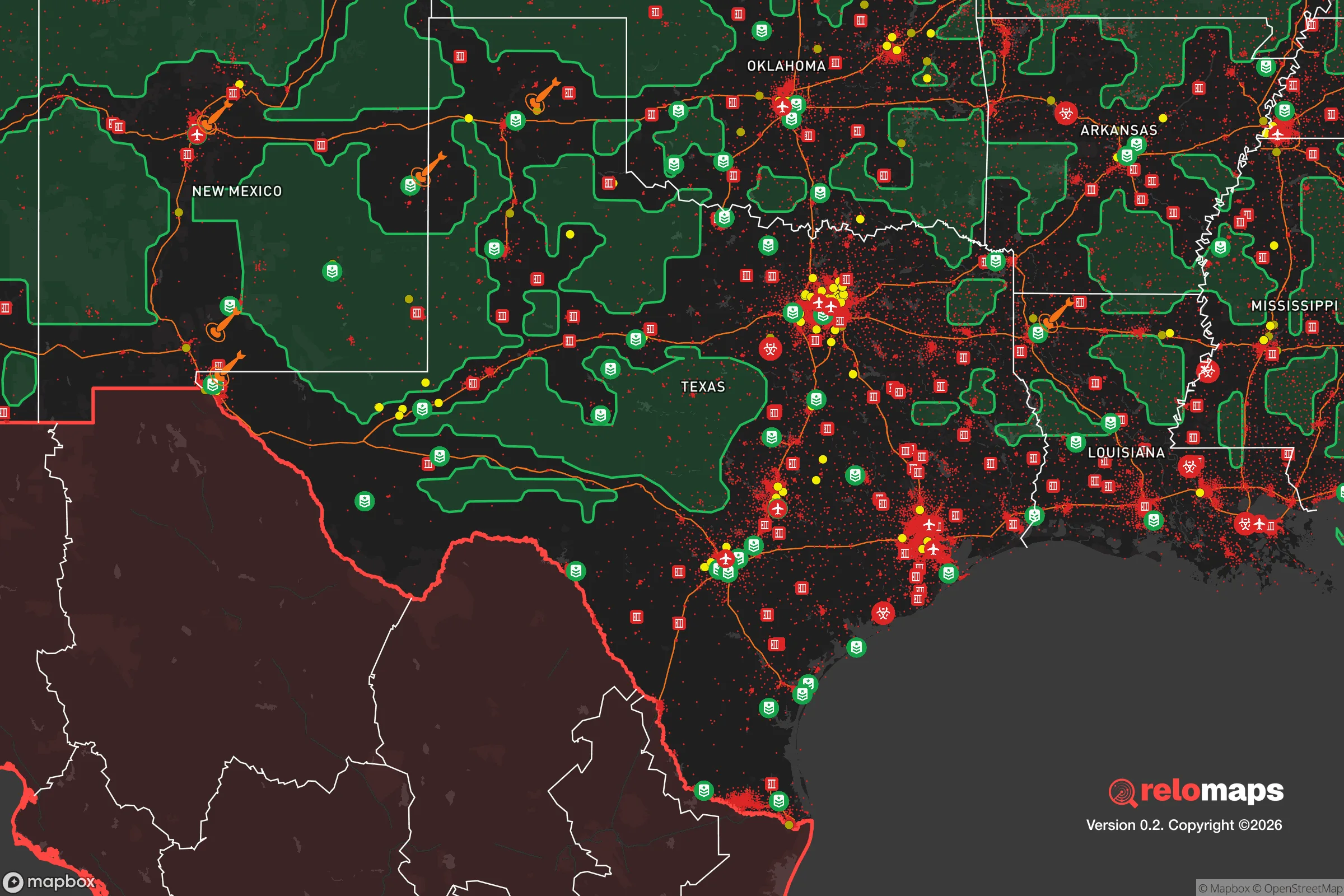


Important Note: For informational purposes only. This does not mean nothing bad ever happens in the green zones. Please use common sense. This is based on public data and modeled with AI. We tried to take a conservative approach but mistakes happen. We update this regularly as new information becomes available.
Solar Generator Recommendations
Backup power matters more here than in safer locations. We've picked three solar generators across budgets and capacity tiers — start with the budget unit if you only need a few essentials, or step up if you want to run a fridge and HVAC for days at a time.

Jackery Portable Power Station Explorer 300
Budget OptionPower on the Go: Weighing only 11 lbs, it's convenient to set up and store with book-sized foldable solar panels

BLUETTI Portable Power Station AC180
Designed for both indoor and outdoor scenarios, AC180 is highly capable as it has a robost capacity and continuous output power.

EF ECOFLOW DELTA Pro Ultra Power Station
Upgraded PickEcoFlow DELTA Pro Ultra is a whole-home energy system designed to grow with your family. Integrated with the Smart Home Panel 2, it scales to meet your evolving energy needs — keeping your home powered, intelligent, and secure through every stage of life.
We earn a commission, at no additional cost to you.
Strategic Assessment Analysis
Highland Park, Texas, presents a paradox for the strategic relocator: it sits in the heart of one of the most politically and logistically vulnerable metropolitan areas in the country, yet its physical layout, wealth concentration, and community cohesion offer a rare degree of localized resilience. For the conservative prepper who cannot or will not retreat to a remote compound, this enclave within Dallas provides a defensible, resource-rich island—provided you understand the risks of the surrounding sea. The town’s location, just north of downtown Dallas and surrounded by the city of University Park, creates a dense, high-value target zone that demands a clear-eyed assessment of both its natural advantages and its exposure to cascading threats.
Geographic position and natural advantages: a fortified island in a vulnerable metroplex
Highland Park’s primary strategic asset is its geography within the Dallas-Fort Worth metroplex, but not in the way most relocation guides describe. The town sits on a relatively flat, elevated plateau above the Trinity River floodplain, meaning it avoids the flash-flooding risks that plague parts of Dallas and Oak Lawn. The area’s clay-based soil, while challenging for gardening, provides stable foundations for reinforced structures—a non-trivial consideration for anyone building a safe room or underground storage. The town is bounded by the Dallas North Tollway to the west and U.S. Highway 75 to the east, creating natural chokepoints that can be monitored or controlled during unrest. More importantly, Highland Park’s street grid is a deliberate maze of cul-de-sacs and winding lanes, designed in the early 20th century to discourage through traffic. This layout, combined with the town’s own police force (the Highland Park Department of Public Safety, with a response time under three minutes), makes it one of the most defensible residential areas in North Texas. The nearby Turtle Creek and the Katy Trail greenbelt offer limited but viable escape corridors on foot or bicycle if vehicle routes become compromised.
Risks, exposures, and proximity to fallout-relevant landmarks
The most significant vulnerability for Highland Park is its proximity to high-value, high-risk targets that would attract attention during any major civil unrest or terrorist event. The town lies less than five miles from downtown Dallas, home to the Federal Reserve Bank of Dallas, the JFK assassination site (a perennial symbolic target), and multiple federal office buildings. Love Field Airport, a major general aviation and commercial hub, is just three miles west—a likely staging area for federal response or, conversely, a target for disruption. The nearby SMU campus, while not a direct threat, could become a flashpoint during political protests. For the prepper, the density of the surrounding area is the primary concern: a grid-down event or supply chain collapse would see hundreds of thousands of people from Dallas, Oak Lawn, and Uptown moving north toward Highland Park’s relative affluence and presumed resources. The town’s perimeter is porous along the major arterials, and while the police force is excellent, it cannot hold a perimeter against a determined crowd. Additionally, the town sits within the Dallas-Fort Worth tornado alley, and while the flat terrain offers some warning time, a direct hit from an EF-3 or higher would overwhelm local shelter capacity. The risk of a chemical or hazmat incident from the nearby rail lines and industrial corridors along I-30 and I-35 is low but non-zero.
Practical resilience for a relocator: food, water, energy, and defensibility
For the individual or family willing to invest, Highland Park offers a surprisingly strong foundation for practical resilience. The town’s water supply comes from the Dallas Water Utilities system, drawing from the Elm Fork of the Trinity River and several reservoirs. A prolonged outage would be catastrophic for the broader metroplex, but Highland Park’s elevation and proximity to the Turtle Creek watershed mean that a private well (with proper permits) is feasible on larger lots, and rainwater catchment from the many large roofs is viable. The area’s climate supports year-round vegetable gardening in raised beds, though the clay soil requires amendment. The town’s strict zoning and homeowners’ association rules are a double-edged sword: they prevent the kind of visible prepping that might draw unwanted attention, but they also mean that a well-stocked pantry, solar panels, and a backup generator must be discreetly integrated. The local energy grid is served by Oncor, and while rolling blackouts are rare, the affluent nature of the neighborhood means that many homes already have natural gas generators—a critical advantage during extended outages. For food storage, the nearby Central Market and Whole Foods in the Park Cities are high-volume stores that would be stripped within hours of a crisis, so a serious relocator should maintain a 90-day supply at home. Defensibility is enhanced by the town’s strong social fabric: neighborhood watch programs, active Nextdoor groups, and a culture of mutual assistance among long-term residents. The Highland Park Village shopping center, with its high-end retail and restaurants, could serve as a rallying point or supply hub in a managed crisis, but it would also be a magnet for looting if law enforcement is overwhelmed.
The overall strategic picture for Highland Park is one of high reward paired with high risk. It is not a bug-out location—it is a shelter-in-place fortress for those who can afford the real estate and the preparation costs. The town’s wealth, police protection, and physical layout make it one of the most survivable urban enclaves in Texas during a short-term crisis (days to weeks). However, its location within the Dallas metroplex means that any long-term collapse (months or years) would eventually see the surrounding population pressing inward, and the town’s resources would become a liability rather than an asset. For the conservative relocator who works in Dallas and wants a home base that can weather a moderate disruption while maintaining a low profile, Highland Park is a strong choice. For those planning for a complete societal breakdown, it is a temporary haven at best—a place to ride out the first wave before moving to a more remote secondary location. The key is to treat Highland Park as a strategic forward operating base, not a final redoubt. Invest in underground storage, a discreet water filtration system, and a vehicle capable of navigating clogged highways, and you will have a decade of relative safety in one of the most politically aligned communities in the state. Just do not mistake its manicured lawns for a guarantee of safety when the world outside its borders turns hostile.

* Values derived from national, state, county, city and local statistics and may differ in a specific area. Last updated: 2026-04-14T23:44:33.000Z
Narrative content on this page is AI-generated and may contain mistakes. Verify any details that matter before acting on them.
ReloMaps may earn a commission from affiliate links at no extra cost to you.

