
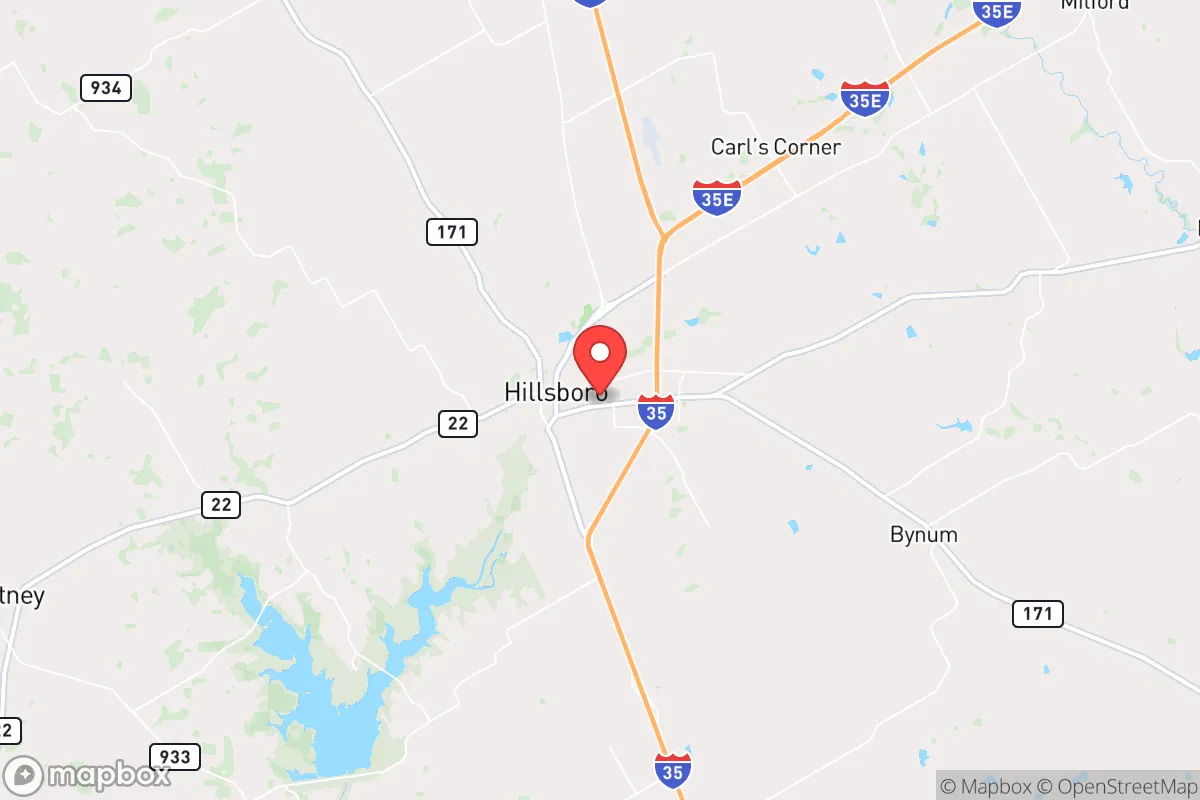
Photo: Wikipedia
Quality of Life in Hillsboro, TX
A high quality of life with strong walkability, manageable living costs, healthy neighborhood signals, and solid amenity access.
What does Quality of Life tell us?
Quality of Life blends cost of living, nearby amenities, socioeconomic signals, and neighborhood character. City-level scores represent the whole municipality; individual neighborhoods can differ.
What does this tell us?
Quality of Life blends cost of living, nearby amenities, socioeconomic signals, and neighborhood character. City-level scores represent the whole municipality; individual neighborhoods can differ.
Cost of Living
34% below national average
The Real Cost of Living in Hillsboro, TX for 2026
| Tier | Individual | Family (4) |
|---|---|---|
| Survival | $15k | $28k |
| Comfortable | $25k | $36k |
| Luxury | $83k+ | $129k+ |
| Elite (Top 5%) | $98k+ | $152k+ |
155%
The Area Signal
A metric tracking the socioeconomic signals of the area.
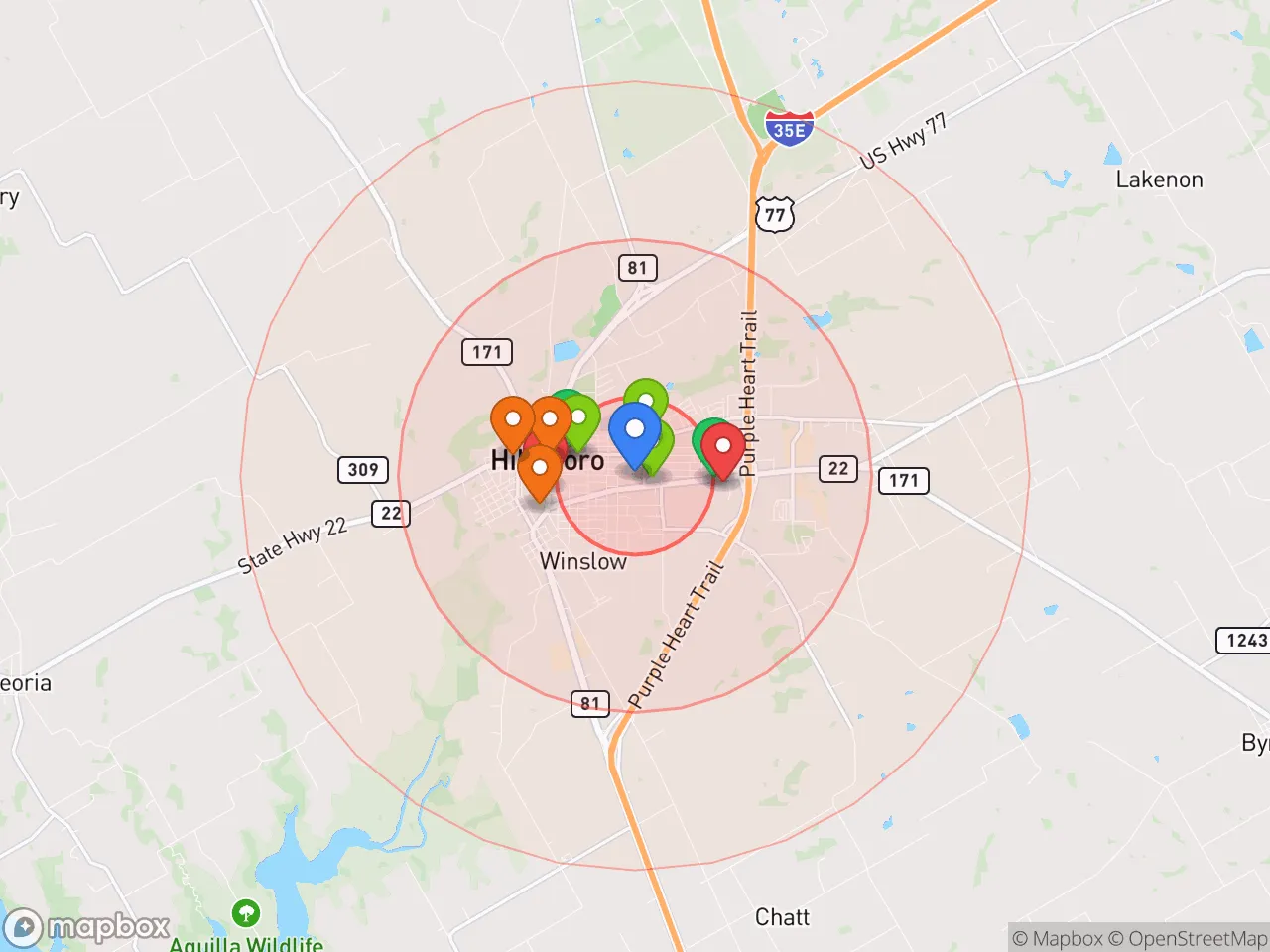
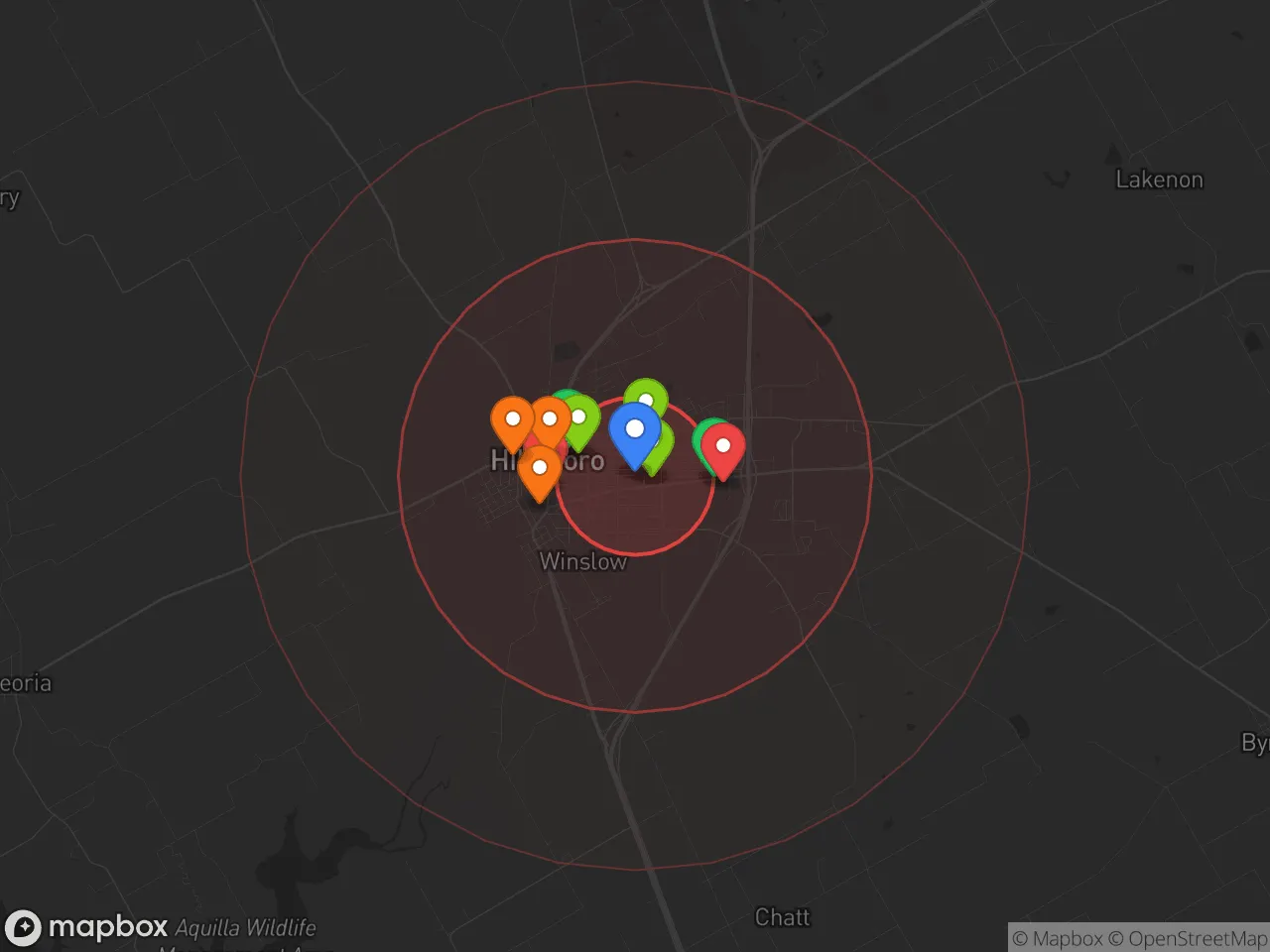
Hobbies
Explore the areaGroceries
2 within 10 miles
Gas
18 within 10 miles
Hospital
1 within 20 miles
Airport
DFW — Dallas/Fort Worth International
Post Office
USPS — Hillsboro, TX
Critical Amenities
Quality-of-Life Analysis
Hillsboro, Texas, offers a notably low cost of living that attracts a mix of working-class families, retirees, and commuters seeking affordable housing within striking distance of the Dallas-Fort Worth metroplex. With a cost-of-living index of 66—34 percent below the U.S. average—the city provides a financial cushion that is increasingly rare in North Texas. The population skews toward those who prioritize budget stability over urban amenities, including a growing number of remote workers and tradespeople employed in the region’s logistics and manufacturing sectors.
Cost of living, housing prices, and how Hillsboro compares to nearby cities
Housing in Hillsboro is dramatically cheaper than in most of Texas. The median home value sits at $118,400, roughly one-third the median in the Dallas-Fort Worth metro area and about half the statewide median. Median rent is $948, making it one of the most affordable rental markets in Hill County. For context, a comparable home in Waco (40 miles north) would cost roughly 30 percent more, while in suburban Fort Worth the price gap widens to over 200 percent. The average commute of 21.7 minutes is slightly shorter than the national average, reflecting the fact that many residents work locally in retail, healthcare, or at the Hill County government offices, though a notable minority commutes to jobs in Waco or even DFW via I-35. Property taxes in Hill County run about 1.7–1.9 percent of assessed value, which is typical for rural Texas but still manageable given the low base home price.
What daily life is like for families: amenities, schools, and local rhythm
Daily life in Hillsboro centers on a compact downtown with a historic courthouse square, a handful of locally owned restaurants, and basic retail along I-35. The Hillsboro Independent School District serves most families, with three elementary schools, one middle school, and Hillsboro High School (enrollment roughly 900). The district’s academic ratings are average for the region, with a 2024 accountability score of B from the Texas Education Agency. For groceries and errands, residents rely on a Walmart Supercenter and a Brookshire’s; for more extensive shopping or entertainment, most drive 30–40 minutes to Waco or 50 minutes to the southern edge of the DFW suburbs. The city’s recreational offerings include the Hillsboro Community Center, a public pool, and several small parks, but there is no major hospital within city limits—the nearest full-service emergency room is in Waco. The pace of life is slow and neighborly, with community events like the annual Hill County Fair and Christmas on the Square drawing consistent local turnout.
Hillsboro is best suited for budget-conscious homebuyers, retirees on fixed incomes, and families who do not require urban nightlife or elite school districts. The combination of a cost-of-living index of 66 and a median home value under $120,000 makes it one of the most affordable incorporated cities in the I-35 corridor between Austin and Dallas. However, the trade-offs include limited local employment diversity, a thin healthcare network, and a school system that, while adequate, does not match the academic performance of suburban districts. For those who value financial breathing room over proximity to cultural amenities, Hillsboro delivers a stable, low-stress base in central Texas.

Crime in Hillsboro, TX
Lower crime rates than 83% of comparable U.S. locations.
Violent CrimeViolent Crime Analysis
Property CrimeProperty Crime Analysis
Crime Analysis
Hillsboro, Texas, presents a mixed safety profile for prospective residents. The city’s violent crime rate of 154.6 incidents per 100,000 people is notably lower than both the Texas state average and national figures, while its property crime rate of 1,711.2 per 100,000 sits slightly above the national median. This combination means that while serious violent offenses are relatively rare, property-related crimes like theft and burglary are a more common concern for those living in or moving to this Hill County seat.
Crime in context
To understand Hillsboro’s safety, it helps to compare it directly to broader benchmarks. The city’s violent crime rate is roughly half the national average of approximately 380 per 100,000, and well below the Texas average of around 430 per 100,000. This makes Hillsboro statistically safer than many larger Texas metros, including Dallas-Fort Worth and Houston, where violent crime rates often exceed 500 per 100,000. However, the property crime rate is about 15% higher than the national average of roughly 1,500 per 100,000. This elevated property crime figure is typical for smaller cities situated along major interstate corridors—Hillsboro sits at the junction of I-35 and I-35E—where transient populations and easy highway access can contribute to theft and vehicle break-ins.
What residents experience
For daily life in Hillsboro, the low violent crime rate means most residents rarely encounter serious personal threats. The most common safety issues involve theft from vehicles, burglary of sheds or garages, and occasional shoplifting at the city’s outlet mall and retail centers. Residents typically report feeling safe walking downtown or in residential neighborhoods during the day, though caution is advised after dark in less-trafficked areas. It is important to note that Hillsboro operates under a traditional Texas justice system, with elected judges and a district attorney who generally take a law-and-order approach. This stands in contrast to larger, more progressive metro areas where liberal district attorneys have been criticized for policies that reduce incarceration rates and plea down serious charges, potentially leading to more repeat offenders on the street. In Hillsboro, the local legal climate tends to prioritize public safety and victim rights over offender rehabilitation, which aligns with the conservative values of the region and helps maintain the city’s low violent crime numbers.
Neighborhood-level variation in Hillsboro is modest but worth noting. The historic downtown core and newer subdivisions on the city’s south and west sides report the lowest crime incidents. Areas immediately adjacent to the I-35 corridor, particularly near the outlet mall and along Highway 22, see higher concentrations of property crime. The city’s police department maintains a visible presence and participates in regional task forces, but residents are advised to secure vehicles and outbuildings, especially in neighborhoods closer to the interstate. Overall, Hillsboro offers a safer environment than most Texas metro areas, with the caveat that property crime requires routine vigilance.
* Values derived from national, state, county, city and local statistics and may differ in a specific area. Last updated: 2026-04-28T23:17:22.000Z
Narrative content on this page is AI-generated and may contain mistakes. Verify any details that matter before acting on them.
ReloMaps may earn a commission from affiliate links at no extra cost to you.

