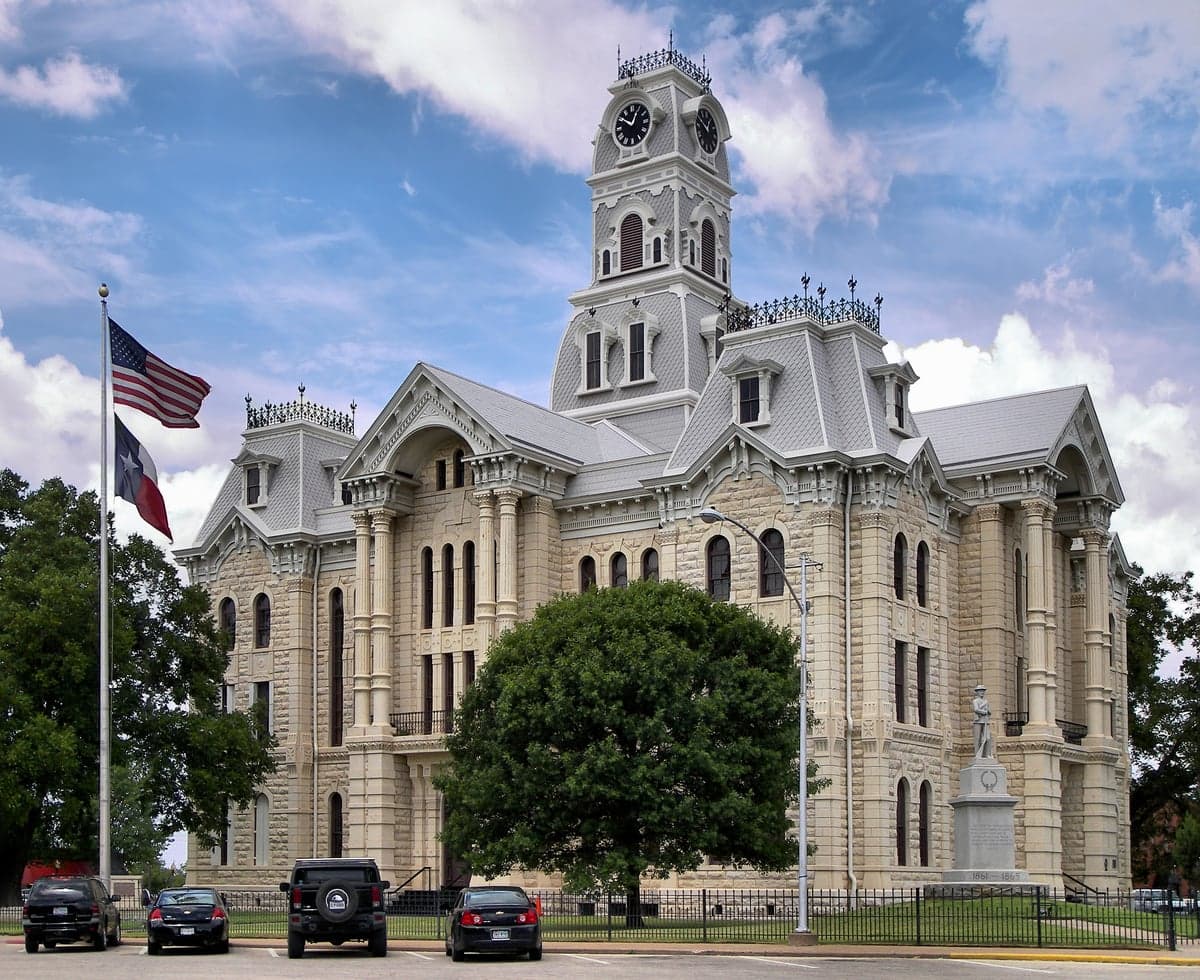
Photo: Wikipedia
Political ClimatePolitical Climate in Hillsboro, TX
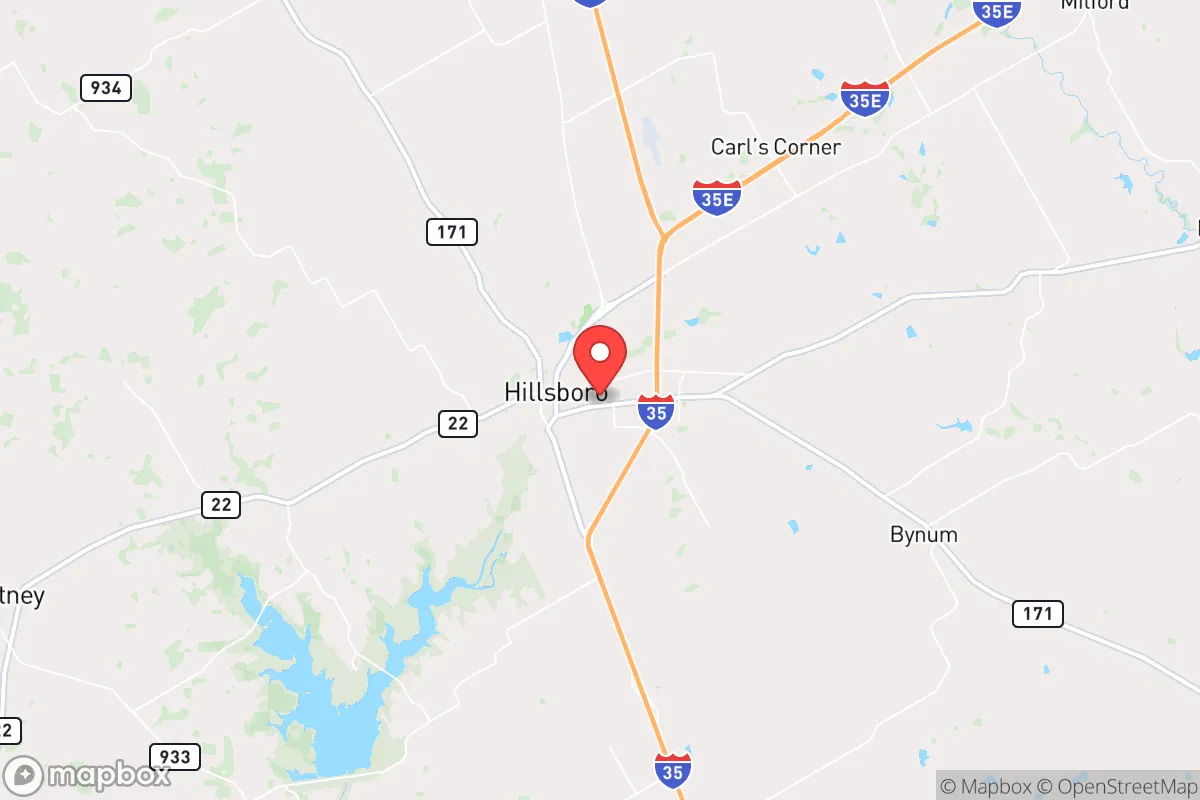
District shown is the primary district for this city’s centroid. Cities may span multiple districts.
Local Political AnalysisPolitical Analysis of Hillsboro, TX
Hillsboro, Texas, is about as reliably conservative as it gets in the Lone Star State, and that’s not changing anytime soon. With a Cook Partisan Voting Index of R+14, the area votes Republican by a margin that’s nearly double the national average for a red district. In practical terms, that means local and county offices are held by folks who generally believe in limited government, lower taxes, and the Second Amendment. The political trajectory here is steady—no dramatic swings leftward, just a quiet, consistent preference for traditional values and personal responsibility.
How it compares
Drive 30 minutes north to Waxahachie, and you’ll find a similar conservative vibe, though it’s a bit more suburban and tied to the Dallas-Fort Worth metroplex. Head south about 20 miles to Waco, and you’ll notice a different energy—Waco’s younger, more diverse population has nudged it slightly left, especially in city council races. Hillsboro, by contrast, feels like a time capsule of old-school Texas values. It’s a place where folks still wave at each other on the square, and the idea of government overreach—whether it’s mask mandates, zoning restrictions, or property rights encroachments—gets met with serious skepticism. Compared to the more progressive pockets of Austin (about an hour southwest) or even the growing liberal tilt in parts of Dallas, Hillsboro stands as a bulwark. The surrounding Hill County is solidly red, and that’s not likely to shift much in the next decade.
What this means for residents
For someone living here, the political climate translates into a pretty straightforward daily life. You’re not going to see a lot of new regulations on businesses or homeowners. Property taxes are a perennial concern—everyone grumbles about them—but the local government tends to keep spending in check. The school board leans conservative, so curriculum debates are minimal, and parental rights are taken seriously. If you’re worried about progressive ideology creeping into local policy, Hillsboro is a safe bet. The biggest red flag I’d watch for is any attempt by the state or federal government to impose mandates on small towns—like environmental rules that could hurt local agriculture or gun laws that feel like an infringement. So far, the community pushes back hard on that kind of thing. Long-term, the biggest threat might be growth from the DFW sprawl, which could bring in new residents with different ideas. But for now, the political culture here is stable, and most folks like it that way.
Culturally, Hillsboro is distinct in a few ways that reflect its politics. The Hill County Courthouse is a local landmark, and the annual “Christmas on the Square” is a big deal—no one’s trying to rebrand it as a “holiday festival.” The local gun culture is strong; you’ll see “Come and Take It” stickers on trucks, and concealed carry is common. There’s a quiet pride in self-reliance here. If you’re looking for a place where the government stays out of your business and your neighbors share your values, Hillsboro fits the bill. Just don’t expect a lot of change—that’s the whole point.

State Political ClimatePolitical Climate in Texas
State Political AnalysisPolitical Environment in the State
Texas remains a solidly Republican state, but the margin has tightened noticeably over the past 20 years. In 2004, George W. Bush carried the state by 23 points; by 2020, Donald Trump won it by just under 6 points, and in 2024 the margin held around 5.5 points. The dominant coalition is still conservative — anchored by rural voters, suburban families, and the oil-and-gas economy — but explosive growth in the blue-leaning metros of Austin, Dallas, Houston, and San Antonio is slowly shifting the ground beneath the state’s politics. For a conservative considering relocation, the key question is whether the state’s institutional culture can outlast the demographic tide.
Urban vs. rural divide
The political map of Texas is a study in contrast. The vast rural and exurban counties — places like Lubbock, Midland, and the Panhandle — vote Republican by 40 to 60 points. Meanwhile, the major urban cores are increasingly Democratic strongholds. Harris County (Houston) flipped from red to blue between 2012 and 2016 and now votes Democratic by double digits. Travis County (Austin) is one of the most liberal counties in the South, routinely going +40 or more for Democrats. The real battleground is the suburbs: Collin County (north of Dallas) was once a Republican fortress but has shifted from +30 R in 2012 to roughly +10 R in 2024. Fort Bend County (southwest of Houston) flipped to blue in 2018 and has stayed there. The 2024 election saw Bexar County (San Antonio) move closer to the Democratic column, while Tarrant County (Fort Worth) — long a bellwether — is now a true swing county, voting Republican by only 2-3 points. The rural-urban split is so stark that a drive from downtown Austin to the Hill Country town of Fredericksburg is a journey from a progressive bubble to a deeply conservative community in under 90 minutes.
Policy environment
Texas’s policy environment is a major draw for conservatives. There is no state income tax, which keeps the overall tax burden low relative to high-tax states like California or New York. Property taxes are high — averaging about 1.6% of assessed value — but the state offers a homestead exemption and a 10% cap on appraisal growth for homeowners. Regulatory posture is business-friendly, with right-to-work laws, minimal zoning in many areas, and a tort-reform system that caps noneconomic damages in medical malpractice cases. On education, Texas has a robust school-choice landscape: the 2023 legislative session created the Texas Education Savings Account program, which allows families to use state funds for private school tuition, tutoring, or homeschooling. Healthcare policy is mixed — the state did not expand Medicaid under the ACA, which keeps costs lower for taxpayers but leaves a coverage gap for low-income adults. Election laws tightened after 2020: SB 1 (2021) restricted mail-in voting, added ID requirements, and banned 24-hour and drive-through voting, measures that conservatives argue protect ballot integrity. For a family or individual moving here, the policy environment is unmistakably tilted toward limited government and personal responsibility — but the property tax burden is a real cost to factor into your budget.
Trajectory & freedom
On the freedom front, Texas has moved in two directions simultaneously. On gun rights, the state expanded permitless carry in 2021 (HB 1927), allowing any law-abiding adult to carry a handgun without a license. On parental rights, the 2023 session passed the READER Act, which requires schools to post all instructional materials online and gives parents the right to challenge books and curricula. The state also banned gender-transition procedures for minors (SB 14, 2023) and restricted drag performances in the presence of minors. These are clear expansions of what conservatives would call personal liberty and family autonomy. However, there are concerning trends. Local governments in blue cities have increasingly tried to preempt state law on issues like fracking bans, plastic bag bans, and sanctuary policies, leading to a patchwork of enforcement. The state has fought back with preemption bills, but the friction is real. On medical freedom, Texas did not impose broad COVID-19 vaccine mandates, but some private employers and universities did, and the state’s response was less aggressive than in blue states. The trajectory is toward more state-level protection of conservative values, but the growing urban population means these battles will intensify. A new resident should expect a state that is broadly free but with constant legal skirmishes between Austin and the local governments of Houston, Dallas, and San Antonio.
Civil unrest & political movements
Texas has seen its share of political flashpoints. The 2020 Black Lives Matter protests in Austin, Dallas, and Houston were large and occasionally violent, with property damage in downtown Austin that led to a backlash and the passage of the “Back the Blue” law (HB 9, 2021), which increased penalties for rioting and obstructing police. Immigration remains the hottest-button issue. Governor Abbott’s Operation Lone Star has deployed state troopers and National Guard to the border, bused migrants to sanctuary cities like New York and Chicago, and signed SB 4 (2023) — which makes illegal entry a state crime and allows state judges to order deportation. This law is currently tied up in federal court, but it signals the state’s willingness to push the limits of state sovereignty. On the left, groups like the Texas Democratic Party and MOVE Texas have been aggressively registering voters in the suburbs and college towns. On the right, the Texas Nationalist Movement — a fringe group advocating secession — gets media attention but has no real political power. Election integrity remains a live issue: the 2020 and 2022 cycles saw lawsuits over Harris County’s handling of polling places, and the 2024 election featured a high-profile investigation into alleged noncitizen voter registration in Travis County. For a new resident, the most visible sign of political tension is the constant presence of campaign signs, dueling protests at the Capitol, and the occasional bus of migrants arriving in a blue city as a political statement.
Projection
Over the next 5-10 years, Texas is likely to remain Republican at the state level, but the margin will continue to narrow. The state gains roughly 1,000 new residents per day, and a significant share come from blue states like California and New York. These newcomers tend to settle in the suburbs of Austin, Dallas, and Houston, and while many are moderate, they are not reliably conservative. If current trends hold, Texas could become a swing state by 2032 or 2034, especially if the Democratic Party can turn out the growing Hispanic population — which, notably, has been trending more Republican in recent cycles, particularly in the Rio Grande Valley. The state legislature is gerrymandered to protect Republican majorities, but the map will be redrawn after the 2030 census, and the outcome is uncertain. The wild card is the state’s economic resilience: if the oil-and-gas sector remains strong and the tech industry continues to decentralize from California, the conservative coalition may hold. If a recession hits or the housing market cools, the political calculus could shift faster. For a conservative moving in now, the next decade will feel like a holding action — the state’s institutions and culture are still red, but the demographic tide is rising.
Bottom line: Texas offers a policy environment that is broadly aligned with conservative values — low taxes, gun rights, school choice, and parental rights — but the political geography is shifting. If you move to a rural or exurban county like Comal, Montgomery, or Collin, you will live in a deeply red community. If you choose a central Austin address or a close-in Houston suburb, you will be in a blue or purple area. The state is still a net positive for freedom compared to most of the country, but the battles over that freedom are intensifying. Come for the no-income-tax and the business climate, but be prepared for a state that is increasingly contested — and make sure your local school board and city council elections get your attention.
* Values derived from national, state, county, city and local statistics and may differ in a specific area. Last updated: 2026-04-28T23:17:22.000Z
Narrative content on this page is AI-generated and may contain mistakes. Verify any details that matter before acting on them.
ReloMaps may earn a commission from affiliate links at no extra cost to you.

