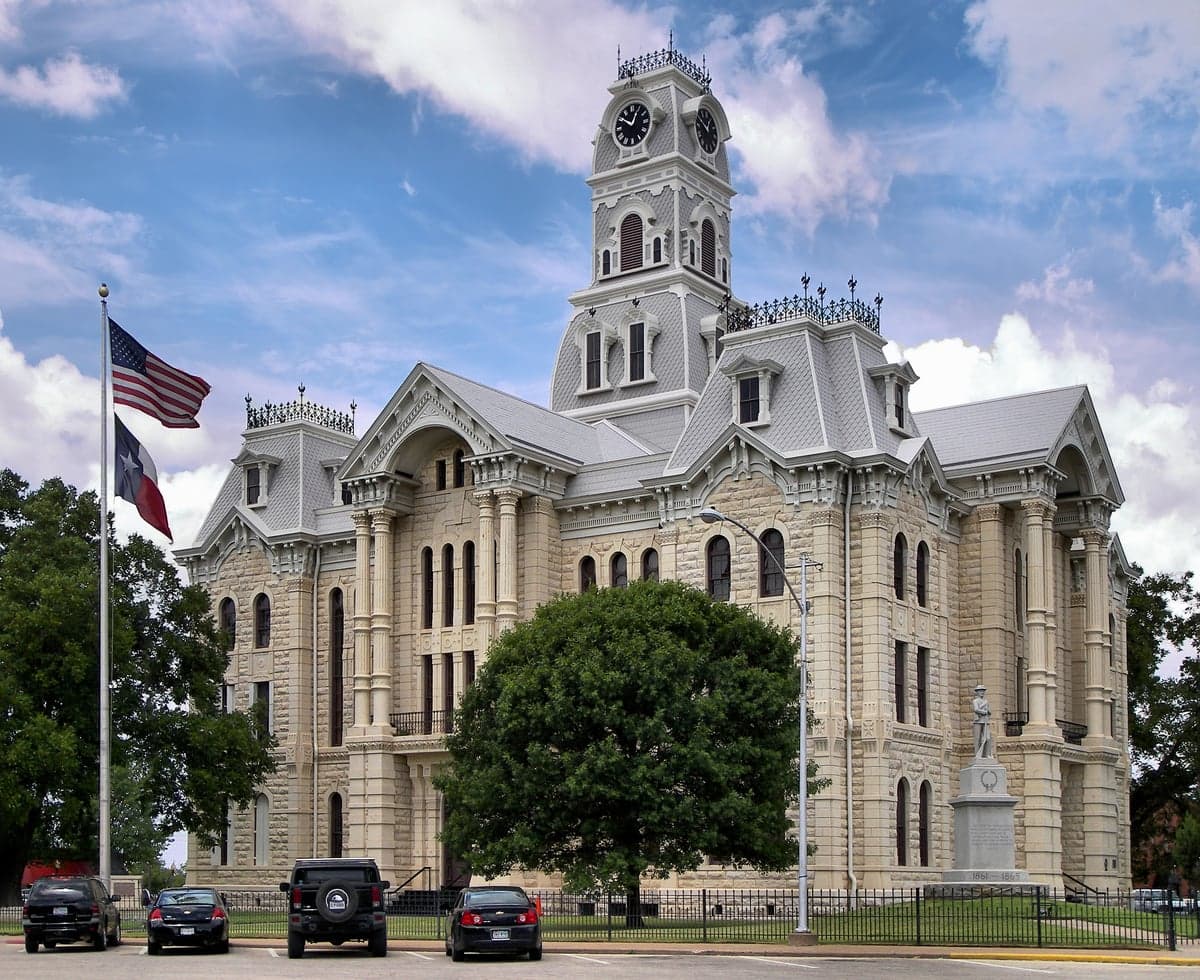
Photo: Wikipedia
Strategic Assessment of Hillsboro, TX
Meaningful friction. Expect exposure to either population pressure, blast zones, or natural disaster risk. Consider buying a retreat property.
What does the Strategic Assessment tell us?
Our Strategic Assessment grades tactical survivability of an area. Major population centers, military targets, fallout zones, natural disasters, and border exposure all drive risk — lower exposure means a more defensible position in a crisis.
This is heavily inspired by Joel Skousen's Strategic Relocation book. Highly recommended you checkout the book ($)What does this tell us?
Our Strategic Assessment grades tactical survivability of an area. Major population centers, military targets, fallout zones, natural disasters, and border exposure all drive risk — lower exposure means a more defensible position in a crisis.
This is heavily inspired by Joel Skousen's Strategic Relocation book. Highly recommended you checkout the book ($)Strategic Pillars

Key Distances
Regional Safe Places
Below is our recommended "safe zones" in Texas and the surrounding area based on our strategic heuristics. For most people, it's unrealistic to live in a “safe zone” full-time due to work, family or other personal reasons. They tend to be more rural. However, many of these areas are perfect for second homes and retreat properties that double as a vacation home or even a short-term rental.

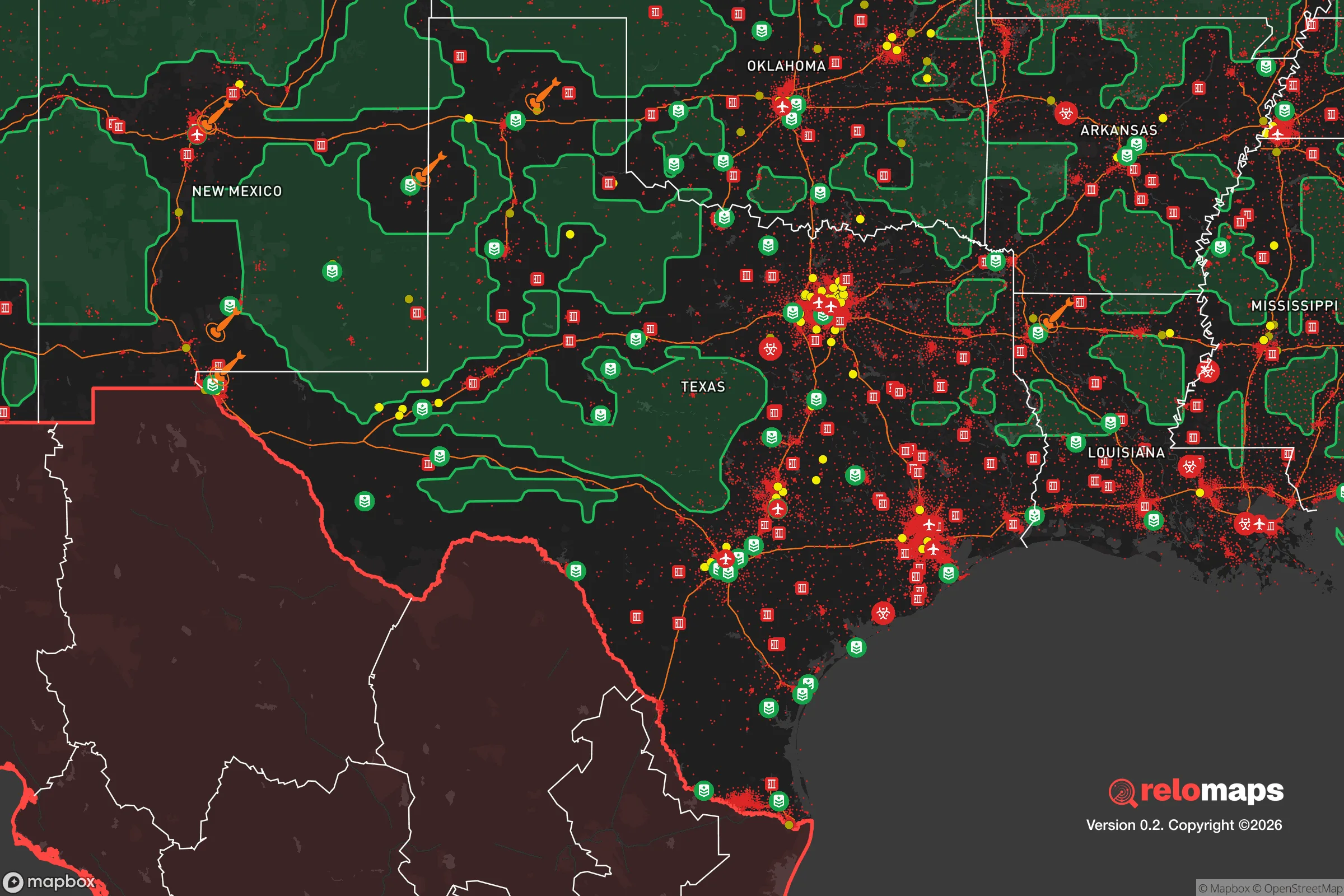


Important Note: For informational purposes only. This does not mean nothing bad ever happens in the green zones. Please use common sense. This is based on public data and modeled with AI. We tried to take a conservative approach but mistakes happen. We update this regularly as new information becomes available.
Solar Generator Recommendations
Backup power matters more here than in safer locations. We've picked three solar generators across budgets and capacity tiers — start with the budget unit if you only need a few essentials, or step up if you want to run a fridge and HVAC for days at a time.

Jackery Portable Power Station Explorer 300
Budget OptionPower on the Go: Weighing only 11 lbs, it's convenient to set up and store with book-sized foldable solar panels

BLUETTI Portable Power Station AC180
Designed for both indoor and outdoor scenarios, AC180 is highly capable as it has a robost capacity and continuous output power.

EF ECOFLOW DELTA Pro Ultra Power Station
Upgraded PickEcoFlow DELTA Pro Ultra is a whole-home energy system designed to grow with your family. Integrated with the Smart Home Panel 2, it scales to meet your evolving energy needs — keeping your home powered, intelligent, and secure through every stage of life.
We earn a commission, at no additional cost to you.
Strategic Assessment Analysis
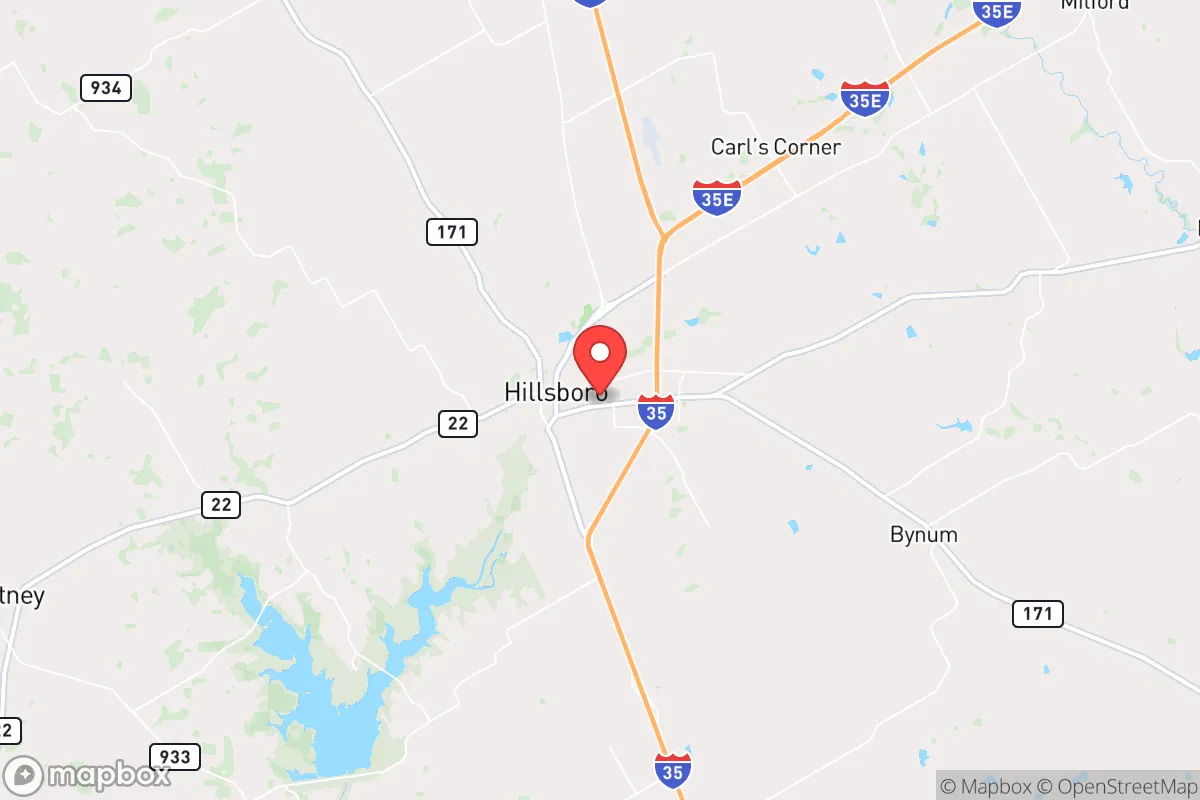
Hillsboro, Texas, sits at a strategic crossroads that makes it a surprisingly resilient relocation option for those thinking long-term about security and self-sufficiency. Roughly 60 miles south of the Dallas-Fort Worth metroplex and 40 miles north of Waco, this Hill County seat of about 8,500 people offers a buffer from the immediate blast radius of major urban targets while still providing access to critical infrastructure. The town’s position along Interstate 35 and the Union Pacific rail line gives it logistical advantages, but its real value for a prepper mindset lies in what’s not there: no major military bases, no nuclear power plants within 50 miles, and no obvious high-value terrorist targets that would draw secondary attacks. For someone weighing the risks of civic unrest, mass casualty events, or natural disasters, Hillsboro represents a middle ground—close enough to tap into resources, far enough to avoid the worst of the fallout.
Geographic position and natural advantages for long-term security
Hillsboro’s location in the Blackland Prairie region offers a mix of flat agricultural land and gentle rolling hills, which is favorable for both farming and defensive positioning. The area sits atop the Trinity Aquifer, providing reliable groundwater access—a critical factor when municipal water systems might fail during a prolonged crisis. The local climate is temperate, with hot summers and mild winters, allowing for year-round food production if you’re willing to manage the summer heat. The town is surrounded by rural farmland, which means fewer neighbors and more space to establish a self-sufficient homestead. The proximity to Lake Whitney (about 25 miles west) and Lake Waco (about 30 miles south) gives additional water security, though neither is close enough to be a primary concern for flood risk. The lack of major natural barriers—no mountains, no dense forests—means the area is less likely to be a chokepoint for fleeing urban populations, but it also means you’ll need to rely on man-made defenses and community networks rather than terrain for security.
Risks, exposures, and proximity to fallout-relevant landmarks
The biggest risk for Hillsboro is its position along I-35, a major north-south corridor that would become a highway of desperation during a mass evacuation from Dallas-Fort Worth. In a scenario involving a nuclear detonation or major terrorist attack on DFW, expect tens of thousands of people to stream south along this route, potentially overwhelming local resources. Hillsboro itself is about 60 miles from the Dallas city limits—outside the lethal blast radius of a 10-kiloton device, but within the zone where fallout could arrive within hours depending on wind patterns. The town is also roughly 70 miles from the Comanche Peak Nuclear Power Plant near Glen Rose, which is a secondary concern: a sabotage or accident there could force an evacuation corridor that passes through Hillsboro. On the plus side, there are no major chemical plants, refineries, or military installations within 50 miles that would make the area a primary target. The Hill County Jail and the local police station are modest facilities, not the kind of infrastructure that would attract coordinated attacks. For a relocator, the key takeaway is that Hillsboro is not a target itself, but it sits on the escape route from targets—meaning you need a plan for filtering out transient threats while maintaining your own position.
Practical resilience for a relocator: food, water, energy, and defensibility
For someone serious about self-sufficiency, Hillsboro offers a workable baseline. The surrounding farmland is suitable for row crops like corn, wheat, and sorghum, and the local climate supports vegetable gardens from March through November with proper irrigation. The Trinity Aquifer means you can drill a well for potable water, though you’ll need to test for agricultural runoff in some areas. Electricity comes from the ERCOT grid, which has proven unreliable during winter storms (see 2021’s Uri), so solar panels with battery storage are a wise investment—the area gets about 220 sunny days per year, enough for a decent off-grid setup. Natural gas is available in town, but propane tanks are common in rural areas and offer a more independent heating and cooking option. Defensibility is moderate: the flat terrain means you can’t rely on natural cover, but the low population density (about 50 people per square mile in the county) gives you space to establish a perimeter. The town itself has a small police force (around 20 officers) and a volunteer fire department, so don’t expect rapid emergency response in a widespread crisis. Building a network with like-minded neighbors in the surrounding rural areas is more practical than trying to fortify a suburban lot inside city limits. The Hill County Sheriff’s Office has a decent reputation for rural patrols, but in a collapse scenario, you’re largely on your own—which is exactly the point for a prepper.
The overall strategic picture for Hillsboro is one of calculated trade-offs. It’s not a remote bunker location like the Texas Panhandle or the Hill Country, but it offers a realistic balance of access and isolation for someone who wants to stay connected to regional infrastructure without being in the danger zone. The proximity to DFW is a double-edged sword: it gives you access to medical centers, supply chains, and job opportunities in normal times, but it becomes a liability during a mass evacuation or attack. For a conservative-leaning relocator who values community, self-reliance, and a lower cost of living (median home price around $200,000 as of 2025), Hillsboro is a viable option—provided you have a solid plan for water, energy, and security that doesn’t depend on the grid or the government. The town’s small size and agricultural base mean it could weather a moderate crisis better than a suburb, but it’s not a fortress. If you’re looking for a place to ride out the next decade of uncertainty, Hillsboro deserves a serious look, but only if you’re willing to put in the work to make it truly resilient.

* Values derived from national, state, county, city and local statistics and may differ in a specific area. Last updated: 2026-04-28T23:17:22.000Z
Narrative content on this page is AI-generated and may contain mistakes. Verify any details that matter before acting on them.
ReloMaps may earn a commission from affiliate links at no extra cost to you.

