
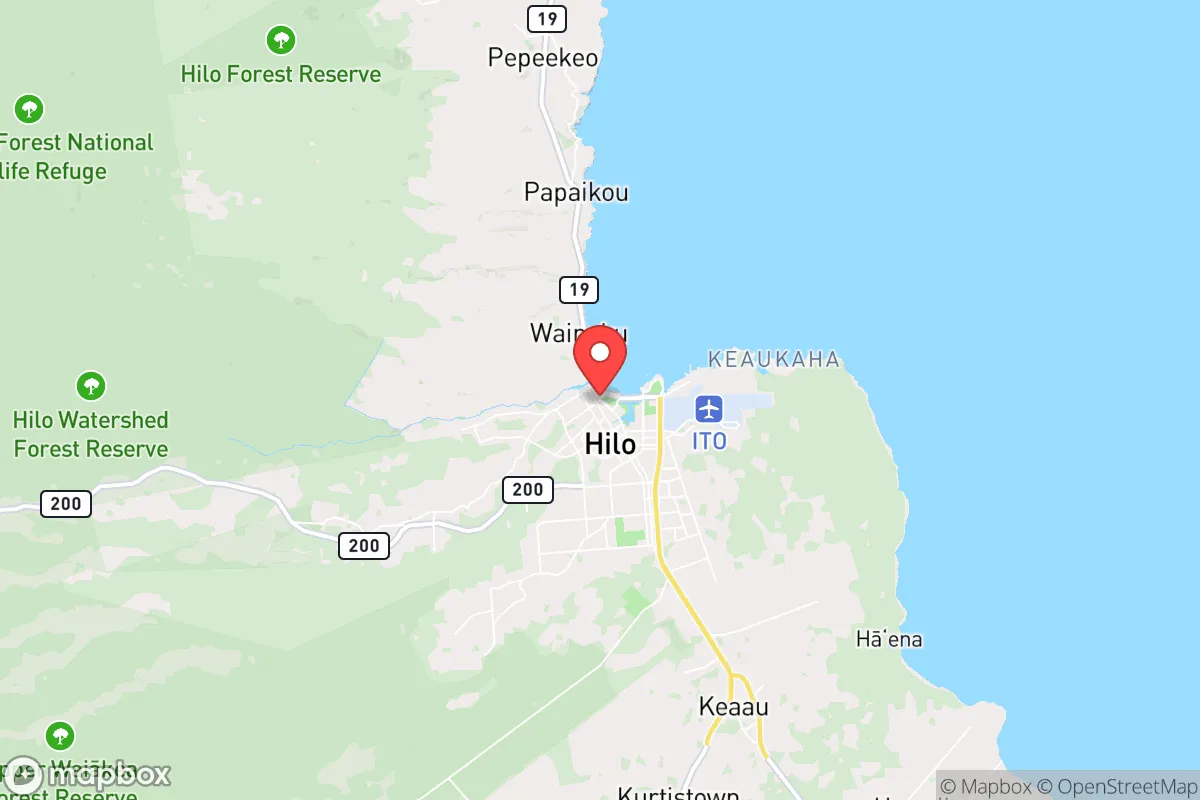
Personal Sovereignty in Hilo, HI
Self-reliance is harder here. Restrictive laws and challenging geography make a self-reliant lifestyle difficult to maintain.
What does Personal Sovereignty tell us?
Personal Sovereignty measures your capacity for self-reliance and independence with minimal government friction. Higher scores mean fewer barriers between you and the way you want to live... but it assumes you have the space you need and good neighbors.
What does this tell us?
Personal Sovereignty measures your capacity for self-reliance and independence with minimal government friction. Higher scores mean fewer barriers between you and the way you want to live... but it assumes you have the space you need and good neighbors.
State Policy
Energy independence: Importer (2% of energy produced in-state)
Personal Liberty
Homesteading

Personal Liberty Analysis
For the strategic-minded individual or family evaluating Hilo, Hawaii, as a relocation destination from a personal sovereignty standpoint, the picture is complex and demands a clear-eyed assessment. While the Big Island offers unparalleled natural resources and a physical distance from mainland turmoil that appeals to the prepper mindset, the state-level legal and regulatory environment imposes significant constraints on individual autonomy. Hilo itself, as the county seat and largest population center on the island, is the epicenter of these trade-offs, where a desire for self-reliance must contend with some of the nation's most restrictive laws on firearms, property use, and taxation. The core question is not whether Hawaii is a sovereign's paradise—it is not—but whether the specific freedoms of land, climate, and community in Hilo outweigh the heavy hand of state control.
Tax burden and regulatory posture: The cost of island autonomy
Hawaii's tax posture is a major liability for anyone seeking to maximize personal financial sovereignty. The state has a progressive income tax with rates that climb to 11%, one of the highest in the nation, and a general excise tax (GET) of 4% that applies to nearly all business transactions, effectively acting as a hidden sales tax on everything from groceries to construction materials. For a prepper or homesteader, this means every dollar earned and every supply purchased is heavily taxed, reducing the capital available for self-sufficiency projects. Property taxes in Hawaii County are relatively low compared to the mainland—around 0.7% of assessed value—but this is a double-edged sword: the county relies heavily on transient accommodation taxes and state funding, making local budgets volatile. The regulatory posture is equally burdensome. Building permits, land use changes, and even minor agricultural improvements can require months of county review, and the state's strict environmental and coastal zone management laws add layers of bureaucracy. For someone accustomed to the "leave me alone" ethos of rural mainland counties, Hilo's regulatory environment feels like a constant, slow-moving intrusion.
Self-defense and gun law specifics: A restrictive reality
For the survivalist or conservative concerned with the right to keep and bear arms, Hawaii is arguably the most restrictive state in the union. Hawaii County has a "may issue" concealed carry policy, meaning the police chief has near-total discretion to deny a permit, and as of 2024, only a handful of permits have been issued county-wide. Open carry is effectively banned. The state also has a registry for all firearms, a ban on "assault weapons" (defined broadly to include many common semi-automatic rifles and shotguns), and a 10-round magazine limit. Purchasing a handgun requires a permit that involves a background check, a 14-day waiting period, and registration with the county police. For the prepper mindset, this is a catastrophic limitation. Self-defense in the home is legally recognized, but the practical ability to acquire, store, and carry defensive firearms is severely curtailed. The state's argument is public safety; the reality for the sovereignty-minded is that the government has placed itself as the gatekeeper of a fundamental right. Anyone considering Hilo must accept that their firearms options will be limited to what the state allows, and that building a robust personal armory is not feasible within the law.
Self-reliance and homesteading viability: Lot sizes, zoning, and off-grid feasibility
This is where Hilo and the broader Big Island offer genuine, though qualified, advantages. Hawaii County has large swaths of agricultural land zoned for "family farms" with minimum lot sizes of 1 to 3 acres, and many parcels in the Puna and Ka'u districts (a short drive from Hilo) are available for under $50,000. This makes affordable land ownership a real possibility. Zoning allows for single-family dwellings, farming, and keeping livestock like goats, chickens, and pigs without the intense restrictions found in suburban mainland counties. Off-grid living is not only feasible but common: many properties lack county water and electricity, and residents rely on catchment systems (rainwater collection), solar panels, and composting toilets. The county permits these systems, though they must meet health department standards. However, the regulatory catch is that any permanent structure requires a building permit, and unpermitted dwellings are subject to fines and even demolition. The "off-grid" lifestyle in Hilo is thus a negotiated one: you can live without utility hookups, but you cannot legally build a cabin without county approval. For the hardcore prepper, this is a compromise—you can be self-reliant in water and power, but you remain on the government's radar for your shelter.
Personal liberties: Parental rights, medical autonomy, speech, and property
On parental rights, Hawaii law generally respects family decision-making, but the state has a strong child welfare system that can be intrusive. Hawaii is a mandatory reporting state for suspected child abuse or neglect, and the definition of neglect can be broad, potentially including homeschooling without proper registration or medical decisions that deviate from standard care. Homeschooling is legal but requires annual notification and a curriculum plan, which some sovereignty-minded parents view as state overreach. Medical autonomy is a mixed bag: Hawaii has no state-level vaccine mandate for adults, but it does have strict school immunization requirements (with a religious exemption available). The state's response to COVID-19 included some of the nation's longest-lasting emergency orders, including mask mandates and travel restrictions, which rankled those who prioritize medical freedom. Speech and assembly are protected by the First Amendment, but the state's strong public nuisance and trespass laws can be used to limit protests or gatherings on private property. Property rights are the most contentious: Hawaii's unique history includes the "Hawaii Housing Authority" and a state supreme court that has, in some cases, favored public access over private property rights, particularly along shorelines and in conservation districts. For the conservative, the message is clear: your property is yours, but the state retains significant power to regulate its use, access, and development.
In the final analysis, Hilo offers a unique but deeply flawed environment for personal sovereignty. The land, climate, and community of like-minded homesteaders provide a foundation for self-reliance that is rare in the modern United States. However, the state's tax burden, gun laws, and regulatory apparatus represent a level of government control that would be unacceptable in a freer state like Idaho or Montana. For the strategic relocator, Hilo is a compromise: you gain physical distance and agricultural independence, but you surrender a significant degree of legal and financial autonomy. If your priority is maximum personal sovereignty with minimal government interference, look elsewhere. But if you are willing to navigate a restrictive system for the sake of living on a volcano in the middle of the Pacific, Hilo can work—provided you keep your head down, your paperwork in order, and your expectations realistic.

* Values derived from national, state, county, city and local statistics and may differ in a specific area. Last updated: 2026-04-23T22:53:42.000Z
Narrative content on this page is AI-generated and may contain mistakes. Verify any details that matter before acting on them.
ReloMaps may earn a commission from affiliate links at no extra cost to you.

