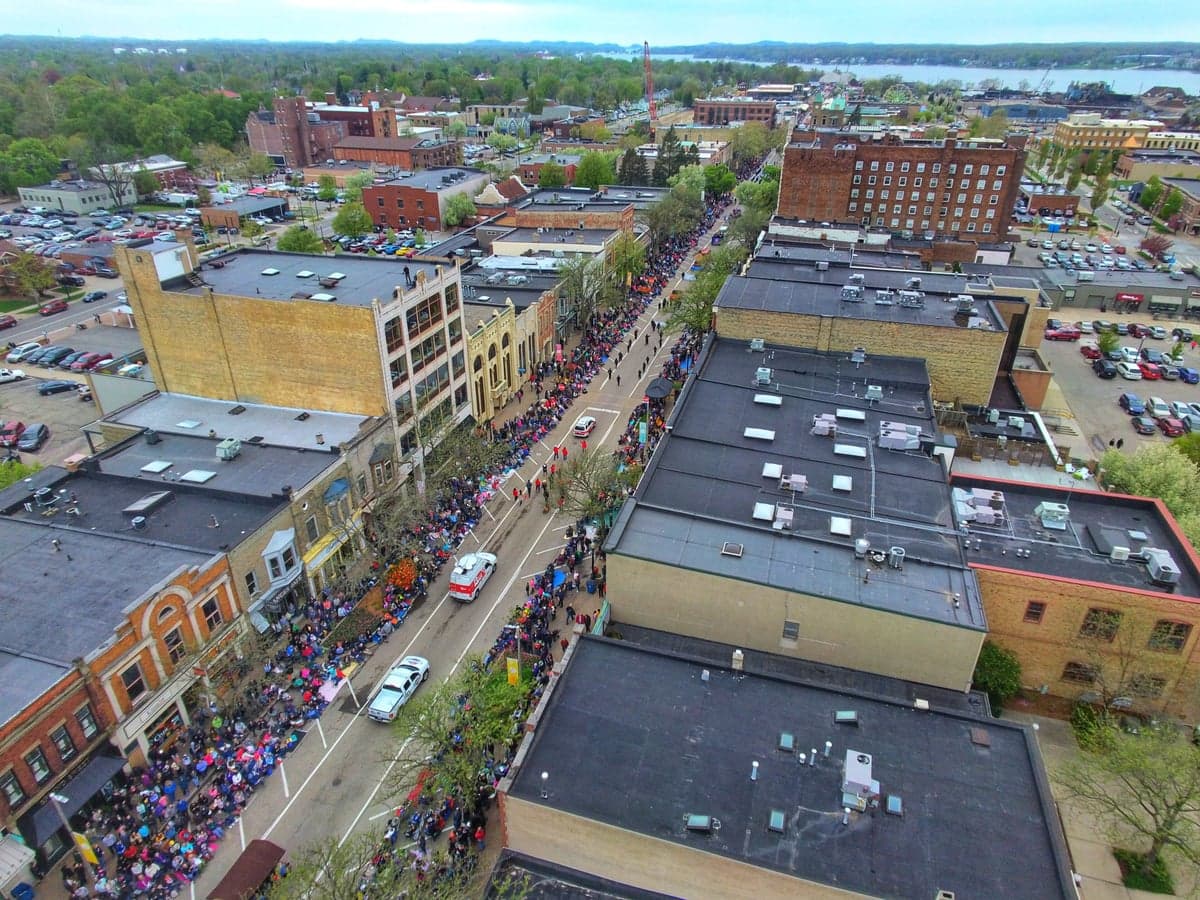
Photo: Wikipedia
Strategic Assessment of Holland, MI
Meaningful friction. Expect exposure to either population pressure, blast zones, or natural disaster risk. Consider buying a retreat property.
What does the Strategic Assessment tell us?
Our Strategic Assessment grades tactical survivability of an area. Major population centers, military targets, fallout zones, natural disasters, and border exposure all drive risk — lower exposure means a more defensible position in a crisis.
This is heavily inspired by Joel Skousen's Strategic Relocation book. Highly recommended you checkout the book ($)What does this tell us?
Our Strategic Assessment grades tactical survivability of an area. Major population centers, military targets, fallout zones, natural disasters, and border exposure all drive risk — lower exposure means a more defensible position in a crisis.
This is heavily inspired by Joel Skousen's Strategic Relocation book. Highly recommended you checkout the book ($)Strategic Pillars

Key Distances
Regional Safe Places
Below is our recommended "safe zones" in Michigan and the surrounding area based on our strategic heuristics. For most people, it's unrealistic to live in a “safe zone” full-time due to work, family or other personal reasons. They tend to be more rural. However, many of these areas are perfect for second homes and retreat properties that double as a vacation home or even a short-term rental.


Important Note: For informational purposes only. This does not mean nothing bad ever happens in the green zones. Please use common sense. This is based on public data and modeled with AI. We tried to take a conservative approach but mistakes happen. We update this regularly as new information becomes available.
Solar Generator Recommendations
Backup power matters more here than in safer locations. We've picked three solar generators across budgets and capacity tiers — start with the budget unit if you only need a few essentials, or step up if you want to run a fridge and HVAC for days at a time.

Jackery Portable Power Station Explorer 300
Budget OptionPower on the Go: Weighing only 11 lbs, it's convenient to set up and store with book-sized foldable solar panels

BLUETTI Portable Power Station AC180
Designed for both indoor and outdoor scenarios, AC180 is highly capable as it has a robost capacity and continuous output power.

EF ECOFLOW DELTA Pro Ultra Power Station
Upgraded PickEcoFlow DELTA Pro Ultra is a whole-home energy system designed to grow with your family. Integrated with the Smart Home Panel 2, it scales to meet your evolving energy needs — keeping your home powered, intelligent, and secure through every stage of life.
We earn a commission, at no additional cost to you.
Strategic Assessment Analysis
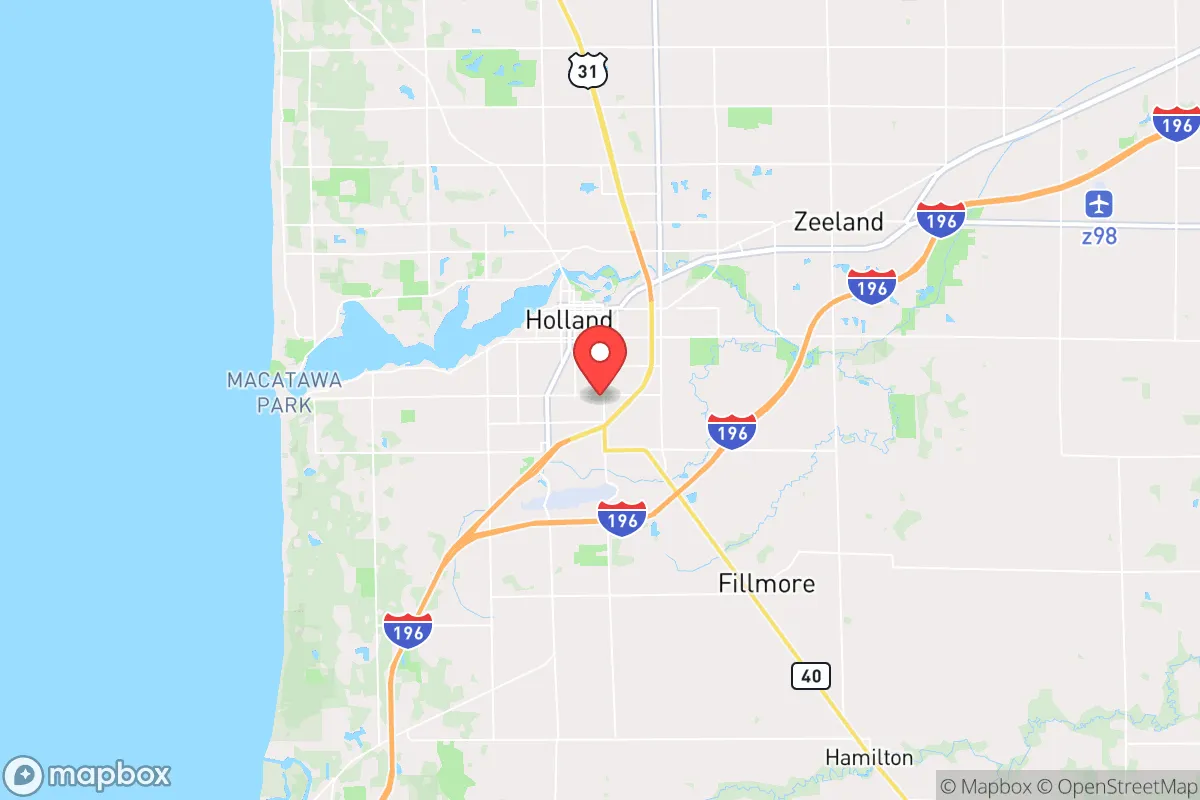
Holland, Michigan, sits on the eastern shore of Lake Michigan, roughly 150 miles from Chicago and 30 miles from Grand Rapids, offering a blend of Great Lakes access and Midwestern stability that makes it a serious candidate for those prioritizing long-term resilience. The area’s Dutch heritage and conservative cultural roots provide a social fabric that tends toward self-reliance and community cohesion—traits that matter when civic systems strain. Its position away from major fault lines, hurricane zones, and wildfire corridors reduces baseline natural disaster risk, while the lake itself acts as a natural barrier and resource buffer. For a relocator thinking in terms of decades, not election cycles, Holland’s combination of geographic insulation and functional infrastructure warrants a close look.
Geographic position and natural advantages for long-term stability
Holland sits at the mouth of the Black River where it empties into Lake Michigan, giving it a dual water advantage: a freshwater coastline for potential transport and fishing, plus a navigable river for inland access. The surrounding terrain is relatively flat but well-drained, with sandy soils that support agriculture—particularly fruit orchards and row crops—meaning local food production is viable without heavy industrial inputs. The area’s elevation averages around 600 feet above sea level, well above any floodplain concerns from the lake or river, and the region sits on the Michigan Basin, a geologically stable area with no significant seismic history. Winters are snowy but manageable, with average annual snowfall around 80 inches, which provides a natural water reservoir in the form of snowpack that feeds groundwater recharge through spring melt. The lake effect also moderates temperatures, keeping summers cooler and winters slightly warmer than inland areas, reducing extreme temperature stress on infrastructure and crops. For a prepper mindset, the key takeaway is that Holland is not in a zone where a single weather event or geological shift will wipe out the area—it’s a slow-burn environment where gradual adaptation is possible.
Risks, exposures, and proximity to fallout-relevant landmarks
The most significant risk for Holland is its proximity to major population and industrial centers that could become targets or sources of instability. Grand Rapids, 30 miles east, is a metro area of over 1 million people with a concentration of manufacturing, healthcare, and logistics infrastructure—including the Gerald R. Ford International Airport and major rail hubs. In a scenario involving civil unrest, supply chain collapse, or a mass casualty event, Grand Rapids could become a source of refugees, resource competition, or secondary effects like power grid strain. Chicago, 150 miles southwest, is a Tier 1 city with over 2.7 million people and is a likely target for any coordinated attack or major disruption; fallout from such an event could affect Holland depending on wind patterns, though the lake provides some shielding from direct blast effects. The Palisades Nuclear Plant, located about 20 miles north of Holland near Covert, Michigan, is a decommissioned facility but still contains spent fuel stored on-site—a potential radiological hazard if compromised by accident or sabotage. Additionally, the area’s reliance on the Lake Michigan water intake system means a contamination event upstream or in the lake itself could disrupt the municipal water supply. The I-196 corridor running through Holland is a primary evacuation route from the lakeshore to Grand Rapids, which could become a chokepoint during a crisis. For a relocator, these risks are manageable with proper planning—maintaining a 72-hour bug-out kit, having a secondary water source, and knowing alternative routes out of the area—but they are not negligible.
Practical resilience for a relocator: food, water, energy, and defensibility
Holland’s practical resilience hinges on its access to freshwater, arable land, and a community that still values self-sufficiency. The city draws its municipal water from Lake Michigan, but a well-drilled property outside city limits—common in the surrounding Ottawa and Allegan counties—provides a private, gravity-fed water source that is not dependent on the grid. The area’s agricultural base means local farmers markets, u-pick orchards, and CSAs are abundant, and the growing season runs from April to October, allowing for substantial home gardening and food preservation. Soil quality is good for vegetables and fruit trees, and the lake moderates frost dates, extending the harvest window. For energy, Holland has its own municipal electric utility, the Holland Board of Public Works, which operates a coal and natural gas plant plus a growing solar array—this local control means the grid is more stable than in areas served by large, distant utilities, but it’s still vulnerable to regional blackouts. Wood heating is viable given the surrounding forests, and many homes have basements that can serve as storm shelters or root cellars. Defensibility is moderate: the city itself is compact and walkable, with a downtown grid that could be secured with minimal checkpoints, but the suburban sprawl to the east and south creates porous boundaries. The lake to the west provides a natural barrier against approach from that direction, and the Black River offers a secondary defensive line if needed. For a single individual or family, the best strategy is to buy property in the rural townships just outside Holland—like Park Township or Laketown Township—where acreage, well water, and septic systems are standard, and neighbors are spaced far enough apart to avoid close-quarters conflict but close enough for mutual aid. The local gun culture is present but not aggressive; Ottawa County has a strong conservative majority, and concealed carry permits are common, which suggests a baseline of armed preparedness among the population.
Overall, Holland presents a solid strategic option for someone looking to relocate with a prepper mindset, but it is not a bug-out location for a total collapse scenario. Its strengths are freshwater access, a conservative and community-oriented population, a stable climate, and local food production capacity. Its weaknesses are proximity to Grand Rapids and Chicago, a decommissioned nuclear plant upwind, and reliance on a single major highway for evacuation. The area is best suited for a relocator who wants to build a resilient lifestyle over time—establishing a home with well water, solar panels, a garden, and a network of like-minded neighbors—rather than someone expecting to ride out a short-term crisis. If you are willing to invest in property and infrastructure, and you can tolerate cold winters and the occasional lake-effect snowstorm, Holland offers a defensible, resource-rich base that balances isolation with access to medical care and supply chains. It is not a fortress, but it is a place where a prepared family can thrive while the world around them becomes less certain.

* Values derived from national, state, county, city and local statistics and may differ in a specific area. Last updated: 2026-04-29T18:11:04.000Z
Narrative content on this page is AI-generated and may contain mistakes. Verify any details that matter before acting on them.
ReloMaps may earn a commission from affiliate links at no extra cost to you.

