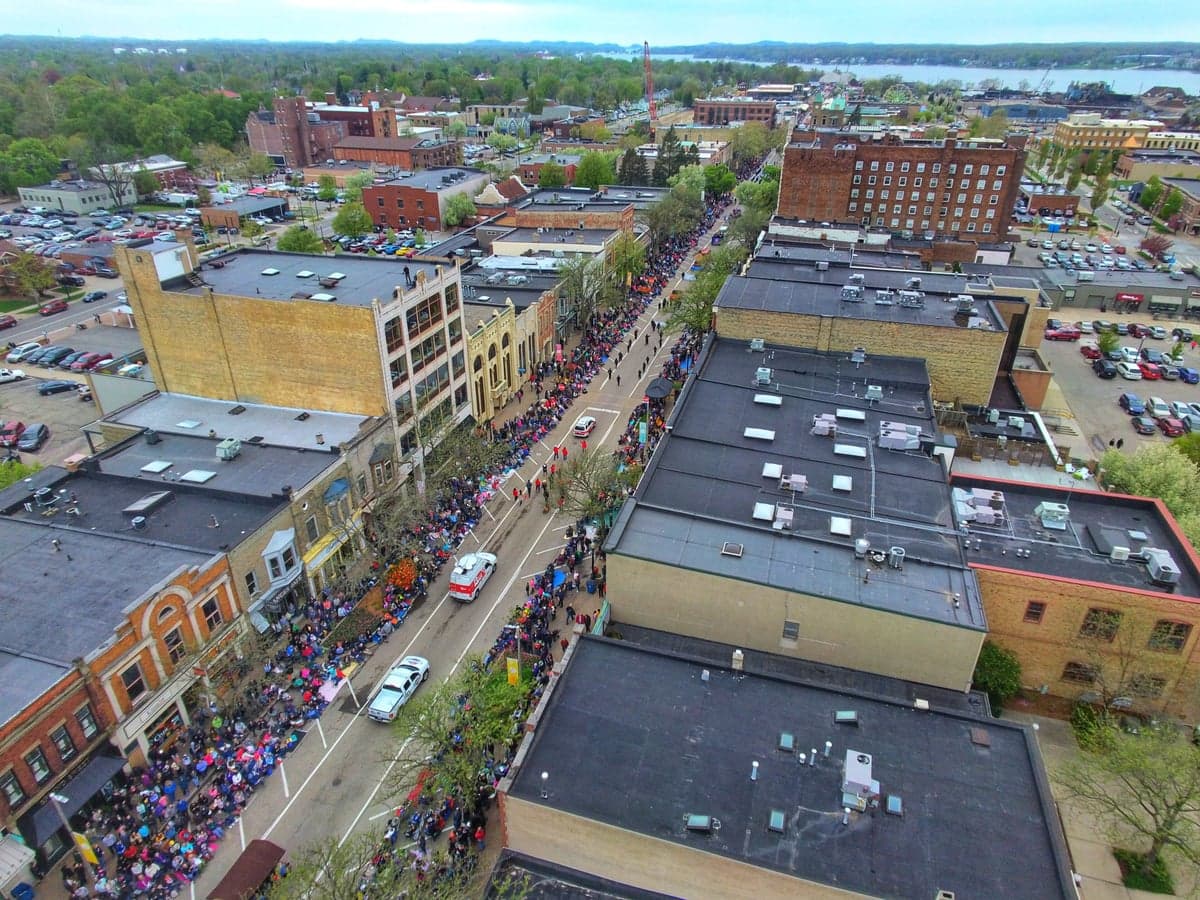
Photo: Wikipedia
Political ClimatePolitical Climate in Holland, MI
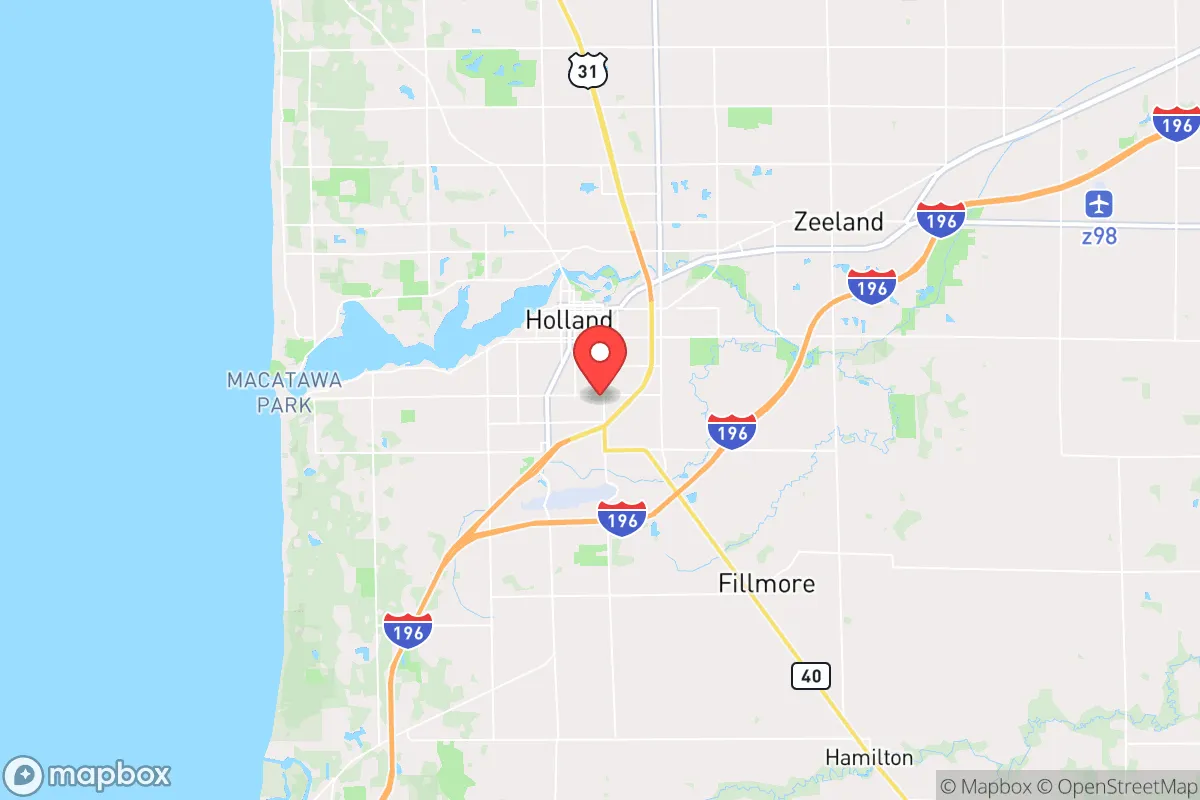
District shown is the primary district for this city’s centroid. Cities may span multiple districts.
Local Political AnalysisPolitical Analysis of Holland, MI
Holland, Michigan, has long been a conservative stronghold, anchored by a deep Dutch Reformed heritage and a community that values personal responsibility and limited government. The Cook PVI rating of R+3 tells part of the story, but it doesn't capture the cultural undercurrents that have kept this area reliably red for generations. While Ottawa County as a whole still leans right, there's been a noticeable shift in Holland itself over the past decade—a slow drift toward more progressive policies, especially in city governance, that has some of us who've lived here a while feeling a little uneasy about where things are headed.
How it compares
If you drive just 15 minutes south to Zeeland, you'll find a community that still feels like the Holland of the 1990s—strong church attendance, low taxes, and a city council that doesn't mess around with social experiments. Up north, Grand Rapids has gone full-on purple, with its downtown pushing bike lanes and diversity initiatives that would make your head spin. Holland sits right in the middle: not as conservative as its rural neighbors like Fennville or Saugatuck, but not yet as progressive as Grand Rapids. The real contrast is with nearby Muskegon, which has embraced a much more liberal agenda on everything from zoning to policing. What worries me is that Holland's city leadership seems to be taking notes from Muskegon rather than from Zeeland.
What this means for residents
For folks who moved here to escape the overreach you see in bigger cities, the warning signs are starting to pop up. The city council has debated things like inclusionary zoning ordinances and "equity" task forces that sound nice on paper but usually mean more bureaucracy and less freedom for property owners. There's been talk of raising local taxes to fund affordable housing mandates—something that would have been laughed out of the room twenty years ago. The school board has also gotten more activist, pushing curriculum changes that prioritize social-emotional learning over the basics. If you value being left alone to run your business or raise your family without government interference, you'll want to keep a close eye on city commission meetings. The old guard is retiring, and the new faces coming in tend to see government as a tool for social engineering rather than a protector of your rights.
On the cultural side, Holland still has its strengths. The Tulip Time festival remains a celebration of Dutch heritage, not a platform for political messaging. The Hope College campus leans left, but the surrounding neighborhoods still fly American flags and keep their lawns neat. The real test will come in the next few election cycles. If the county commission stays conservative and the city council flips further left, you'll see a growing tension between county and city policies—especially on things like mask mandates, business closures, and property rights. For now, Holland is still a good place to live if you want a quiet, family-oriented community with decent schools and low crime. But the trajectory is worth watching. If you're thinking of moving here, I'd recommend looking at the townships just outside the city limits—Park Township or Laketown Township—where the conservative values that built this area are still holding strong.

State Political ClimatePolitical Climate in Michigan
State Political AnalysisPolitical Environment in the State
Michigan has transformed from a classic purple battleground into a state where Democrats now hold total control of the governorship, legislature, and Supreme Court, a shift cemented in the 2022 midterms. The state’s overall partisan lean has moved from a toss-up to a solidly blue +7 in presidential races, driven by a massive consolidation of the Detroit metro vote and a collapse of GOP strength in the suburbs. Over the last 20 years, the state has lurched leftward, with Republicans losing every statewide race since 2018 and seeing their legislative majorities wiped out after the 2020 redistricting.
Urban vs. rural divide
The political map of Michigan is a tale of two peninsulas, with the real action in the Lower Peninsula. Detroit and its inner-ring suburbs like Southfield and Warren are the engine of the Democratic vote, delivering margins of 80% or more in Wayne County. The rest of the state is deeply red: the entire Upper Peninsula, the western Lower Peninsula around Grand Rapids, and the rural Thumb region all vote Republican by 20-30 points. The key battlegrounds are the collar counties around Detroit—Macomb, Oakland, and Washtenaw—which have flipped decisively blue. Macomb County, once the iconic Reagan Democrat stronghold, voted for Biden in 2020 and has not gone Republican for president since 2012. Grand Rapids, the state’s second-largest city, is a growing blue island in a sea of red, while Traverse City and Ann Arbor are liberal enclaves surrounded by conservative countryside. The political divide is stark: the 10-county Detroit metro area now decides every statewide election, leaving rural voters with little influence.
Policy environment
Michigan’s policy environment has shifted hard left since Democrats took full control in 2023. The state income tax is a flat 4.25%, but that’s paired with a 6% sales tax and some of the highest property taxes in the Midwest—effective rates often exceed 1.5% of home value. The regulatory posture is increasingly hostile to business: the state has adopted California-style auto emissions standards, banned right-to-work laws, and repealed the 2012 law that allowed workers to opt out of union dues. Education policy is a flashpoint: the state has eliminated the third-grade reading retention law, expanded LGBTQ+ curriculum mandates, and allowed school districts to ban parents from being notified of a child’s gender identity changes. Election laws have been loosened significantly: Proposal 2 in 2022 enshrined nine days of early voting, no-excuse absentee ballots, and ballot drop boxes into the state constitution. The state also legalized recreational marijuana in 2018, but the regulatory framework is heavy, with high licensing fees and strict local control that has kept many small businesses out.
Trajectory & freedom
Michigan is clearly becoming less free for conservatives. The most alarming trend is the erosion of parental rights: the state’s Department of Education has issued guidance that effectively prohibits schools from outing a child’s gender identity to parents without the child’s consent, a policy that has sparked massive school board protests in places like Northville and Rochester Hills. Gun rights have been under sustained assault: in 2023, the legislature passed universal background checks, safe storage requirements, and a red flag law that allows courts to seize firearms without a criminal conviction. The state also banned open carry at polling places and the state capitol. Medical autonomy took a hit with the repeal of the 2012 right-to-work law, which now forces private-sector workers to pay union dues as a condition of employment. Property rights are being squeezed by aggressive zoning reforms pushed by the governor, which override local control to force higher-density housing in suburban communities. On the positive side, Michigan has no state-level income tax on Social Security benefits, and the state’s gas tax is relatively low at 28.6 cents per gallon. But the overall trajectory is one of expanding government control over personal decisions.
Civil unrest & political movements
Michigan has been a national flashpoint for political conflict. The 2020 lockdown protests at the state capitol in Lansing drew national attention, with armed demonstrators demanding the governor end the COVID-19 restrictions. That energy has since channeled into organized grassroots groups like the Michigan Conservative Coalition and the Michigan Freedom Fund, which have been active in school board races and local elections. On the left, the “Wolverine” wing of the Democratic Party has pushed for more aggressive progressive policies, including a proposed repeal of the state’s 1931 abortion ban (which was already nullified by the 2022 Proposal 3 that enshrined abortion rights in the state constitution). Immigration politics are relatively quiet compared to border states, but the city of Detroit has declared itself a “sanctuary city,” and the state has expanded driver’s licenses for illegal immigrants. Election integrity remains a hot-button issue: the 2020 election in Michigan saw widespread use of ballot drop boxes and mass absentee voting, leading to ongoing litigation and a controversial audit of Wayne County results. The state’s independent redistricting commission, created by a 2018 ballot measure, has been criticized by Republicans for drawing maps that favor Democrats. Visible flashpoints include the constant protests at the capitol, the armed standoffs at school board meetings, and the growing tension between rural sheriffs who refuse to enforce new gun laws and the state attorney general who has threatened to prosecute them.
Projection
Over the next 5-10 years, Michigan is likely to continue its leftward drift. Demographic trends favor Democrats: the state’s growing Hispanic population in southwest Michigan, the influx of young professionals to Detroit and Ann Arbor, and the continued suburbanization of Macomb and Oakland counties all point to a more blue electorate. The Republican Party is in disarray, with internal fights between the establishment and the Trump-aligned grassroots, and has not won a statewide race since 2016. The state’s in-migration patterns are mixed: while some conservatives are moving to northern Michigan and the Upper Peninsula for lower costs and more freedom, the net migration is negative, with many leaving for Florida, Texas, and Tennessee. The most likely scenario is that Michigan becomes a one-party state for the foreseeable future, with Democrats controlling all levers of government and pushing through a progressive agenda that includes a graduated income tax, stricter environmental regulations, and expanded government healthcare. A new resident moving in now should expect to see continued erosion of gun rights, further expansion of government control over education and healthcare, and a political environment where conservative voices are increasingly marginalized.
Bottom line for a new resident: If you’re a conservative considering Michigan, you need to go in with eyes wide open. The state is no longer a purple battleground where your vote matters—it’s a blue stronghold where your values will be under constant assault from the state government. The best places to land are the rural counties like Livingston, Ottawa, and the Upper Peninsula, where local governments are still conservative and the state’s reach is somewhat blunted. But even there, you’ll be fighting against a tide of progressive legislation from Lansing. If you value low taxes, gun rights, parental control over education, and limited government, Michigan is not the place it was 20 years ago, and it’s only going to get worse. Choose carefully.
* Values derived from national, state, county, city and local statistics and may differ in a specific area. Last updated: 2026-04-29T18:11:04.000Z
Narrative content on this page is AI-generated and may contain mistakes. Verify any details that matter before acting on them.
ReloMaps may earn a commission from affiliate links at no extra cost to you.

