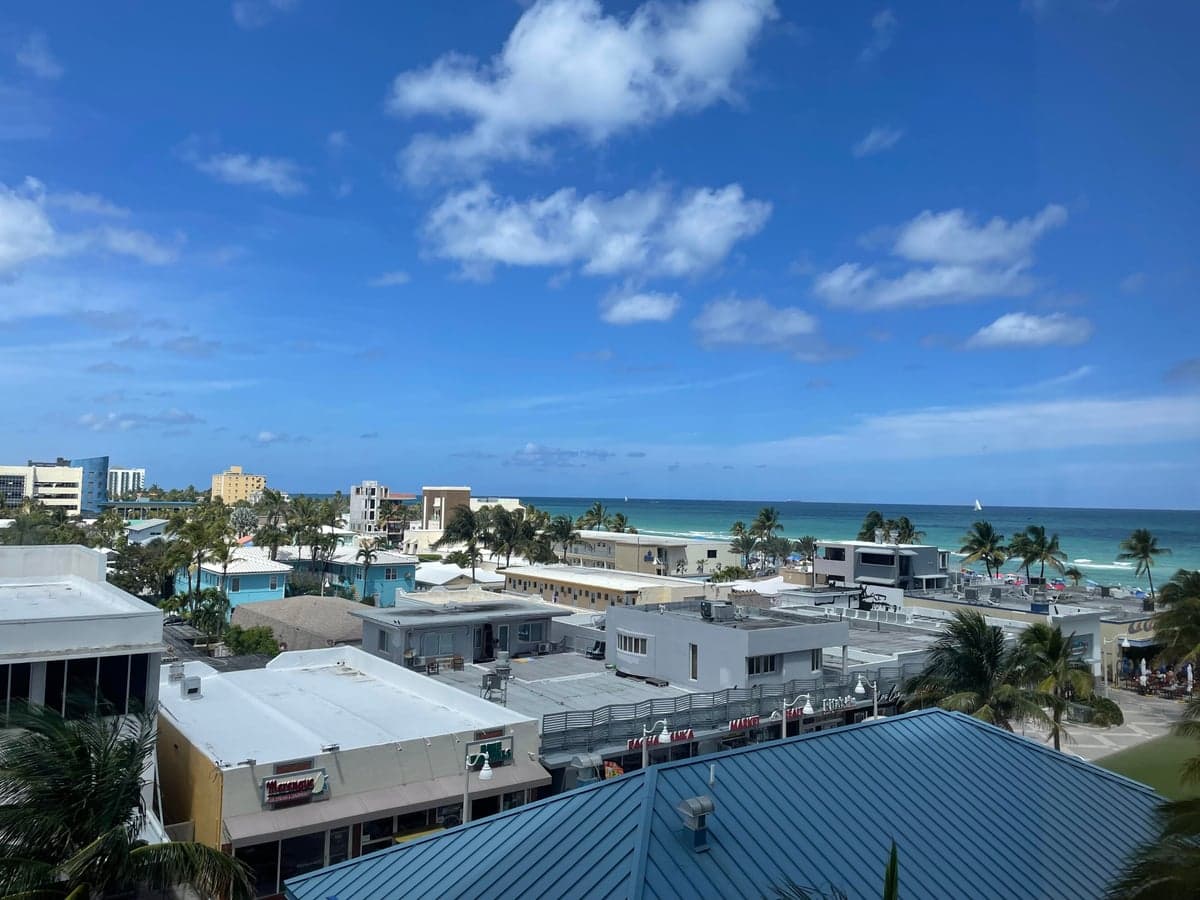
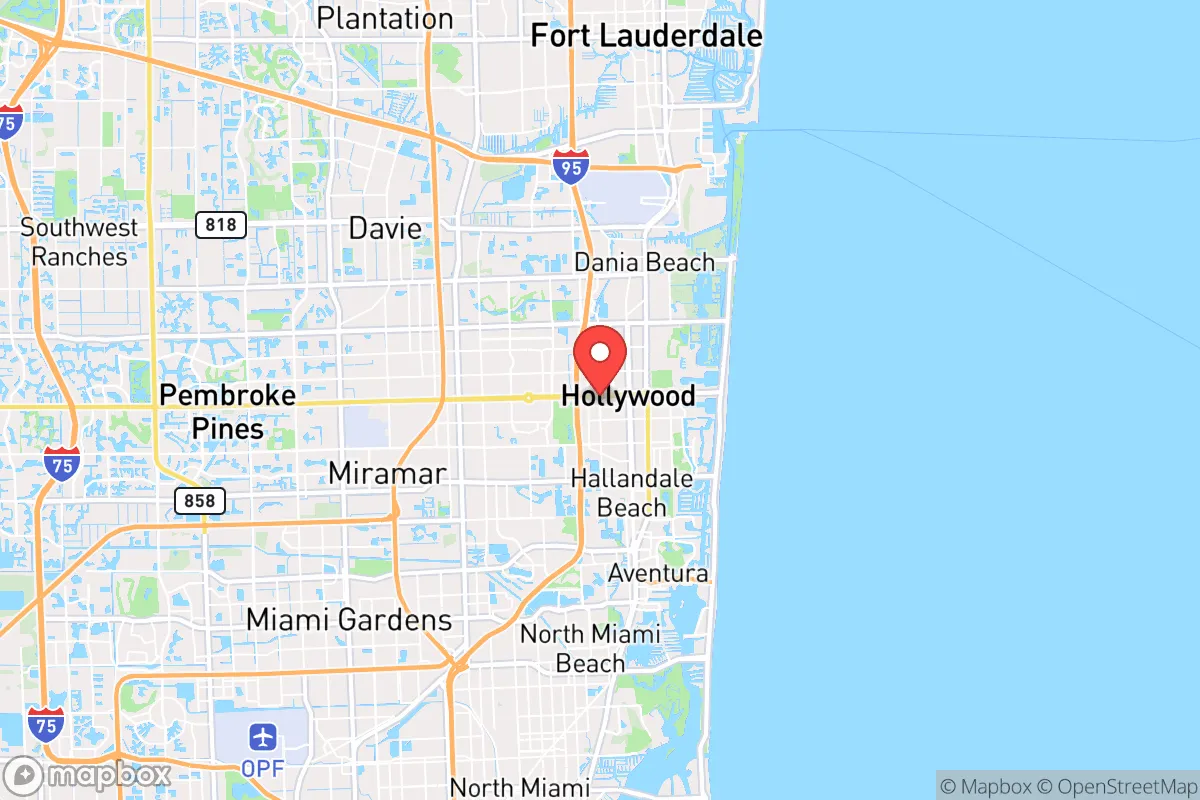
Photo: Wikipedia
Demographics of Hollywood, FL
Affluence Level in Hollywood, FL
A middle-class area roughly in line with national averages across income, home values, education, and employment.
People of Hollywood, FL
The people of Hollywood, Florida today form a dense, majority-minority city of 152,935 where no single ethnic group holds a numerical majority. The city is 42.9% Hispanic, 34.8% White, 16.1% Black, 1.3% East/Southeast Asian, and 1.2% Indian (subcontinent), with 15.8% foreign-born and 32.7% college-educated. This demographic profile reflects a century of layered migration—from early 20th-century Jewish and Italian developers, through post-1965 Cuban and Latin American arrivals, to recent Caribbean and South American newcomers—creating a city that feels more like a working-to-middle-class Broward County hub than a beachside resort.
How the city was settled and grew
Hollywood was founded in 1925 by Joseph Young, a California developer who envisioned a planned "Dream City" on drained mangrove swamps between Fort Lauderdale and Miami. The original population was overwhelmingly White, drawn by land sales, the opening of the Hollywood Beach Hotel in 1926, and seasonal tourism. The city's early neighborhoods reflect this founding wave: Hollywood Lakes, the original downtown core with its historic bungalows and Mediterranean Revival homes, housed the professional class; Hollywood Beach attracted seasonal residents and hotel workers. The Great Depression slowed growth, but post-World War II suburbanization brought a second wave: returning veterans and Northern retirees filled new subdivisions like Emerald Hills (built in the 1950s) and Hollywood Hills (developed in the 1960s), both of which remain predominantly White and older today. By 1960, Hollywood's population was roughly 95% White, with a small Black community concentrated in the Liberty Park area near the city's western edge.
Modern era (post-1965)
The 1965 Hart-Cellar Act and the 1980 Mariel boatlift transformed Hollywood's demographics dramatically. Cuban exiles and later Central and South American immigrants—particularly Colombians, Venezuelans, and Nicaraguans—settled in the city's central and western corridors. Downtown Hollywood and the South Lake neighborhood became Hispanic-majority areas, with bodegas, Latin bakeries, and Spanish-language signage now defining the commercial strips. The 1990s and 2000s saw an influx of Caribbean immigrants, especially from Jamaica, Haiti, and the Dominican Republic, who concentrated in Liberty Park and the Washington Park area, shifting the Black population from a small minority to 16.1% of the city. The White share dropped from 80% in 1980 to 34.8% today, while the Hispanic share rose from 10% to 42.9% over the same period. The East/Southeast Asian community (1.3%) remains small and dispersed, with no single ethnic enclave, while the Indian-subcontinent population (1.2%) is similarly scattered, often tied to medical and tech professionals working in Broward County's hospitals and offices.
The future
Hollywood's population is trending toward further Hispanic growth and White decline, mirroring Broward County's broader trajectory. The Hispanic share is projected to approach 50% by 2035, driven by continued immigration from South America (especially Venezuela and Colombia) and higher birth rates among established families. The Black population is stable but aging, with younger Black residents often moving to western Broward suburbs like Miramar or Pembroke Pines. The White population is declining in absolute numbers, concentrated in the older, wealthier beachside and golf-course neighborhoods. The city is not tribalizing into stark enclaves—most neighborhoods are mixed—but Downtown Hollywood and South Lake are becoming more uniformly Hispanic, while Emerald Hills and Hollywood Hills remain predominantly White and older. The foreign-born share (15.8%) is plateauing, suggesting that second-generation assimilation is underway, with younger Hispanics increasingly English-dominant and college-educated (32.7% citywide).
For someone moving in now, Hollywood is a city in demographic transition: increasingly Hispanic and working-to-middle-class, with a stable Black minority and a shrinking White population. The beachside neighborhoods retain a tourist-oriented, seasonal character, while the inland areas feel like a typical Broward suburb—dense, diverse, and family-oriented. The city is not homogenizing into a single identity but rather becoming a layered, polyglot community where Spanish is as common as English in daily commerce. For conservative-leaning families, the key consideration is that Hollywood's politics have shifted leftward with its demographics, but the city remains more moderate than Miami or Fort Lauderdale, with a strong sense of local identity and relatively affordable housing compared to coastal Broward.

* Values derived from national, state, county, city and local statistics and may differ in a specific area. Last updated: 2026-04-29T23:25:24.000Z
Narrative content on this page is AI-generated and may contain mistakes. Verify any details that matter before acting on them.
ReloMaps may earn a commission from affiliate links at no extra cost to you.

