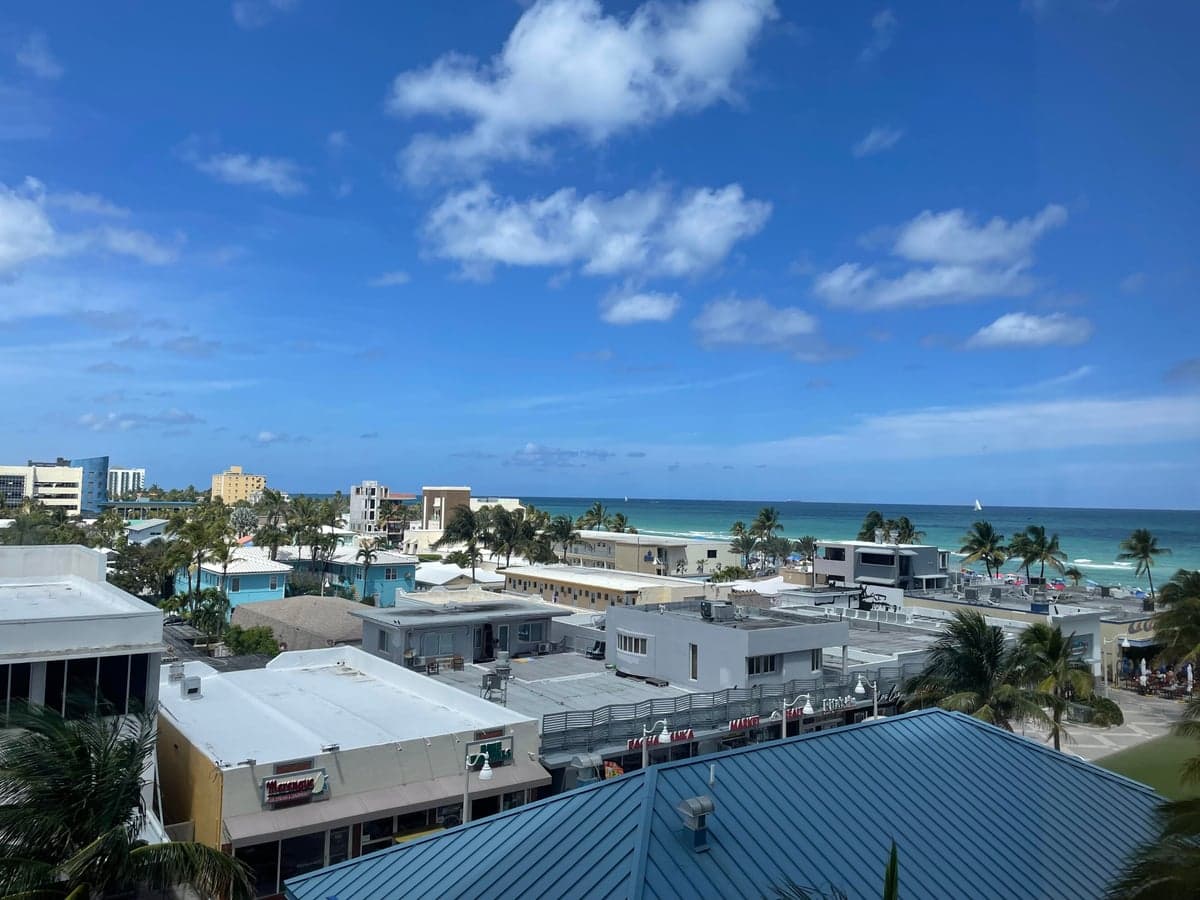
Photo: Wikipedia
Political ClimatePolitical Climate in Hollywood, FL
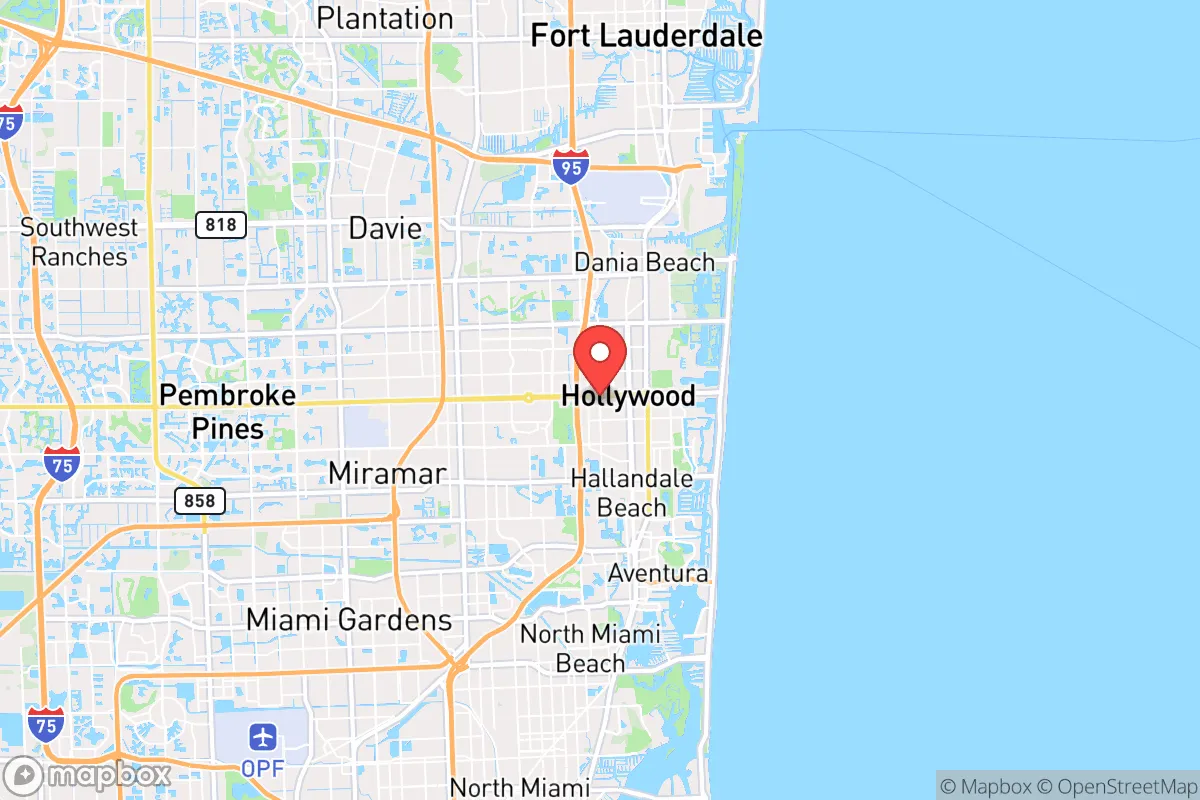
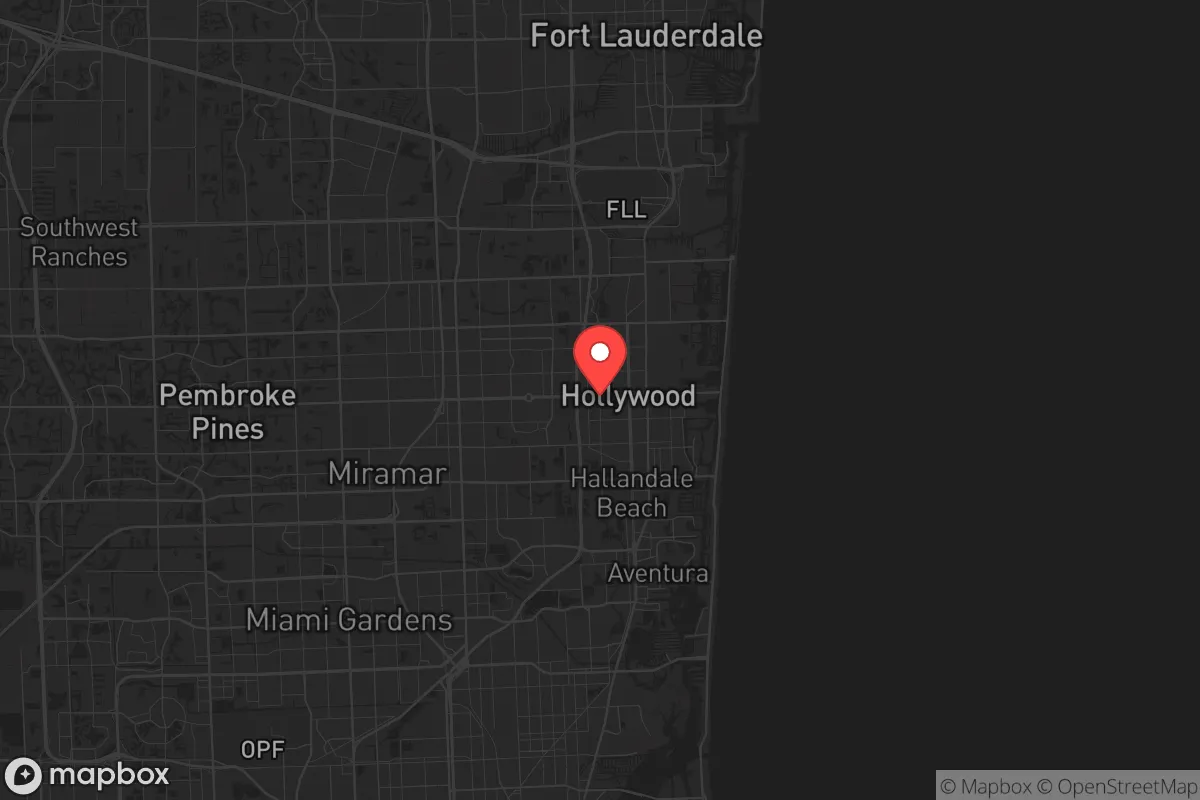
District shown is the primary district for this city’s centroid. Cities may span multiple districts.
Local Political AnalysisPolitical Analysis of Hollywood, FL
Hollywood, Florida, has a political climate that leans reliably Democratic, with a Cook PVI of D+5, but it’s not the kind of deep-blue stronghold you’d see in Miami-Dade County. The city has been shifting leftward over the past decade, and if you’ve lived here as long as I have, you’ve watched the local government get more comfortable with progressive policies—especially on zoning, taxes, and public spending. It’s a place where the old-school, live-and-let-live vibe is slowly getting crowded out by a more activist city council that seems to think more rules and higher fees are the answer to everything.
How it compares
Drive 15 minutes north to Fort Lauderdale, and you’ll find a similar Democratic tilt, but with a more aggressive push on social and environmental regulations. Head west to Pembroke Pines or Miramar, and you’ll see a more moderate, family-oriented electorate that still votes blue but is skeptical of the kind of government overreach Hollywood is flirting with. The real contrast is just south, in Hallandale Beach and Aventura—both are even more liberal, with higher taxes and stricter development controls. Hollywood sits in the middle: it’s not as wild as Miami Beach, but it’s definitely not the conservative haven that parts of western Broward County (like Weston or Parkland) still are. The surrounding county, Broward, voted for Biden by about 17 points in 2020, so Hollywood’s D+5 rating actually makes it one of the more competitive spots in the region—though that’s not saying much when the whole area leans left.
What this means for residents
For folks who value personal freedoms and limited government, Hollywood’s trajectory is a real concern. The city council has been pushing higher property taxes and more restrictive short-term rental rules, which hits homeowners and small landlords hard. There’s also been a steady creep of new regulations on everything from lawn watering to business signage—stuff that used to be common sense is now a permit process. If you’re a conservative or even a moderate who just wants to be left alone, you’ll feel the squeeze. The school board and county commission are also deep blue, so don’t expect much pushback on state-level progressive initiatives like expanded Medicaid or stricter environmental mandates. The silver lining? Hollywood still has a strong sense of local community, and many residents—especially in the older neighborhoods east of I-95—vote with their feet by keeping their politics at the dinner table, not on their front lawn.
One cultural distinction that stands out is Hollywood’s relationship with its beachfront and downtown redevelopment. The city has poured millions into new parks, a performing arts center, and pedestrian-friendly streetscapes—which sounds nice, but it’s come with a lot of taxpayer money and a growing list of rules about what you can do on public property. There’s also a noticeable push to make the city more “inclusive” through official diversity programs and equity initiatives, which some long-time residents see as government overreach into private life. The local police department has been under pressure to adopt more progressive use-of-force policies, and while crime is down overall, the trade-off feels like a loss of the old-school, hands-off approach that made Hollywood a laid-back place to raise a family. If you’re looking for a city that still respects individual liberty and fiscal restraint, you might want to keep an eye on the western suburbs—because Hollywood is heading in a direction that’s harder to stomach for anyone who values personal freedom over government planning.

State Political ClimatePolitical Climate in Florida
State Political AnalysisPolitical Environment in the State
Florida has transformed from a classic swing state into a solidly Republican-leaning powerhouse over the past decade, with a partisan lean of roughly +3 to +5 points in statewide races as of 2026. The dominant coalition is a mix of conservative retirees, Hispanic voters (especially Cuban-Americans in Miami-Dade), and transplants from blue states seeking lower taxes and fewer restrictions. Over the last 20 years, the state has shifted rightward by about 10 points—a dramatic realignment driven by in-migration from the Northeast and Midwest, and a growing distrust of progressive governance in places like California and New York. Today, Florida is widely seen as the flagship of conservative governance in the Sun Belt, with a governor who has become a national figure.
Urban vs. rural divide
The political map of Florida is starkly divided, but not in the way you might expect. The major metros—Miami, Orlando, Tampa, and Jacksonville—are not uniformly blue. Miami-Dade County, once a Democratic stronghold, has flipped hard to the right in recent cycles, driven by Cuban-American and Venezuelan voters who associate the Democratic Party with socialism. In 2024, Miami-Dade voted for the Republican presidential candidate by a margin of 11 points, a seismic shift from its Obama-era lean. Meanwhile, Orlando (Orange County) remains a deep-blue island, powered by a younger, more diverse population and a strong tourism economy. Tampa (Hillsborough County) is a true battleground, trending red in suburban areas like Brandon and Riverview, while the city itself stays blue. Jacksonville (Duval County) has moved right, with suburban growth in St. Johns County—one of the fastest-growing and most conservative counties in the state—pulling the region further from its purple past. The rural Panhandle, from Pensacola to Tallahassee, is deeply red, with counties like Santa Rosa and Okaloosa routinely voting 70%+ Republican. The divide isn't just urban vs. rural—it's coastal vs. interior, with the I-4 corridor (Tampa to Daytona) acting as the ultimate swing zone.
Policy environment
Florida's policy environment is a conservative's dream, and it's been deliberately engineered that way. There is no state income tax, a massive draw for high-earners and retirees. Property taxes are capped by the Save Our Homes amendment, which limits annual increases to 3% for homesteaded properties. The regulatory posture is aggressively pro-business: Florida is a right-to-work state, with minimal union influence and fast-track permitting for development. On education, Governor Ron DeSantis signed the Parental Rights in Education Act (HB 1557) in 2022, which prohibits classroom instruction on sexual orientation and gender identity in grades K-3—a law critics call "Don't Say Gay," but supporters see as a shield for parental authority. School choice is robust, with the Family Empowerment Scholarship program allowing state funds to follow students to private or charter schools. Healthcare policy is mixed: Florida did not expand Medicaid under the ACA, and the state has a competitive private insurance market. Election laws were tightened after 2020, with SB 90 (2021) requiring stricter voter ID, limiting drop boxes, and banning ballot harvesting—measures that have withstood court challenges. The state also passed a 15-week abortion ban (HB 5) in 2023, later extended to six weeks, reflecting the conservative majority on the state supreme court.
Trajectory & freedom
Florida is unequivocally becoming more free in the classical liberal sense—lower taxes, less regulation, and stronger protections for individual rights. The trajectory accelerated after 2020, when DeSantis positioned the state as a "freedom sanctuary" against federal overreach. Constitutional carry (permitless carry) became law in 2023 (HB 543), allowing any law-abiding adult to carry a concealed firearm without a permit. The state also passed the Individual Freedom Act (HB 7) in 2022, which bans mandatory diversity training and critical race theory in schools and workplaces—a direct challenge to what many see as woke indoctrination. On medical autonomy, Florida banned COVID-19 vaccine mandates for private employers (SB 252, 2023) and prohibited mask mandates in schools. Property rights were strengthened with the Live Local Act (2023), which preempts local zoning to allow affordable housing development, though some conservatives worry this infringes on local control. The only area where freedom has arguably contracted is in social policy: the six-week abortion ban and restrictions on gender-affirming care for minors (SB 254, 2023) represent a more interventionist approach to moral issues. But for most conservative residents, these are seen as protecting life and children, not limiting liberty.
Civil unrest & political movements
Florida has seen its share of political flashpoints, but they've been less violent than in other states. The 2020 George Floyd protests in Miami, Orlando, and Tampa led to some looting and clashes, but the state's quick deployment of the National Guard and strict curfews kept things from spiraling. The most organized activist movements are on the right: the Moms for Liberty group, founded in Florida in 2021, has become a national force in school board elections, pushing for parental rights and book bans. On the left, the Dream Defenders (based in Miami) organize around racial justice and police reform, but their influence has waned as the state's politics have shifted right. Immigration politics are front and center: DeSantis's SB 1718 (2023) requires businesses with 25+ employees to use E-Verify, bans local "sanctuary" policies, and makes it a felony to transport undocumented immigrants into the state. This led to a brief but intense standoff with Martha's Vineyard-style migrant flights, which the governor used to highlight the Biden administration's border failures. Election integrity remains a hot-button issue: the 2020 recount in Broward and Palm Beach counties was a mess, and the state's new election police force (Office of Election Crimes and Security) has prosecuted several cases of double voting. A new resident would notice the political energy—yard signs, bumper stickers, and local news coverage are heavily partisan, but the state's culture is generally live-and-let-live outside of the most contentious issues.
Projection
Over the next 5-10 years, Florida is likely to become even more conservative, driven by demographic trends. The state is adding about 1,000 new residents per day, many from blue states like New York, California, and Illinois. These transplants are not fleeing to become Democrats—they're fleeing high taxes, crime, and progressive policies. The Hispanic vote, especially in Miami-Dade and along the I-4 corridor, is trending right as second- and third-generation Cuban-Americans and newer arrivals from Venezuela and Nicaragua reject socialism. The only countervailing force is the growing population of younger, more liberal voters in Orlando and parts of Tampa, but they are outnumbered by retirees and families moving to suburban and exurban areas like The Villages, Lakeland, and Naples. Expect the state to continue passing preemptive laws that override local progressive ordinances—like the ban on local heat protection for outdoor workers (HB 433, 2024) and the preemption of local rent control. The biggest wildcard is climate change: rising sea levels and stronger hurricanes could eventually slow in-migration, but for now, the state's political trajectory is firmly rightward. A new resident moving in now should expect to find a state that is increasingly assertive in defending conservative values, with a government that sees itself as a model for the nation.
For a conservative-leaning individual or family, Florida offers a rare combination: no income tax, strong parental rights in education, robust gun rights, and a government that actively pushes back against federal overreach. The political climate is not just red—it's confident and forward-leaning, with a sense that the state is winning the culture war. You'll find like-minded communities in places like Naples, St. Augustine, and the suburbs of Jacksonville, while cities like Miami and Tampa offer a more diverse but still center-right vibe. The trade-offs are real: summers are brutal, insurance costs are rising, and the state's approach to social issues may feel too interventionist for some libertarians. But if you're looking for a place where your tax dollars aren't funding progressive experiments and your kids aren't being taught radical gender theory, Florida is the safest bet in the country right now. Just be ready for the humidity—and the political arguments at the dinner table.
* Values derived from national, state, county, city and local statistics and may differ in a specific area. Last updated: 2026-04-29T23:25:24.000Z
Narrative content on this page is AI-generated and may contain mistakes. Verify any details that matter before acting on them.
ReloMaps may earn a commission from affiliate links at no extra cost to you.

