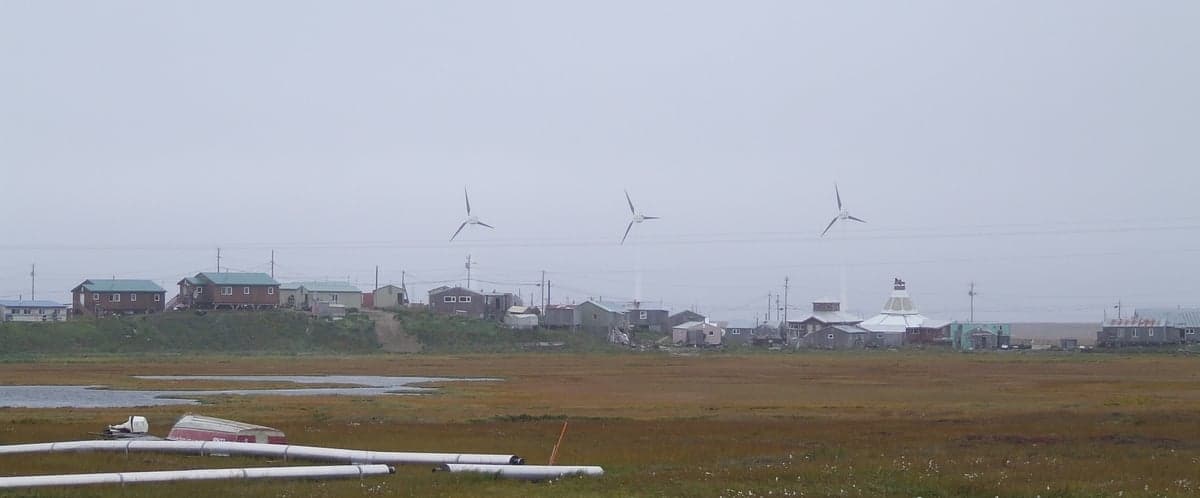
Photo: Wikipedia
Demographics of Hooper Bay, AK
Affluence Level in Hooper Bay, AK
A below-average socioeconomic profile. Incomes, home values, and educational attainment trail the U.S., with higher poverty and unemployment.
People of Hooper Bay, AK
The people of Hooper Bay, Alaska, are overwhelmingly Alaska Native, primarily Yup'ik, with a population of 1,008 as of the most recent estimates. The community is characterized by its strong subsistence lifestyle, high birth rates, and deep cultural continuity, with a median age of just 22.5 years. Only 7.5% of residents identify as White, and the foreign-born population is negligible at 0.7%, making this one of the most homogenous indigenous communities in the state. The city’s identity is rooted in Yup'ik language, traditional fishing and hunting, and a tight-knit social structure that sets it apart from nearly any other relocation destination in the United States.
How the city was settled and grew
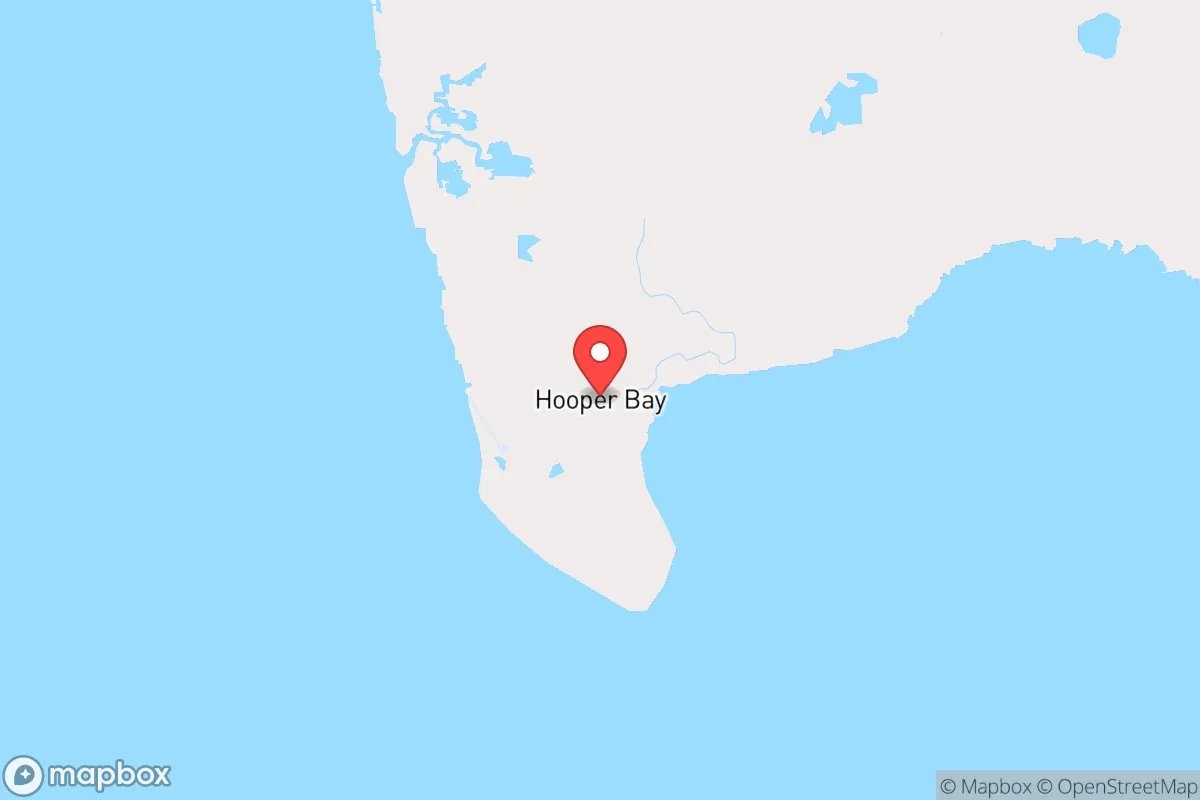
Hooper Bay’s human history is not one of colonial settlement or pioneer migration, but of continuous Yup'ik habitation stretching back millennia. The modern village was formally established in the early 20th century when the Bureau of Indian Affairs (BIA) built a school in 1917, drawing families from surrounding seasonal camps into a permanent winter settlement. The original core of the village, known locally as Old Town, sits on a low spit of land between the Bering Sea and the Hooper Bay River. This area was where the first BIA school and the Russian Orthodox church were built, and it remains the historic heart of the community. A second wave of consolidation occurred in the 1940s and 1950s when the federal government encouraged families from smaller outlying camps—such as Kashunuk and Kokechik—to relocate to Hooper Bay for access to schooling and medical care. These families settled in what is now called Upper Village, a slightly higher-elevation area that expanded as the population grew. The village was officially incorporated as a city in 1966, but its growth was driven entirely by indigenous in-migration from the surrounding tundra, not by outside settlers.
Modern era (post-1965)
Since the 1970s, Hooper Bay’s population has more than doubled, driven by one of the highest birth rates in Alaska. The Alaska Native Claims Settlement Act (ANCSA) of 1971 created the Yukon-Kuskokwim Health Corporation (YKHC) and the Calista Corporation, which brought new housing, a health clinic, and infrastructure to the village. The New Town neighborhood, built on the eastern edge of the village in the 1980s and 1990s, absorbed most of this growth, with HUD-funded homes replacing traditional sod houses and tents. Today, the population remains 99% Alaska Native, with no significant Black, East/Southeast Asian, or Indian subcontinent populations. The 11.0% Hispanic share is almost entirely composed of mixed-heritage individuals (often Yup'ik and Hispanic) rather than recent immigrants, as there are no migrant labor or service industries to attract outside workers. The Airport Road area, near the gravel airstrip, has become a small commercial hub with a store, post office, and school, but it remains fully integrated into the Yup'ik community. The college-educated share is just 3.1%, reflecting the village’s focus on subsistence skills and vocational training rather than four-year degrees.
The future
Hooper Bay’s population is projected to continue growing due to high fertility rates, but it is not homogenizing or tribalizing into distinct enclaves—it is already as homogeneous as an American community can be. The Yup'ik language remains the first language for most children, and English is a second language for many. The biggest demographic challenge is out-migration of young adults to larger hubs like Bethel or Anchorage for education and employment, but the birth rate ensures the village population remains stable or slightly increasing. Over the next 10–20 years, the community will likely remain overwhelmingly Yup'ik, with no significant influx of outside groups. Climate change and coastal erosion are the more pressing threats to the village’s physical location, with some homes in Old Town already threatened by storm surges. The New Town neighborhood, built on slightly higher ground, may become the new core if relocation efforts proceed.
For someone moving in now, Hooper Bay is not a place of demographic diversity or economic opportunity in the conventional sense. It is a deeply traditional Yup'ik community where subsistence living, extended family networks, and cultural preservation define daily life. A newcomer—especially one not Alaska Native—would need to be prepared for a complete immersion in a non-English-speaking, non-Western cultural environment, with limited infrastructure and no private land ownership. The population is stable, young, and growing, but it is not diversifying; it is reinforcing its indigenous identity in the face of environmental and economic pressures.

* Values derived from national, state, county, city and local statistics and may differ in a specific area. Last updated: 2026-04-19T19:22:32.000Z
Narrative content on this page is AI-generated and may contain mistakes. Verify any details that matter before acting on them.
ReloMaps may earn a commission from affiliate links at no extra cost to you.

