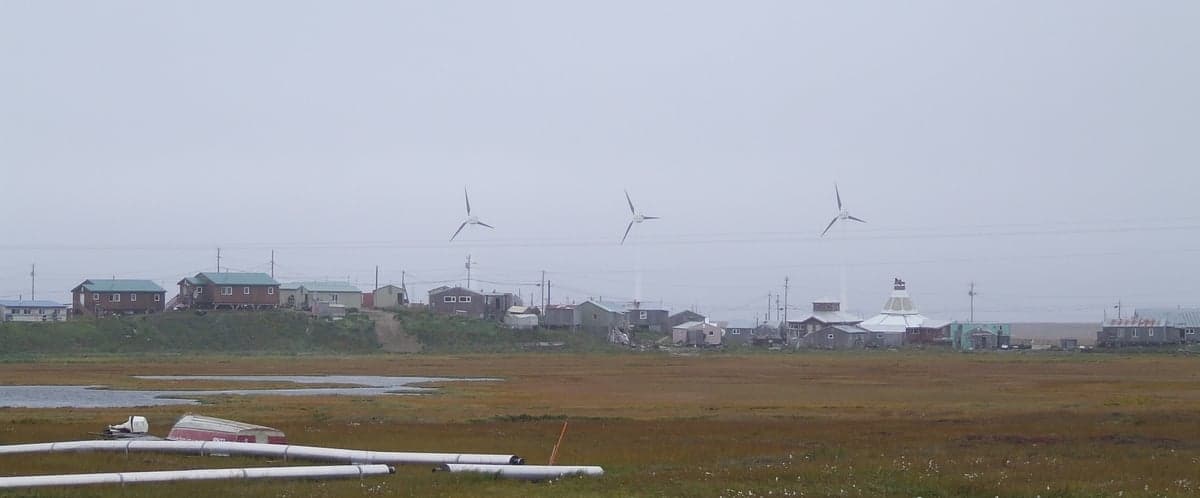
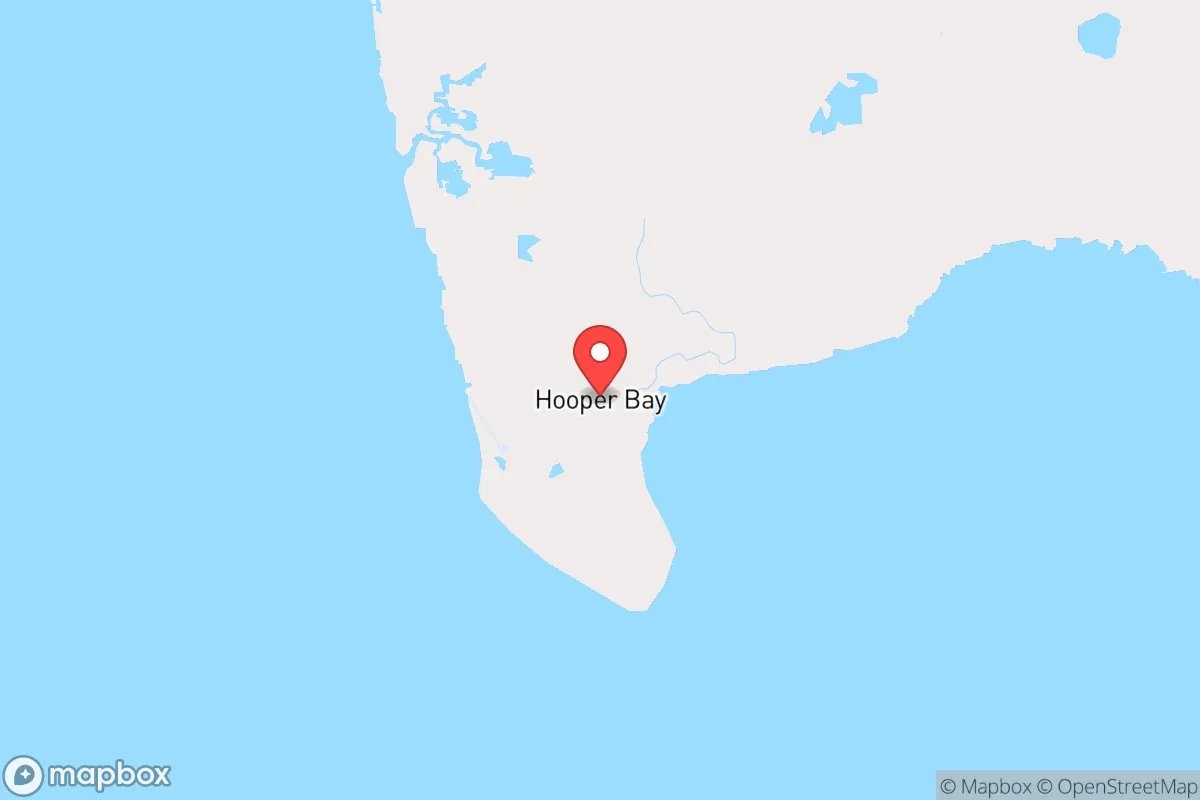
Photo: Wikipedia
Political ClimatePolitical Climate in Hooper Bay, AK
District shown is the primary district for this city’s centroid. Cities may span multiple districts.
Inherited from parent state — no local data available.
Local Political AnalysisPolitical Analysis of Hooper Bay, AK
Hooper Bay has long been a conservative stronghold in western Alaska, and while the Cook PVI of R+6 might not sound extreme, it reflects a community that has consistently voted for traditional values and local control over the years. I’ve seen it shift a bit, though—there’s a quiet unease among folks here about outside influences creeping in, especially from Anchorage or even Bethel, where progressive ideas are starting to take hold. The trajectory feels like a slow drift, but the core of Hooper Bay still holds firm to the belief that government should stay out of our personal lives and our subsistence way of life.
How it compares
Compared to nearby towns like Bethel, which leans more moderate and has seen a noticeable push toward progressive policies in recent years, Hooper Bay feels like a different world. Bethel’s city council has debated things like diversity initiatives and climate action plans that sound good on paper but often feel like they’re written by people who don’t live off the land. Then you’ve got places like Chevak or Scammon Bay—smaller, quieter, and even more conservative than us. They’re the kind of towns where folks still remember when the state tried to mandate caribou hunting quotas that didn’t match local needs, and they voted accordingly. Hooper Bay sits right in that pocket: not as isolated as some, but far enough from the urban centers to keep a healthy skepticism of big government solutions.
What this means for residents
For the people living here, the R+6 lean isn’t just a statistic—it’s a shield. It means we’ve got a better chance of pushing back against overreach, like when the state or feds try to regulate our fishing or hunting rights under the guise of conservation. I’ve seen it firsthand: a few years back, there was a push to limit salmon harvests based on models that didn’t account for our local knowledge. The community rallied, and our conservative voting record gave local leaders the backbone to say no. That’s the real benefit—keeping decisions close to home. On the flip side, any shift toward progressive ideology, like pushing for stricter environmental rules that ignore subsistence needs, is a red flag. It threatens not just our freedom but our ability to feed our families the way we always have.
One thing that sets Hooper Bay apart culturally is how deeply tied our politics are to the land and the seasons. We don’t get caught up in national culture wars as much as folks in the Lower 48—our debates are about fish, fuel, and whether the school board is listening to parents. But there’s a growing concern that outside money and activists are trying to change that, especially around issues like tribal sovereignty and resource management. If you ask me, the best thing we can do is keep voting for people who remember that government’s job is to protect our rights, not manage our lives. The future? I think we’ll hold the line, but it’ll take staying alert and not letting the noise from Anchorage or D.C. drown out our own voices.

State Political ClimatePolitical Climate in Alaska
State Political AnalysisPolitical Environment in the State
Alaska has long been a politically unique state, with a strong libertarian streak and a Republican lean that has become more pronounced over the last two decades. The state voted for Donald Trump by +10 points in 2020 and +13 in 2024, a shift from its more independent, ticket-splitting past when it backed both George W. Bush and Barack Obama. The dominant coalition is a mix of resource-extraction workers, rural conservatives, and fiscal conservatives in the Anchorage bowl, but the state’s political center of gravity has moved rightward as the Democratic Party has become more aligned with coastal environmentalism and federal land restrictions that directly threaten Alaska’s economy.
Urban vs. rural divide
The political map of Alaska is starkly divided between a few urbanized areas and the vast, resource-dependent rural expanse. Anchorage, home to roughly 40% of the state’s population, is the key battleground: the city itself leans slightly Democratic in local races, but its surrounding suburbs—like Eagle River, Chugiak, and the Mat-Su Borough (Wasilla and Palmer)—are deeply conservative. The Mat-Su Valley is the engine of the state’s rightward shift, voting +30 to +40 points Republican in recent cycles. Fairbanks, the second-largest city, is more mixed but trending red, with the University of Alaska campus providing a small liberal pocket. Juneau, the capital, is the state’s most reliably Democratic city, driven by government workers and a tourism-based economy. The rural bush—places like Bethel, Nome, and Kotzebue—votes heavily Democratic due to strong tribal ties and reliance on federal programs, but their populations are small. The real story is the exurban growth around Anchorage: as people flee high costs and crime in the city, they’re moving to conservative strongholds like the Mat-Su, which now has enough population to swing statewide elections.
Policy environment
Alaska’s policy environment is a mixed bag for conservatives. The good news: there is no state income tax or state sales tax, funded by the Permanent Fund oil revenue, which keeps government small by necessity. The state has a constitutional budget reserve and a spending cap, though lawmakers have occasionally raided it. Property taxes are low, with no statewide property tax—only local borough levies. On regulation, Alaska is generally permissive for oil, gas, and mining, but the federal government owns about 60% of the land, creating constant friction over resource development. Education policy is locally controlled, with no statewide curriculum mandates, and homeschooling is popular and lightly regulated. Healthcare is a sore spot: Alaska has the highest per-capita healthcare costs in the nation, and the state expanded Medicaid under the Affordable Care Act in 2015, a move many conservatives opposed. Election laws are relatively secure: Alaska uses a top-four primary system and ranked-choice voting for general elections, passed by ballot initiative in 2020. This system has produced mixed results—it helped elect Democrat Mary Peltola to Congress in 2022 but also allowed conservative Nick Begich to win in 2024. Many conservatives view ranked-choice voting as a manipulation tool and are actively working to repeal it.
Trajectory & freedom
Alaska’s trajectory on personal freedom is a tug-of-war between its libertarian roots and progressive encroachments. On the positive side, gun rights are strong: Alaska is a constitutional carry state, with no permit required for concealed carry, and it has a state preemption law that blocks local gun bans. In 2024, the legislature passed a law prohibiting state enforcement of federal gun regulations that violate the Second Amendment, a direct response to federal overreach. Parental rights are generally respected, with no controversial gender-identity mandates in schools as of 2026, though Anchorage’s school board has pushed for LGBTQ+ policies that alarm conservatives. Medical freedom is a bright spot: Alaska has no vaccine mandates for adults, and the state banned COVID-19 vaccine passports in 2021. However, property rights are under constant threat from federal land management—the Biden administration’s restrictions on oil drilling in the Arctic National Wildlife Refuge and the proposed “30x30” conservation plan have sparked fierce opposition. The Permanent Fund dividend, a direct cash payment to residents from oil revenue, has been shrinking due to legislative diversions, which many see as a tax by another name. The biggest freedom concern is the state’s heavy reliance on federal dollars—about one-third of the budget comes from Washington, creating a vulnerability to federal strings.
Civil unrest & political movements
Alaska has seen relatively little civil unrest compared to the Lower 48, but political movements are active and visible. The most prominent is the Alaska Independence Party, which advocates for a referendum on secession from the United States—a fringe but persistent voice that reflects deep distrust of federal control. On the right, the “Mat-Su Patriots” and local Tea Party groups are well-organized, holding regular rallies and school board meetings. In 2020-2021, there were large protests in Anchorage against COVID-19 mandates, including a “Freedom Rally” that drew thousands. On the left, environmental groups like the Sierra Club and Alaska Wilderness League are powerful, organizing protests against oil drilling and mining projects—most notably the Pebble Mine controversy in Bristol Bay. Immigration politics are muted because Alaska has a small foreign-born population (about 7%), but there is a strong undercurrent of concern about illegal immigration via the Canadian border, which is lightly patrolled. Election integrity is a hot-button issue: the 2020 ranked-choice voting system was challenged in court by conservatives, and there have been ongoing calls for a return to traditional primaries. The most visible flashpoint for a new resident would be the constant tension between resource development and environmental restrictions—you’ll see “Save the Arctic” bumper stickers next to “Drill Baby Drill” ones in the same parking lot.
Projection
Over the next 5-10 years, Alaska is likely to become more conservative, but with a twist. The demographic trend is clear: the state is losing young, liberal-leaning residents to the Lower 48, while retirees and remote workers from red states are moving in, drawn by the lack of income tax and the outdoor lifestyle. The Mat-Su Borough will continue to grow and pull the state rightward, while Anchorage’s urban core may become more Democratic as it densifies. The wildcard is the Permanent Fund: if oil revenues continue to decline due to federal restrictions, the state may be forced to adopt an income tax or cut services, which could trigger a backlash and a push for more autonomy. The ranked-choice voting system is likely to be repealed or modified, as conservative anger over it remains high. On freedom, expect more clashes with the federal government over land use—Alaska’s congressional delegation is already pushing for a “state sovereignty” bill that would give the state more control over federal lands. For a new resident, the bottom line is that Alaska is a place where you can still live largely free from state-level overreach, but you’ll be fighting Washington every step of the way. If you value low taxes, gun rights, and personal autonomy, you’ll find a home here—but be prepared for a political landscape that is as rugged as the terrain.
For a conservative moving to Alaska, the practical takeaway is this: you’ll find a state that largely shares your values on taxes, guns, and local control, but you’ll need to be politically active to keep it that way. The fight over ranked-choice voting, federal land restrictions, and the Permanent Fund dividend will define the next decade. If you settle in the Mat-Su Valley or Fairbanks, you’ll be in the heart of the conservative movement; if you choose Anchorage or Juneau, you’ll be in a more mixed environment where your vote matters. Either way, Alaska offers a level of personal freedom that is increasingly rare in the Lower 48—but it’s not guaranteed, and it requires constant vigilance.
* Values derived from national, state, county, city and local statistics and may differ in a specific area. Last updated: 2026-04-19T19:22:32.000Z
Narrative content on this page is AI-generated and may contain mistakes. Verify any details that matter before acting on them.
ReloMaps may earn a commission from affiliate links at no extra cost to you.

