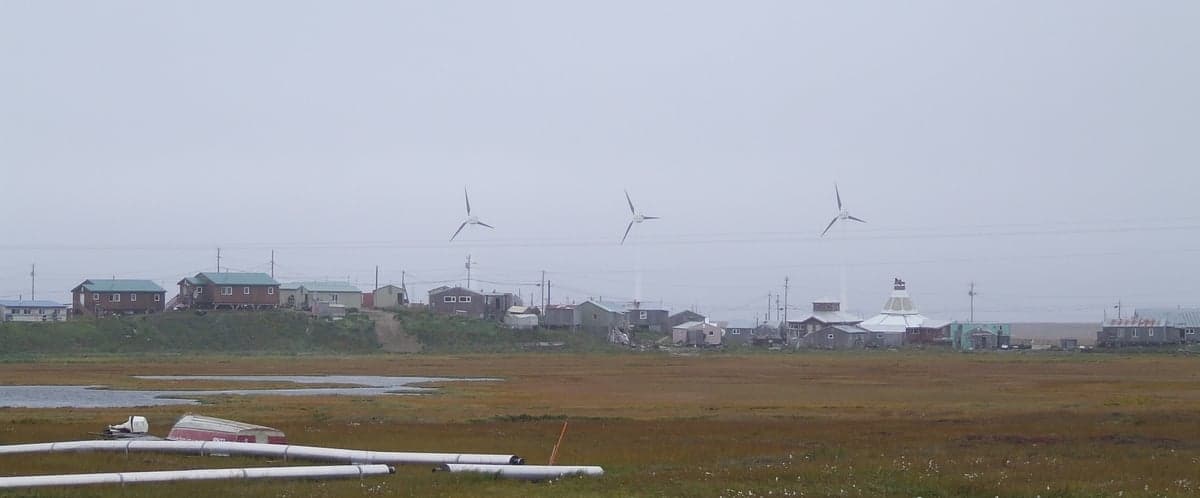
Photo: Wikipedia
Strategic Assessment of Hooper Bay, AK
Strong survivability profile. Good buffer from population centers, with manageable environmental and tactical risks.
What does the Strategic Assessment tell us?
Our Strategic Assessment grades tactical survivability of an area. Major population centers, military targets, fallout zones, natural disasters, and border exposure all drive risk — lower exposure means a more defensible position in a crisis.
This is heavily inspired by Joel Skousen's Strategic Relocation book. Highly recommended you checkout the book ($)What does this tell us?
Our Strategic Assessment grades tactical survivability of an area. Major population centers, military targets, fallout zones, natural disasters, and border exposure all drive risk — lower exposure means a more defensible position in a crisis.
This is heavily inspired by Joel Skousen's Strategic Relocation book. Highly recommended you checkout the book ($)Strategic Pillars

Key Distances
Regional Safe Places
Below is our recommended "safe zones" in Alaska and the surrounding area based on our strategic heuristics. For most people, it's unrealistic to live in a “safe zone” full-time due to work, family or other personal reasons. They tend to be more rural. However, many of these areas are perfect for second homes and retreat properties that double as a vacation home or even a short-term rental.
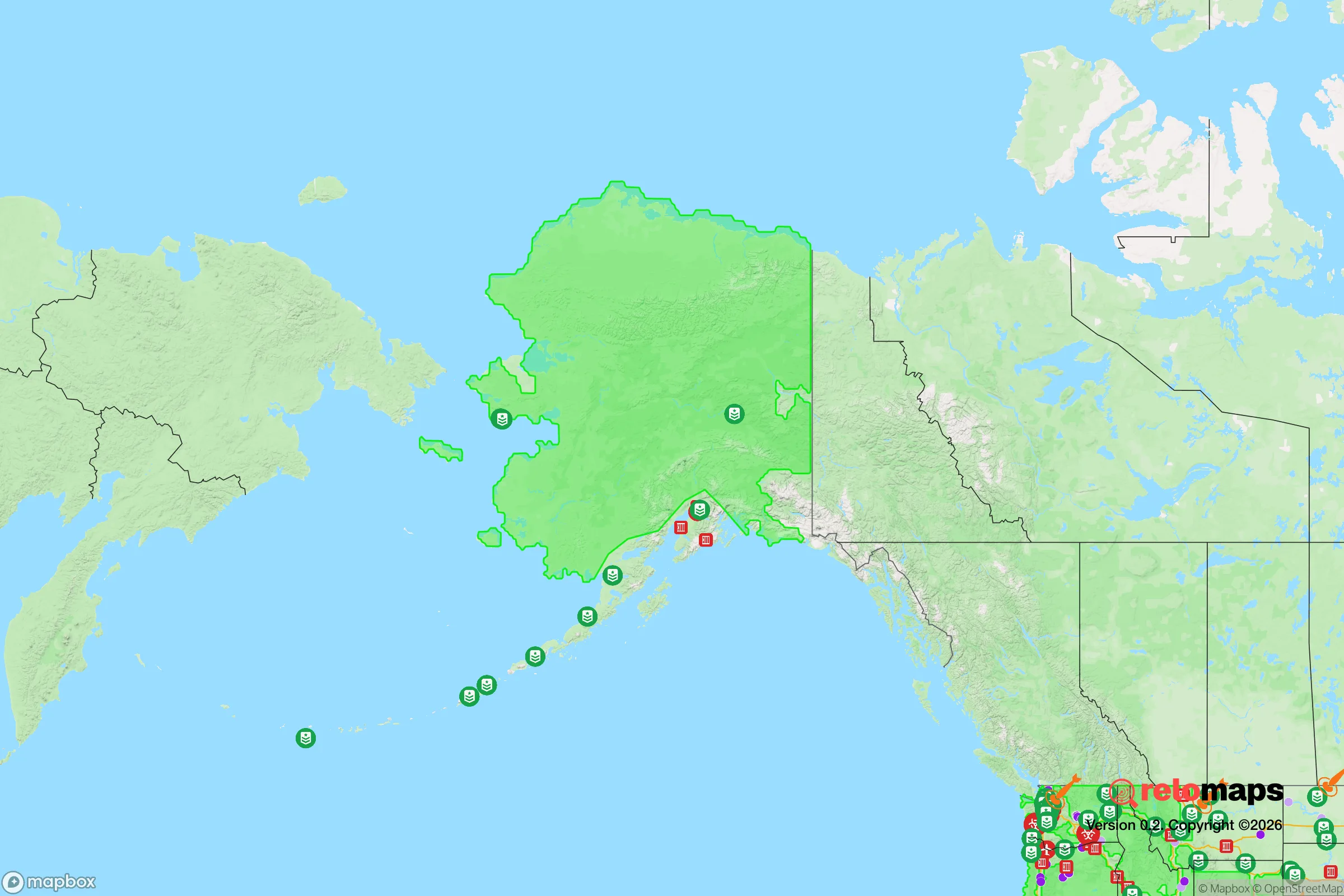
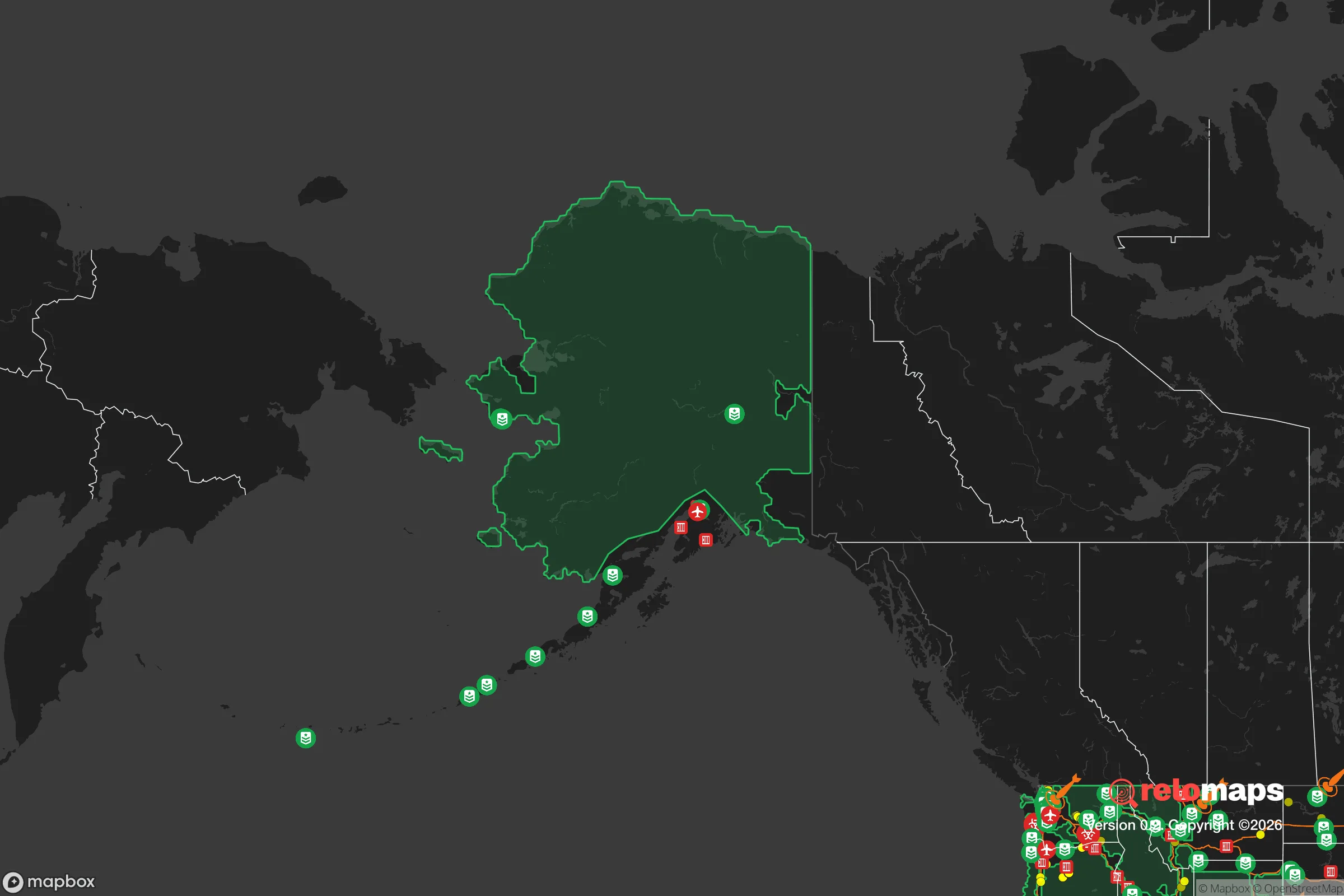


Important Note: For informational purposes only. This does not mean nothing bad ever happens in the green zones. Please use common sense. This is based on public data and modeled with AI. We tried to take a conservative approach but mistakes happen. We update this regularly as new information becomes available.
Solar Generator Recommendations
Backup power matters more here than in safer locations. We've picked three solar generators across budgets and capacity tiers — start with the budget unit if you only need a few essentials, or step up if you want to run a fridge and HVAC for days at a time.

Jackery Portable Power Station Explorer 300
Budget OptionPower on the Go: Weighing only 11 lbs, it's convenient to set up and store with book-sized foldable solar panels

BLUETTI Portable Power Station AC180
Designed for both indoor and outdoor scenarios, AC180 is highly capable as it has a robost capacity and continuous output power.

EF ECOFLOW DELTA Pro Ultra Power Station
Upgraded PickEcoFlow DELTA Pro Ultra is a whole-home energy system designed to grow with your family. Integrated with the Smart Home Panel 2, it scales to meet your evolving energy needs — keeping your home powered, intelligent, and secure through every stage of life.
We earn a commission, at no additional cost to you.
Strategic Assessment Analysis
Hooper Bay, Alaska, presents a unique strategic paradox for the conservative prepper: extreme isolation that offers near-total insulation from cascading national crises, but at a cost of logistical fragility that would test even the most hardened survivalist. Located on the Bering Sea coast, roughly 450 miles west of Anchorage and 130 miles from the nearest road system, this Yup'ik community of roughly 1,300 people sits in a position that is simultaneously a fortress and a trap. For the relocator seeking to escape the collapse of urban infrastructure, civil unrest, or fallout from major population centers, Hooper Bay offers a blank slate—but one that demands you bring your own infrastructure, skills, and community ties from scratch.
Geographic isolation and natural defensive advantages
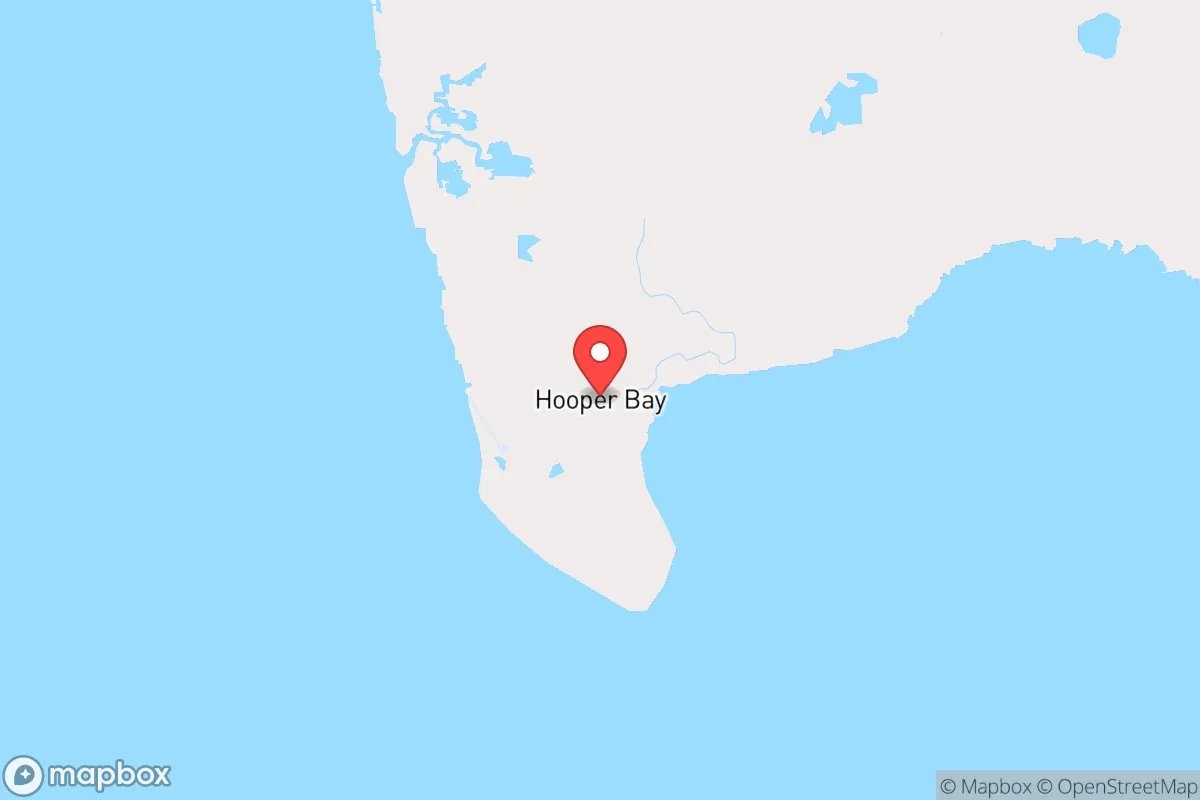
Hooper Bay’s primary strategic asset is its sheer distance from anything resembling a target. The nearest city of any size is Bethel, 130 miles to the east, itself a small hub of 6,000. Anchorage, the state’s largest population center and a plausible target for any mass-casualty event or EMP strike, is a full 450 miles away—over water and tundra, with no road connection. The community sits on a low-lying spit of land between the Bering Sea and the Hooper Bay lagoon, meaning any approach by land is funneled through a narrow, easily defensible corridor. In a scenario where civil unrest or resource wars break out in the Lower 48, Hooper Bay is effectively off the grid. The nearest military installation is Joint Base Elmendorf-Richardson near Anchorage, and the nearest potential fallout danger from a nuclear event would be that same Anchorage area or, more distantly, Russian Far East sites like Petropavlovsk-Kamchatsky (roughly 1,200 miles southwest). For the prepper concerned with fallout from a continental-scale disaster, this location offers a buffer measured in hundreds of miles of uninhabited, windswept terrain. The Bering Sea coast also provides a natural barrier against mass migration—no one is walking to Hooper Bay from the Lower 48.
Risks, exposures, and proximity to fallout-relevant landmarks
The same isolation that makes Hooper Bay a refuge also creates acute vulnerabilities. The community is entirely dependent on air and sea resupply for fuel, medical supplies, and most non-subsistence food. The single airstrip—a gravel runway 3,000 feet long—is the lifeline. In a national emergency where air traffic is grounded or fuel becomes scarce, that lifeline snaps. The Bering Sea is notoriously treacherous; winter storms can cut off barge deliveries for weeks. The nearest hospital is in Bethel, a 45-minute flight or a multi-day boat trip in good weather. For a relocator with a family, a medical emergency during a crisis could be a death sentence. Additionally, Hooper Bay sits in a zone of high seismic activity—the Alaska-Aleutian subduction zone. A major earthquake could trigger a tsunami that would inundate the low-lying village (elevation roughly 10 feet above sea level). The community has no tsunami evacuation plan or high ground within walking distance. For the prepper, this means the location itself is a risk: a single tectonic event could erase the entire settlement. There are no fallout shelters, no hardened infrastructure, and no redundancy in the power grid—the village relies on diesel generators and a small wind turbine. A prolonged fuel disruption means no electricity, no heat, and no water pumping.
Practical resilience for a relocator: food, water, energy, and defensibility
For the individual or family willing to invest in self-sufficiency, Hooper Bay offers a subsistence-based lifestyle that aligns with prepper values. The Yup'ik residents have lived here for millennia on a diet of seal, fish (salmon, herring, whitefish), waterfowl, and berries. A relocator who learns these skills—or brings their own hunting, fishing, and preservation knowledge—can theoretically feed themselves without a grocery store. Water is available from the lagoon and local lakes, but must be treated or boiled; there is no municipal water treatment plant. Energy is the hardest nut to crack. Solar is marginal at this latitude (56°N), with near-total darkness from November to January. Wind is abundant but requires robust turbine systems that can survive 100 mph winter storms. Diesel storage is the most reliable backup, but you’d need to stockpile hundreds of gallons before a crisis hits. Defensibility is excellent: the village is small, everyone knows everyone, and outsiders are immediately noticed. A single armed individual or family could secure a perimeter around a well-stocked cabin. However, the social dynamics are complex—this is a tight-knit indigenous community with its own governance, language, and norms. A relocator who arrives without building genuine relationships will find themselves isolated in a different way: socially and economically excluded from the subsistence network. The best approach is to integrate slowly, learn Yup'ik customs, and contribute skills (medical, mechanical, construction) that the community values.
The overall strategic picture for Hooper Bay is one of extreme trade-offs. For the prepper who prioritizes total avoidance of urban collapse, fallout, and civil unrest, this location is arguably the most secure in the United States—no roads, no targets, no crowds. The Bering Sea coast is a natural moat. But the price is a level of logistical dependence that would be catastrophic if the supply chain fails. The community’s low elevation and seismic risk mean that a natural disaster could be as devastating as any man-made crisis. For a single individual with deep bushcraft skills, a stockpile of fuel and ammunition, and a willingness to live without modern medical care, Hooper Bay could be a viable long-term retreat. For a family with children, the lack of education options (the local school goes to 12th grade but is small), the extreme weather, and the isolation from any backup make it a high-risk choice. The conservative prepper should view Hooper Bay not as a primary relocation target, but as a fallback option—a place to have a pre-positioned cache and a network of contacts, but not a place to move to unless the collapse is total and permanent. For most, a more balanced location in interior Alaska (like the Tanana Valley or the Kenai Peninsula) offers a better mix of isolation, resources, and defensibility without the extreme vulnerabilities of the Bering Sea coast.

* Values derived from national, state, county, city and local statistics and may differ in a specific area. Last updated: 2026-04-19T19:22:32.000Z
Narrative content on this page is AI-generated and may contain mistakes. Verify any details that matter before acting on them.
ReloMaps may earn a commission from affiliate links at no extra cost to you.

