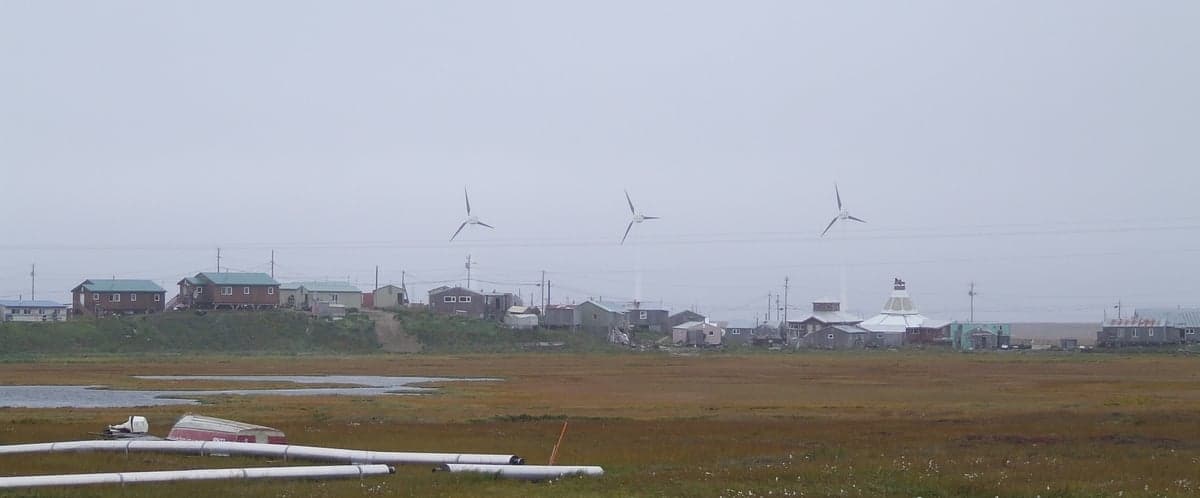
Photo: Wikipedia
Personal Sovereignty in Hooper Bay, AK
Strong independent fundamentals that actively favor personal liberty and low regulation.
What does Personal Sovereignty tell us?
Personal Sovereignty measures your capacity for self-reliance and independence with minimal government friction. Higher scores mean fewer barriers between you and the way you want to live... but it assumes you have the space you need and good neighbors.
What does this tell us?
Personal Sovereignty measures your capacity for self-reliance and independence with minimal government friction. Higher scores mean fewer barriers between you and the way you want to live... but it assumes you have the space you need and good neighbors.
State Policy
Energy independence: Net exporter (350% of energy produced in-state)
Personal Liberty
Homesteading

Personal Liberty Analysis
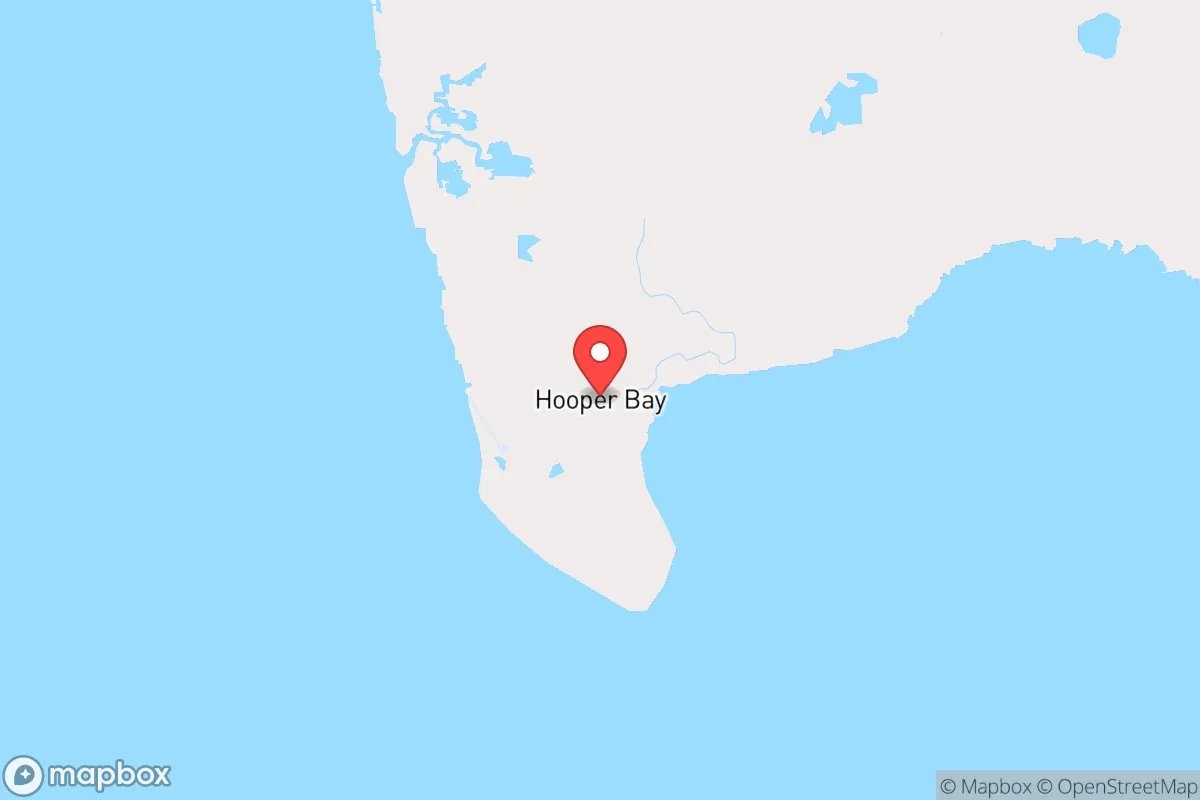
Hooper Bay, Alaska, offers a level of personal sovereignty that is increasingly rare in the Lower 48, but it comes with extreme trade-offs that a survivalist or prepper must weigh carefully. This remote Yup'ik village of roughly 1,400 people sits on the Bering Sea coast, accessible only by air or sea, which inherently limits government reach but also strains self-reliance. For those seeking to escape the encroaching regulatory state, Hooper Bay presents a raw, frontier-like autonomy environment where daily life is governed more by subsistence hunting and weather than by municipal codes. However, the practical realities of isolation, limited infrastructure, and a collectivist village culture mean that personal sovereignty here is less about individual rights and more about surviving within a tight-knit, traditional community.
Tax burden and regulatory posture in a remote Alaskan village
Alaska’s state-level tax posture is among the most favorable in the nation for those seeking to minimize government extraction. There is no state income tax and no state sales tax, a direct result of the state’s Permanent Fund Dividend (PFD) system, which pays residents an annual check from oil revenues. Hooper Bay itself, as a small, unincorporated community, has no local property tax or municipal sales tax, meaning your earnings and purchases are largely untouched by local levies. The regulatory posture is similarly light: there are no zoning ordinances, no building permits required for most structures, and no county-level planning commissions dictating land use. However, this regulatory vacuum is not a libertarian paradise—it’s a reflection of the state’s inability to enforce rules in such a remote location. The practical effect is that you can build a cabin, dig a well, or set up a solar array without filing a single form, but you also have no legal recourse if a neighbor’s actions affect your property. For the prepper, this means maximum freedom to construct off-grid infrastructure, but with the understanding that the village’s traditional council (the Native Village of Hooper Bay) may exert informal social pressure on land use. The biggest regulatory hurdle is the Alaska Department of Fish and Game, which strictly controls subsistence hunting and fishing seasons—a critical point for anyone planning to live off the land. State troopers are a rare sight, but federal agencies like the US Fish and Wildlife Service (which manages the nearby Yukon Delta National Wildlife Refuge) can impose restrictions on trapping and waterfowl hunting.
Self-defense and gun law specifics in a village without police
Alaska is a constitutional carry state, and Hooper Bay takes that to its logical extreme. No permit is required to open or conceal carry a firearm for anyone legally allowed to possess one, and there is no state-level firearm registration or waiting period. The village has no local police department—law enforcement is provided by the Alaska State Troopers based in Bethel, a 45-minute flight away, meaning response times are measured in hours, not minutes. For the survivalist, this creates a de facto self-defense environment where you are the first and last line of protection. Shotguns and bolt-action rifles are common for subsistence hunting, but semi-automatic rifles (including AR-15s) are legal and present in the village, though less common due to cost and corrosion from the saltwater environment. Magazine capacity is unrestricted, and there are no "red flag" laws or firearm storage mandates at the state level. However, there are practical constraints: ammunition is expensive and must be flown in, and the extreme cold and humidity require diligent maintenance. The village’s high rate of alcohol-related violence (Hooper Bay has a dry community ordinance, but bootlegging is rampant) means that a firearm for home defense is a practical necessity, not a political statement. Stand-your-ground laws apply statewide, and there is no duty to retreat in any place where you are lawfully present. For parents, this means you can legally teach your children firearm safety and use without government interference, but you must also contend with the reality that firearms are ubiquitous and accidents happen in close quarters.
Self-reliance and homesteading viability in a coastal tundra environment
Hooper Bay sits on the edge of the Yukon-Kuskokwim Delta, a vast expanse of tundra, permafrost, and wetlands that makes traditional homesteading nearly impossible. Lot sizes are not formally platted—land is held in trust by the Native Village of Hooper Bay under the Alaska Native Claims Settlement Act (ANCSA), meaning you cannot buy land outright; you can only lease it from the village corporation or live on family allotments. This is a critical sovereignty issue: you do not own the dirt under your feet, and the village council can theoretically revoke your lease. Off-grid feasibility is high in theory but brutal in practice. There is no municipal water or sewer system—most homes rely on hauled water and honey buckets (plastic bags for human waste), which must be disposed of in designated dump sites. Electricity comes from diesel generators run by the village utility, with rates around $0.50–$0.70 per kWh (three to five times the national average). Solar panels are viable only during the long summer days (20+ hours of light) but useless in winter when the sun barely rises. Wind turbines are common but prone to icing and mechanical failure. For the prepper, the only reliable heat source is a wood stove, but firewood is scarce on the tundra—most is driftwood collected from the coast or flown in at exorbitant cost. Gardening is limited to a few hardy greens in raised beds during the brief summer (June–August), and the permafrost prevents deep root systems. True self-reliance here means mastering subsistence hunting (seal, salmon, moose, waterfowl) and traditional food preservation (drying, smoking, fermenting), not growing crops or raising livestock. The village has no feed store, no hardware store, and no lumber yard—everything must be ordered from Anchorage or Bethel and shipped by barge or air, with lead times of weeks.
Personal liberties in a tight-knit Yup'ik community
Personal liberties in Hooper Bay exist in a unique tension between state law and village custom. Parental rights are strong under Alaska law—there is no state-level mandate for school curriculum transparency or vaccine requirements that override parental choice, and homeschooling is legal with minimal reporting. The local school (Hooper Bay School, K–12) is run by the Lower Kuskokwim School District, which follows state standards but is heavily influenced by the village’s Yup'ik cultural values. Medical autonomy is a mixed bag: there is no hospital in Hooper Bay—only a small clinic staffed by community health aides (CHAs) who can treat minor injuries and illnesses. For serious medical issues, you must be medevaced to Bethel or Anchorage, a process that can take hours and costs thousands of dollars (even with insurance). This effectively means you have near-total medical autonomy because the state cannot easily intervene, but you also have no access to emergency care for conditions like appendicitis or heart attacks. Speech and property rights are protected by the Alaska Constitution, which is more expansive than the U.S. Constitution on privacy and property. There are no local noise ordinances, no HOA-style restrictions, and no building codes. However, the village’s social fabric is collectivist—decisions about land use, hunting areas, and even home construction are often made by consensus within extended family networks. For a conservative individualist, this can feel stifling; for a parent seeking to raise children away from government indoctrination, it offers a community where traditional values (subsistence, respect for elders, communal sharing) are the norm, not the exception.
Overall, Hooper Bay offers a level of personal sovereignty that is unmatched in most of the United States—no income tax, no building codes, constitutional carry, and minimal government presence. But this sovereignty is not the rugged individualism of a Montana homestead; it is a collective sovereignty embedded in a Yup'ik subsistence culture that predates the United States. For the survivalist or prepper, the trade-offs are stark: you gain freedom from the regulatory state but lose access to modern infrastructure, healthcare, and supply chains. Compared to other remote Alaskan villages like McCarthy or Skwentna, Hooper Bay is more constrained by its tribal land tenure and reliance on subsistence hunting. Compared to the Lower 48, it is a sovereign anomaly where the government’s reach is limited by geography and cost. The question is not whether you can be free here—you can—but whether you can survive the freedom.

* Values derived from national, state, county, city and local statistics and may differ in a specific area. Last updated: 2026-04-19T19:22:32.000Z
Narrative content on this page is AI-generated and may contain mistakes. Verify any details that matter before acting on them.
ReloMaps may earn a commission from affiliate links at no extra cost to you.

