
Photo: Wikipedia
Quality of Life in Hot Springs, AR
A high quality of life with strong walkability, manageable living costs, healthy neighborhood signals, and solid amenity access.
What does Quality of Life tell us?
Quality of Life blends cost of living, nearby amenities, socioeconomic signals, and neighborhood character. City-level scores represent the whole municipality; individual neighborhoods can differ.
What does this tell us?
Quality of Life blends cost of living, nearby amenities, socioeconomic signals, and neighborhood character. City-level scores represent the whole municipality; individual neighborhoods can differ.
Cost of Living
31% below national average
The Real Cost of Living in Hot Springs, AR for 2026
| Tier | Individual | Family (4) |
|---|---|---|
| Survival | $14k | $27k |
| Comfortable | $30k | $45k |
| Luxury | $84k+ | $130k+ |
| Elite (Top 5%) | $104k+ | $161k+ |
104%
The Area Signal
A metric tracking the socioeconomic signals of the area.
Hobbies
Explore the areaGroceries
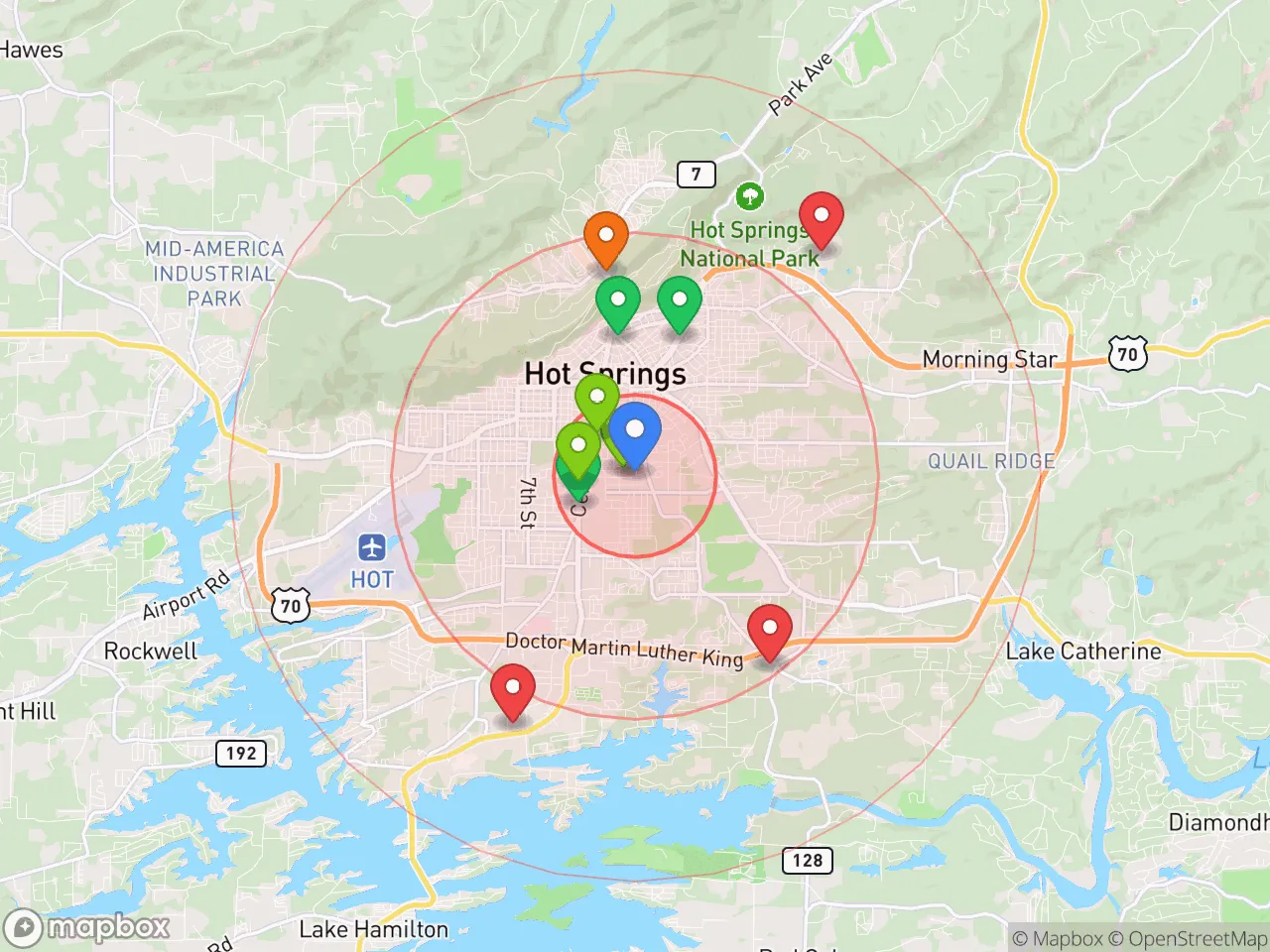
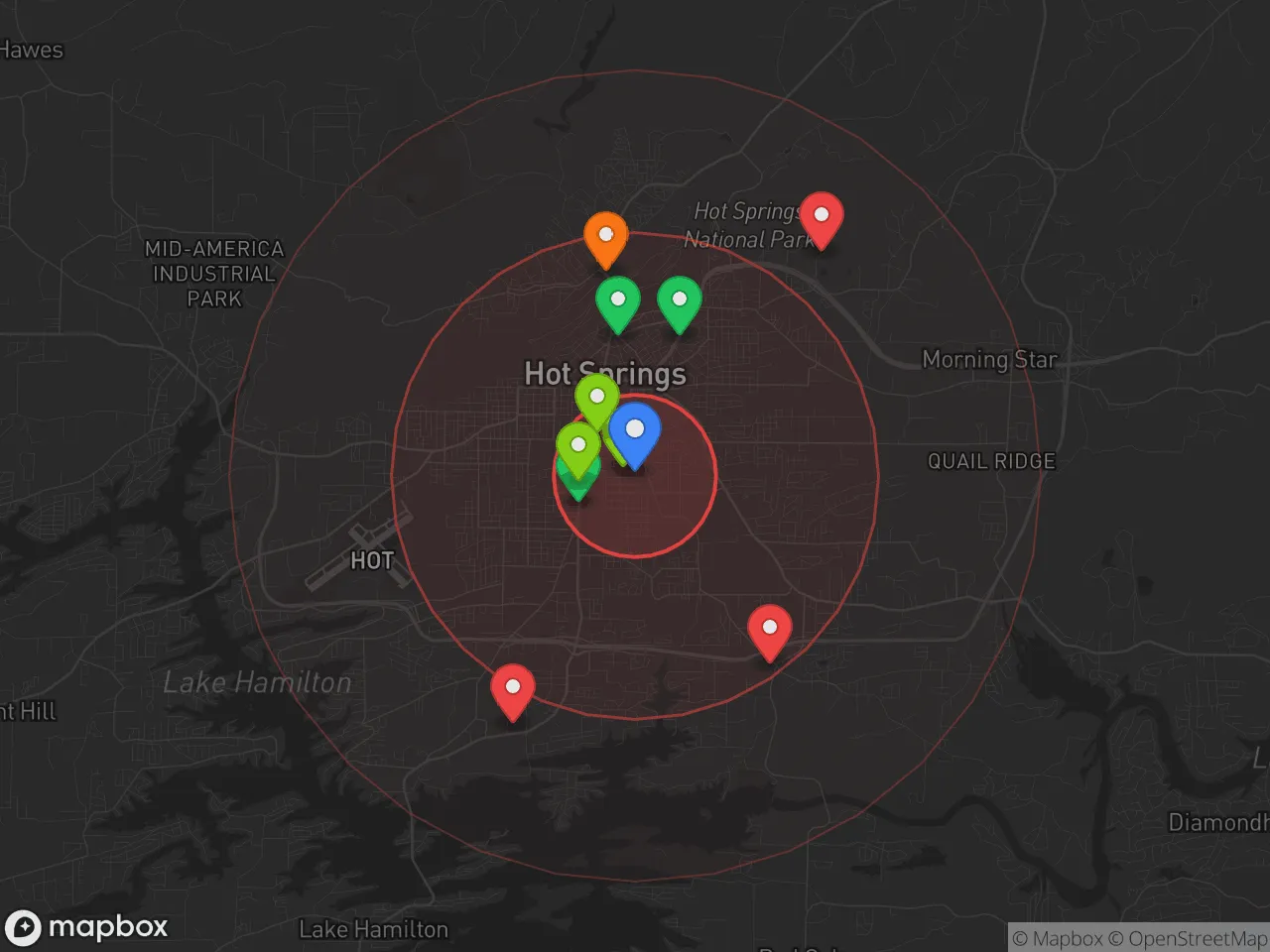
3 within 10 miles
Gas
20 within 10 miles
Hospital
6 within 20 miles
Airport
DFW — Dallas/Fort Worth International
Post Office
USPS — Hot Springs, AR
Critical Amenities
Quality-of-Life Analysis
Hot Springs, Arkansas, offers a notably affordable quality of life that attracts a mix of retirees, remote workers, and families seeking a slower pace without sacrificing natural amenities. With a cost of living index of 69 — well below the national average of 100 — the area provides significant financial breathing room compared to larger metros like Little Rock or Fayetteville. The population skews slightly older than the national median, reflecting its long history as a spa and retirement destination, though a growing number of younger professionals are drawn by the low housing costs and scenic Ouachita Mountain setting.
Cost of living, housing affordability, and how it compares to nearby areas
Housing in Hot Springs is a primary driver of its low cost of living. The median home value sits at $156,900, roughly half the national median, while the median rent of $902 is similarly below the U.S. average. This makes homeownership attainable for households earning the local median income of around $45,000. Compared to nearby cities — such as Little Rock (COL index 85) or Bentonville (COL index 92) — Hot Springs offers a clear affordability edge, particularly for retirees on fixed incomes or first-time buyers. The average commute of 17 minutes is notably short, reducing transportation costs and freeing up time for outdoor recreation. Utility costs and grocery prices also track below national averages, further stretching household budgets. However, property taxes in Garland County are moderate, and sales tax is relatively high at 9.5%, which can offset some housing savings for frequent shoppers.
Local amenities, schools, and what daily life feels like
Daily life in Hot Springs revolves around its unique blend of historic downtown, Lake Hamilton, and Hot Springs National Park. The city’s public schools, part of the Hot Springs School District, serve roughly 3,700 students and have seen incremental improvements in test scores, though they lag behind top-performing districts in central Arkansas. Private and charter options, such as Lakeside High School, offer alternatives. For amenities, the downtown area features Bathhouse Row, independent restaurants, and the Hot Springs Farmers Market. The city hosts the Hot Springs Documentary Film Festival and the Oaklawn Racing Casino Resort, which provides entertainment and employment. Outdoor life is central: residents boat and fish on Lake Hamilton, hike the Ouachita National Forest trails, and use the 26-mile Ouachita River for kayaking. Healthcare access is solid, with CHI St. Vincent Hot Springs and National Park Medical Center providing regional care. The rhythm is unhurried — most errands are within a 10-minute drive, and traffic congestion is rare outside of race season at Oaklawn.
Hot Springs is best suited for those who prioritize affordability and outdoor access over urban career opportunities or top-tier public schools. Retirees, remote workers, and families willing to trade higher incomes for a lower-stress lifestyle will find the most value here. The combination of a 17-minute commute, sub-70 cost of living, and immediate access to a national park and large lake creates a quality of life that is hard to match in more expensive regions. However, those seeking high-paying professional jobs or nationally ranked schools may need to look toward Little Rock or Northwest Arkansas.

Crime in Hot Springs, AR
Higher crime rates than 74% of comparable U.S. locations.
Violent CrimeViolent Crime Analysis
Property CrimeProperty Crime Analysis
Crime Analysis
Hot Springs, Arkansas, reports a violent crime rate of 505.5 per 100,000 residents and a property crime rate of 3,380.7 per 100,000, placing it significantly above both state and national averages. These figures indicate that the city faces serious public safety challenges, particularly in property-related offenses like theft and burglary. Visitors and new residents should approach the city with heightened awareness, as the overall safety picture is notably worse than in many comparable Arkansas communities.
Crime in context
Compared to the national violent crime rate of roughly 380 per 100,000, Hot Springs' rate of 505.5 is about 33% highercars. Property crime in the city is even more elevated, with the 3,380.7 per 100,000 figure nearly double the national average of approximately 1,950 per 100,000. These statistics place Hot Springs in a higher-risk tier among Arkansas municipalities, though it remains below the most dangerous cities in the state like Pine Bluff. The elevated rates are partly attributable to the city's status as a regional tourism and entertainment hub, which draws transient populations and creates more opportunities for crime. However, a significant contributing factor is the local justice system's approach: Garland County has seen a trend toward progressive prosecution policies, with district attorneys emphasizing diversion programs and reduced sentencing for non-violent offenders. While intended to reduce incarceration, these policies can result in repeat offenders cycling back onto the streets quickly, directly undermining public safety and victim justice.
What residents experience
For daily life in Hot Springs, property crime is the most tangible concern. Residents commonly report vehicle break-ins, package thefts, and burglaries, particularly in areas near the downtown entertainment district and along the Central Avenue corridor. Violent crime, while less frequent, is concentrated in specific pockets, including parts of the historic district and some lower-income neighborhoods east of the Ouachita River. The presence of a large tourist population means that visitors are frequent targets for theft and scams, which can create a sense of unease for locals who live and work in high-traffic zones. Law enforcement presence is visible in the downtown core, but response times in outlying residential areas can be slower. The progressive judicial philosophy in the region means that even when arrests are made, offenders often face minimal consequences, eroding deterrence and leaving residents feeling that the system prioritizes offender rehabilitation over community protection.
Neighborhood-level safety varies considerably. The Whittington Avenue and Mountain Pine areas tend to see higher rates of property crime and occasional violent incidents. In contrast, the residential neighborhoods around Lake Hamilton and the Hot Springs Country Club report lower crime rates, though they are not immune to theft. The city's reliance on tourism creates a dynamic where crime spikes during peak seasons, such as the spring racing season at Oaklawn Park and summer holiday weekends. For those considering relocation, a thorough review of specific block-level crime maps and conversations with local police precincts are strongly recommended before choosing a neighborhood.
* Values derived from national, state, county, city and local statistics and may differ in a specific area. Last updated: 2026-04-30T02:27:40.000Z
Narrative content on this page is AI-generated and may contain mistakes. Verify any details that matter before acting on them.
ReloMaps may earn a commission from affiliate links at no extra cost to you.

