Photo: Wikipedia
Demographics of Huntersville, NC
Affluence Level in Huntersville, NC
An upper-middle-class area. Household wealth, education levels, and homeownership run ahead of national benchmarks.
People of Huntersville, NC
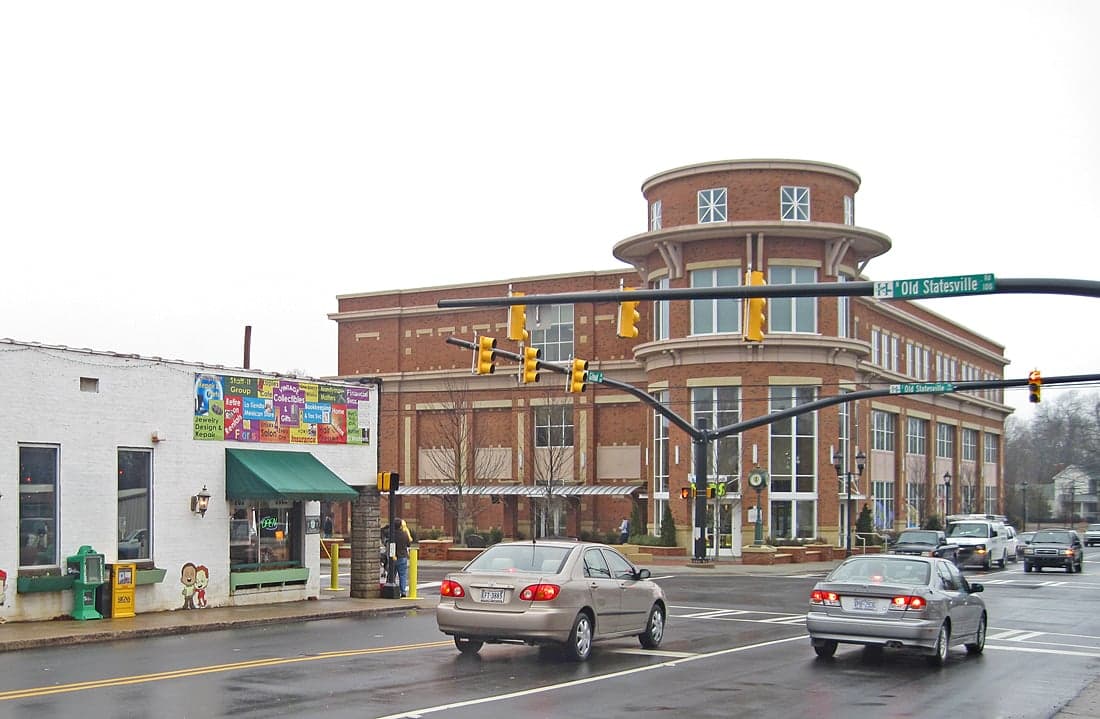
Huntersville, North Carolina, is a rapidly growing suburban city of 62,458 residents that blends traditional Southern roots with a modern, professional-class identity. The city is predominantly white (68.8%) and highly educated (57.3% hold a bachelor’s degree or higher), with a foreign-born population of just 4.9% that is notably diverse for the region. Its character is defined by young families, corporate transplants, and a strong sense of local community centered around historic downtown and newer master-planned neighborhoods.
How the city was settled and grew
Huntersville’s population history begins with Scots-Irish and German settlers who arrived in the mid-18th century, drawn by land grants along the Catawba River and the fertile Piedmont soil. The town was officially incorporated in 1873 as a railroad stop on the Atlantic, Tennessee & Ohio line, which brought a small wave of merchants and tradesmen. For the next century, Huntersville remained a quiet farming and mill town, with the population hovering under 1,000. The original settlement clustered around what is now Old Town Huntersville, where descendants of those early families still maintain historic homes and churches. A small African American community formed during Reconstruction in the Glenwood and Beatties Ford Road corridor, working primarily in agriculture and domestic service. The city saw little growth until the 1960s, when Charlotte’s northern expansion began to reach Huntersville’s doorstep.
Modern era (post-1965)
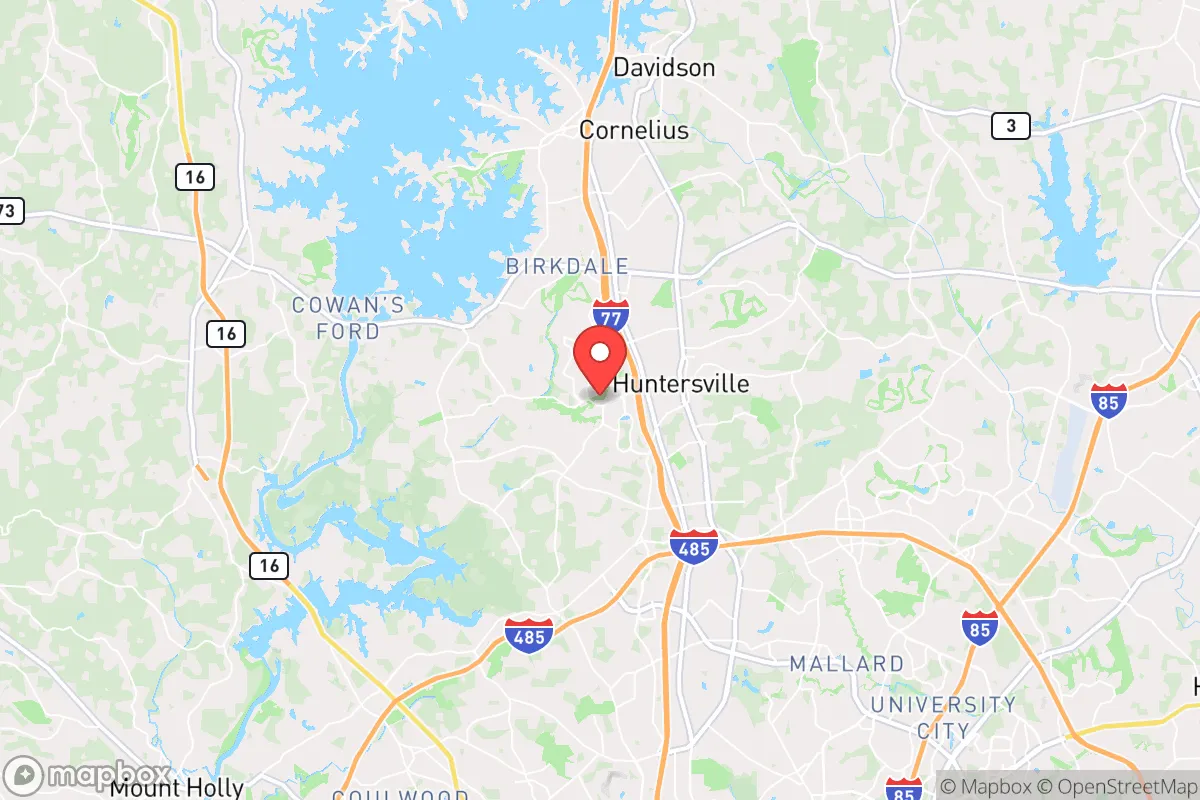
The modern population boom began in the 1970s and accelerated sharply after 1990, driven by Charlotte’s suburban sprawl and the construction of Interstate 77. White middle-class families from Mecklenburg County and other parts of the Southeast moved into new subdivisions like Birkdale Village (a mixed-use community built in the 1990s) and McDowell Creek, drawn by good schools and larger lots. The 2000s brought a wave of corporate relocations, particularly from the Northeast and Midwest, as companies like Bank of America and Lowe’s expanded in the Charlotte region. This influx raised the college-educated share from roughly 35% in 2000 to 57.3% today. The Black population grew from 8% in 1990 to 13.5% currently, with many families settling in the Ranson area and newer subdivisions off Gilead Road. The Hispanic population (7.4%) is concentrated in the Huntersville Station area and along Statesville Road, working in construction, landscaping, and service industries. East/Southeast Asian residents (2.3%) and Indian-subcontinent residents (3.2%) are a smaller but growing presence, often professionals in tech and healthcare who have moved into neighborhoods like Blythe Landing and Northstone since 2010. The foreign-born share remains low (4.9%) compared to Charlotte (14.5%), reflecting Huntersville’s character as a domestic-magnet suburb rather than an immigrant gateway.
The future
Huntersville’s population is projected to reach 75,000–80,000 by 2035, driven by continued infill development and the extension of the Charlotte Area Transit System’s Blue Line light rail into the city. The city is not homogenizing into a single demographic block; instead, distinct enclaves are solidifying. Old Town Huntersville is becoming a walkable historic district for empty-nesters and young professionals, while Birkdale Village and McDowell Creek remain family-oriented, white-majority areas. The Hispanic and Black populations are likely to grow modestly, with new apartment construction along the I-77 corridor attracting younger, more diverse renters. The Indian and East/Southeast Asian communities are expected to increase as Charlotte’s tech and finance sectors expand, but they will likely remain dispersed rather than forming ethnic enclaves. The biggest demographic shift may be generational: as the large cohort of families who moved in during the 1990s and 2000s ages, the city will need to balance senior housing with continued family-oriented development.
Huntersville is becoming a mature, upper-middle-class suburb where demographic change is slow and incremental rather than transformative. For a conservative-leaning individual or family moving in now, the city offers a stable, predominantly white, highly educated community with strong schools and low crime, but with enough diversity to avoid the insularity of a purely homogeneous suburb. The key trend to watch is whether the light-rail extension brings more rental density and demographic mixing, or whether the city’s single-family-home character and zoning preferences keep it on its current trajectory.

* Values derived from national, state, county, city and local statistics and may differ in a specific area. Last updated: 2026-04-24T14:55:51.000Z
Narrative content on this page is AI-generated and may contain mistakes. Verify any details that matter before acting on them.
ReloMaps may earn a commission from affiliate links at no extra cost to you.

