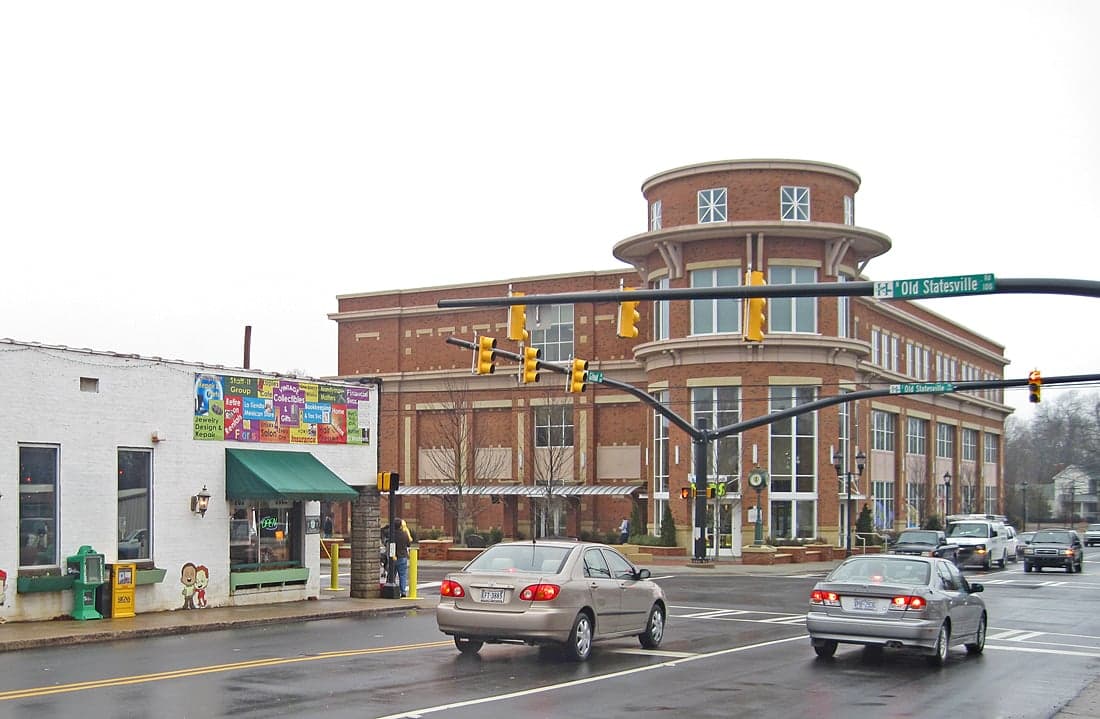
Photo: Wikipedia
Personal Sovereignty in Huntersville, NC
Viable for self-reliance. Generally workable, though some barriers may limit total independence.
What does Personal Sovereignty tell us?
Personal Sovereignty measures your capacity for self-reliance and independence with minimal government friction. Higher scores mean fewer barriers between you and the way you want to live... but it assumes you have the space you need and good neighbors.
What does this tell us?
Personal Sovereignty measures your capacity for self-reliance and independence with minimal government friction. Higher scores mean fewer barriers between you and the way you want to live... but it assumes you have the space you need and good neighbors.
State Policy
Energy independence: Importer (15% of energy produced in-state)
Personal Liberty
Homesteading

Personal Liberty Analysis
Huntersville, North Carolina, offers a notably strong environment for personal sovereignty compared to many suburban enclaves, but it is not a libertarian free zone. The town’s governance, rooted in North Carolina’s generally pro-liberty state laws, provides a solid baseline for autonomy, though local zoning and HOA regulations can chip away at individual decision-making. For a single individual or parent operating from a survivalist or prepper mindset, Huntersville represents a trade-off: you get robust Second Amendment protections and low state-level interference, but you must navigate municipal codes that limit radical self-reliance. The key is understanding where state preemption ends and local control begins, particularly around property use and emergency preparedness.
Tax burden and regulatory posture in Huntersville compared to surrounding areas
North Carolina’s flat income tax rate of 4.5% (as of 2025) and a state sales tax capped at 7.25% keep the overall tax burden moderate, but Huntersville’s local add-ons push the combined rate to roughly 7.75% in Mecklenburg County. Property taxes are the real story: the effective rate in Huntersville hovers around 0.85% of assessed value, which is higher than rural counties like Iredell or Lincoln but lower than Charlotte proper. For a $400,000 home, that’s about $3,400 annually—manageable but not negligible. Regulatory posture is mixed: North Carolina has strong preemption laws that prevent local governments from enacting their own gun, wage, or rental ordinances, which limits Huntersville’s ability to overreach. However, the town enforces strict stormwater management and tree preservation rules that can complicate property modifications like building a root cellar or installing a large rainwater catchment system. Permitting for outbuildings is straightforward if you stay under 600 square feet, but anything larger triggers county-level inspections that can take weeks. For a prepper, the regulatory friction is low enough to work around but high enough to require planning.
Self-defense rights and gun law specifics in Huntersville and North Carolina
North Carolina is a shall-issue state for concealed carry, and Huntersville residents benefit from the state’s permitless carry law (effective since 2023) for handguns. No permit is required to carry openly or concealed for anyone 18 or older who can legally possess a firearm. The town has no local gun ordinances—state preemption is absolute—so you won’t find the magazine bans or waiting periods common in blue states. Stand-your-ground laws are fully in effect, with no duty to retreat in any place you have a lawful right to be. Castle doctrine applies to your home, vehicle, and workplace. For parents, this means you can legally keep a firearm in your vehicle while picking up kids from school, provided it’s not on school property itself (which is a federal zone). The biggest practical concern is that Huntersville is within Mecklenburg County, where the sheriff’s office processes permits efficiently—typically under 45 days for a concealed carry permit application. No red-flag law exists in North Carolina as of 2026, though local activists periodically push for one. For a survivalist, the legal framework is solid: you can defend your family without fear of prosecution, but you must still be aware of federal restrictions on NFA items (suppressors, SBRs) which require ATF approval.
Self-reliance and homesteading viability: lot sizes, zoning, and off-grid feasibility
Huntersville’s zoning is predominantly suburban, with most residential lots ranging from 0.25 to 0.5 acres in planned communities. This severely limits traditional homesteading—raising chickens is allowed in most areas (hens only, no roosters), but goats, pigs, or larger livestock are prohibited in residential zones. The town’s Unified Development Ordinance mandates a minimum lot size of 12,000 square feet for single-family homes, which is generous by suburban standards but still too small for serious food production. Off-grid feasibility is low: the town requires connection to municipal water and sewer in most subdivisions, and solar panels are allowed but must meet HOA aesthetic guidelines if you live in a covenant-controlled neighborhood. Rainwater collection is legal but limited to 100 gallons per property without a permit, and composting must be contained to avoid odor complaints. For a prepper, the realistic path is suburban resilience rather than full self-sufficiency: you can grow a substantial vegetable garden, store emergency supplies, and install a backup generator, but you cannot become independent of the grid. The best option for larger acreage is to look at the unincorporated areas of northern Mecklenburg County or adjacent Iredell County, where lot sizes of 2-5 acres are common and zoning is far more permissive. Huntersville itself is better suited for those who prioritize community security and supply caching over land-based autonomy.
Personal liberties: parental rights, medical autonomy, speech, and property protections
North Carolina has strong parental rights statutes, including the Parents’ Bill of Rights passed in 2023, which requires schools to notify parents of any changes to a child’s health or well-being and prohibits instruction on gender identity and sexuality in K-4. Huntersville’s local school board (Charlotte-Mecklenburg Schools) has been a battleground over these policies, but state law generally overrides local discretion. Medical autonomy is more mixed: the state has no vaccine mandate for adults, but COVID-era emergency orders showed that local health directors can impose restrictions during declared emergencies. Religious and philosophical exemptions to school vaccine requirements are available but require paperwork. Free speech is robust—North Carolina has no hate speech laws that criminalize expression, and public protests in Huntersville’s downtown areas are common without permits for small groups. Property rights are protected by the state’s eminent domain laws, which require just compensation and a public purpose, but the town has used its powers for road widenings and utility easements. For a prepper, the key liberty concern is the lack of a state-level right to keep and bear arms in the constitution (though it’s protected by statute), and the absence of a medical freedom amendment. Overall, Huntersville scores well on speech and parental rights but is average on medical autonomy—you can refuse treatments, but you may face pressure from employers or schools during health emergencies.
In the broader context of the Charlotte metro, Huntersville ranks as a top-tier location for personal sovereignty among suburban towns, behind only rural areas like Mooresville or Denver. The combination of permitless carry, low taxes, and strong parental rights creates a buffer against the overreach seen in cities like Charlotte or Raleigh. However, the trade-off is that you are still within a county that votes blue in national elections, meaning local policies can shift with each election cycle. For a survivalist or conservative parent, Huntersville offers a solid foundation for autonomy—you can live freely, defend your family, and raise your children without state interference—but you must remain vigilant about zoning changes and school board decisions. If you want maximum sovereignty, look further north into Iredell County; if you want a balance of community and liberty, Huntersville is a strong bet.

* Values derived from national, state, county, city and local statistics and may differ in a specific area. Last updated: 2026-04-24T14:55:51.000Z
Narrative content on this page is AI-generated and may contain mistakes. Verify any details that matter before acting on them.
ReloMaps may earn a commission from affiliate links at no extra cost to you.

