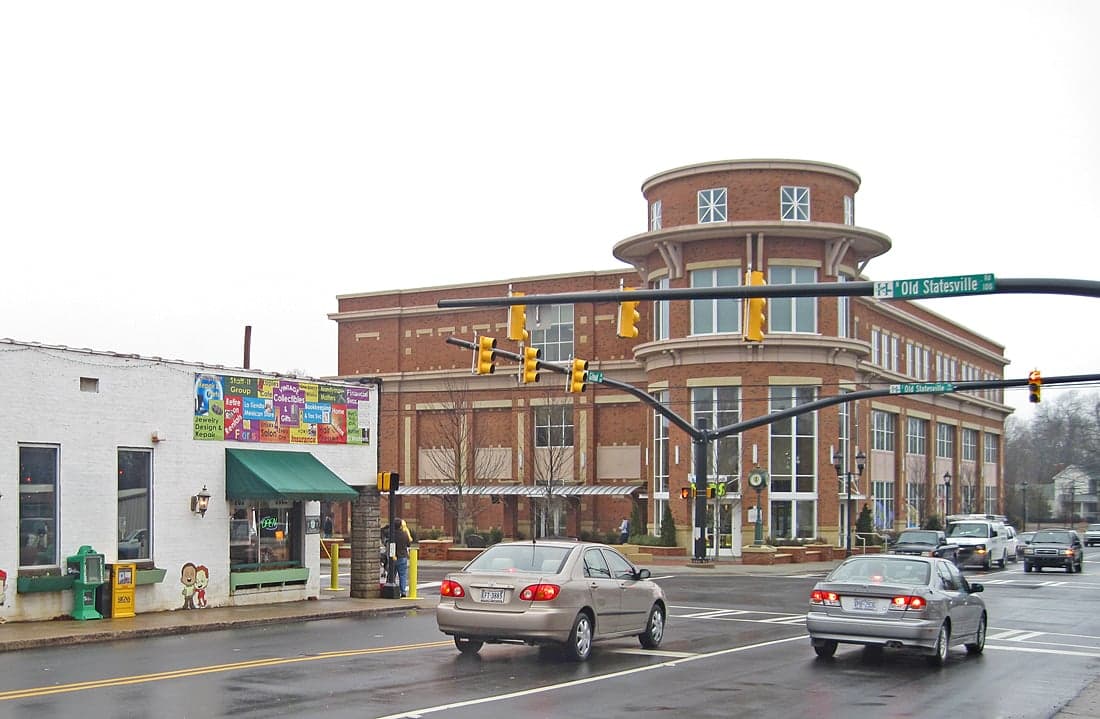
Photo: Wikipedia
Political ClimatePolitical Climate in Huntersville, NC
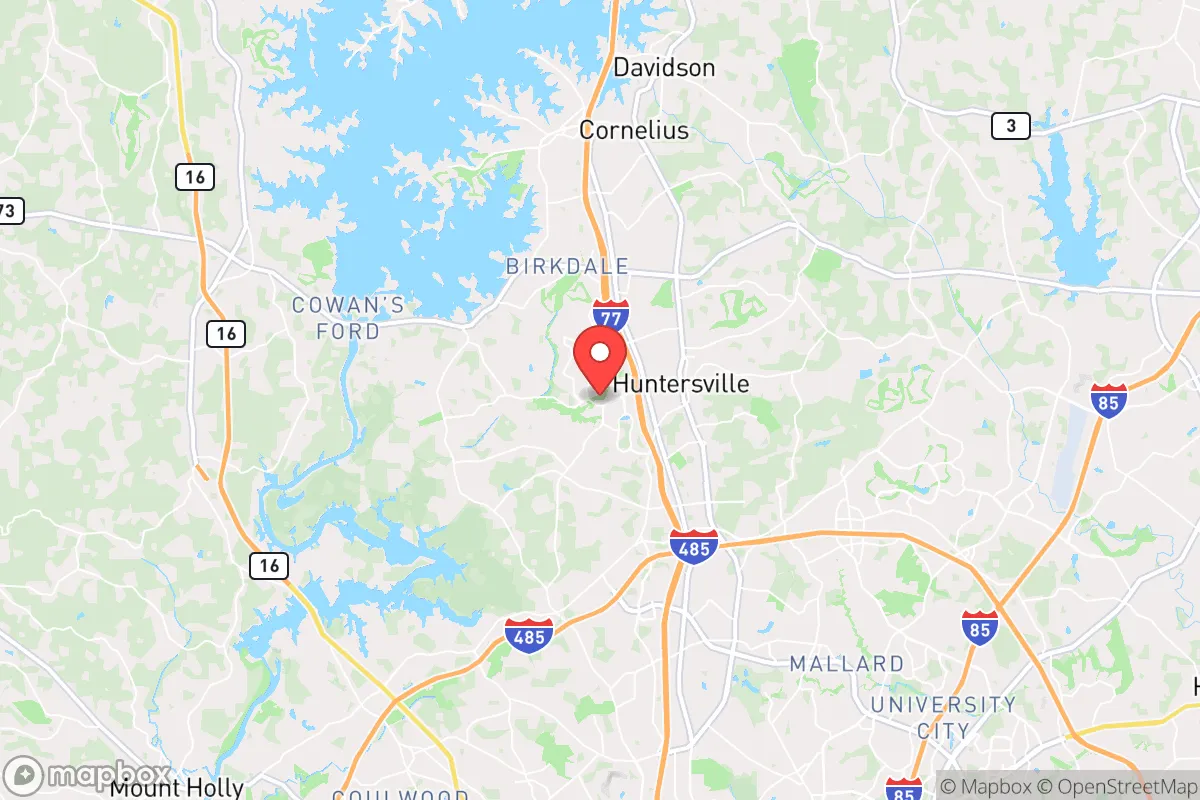
District shown is the primary district for this city’s centroid. Cities may span multiple districts.
Local Political AnalysisPolitical Analysis of Huntersville, NC
Huntersville has long been a reliably conservative community, and the numbers back that up with a Cook PVI of R+8, meaning the area votes about eight points more Republican than the national average. But if you’ve lived here as long as I have, you’ve watched that lean get tested, especially in the last five to ten years. The town’s rapid growth—new neighborhoods, new transplants from blue states—has started to nudge the political needle, and while the countywide results still favor conservative candidates, you can feel a shift in local conversations and school board races that wasn’t there a decade ago. It’s still a red area, no doubt, but the shade is getting lighter.
How it compares
Drive ten minutes south to Charlotte’s center city, and you’re in a completely different political universe—Mecklenburg County as a whole leans heavily Democratic, with a Cook PVI of D+16. That contrast is stark, and it’s why Huntersville has historically felt like a refuge for folks who want good schools and low taxes without the urban progressive agenda. Compare us to nearby Cornelius or Davidson: Cornelius is similar in its conservative tilt, but Davidson, home to Davidson College, has a noticeably more liberal vibe, especially among younger residents and faculty. Huntersville sits right in the middle—still solidly right-leaning, but with a growing pocket of moderates and left-leaning newcomers who’ve brought their voting habits with them. The real tension shows up in county-level races, where Huntersville’s conservative votes are increasingly diluted by Charlotte’s blue wave.
What this means for residents
For those of us who moved here to escape government overreach—whether that’s heavy-handed zoning, business mandates, or overreaching school policies—the trend is worth watching. The local town council has stayed mostly conservative, but the school board has seen more contested races in recent years, with candidates pushing progressive curriculum changes and diversity initiatives that raise eyebrows among parents who value local control and parental rights. Property taxes have crept up, and there’s been chatter about more regulations on short-term rentals and new development. If you value personal freedoms—like the right to run a home-based business without a pile of permits, or to send your kid to school without political indoctrination—Huntersville still offers more breathing room than Charlotte, but the margin is shrinking. Long-term, if the influx of out-of-state residents continues at this pace, the political center of gravity could shift, and that’s a real concern for anyone who chose this town for its conservative foundation.
Culturally, Huntersville still feels like a place where neighbors wave and the Fourth of July parade is a big deal. But there’s a growing divide between the old guard—folks who remember when this was mostly farmland—and the new arrivals who see it as a bedroom community for Charlotte’s banking jobs. The policy fights that used to be about keeping taxes low are now about how much to spend on bike lanes and public art. It’s not a crisis yet, but it’s a slow drift. If you’re considering a move here, know that the political climate is still conservative-friendly, but it’s not the rock-solid red it was twenty years ago. Keep an eye on local elections—that’s where the real story is being written.

State Political ClimatePolitical Climate in North Carolina
State Political AnalysisPolitical Environment in the State
North Carolina has long been considered a classic swing state, but over the past decade it has settled into a reliably red-leaning posture, voting Republican in every presidential election since 2012 except for the narrow 2020 margin. The state’s dominant coalition is a mix of rural conservatives, military veterans, and suburban families who have grown wary of progressive overreach, though the Research Triangle and Charlotte metros keep the state competitive. Over the last 20 years, the shift has been subtle but real: the GOP has consolidated control of the General Assembly and the state Supreme Court, while Democratic gains in urban centers have been offset by explosive growth in exurban and coastal counties like Brunswick and Johnston.
Urban vs. rural divide
The political map of North Carolina is a tale of two worlds. The urban cores of Charlotte, Raleigh, Durham, and Greensboro are solidly blue, driven by a mix of university faculty, tech transplants, and a growing minority population. But step just 15 miles outside any of these cities, and you’re in deep red territory. Wake County (Raleigh) flipped blue in 2008 and has stayed there, but surrounding counties like Johnston and Harnett have become GOP strongholds as families flee the city for lower taxes and better schools. The real story is the coastal plain and mountain west: counties like Brunswick (south of Wilmington) and Watauga (Boone) are seeing an influx of retirees and remote workers who lean conservative on taxes and regulation, even if they’re moderate on social issues. The rural east, from Robeson County to Pitt County, remains a Democratic holdout due to African American and Lumbee Native American voters, but turnout there is inconsistent. The bottom line: if you’re looking for a place where your vote counts, the suburbs of Charlotte and the exurbs of the Triangle are where the real action is.
Policy environment
North Carolina’s policy environment is a mixed bag, but the trend over the last decade has been toward fiscal conservatism and regulatory restraint. The state has a flat income tax rate of 4.5%, down from a progressive top rate of 7.75% in 2013, and the GOP-led General Assembly has passed legislation to phase it down further to 3.99% by 2027. Property taxes are low by national standards, and there’s no state tax on Social Security income. On education, the state has expanded school choice dramatically: the Opportunity Scholarship Program now provides vouchers for low- and middle-income families to attend private schools, and charter schools have proliferated. Healthcare is a sore spot—the state finally expanded Medicaid in 2023 under a bipartisan deal, but only after years of resistance. Election laws have been a flashpoint: the state requires voter ID (upheld by the courts), and the GOP has fought to limit same-day registration and out-of-precinct voting. For a conservative, the policy environment is generally friendly, but the constant legal battles over election integrity and school funding are a reminder that the state is still contested.
Trajectory & freedom
On the freedom front, North Carolina has been a tale of two trajectories. On the positive side, the state has expanded gun rights significantly: permitless carry (constitutional carry) became law in 2023, and the state preempts local gun ordinances, so you won’t see the patchwork of restrictions common in blue states. Parental rights got a boost with the 2023 “Parents’ Bill of Rights,” which requires schools to notify parents about curriculum changes and medical services. On the negative side, the state has seen creeping government overreach in the name of public health and DEI. The HB 2 “bathroom bill” debacle of 2016 was a disaster that cost the state billions in lost business, but it also galvanized a conservative backlash that led to the current GOP supermajority. More recently, the state has banned DEI programs in public universities and restricted transgender medical procedures for minors. The medical marijuana bill passed the Senate but stalled in the House, so don’t expect recreational weed anytime soon. The trajectory is toward more personal freedom on guns and education, but the state is still fighting federal overreach on immigration and environmental regulation.
Civil unrest & political movements
North Carolina has seen its share of political heat, but it’s not California. The 2020 protests in Charlotte and Raleigh over George Floyd’s death were large but mostly peaceful, though there were isolated incidents of looting and property damage. The “Moral Monday” movement, led by the NAACP, has been a persistent force for progressive causes, but it hasn’t translated into electoral wins outside the cities. Immigration politics are relatively quiet—the state is not a sanctuary state, and local sheriffs in rural counties cooperate with ICE. The Lumbee Tribe in Robeson County has been a unique political force, pushing for federal recognition and swinging elections in the southeastern part of the state. The most visible flashpoint for a new resident would be the election integrity debates: you’ll see billboards and yard signs about “stop the steal” in rural areas, and the state GOP has been aggressive in challenging mail-in ballot procedures. If you’re moving from a blue state, you’ll notice the absence of street-level political tension—people here tend to keep their politics to themselves, except during election season.
Projection
Over the next 5-10 years, North Carolina is likely to become more red, not less, despite the influx of out-of-state transplants. The reason is simple: the people moving here are largely from blue states like New York, California, and Illinois, and they’re fleeing high taxes and crime. They may bring some cultural baggage, but they vote with their wallets—and that means supporting lower taxes, school choice, and property rights. The Charlotte exurbs (Union, Cabarrus, and Iredell counties) are growing at breakneck speed, and they’re voting Republican by 20+ points. The Triangle will remain a blue island, but the state’s legislative maps are gerrymandered enough to keep the GOP in power for the foreseeable future. The wild card is the Hispanic population, which is growing fast in the eastern part of the state—if they vote like Florida’s Cubans, the GOP gains; if they vote like California’s Mexicans, the state could flip. For now, the projection is for continued conservative governance with a pragmatic, business-friendly edge.
For a new resident, the bottom line is this: North Carolina offers a high degree of personal freedom on guns, taxes, and education, but you’ll need to stay engaged to keep it that way. The state is not a libertarian paradise—there’s still a lot of government bureaucracy, especially at the county level—but it’s a far cry from the regulatory nightmare of the Northeast or West Coast. If you’re looking for a place where your vote actually matters and where the culture war is being fought on your terms, this is it. Just be prepared for the humidity and the constant construction.
* Values derived from national, state, county, city and local statistics and may differ in a specific area. Last updated: 2026-04-24T14:55:51.000Z
Narrative content on this page is AI-generated and may contain mistakes. Verify any details that matter before acting on them.
ReloMaps may earn a commission from affiliate links at no extra cost to you.

