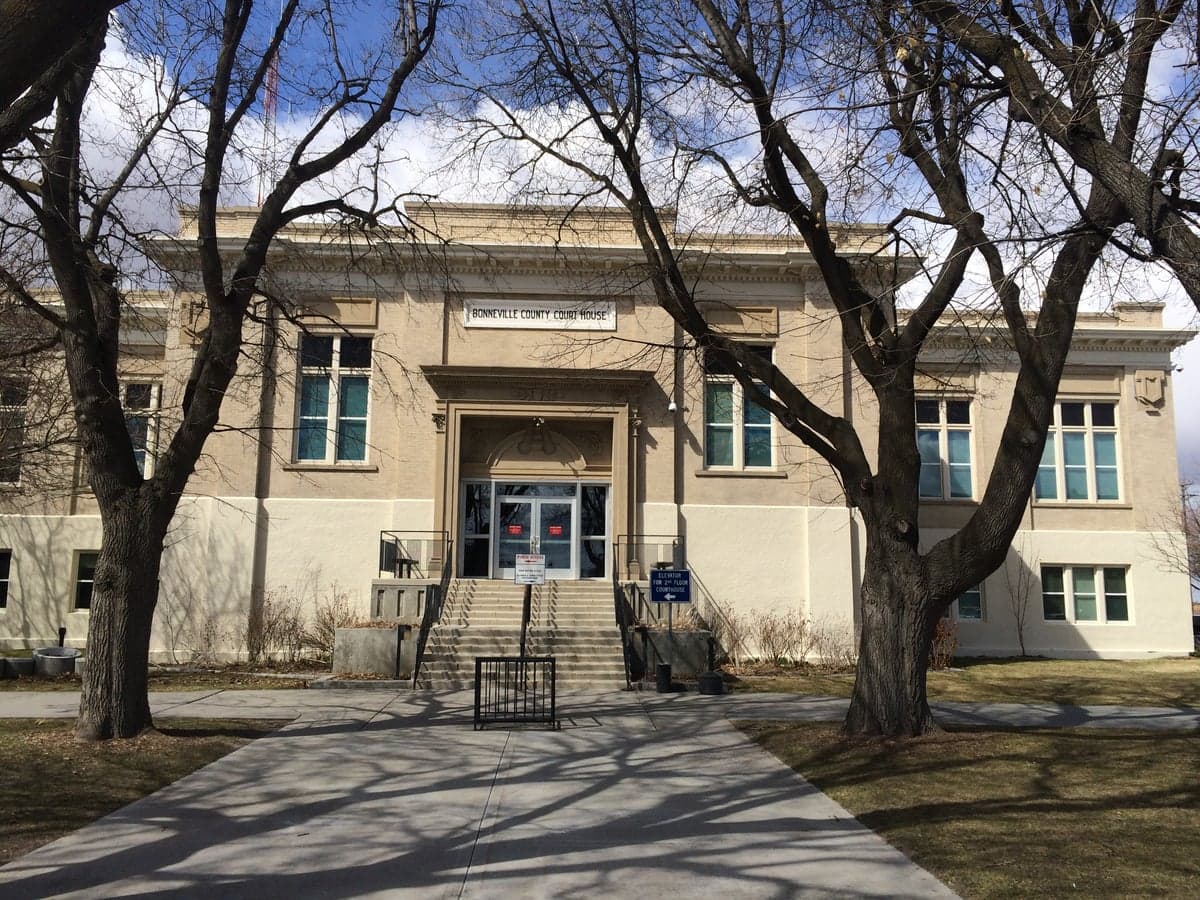
Photo: Wikipedia
Personal Sovereignty in Bonneville County
Moderate friction. Expect trade-offs in some aspect of personal liberty and independence.
What does Personal Sovereignty tell us?
Personal Sovereignty measures your capacity for self-reliance and independence with minimal government friction. Higher scores mean fewer barriers between you and the way you want to live... but it assumes you have the space you need and good neighbors.
What does this tell us?
Personal Sovereignty measures your capacity for self-reliance and independence with minimal government friction. Higher scores mean fewer barriers between you and the way you want to live... but it assumes you have the space you need and good neighbors.
State Policy
Energy independence: Importer (25% of energy produced in-state)
Personal Liberty
Homesteading

Personal Liberty Analysis
Bonneville County, Idaho, offers one of the strongest personal sovereignty environments in the Intermountain West, anchored by Idaho’s preemptive state laws that push back against federal overreach and local government creep. For individuals and families prioritizing autonomy—whether from tax burdens, regulatory mandates, or restrictions on self-defense—this region stands apart from the tightening grip seen in states like California, Oregon, or even parts of Colorado. The county’s culture, rooted in rural self-reliance and a deep skepticism of centralized authority, creates a practical landscape where personal sovereignty isn’t just an ideal but a daily reality, especially when compared to the increasingly restrictive policies in Boise or the liberal enclaves of the Pacific Northwest.
Tax burden and regulatory posture: How Bonneville County compares to state and national norms
Idaho’s tax structure is a major draw for those seeking to minimize government extraction from their labor and property. Bonneville County benefits from a state income tax rate that is a flat 5.8% as of 2025, with ongoing legislative efforts to reduce it further—a stark contrast to the progressive, high-tax regimes of states like New York or California. Property taxes in the county are moderate, with the average effective rate hovering around 0.7% of assessed value, though rates vary by city: Idaho Falls tends to have slightly higher levies due to municipal services, while unincorporated areas like Ririe or Iona offer lower mill rates and fewer layers of local bureaucracy. The regulatory posture in Bonneville County is notably light-touch. The county’s planning and zoning department generally defers to property rights, with no county-wide building codes in unincorporated areas—a critical advantage for those building off-grid or alternative structures. However, Ammon and Idaho Falls have their own municipal codes that can be more prescriptive, particularly regarding setbacks and utility connections. For the prepper-minded, the lack of a county-wide impact fee or excessive permitting for outbuildings, fences, or solar arrays is a clear signal that local government prioritizes individual initiative over bureaucratic control.
Self-defense and gun law specifics: Constitutional carry and the limits of local control
Idaho is a constitutional carry state, meaning no permit is required to carry a concealed firearm for anyone legally able to possess one, and Bonneville County fully embraces this. The county sheriff’s office is known for being pro-Second Amendment, with no history of restrictive local ordinances like those seen in Boise or Kootenai County. Idaho Falls has a few city parks where discharge of firearms is prohibited, but these are narrow exceptions; the vast majority of the county, including Shelley and Ucon, allows open and concealed carry without harassment. Stand-your-ground laws are strong, with no duty to retreat in any place where a person has a lawful right to be. For those concerned about federal overreach, Bonneville County passed a Second Amendment Sanctuary resolution in 2021, signaling local resistance to any future federal gun bans or registration schemes. The practical effect is that gun ownership here is treated as a default right, not a privilege. Gun stores and ranges are plentiful, with Idaho Falls hosting multiple dealers and the Bonneville County Sheriff’s Office offering expedited permits for those who still want a concealed carry license for reciprocity in other states. This is a jurisdiction where the government assumes you are armed and responsible, not a subject to be disarmed.
Self-reliance and homesteading viability: Lot sizes, zoning, and off-grid feasibility
For those serious about self-reliance—growing food, harvesting water, generating power—Bonneville County offers some of the most permissive conditions in the nation. In unincorporated areas, there are no county-wide minimum lot sizes for agricultural use, though subdivisions may have covenants. Ririe and the rural stretches near Menan offer parcels as small as 1-2 acres for intensive homesteading, while larger tracts of 5-20 acres are common around Iona and Ucon. Off-grid living is entirely feasible: Idaho law explicitly protects the right to collect rainwater, and the county does not require connection to municipal water or sewer in areas without existing infrastructure. Solar panels, wind turbines, and composting toilets are legal without special permits, though Idaho Falls city code requires grid-tied electrical for new construction within city limits—a clear reason to avoid the city if full autonomy is the goal. Zoning is minimal: agricultural zones allow livestock, greenhouses, and even small-scale processing without the bureaucratic hurdles common in more regulated states. The county’s soil quality varies, with the Snake River plain offering fertile volcanic loam, but water rights are a critical consideration. Senior water rights holders in the area have priority, and new wells for domestic use are generally permitted, but agricultural irrigation rights can be expensive and complex. For the prepper, the key takeaway is that Bonneville County’s rural areas allow you to build a self-sufficient compound with minimal government interference, provided you secure water rights early and avoid municipal jurisdictions like Idaho Falls or Ammon.
Personal liberties: Parental rights, medical autonomy, speech, and property
Idaho has become a national leader in protecting parental rights, with the 2024 Parental Rights in Education law requiring schools to notify parents of any curriculum related to sexuality or gender identity and to obtain consent before any medical or mental health screenings. Bonneville County school districts, including Idaho Falls School District 91 and Bonneville Joint School District 93, have generally complied, though some parents report friction in Idaho Falls itself, where more progressive teachers may push back. Medical autonomy is strong: Idaho has no vaccine mandates for adults, and the state’s 2023 law banning mRNA vaccines for children under 18 is in effect, with Bonneville County health officials respecting this. The county’s hospitals, including Idaho Falls Community Hospital, do not require COVID-19 vaccines for treatment, and there is a robust network of independent doctors and naturopaths. Free speech is protected by state law that prohibits local governments from restricting speech in public forums, and the county has no hate speech ordinances or mask mandates. Property rights are fiercely defended: Idaho’s eminent domain laws require just compensation and a public necessity finding, and Bonneville County has a history of rejecting federal land-use proposals that would restrict private property. The county’s planning department is known for approving variances and conditional uses with minimal delay, especially for agricultural or self-reliance projects. For those concerned about government overreach into medical decisions, education, or property use, Bonneville County offers a legal framework that prioritizes individual consent and local control over state or federal mandates.
In the broader context of personal sovereignty, Bonneville County ranks among the top 10% of U.S. counties for those seeking to minimize government intrusion into daily life. Compared to the regulatory maze of the Pacific Northwest or the tax-heavy Northeast, this region offers a practical, low-friction environment where self-defense, homesteading, and parental rights are not just tolerated but actively protected by state law and local culture. The trade-offs are real—winters are harsh, healthcare options are limited compared to urban centers, and the political homogeneity can feel insular—but for the survivalist or conservative individual prioritizing autonomy over convenience, Bonneville County represents a strategic stronghold where the government is more partner than overlord. The key is to choose your location wisely: Ririe and Iona for maximum off-grid freedom, Ammon for a balance of services and liberty, and Idaho Falls only if you accept some municipal oversight in exchange for amenities. In a country trending toward centralized control, this corner of Idaho remains a bastion of the individual.

* Values derived from national, state, county, city and local statistics and may differ in a specific area. Last updated: 2026-06-04T21:37:24.000Z
Narrative content on this page is AI-generated and may contain mistakes. Verify any details that matter before acting on them.
ReloMaps may earn a commission from affiliate links at no extra cost to you.

