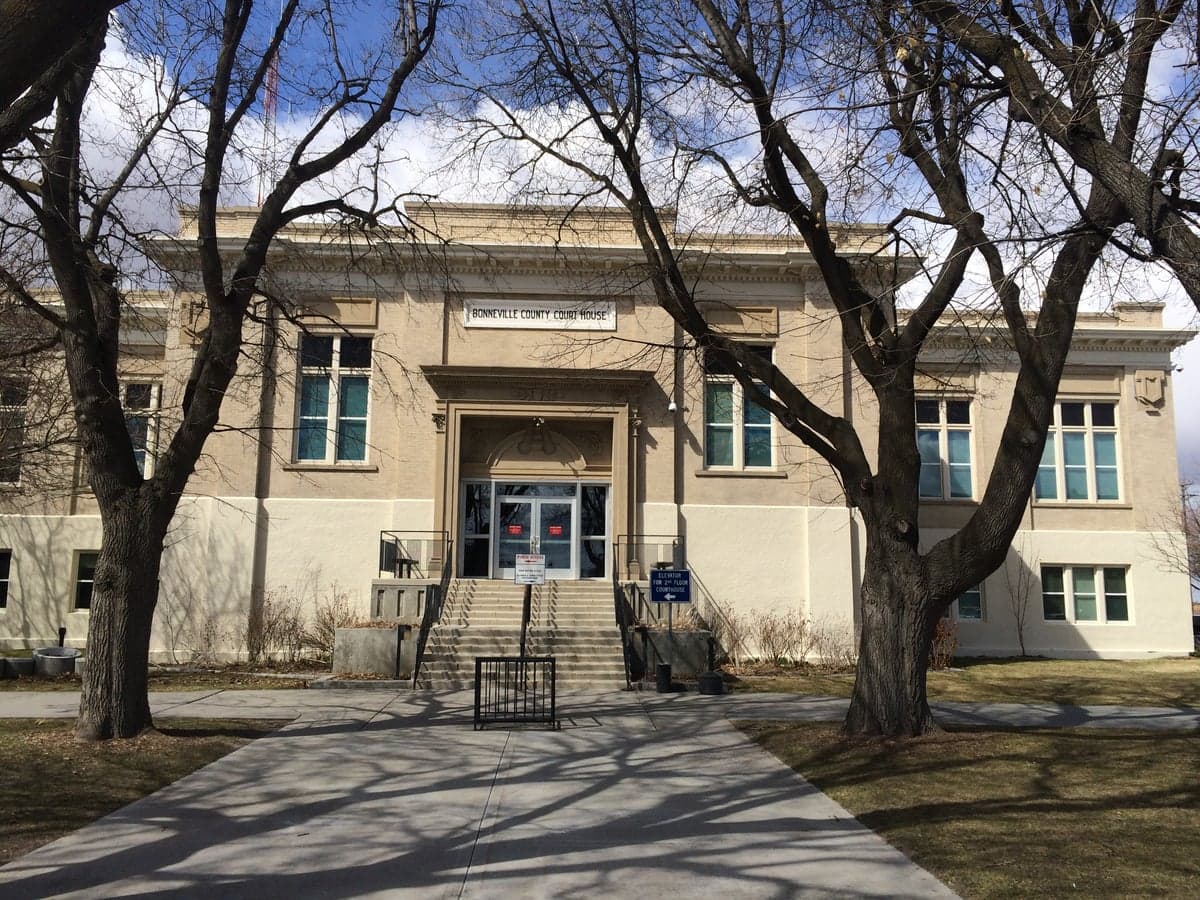
Photo: Wikipedia
Political ClimatePolitical Climate in Bonneville County
Showing district-level results — no local-only data available.
Local Political AnalysisPolitical Analysis of Bonneville County
Bonneville County has long been a rock-solid conservative stronghold, and honestly, it still is, but the political winds are shifting in ways that should give any freedom-loving resident pause. The county’s Cook Partisan Voting Index (PVI) sits at R+13, which is solidly Republican, but that’s actually five points less conservative than the state of Idaho as a whole, which clocks in at R+18. That gap tells you a lot about what’s happening on the ground. While the county has reliably voted red in every presidential election since 1964, the margins have been tightening, especially in the more populated areas around Idaho Falls and Ammon.
How it compares
The real story here is the urban-rural split within Bonneville County itself. The city of Idaho Falls is the political bellwether, and it’s where you see the most concerning drift. Precincts around the city center and near the College of Eastern Idaho have started to show a noticeable uptick in Democratic votes, sometimes hitting 40-45% in local races. That’s a far cry from the surrounding rural towns like Iona, Ucon, and Ririe, where precincts routinely vote 80%+ Republican. Ammon is a bit of a mixed bag—it leans red, but the newer subdivisions are attracting younger families from out of state, and those precincts are less reliably conservative than the older, established neighborhoods. The county’s overall R+13 PVI masks this internal tension: the rural areas are holding the line, but the urban core is slowly bleeding into a more purple shade. Compared to the rest of Idaho, which is still overwhelmingly rural and deeply red, Bonneville County is becoming a microcosm of the national trend—where growth and migration are slowly diluting traditional values.
What this means for residents
For folks who value limited government and personal freedoms, this shift is a red flag. The most immediate impact is on local policy. As the county’s population grows—especially in Idaho Falls—there’s increasing pressure for more government services, zoning regulations, and even talk of “complete streets” initiatives that prioritize bike lanes and public transit over car access. That’s government overreach, plain and simple. The school board races have also become battlegrounds, with progressive candidates pushing for curriculum changes that undermine parental rights. If you’re a long-time resident, you’ve seen the county commission go from unanimously conservative to occasionally having to defend against 2-1 votes on property rights issues. The state legislature, dominated by rural conservatives, still keeps Bonneville County in check, but the local trend is worrying.
Culturally, you can feel the difference. Shelley and Rigby (just outside the county line) still feel like the Idaho you remember—church potlucks, no stoplights, and a general distrust of government. But drive through the newer parts of Idaho Falls near the Snake River, and you’ll see more out-of-state plates, more chain stores, and a growing acceptance of progressive ideas like “diversity, equity, and inclusion” programs in local businesses. The long-term trajectory is clear: if the county doesn’t push back hard, it risks becoming another Boise—a once-conservative area that got overrun by transplants and lost its way. For now, the rural precincts are holding the line, but every election cycle, the margins get a little tighter. Keep an eye on the school board and city council races—that’s where the real battle for Bonneville County’s soul is happening.

State Political ClimatePolitical Climate in Idaho
State Political AnalysisPolitical Environment in the State
Idaho is one of the most reliably Republican states in the nation, with a Cook PVI of R+18, meaning it votes about 18 points more Republican than the national average. The dominant coalition is a mix of rural conservatives, Mormon cultural conservatives in the southeast, and a growing wave of out-of-state transplants fleeing blue states, which has actually deepened the red tilt in recent cycles. Over the last 20 years, Idaho has shifted from a moderate, libertarian-leaning Western state to a hardline conservative stronghold, driven by explosive growth in the Treasure Valley and a backlash against federal overreach.
Urban vs. rural divide
The political map of Idaho is stark. The entire state outside of a few small blue islands is deep red. The biggest metro, Boise (Ada County), was once a swing area but has moved right in recent cycles; Ada County voted for Trump by 12 points in 2024, up from 3 points in 2020. The real engine of the red wave is the rural interior—places like Bonneville County (Idaho Falls), Kootenai County (Coeur d’Alene), and Canyon County (Nampa) routinely deliver 70-80% Republican margins. The only blue dots are Blaine County (Sun Valley/Ketchum), a wealthy ski resort area that votes like a Boulder suburb, and Latah County (Moscow), home to the University of Idaho. The divide is not just urban vs. rural—it’s also cultural. The fast-growing suburbs of Meridian and Eagle are filled with families who moved from California and Washington specifically for conservative governance, and they vote accordingly. Meanwhile, the rural panhandle around Sandpoint and Bonners Ferry has become a hotbed of constitutionalist and libertarian sentiment, often pushing even further right than the state GOP platform.
Policy environment
Idaho’s policy environment is aggressively conservative. There is no state income tax on corporate or personal income—a flat 5.8% rate was phased down to 5.3% in 2024, with triggers to drop further as revenue allows. Property taxes are low by national standards, though they vary by county. The state has a constitutional balanced budget requirement and a strict limit on spending growth. Education policy is a major battleground: the state passed the largest school choice expansion in its history in 2023 with HB 93, creating education savings accounts (ESAs) for families, though it was struck down by the Idaho Supreme Court in 2024. The legislature is currently working on a constitutional amendment to allow public funds for private and homeschool expenses. Healthcare is limited—Idaho did not expand Medicaid until 2020, and only after a citizen initiative forced it. The state has some of the most restrictive abortion laws in the nation, with a near-total ban (HB 578) that took effect in 2022, with exceptions only for rape, incest, and life of the mother. Election laws are tight: voter ID is required, same-day registration is not allowed, and the state has banned ballot drop boxes in most counties. The legislature also passed a law in 2024 making it a felony for non-citizens to vote, even though it was already illegal—a clear signal to the base.
Trajectory & freedom
Idaho is becoming more free in many respects, particularly on gun rights, parental rights, and tax policy. In 2023, the state passed a constitutional carry law (HB 124), allowing any law-abiding adult to carry a concealed firearm without a permit. The same year, the legislature passed the "Parental Rights in Education" bill (HB 240), which requires schools to notify parents of any curriculum involving sexuality or gender identity and bans instruction on those topics in K-5. In 2024, the state passed a law prohibiting gender-affirming care for minors (HB 71), which is currently tied up in court. On medical freedom, Idaho passed a law in 2023 (SB 1137) prohibiting employers from requiring COVID-19 vaccines as a condition of employment, and another law (SB 1012) banning vaccine passports. Property rights are strong—Idaho has a "right to farm" law that protects agricultural operations from nuisance lawsuits, and the state has no statewide zoning mandates, leaving land use to counties. However, there are concerning trends: the state has seen a massive increase in federal land ownership (over 60% of Idaho is federal land), which limits local control and creates friction over logging, mining, and grazing. The legislature has repeatedly passed resolutions demanding the transfer of federal lands to the state, but no real progress has been made. Also, the influx of wealthy out-of-state buyers is driving up property values in places like Boise and Coeur d’Alene, pricing out locals and creating a housing affordability crisis that the state has been slow to address.
Civil unrest & political movements
Idaho has a long history of anti-government and militia movements, particularly in the panhandle. The "North Idaho" region around Hayden and Rathdrum has been a hub for constitutionalist groups, sovereign citizens, and even some white nationalist elements, though these are fringe and not representative of the broader population. In 2022, a planned protest by the "People's Rights" group (founded by Ammon Bundy) in Boise drew a few hundred people but fizzled. The state has seen very little left-wing protest activity—the largest recent demonstration was a 2020 Black Lives Matter rally in Boise that drew about 2,000 people, but it was peaceful and did not recur. Immigration politics are a flashpoint: Idaho has no sanctuary cities, and the legislature passed a law in 2024 (HB 420) requiring local law enforcement to cooperate with ICE. The state also passed a law in 2023 banning "critical race theory" in public schools (HB 377), though the term is broadly defined. Election integrity is a major concern for the base—the state conducted a full audit of the 2020 election and found no irregularities, but the legislature still passed a law in 2021 (HB 124) requiring hand-counting of ballots in all counties, which was later amended to allow machine counting with a hand-count audit. Overall, civil unrest is minimal, but the political temperature is high, especially around education and medical freedom issues.
Projection
Over the next 5-10 years, Idaho will likely become even more conservative, but with a different flavor. The in-migration from California, Washington, and Oregon is not slowing down—Boise is projected to add another 200,000 people by 2035, and the suburbs of Meridian, Eagle, and Star are growing at double-digit rates. These newcomers are overwhelmingly conservative, but they tend to be more "country club Republican" than the libertarian-leaning old guard. This could create tension between the traditional rural conservatives and the new suburban conservatives over issues like growth management, property taxes, and school funding. The state will likely continue to push on school choice, with a constitutional amendment likely passing in 2026. Gun rights will remain strong, but there may be pressure to add "red flag" laws from the business community, which the legislature will resist. The federal land issue will not be resolved, but the state will continue to assert control through lawsuits and administrative actions. The biggest wild card is housing—if the state does not address affordability, it could see a backlash from younger voters and working-class families who feel priced out. Expect the legislature to focus on deregulating zoning and reducing impact fees to encourage construction.
For a new resident, the bottom line is this: Idaho is a safe bet if you want a state that respects your gun rights, keeps taxes low, and pushes back on federal overreach. You will find a welcoming community of like-minded people in the suburbs and rural areas, but you should be prepared for rapid growth and rising costs, especially in the Treasure Valley. The political climate is stable and trending in your favor, but it is not static—the culture wars over education and medical freedom will continue, and you will need to stay engaged to protect the gains made. If you are moving here for freedom, you are making the right call, but do not expect it to be handed to you on a silver platter.
* Values derived from national, state, county, city and local statistics and may differ in a specific area. Last updated: 2026-06-04T21:37:24.000Z
Narrative content on this page is AI-generated and may contain mistakes. Verify any details that matter before acting on them.
ReloMaps may earn a commission from affiliate links at no extra cost to you.

