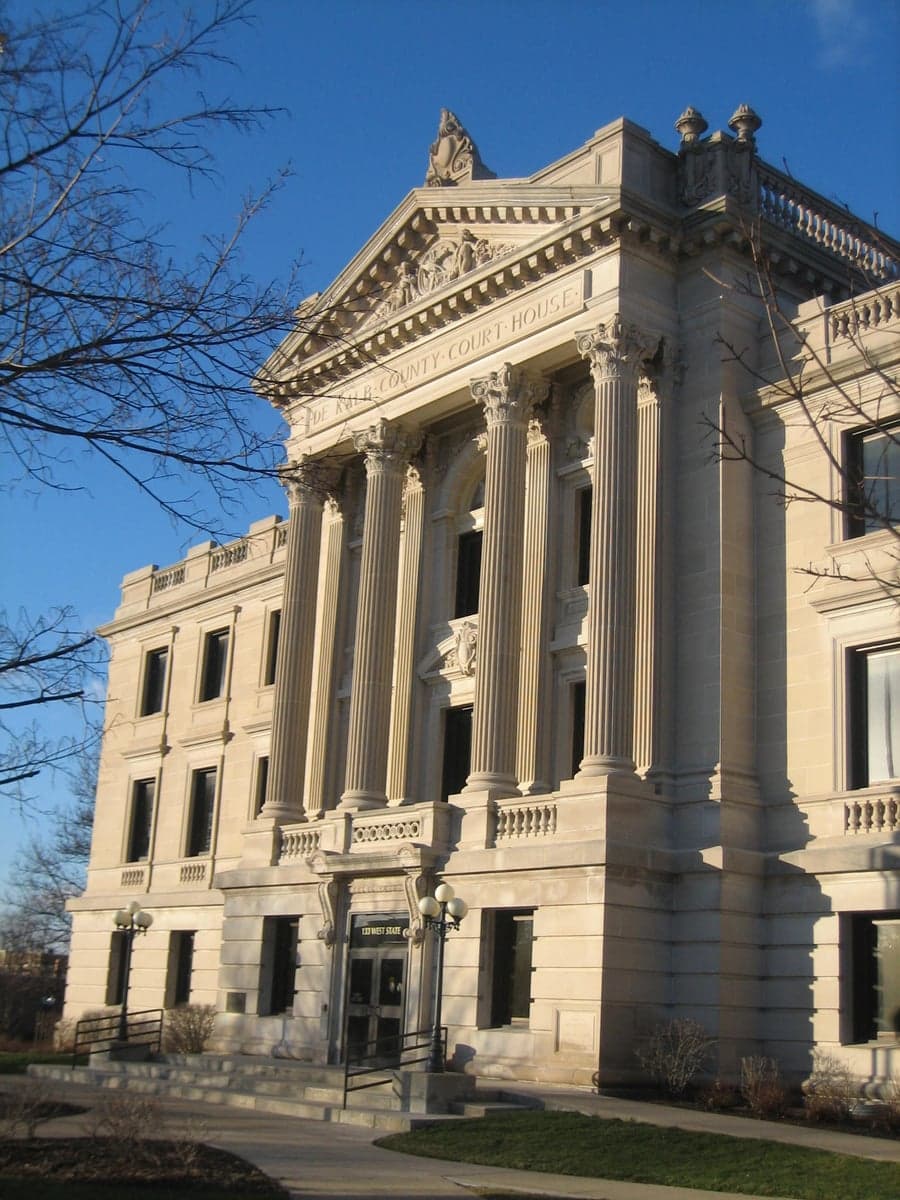
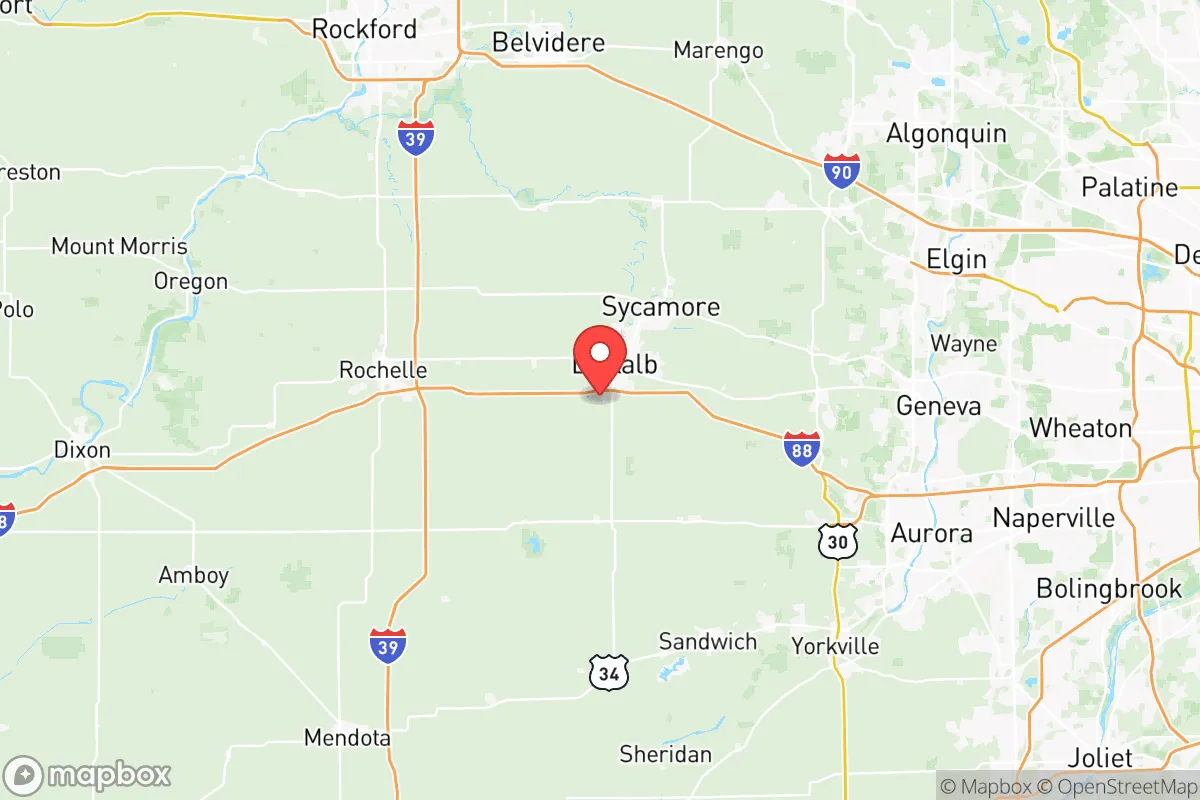
Photo: Wikipedia
Quality of Life in Dekalb County
A livable area that tracks near national norms for affordability, walkability, and neighborhood health.
What does Quality of Life tell us?
Quality of Life measures an area by evaluating factors like cost of living, nearby amenities, country club access, airport proximity, socioeconomic signals and neighborhood character. For large states, this is a general average — quality of life can vary dramatically between metro areas, suburbs, and rural communities within the same state.
What does this tell us?
Quality of Life measures an area by evaluating factors like cost of living, nearby amenities, country club access, airport proximity, socioeconomic signals and neighborhood character. For large states, this is a general average — quality of life can vary dramatically between metro areas, suburbs, and rural communities within the same state.
Cost of Living
13% below national average
104%
The Real Cost of Living in Dekalb County for 2026
| Tier | Individual | Family (4) |
|---|---|---|
| Survival | $17k | $31k |
| Comfortable | $45k | $66k |
| Luxury | $113k+ | $176k+ |
| Elite (Top 5%) | $133k+ | $207k+ |
Quality-of-Life Analysis
DeKalb County, Illinois, offers a broad quality-of-life spectrum that ranges from the college-town energy of its largest city to the quiet, agricultural rhythms of its smaller communities and unincorporated rural pockets. The county’s character is defined by this mix, drawing students and academics to its population centers, families and commuters to its affordable suburbs, and farmers or those seeking solitude to its open countryside. With a cost of living index of 87—13 percent below the national average—and a median home value of $231,900, the county provides a financially accessible entry point into northern Illinois living, though the experience varies sharply depending on where one settles.
Largest town(s) & population centers
The county’s undisputed hub is DeKalb, home to Northern Illinois University (NIU) and roughly 43,000 residents. Daily life here is shaped by the academic calendar: the downtown area along Lincoln Highway features a mix of student-oriented bars, coffee shops, and local eateries, while the Egyptian Theatre provides a historic venue for concerts and films. Housing stock is diverse, with older bungalows near campus, newer subdivisions on the west side, and apartment complexes catering to the student population. The average commute in the county is 26.7 minutes, but DeKalb residents often travel to jobs in Sycamore or as far as the western suburbs of Chicago, about 60 miles east. Sycamore, the county seat with about 18,000 people, offers a quieter, more family-oriented alternative just five miles north. Its historic downtown, anchored by the DeKalb County Courthouse, features independent shops and a popular farmers market. Sycamore’s housing tends to be slightly older and more established, with tree-lined streets and a stronger sense of small-town community compared to DeKalb’s more transient feel.
Smaller towns & rural pockets
Beyond the two main population centers, DeKalb County contains a string of smaller communities that offer distinctly different lifestyles. Genoa, in the county’s northeast corner, is a village of about 5,000 with a compact downtown and a strong agricultural heritage; it feels more like a traditional farm town than a suburb. Kingston, just south of Genoa, is even smaller—roughly 1,200 residents—and is largely residential, with many residents commuting to DeKalb or Rochelle for work. Waterman, in the southeastern part of the county, is a quiet village of about 1,500 with a grain elevator and a handful of local businesses; it is surrounded by corn and soybean fields. Malta, just west of DeKalb, is home to Kishwaukee College and offers a mix of student rentals and rural homesteads. Shabbona, in the county’s southwest, is a tiny village (population under 1,000) that serves as a gateway to Shabbona Lake State Park, a popular fishing and camping destination. Unincorporated areas like Clare and Colony Oaks consist of scattered farmhouses and few services, where residents rely on wells and septic systems and drive 15–20 minutes for groceries.
Cost & lifestyle range
The cost of living varies noticeably across the county. At the higher end, Sycamore commands median home values around $250,000–$270,000, reflecting its desirability among families and professionals. Rents in Sycamore average near the county median of $1,041, but can climb to $1,300 for a newer two-bedroom apartment. At the lower end, Malta and Waterman offer median home values closer to $180,000–$200,000, with rents often below $900 for older units. The rural pockets are the most affordable: a fixer-upper farmhouse on a few acres in Shabbona or near Clare might sell for under $150,000, though buyers should budget for well maintenance and septic repairs. Amenities follow the same gradient. DeKalb and Sycamore have full-service grocery stores, hospitals (Northwestern Medicine DeKalb), and a range of dining options. In Genoa or Waterman, residents have a gas station convenience store and a single pizza place; for a major shopping trip, they drive 15–25 minutes to DeKalb or Rochelle. Internet access also varies: fiber is common in DeKalb and Sycamore, while rural areas may rely on slower DSL or satellite connections.
This county works best for people who value affordability and are comfortable with a trade-off between access and space. Students and faculty at NIU will find DeKalb convenient and walkable. Families who want good schools (Sycamore and Genoa districts are well-regarded) and a short commute to DeKalb or the western suburbs will gravitate toward Sycamore. Those seeking a slower, more self-sufficient lifestyle—homesteaders, remote workers, retirees on a fixed income—will find the rural pockets of Shabbona, Waterman, and unincorporated areas appealing, provided they are prepared for the lack of services and longer drives. The county’s overall low cost of living and median rent of $1,041 make it one of the more accessible options in the broader Chicago region, but the specific experience depends heavily on which of its distinct communities a resident chooses.

Crime in Dekalb County
Crime rates similar to the national median for U.S. locations.
Violent CrimeViolent Crime Analysis
Property CrimeProperty Crime Analysis
Crime Analysis
DeKalb County, Illinois, presents a mixed safety picture for prospective residents. The county's violent crime rate of 241.9 per 100,000 residents is notably lower than the national average, but its property crime rate of 1,462 per 100,000 is significantly higher, creating a situation where theft and burglary are far more common concerns than physical assault. This disparity means that while the risk of violent victimization is relatively low, residents in certain areas face a tangible threat to their personal property and sense of security.
Crime in context
When compared to both state and national benchmarks, DeKalb County's violent crime rate of 241.9 per 100,000 is a clear positive. This figure sits well below the Illinois state average of roughly 395 per 100,000 and the U.S. national average of approximately 380 per 100,000. However, the property crime rate of 1,462 per 100,000 is a significant outlier. It is substantially higher than both the Illinois average (around 1,200 per 100,000) and the national average (approximately 1,954 per 100,000). This high property crime rate is the primary driver of the county's overall safety concerns, with larceny-theft and motor vehicle theft being the most frequently reported offenses. The presence of Northern Illinois University in the city of DeKalb contributes to these numbers, as college towns often see elevated rates of bicycle theft, package theft, and burglary from student housing.
What residents experience
For those living in DeKalb County, the day-to-day experience of crime is heavily shaped by location and awareness. The city of DeKalb itself, being the county seat and home to NIU, concentrates the majority of reported incidents, particularly property crimes like vehicle break-ins and theft from porches. Residents in neighborhoods near the university, such as those around Lucinda Avenue and Annie Glidden Road, report higher instances of these issues. In contrast, the smaller towns of Sycamore and Genoa generally report lower crime rates, offering a quieter, more suburban feel. The county's judicial landscape is also a factor. The 23rd Judicial Circuit, which covers DeKalb County, has seen a trend toward progressive prosecution policies in recent years. This approach, while intended to reduce incarceration, can lead to more offenders being released on pretrial supervision or receiving lighter sentences, which directly impacts public safety by keeping repeat property offenders on the street. Residents in the city of DeKalb should be particularly vigilant about securing their homes and vehicles, as the combination of a transient student population and a lenient justice system can create an environment where property crime is seen as a low-risk, high-reward activity.
Neighborhood-level variation is pronounced. The safest areas are generally the outlying rural communities and the more established residential neighborhoods in Sycamore, particularly west of State Street. Conversely, the highest concentration of crime, both violent and property, is found in the central and northern parts of the city of DeKalb, especially around the NIU campus and the commercial corridors along Lincoln Highway. The town of Sandwich offers a middle ground, with crime rates that are lower than DeKalb city but higher than Sycamore. For families and professionals, choosing a home in Sycamore or the southern parts of DeKalb County near Waterman typically provides a much lower risk of encountering crime, while those living closer to the university core should take proactive security measures as a routine part of daily life.
* Values derived from national, state, county, city and local statistics and may differ in a specific area. Last updated: 2026-05-29T18:24:21.000Z
Narrative content on this page is AI-generated and may contain mistakes. Verify any details that matter before acting on them.
ReloMaps may earn a commission from affiliate links at no extra cost to you.

