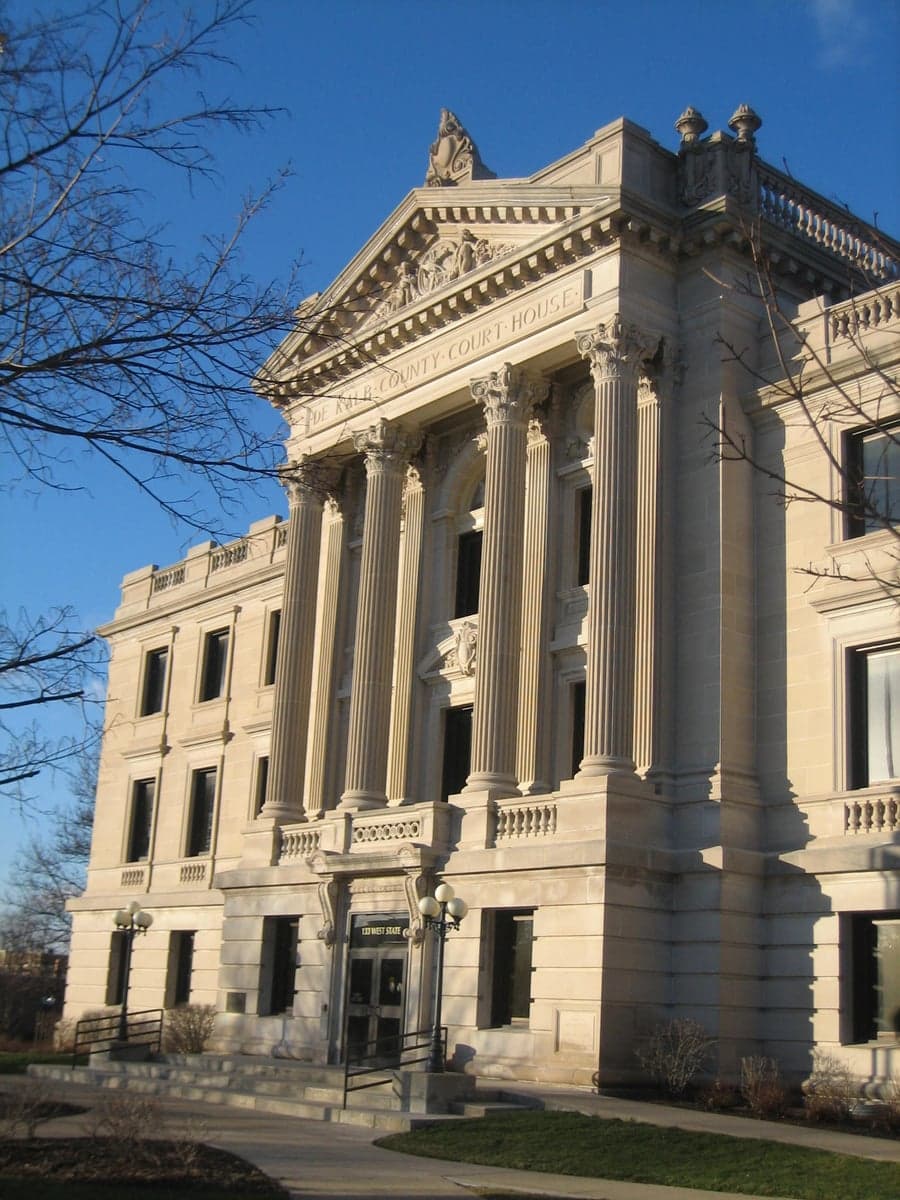
Photo: Wikipedia
Personal Sovereignty in Dekalb County
Viable for self-reliance. Generally workable, though some barriers may limit total independence.
What does Personal Sovereignty tell us?
Personal Sovereignty measures your capacity for self-reliance and independence with minimal government friction. Higher scores mean fewer barriers between you and the way you want to live... but it assumes you have the space you need and good neighbors.
What does this tell us?
Personal Sovereignty measures your capacity for self-reliance and independence with minimal government friction. Higher scores mean fewer barriers between you and the way you want to live... but it assumes you have the space you need and good neighbors.
State Policy
Energy independence: Importer (45% of energy produced in-state)
Personal Liberty
Homesteading

Personal Liberty Analysis
For the liberty-minded individual or family evaluating Dekalb County, Illinois, the personal sovereignty picture is a study in contrasts—a rural landscape where self-reliance is still a living tradition, but one that operates under the thumb of one of America’s most aggressively progressive state governments. While the county’s small towns and farmsteads offer a degree of physical and social distance from the chaos of Chicago, the legal and regulatory framework emanating from Springfield imposes significant constraints on gun rights, medical autonomy, and property freedom. This is not a place where you can simply disappear into the woods and live by your own rules; it’s a place where you must be strategic, informed, and prepared to navigate a system that is often hostile to the concept of personal sovereignty.
Tax burden and regulatory posture: How Dekalb County compares to Illinois’s worst
Illinois is notorious for its fiscal predation, and Dekalb County is not exempt. The state’s flat income tax rate of 4.95% is coupled with a property tax burden that is among the highest in the nation. In Dekalb County, the average effective property tax rate hovers around 2.1% of assessed home value, meaning a $250,000 home can carry an annual tax bill of over $5,000. This is a direct hit to your ability to build wealth and pass it on. The regulatory posture is equally burdensome: Illinois has some of the strictest environmental and building codes in the Midwest, which can complicate everything from constructing a detached workshop to installing a rainwater catchment system. However, there is significant variation within the county. The city of DeKalb itself, home to Northern Illinois University, is the most regulated and expensive, with higher property taxes and more zoning restrictions. In contrast, towns like Sycamore and Cortland offer slightly more breathing room, with lower mill rates and a more permissive attitude toward small-scale agriculture and home-based businesses. The unincorporated areas near Waterman and Kingston are where the savvy prepper will find the most favorable regulatory posture—fewer inspections, less oversight, and a county government that is more focused on rural concerns than urban compliance.
Self-defense and gun law specifics: Navigating Illinois’s restrictive carry and ownership rules
This is the single biggest sovereignty compromise in Dekalb County. Illinois is a “may-issue” state for concealed carry, meaning the county sheriff has discretion—and in practice, the process is expensive, time-consuming, and subject to political winds. The Firearm Owners Identification (FOID) card is a state-mandated prerequisite for even owning a firearm, creating a de facto registry that many liberty-minded individuals view as an infringement. Magazine capacity is capped at 10 rounds for long guns and 15 for handguns, and the state’s “assault weapons” ban, passed in 2023, prohibits the sale of many common semi-automatic rifles and handguns. For the prepper, this means your ability to stockpile standard-capacity magazines and certain defensive platforms is severely limited. That said, enforcement varies. In Genoa and Kirkland, the local sheriff’s office is known to be more pragmatic, and gun culture is still strong—you’ll find shooting ranges and hunting clubs that operate with a live-and-let-live attitude. But the legal reality is that you are one Springfield bill away from further restrictions. The best strategy here is to acquire what you can legally before any new bans take effect, and to consider property in unincorporated areas where discharge ordinances are less restrictive. Do not expect to open-carry or to enjoy the same freedoms you would in a state like Indiana or Missouri.
Self-reliance and homesteading viability: Lot sizes, zoning, and off-grid feasibility
For the serious homesteader, Dekalb County offers genuine opportunity, but it requires careful location selection. The county’s agricultural zoning allows for substantial lot sizes—parcels of 5, 10, or even 40 acres are common outside the urbanized corridor. Towns like Malta and Shabbona are particularly attractive, with large tracts of land that are still affordable relative to the national average. Zoning in these areas generally permits livestock, poultry, and small-scale crop production without the need for expensive permits. However, off-grid living is legally tricky. Illinois has no statewide right to solar access, and many townships require connection to the electrical grid if it is available within a certain distance. Rainwater collection is technically legal for non-potable uses, but the state’s Department of Public Health imposes strict guidelines that can make a fully self-sufficient system costly. Septic systems are heavily regulated, and composting toilets are not universally approved. The most viable path to self-reliance in Dekalb County is to buy a large parcel in an unincorporated area like Clare or Leland, install a grid-tied solar system with battery backup (to avoid legal battles), and use a conventional well and septic. You can achieve a high degree of autonomy, but you will likely have to maintain a nominal grid connection to satisfy local codes.
Personal liberties: Parental rights, medical autonomy, speech, and property
Illinois is a state where parental rights are under active assault. The state has passed laws that allow minors to consent to certain medical procedures without parental notification, and the Department of Children and Family Services has a broad mandate that can be weaponized against parents who choose alternative education or medical treatments. Medical autonomy is similarly constrained: Illinois has some of the strictest vaccine mandates in the country, and during the COVID-19 era, it was among the most aggressive in enforcing lockdowns and mask orders. For the prepper concerned about medical freedom, this is a red flag. On the positive side, property rights in Dekalb County are relatively strong for rural landowners. There is no county-wide zoning overlay that restricts what you can do on your own land, provided you are not in a municipality. You can build a fence, dig a pond, or construct a barn without a parade of inspectors—as long as you stay within state environmental guidelines. Free speech is protected by the First Amendment, but Illinois has a history of using “disorderly conduct” statutes to silence political dissent, particularly around government buildings. The bottom line: you have more freedom on your own property than you do in the public square, and your children are at greater risk from state overreach than your livestock.
Overall, Dekalb County offers a moderate-to-low sovereignty score compared to the Mountain West or the Deep South. It is a better bet than Cook County or the Chicago suburbs, but it is not a sanctuary for the hardcore prepper. The tax burden is heavy, the gun laws are restrictive, and the state government is actively hostile to parental and medical autonomy. However, for the strategic relocator who is willing to choose their location carefully—opting for unincorporated land near Waterman or Kingston over a lot in DeKalb city—there is still room to build a self-reliant life. The key is to treat Illinois as a place to hunker down and build local resilience, not as a place to openly defy the state. If you can live quietly, pay your taxes, and keep your head down, Dekalb County can work. If you want to fly the Gadsden flag from your front porch and openly carry a rifle, you will want to look elsewhere.

* Values derived from national, state, county, city and local statistics and may differ in a specific area. Last updated: 2026-05-29T18:24:21.000Z
Narrative content on this page is AI-generated and may contain mistakes. Verify any details that matter before acting on them.
ReloMaps may earn a commission from affiliate links at no extra cost to you.

