
Photo: Wikipedia
Strategic Assessment of Dekalb County
Meaningful friction. Expect exposure to either population pressure, blast zones, or natural disaster risk. Consider buying a retreat property.
What does the Strategic Assessment tell us?
Our Strategic Assessment grades tactical survivability of an area. Major population centers, military targets, fallout zones, natural disasters, and border exposure all drive risk — lower exposure means a more defensible position in a crisis.
This is heavily inspired by Joel Skousen's Strategic Relocation book. Highly recommended you checkout the book ($)What does this tell us?
Our Strategic Assessment grades tactical survivability of an area. Major population centers, military targets, fallout zones, natural disasters, and border exposure all drive risk — lower exposure means a more defensible position in a crisis.
This is heavily inspired by Joel Skousen's Strategic Relocation book. Highly recommended you checkout the book ($)Strategic Pillars

Key Distances
Strategic Assessment Analysis
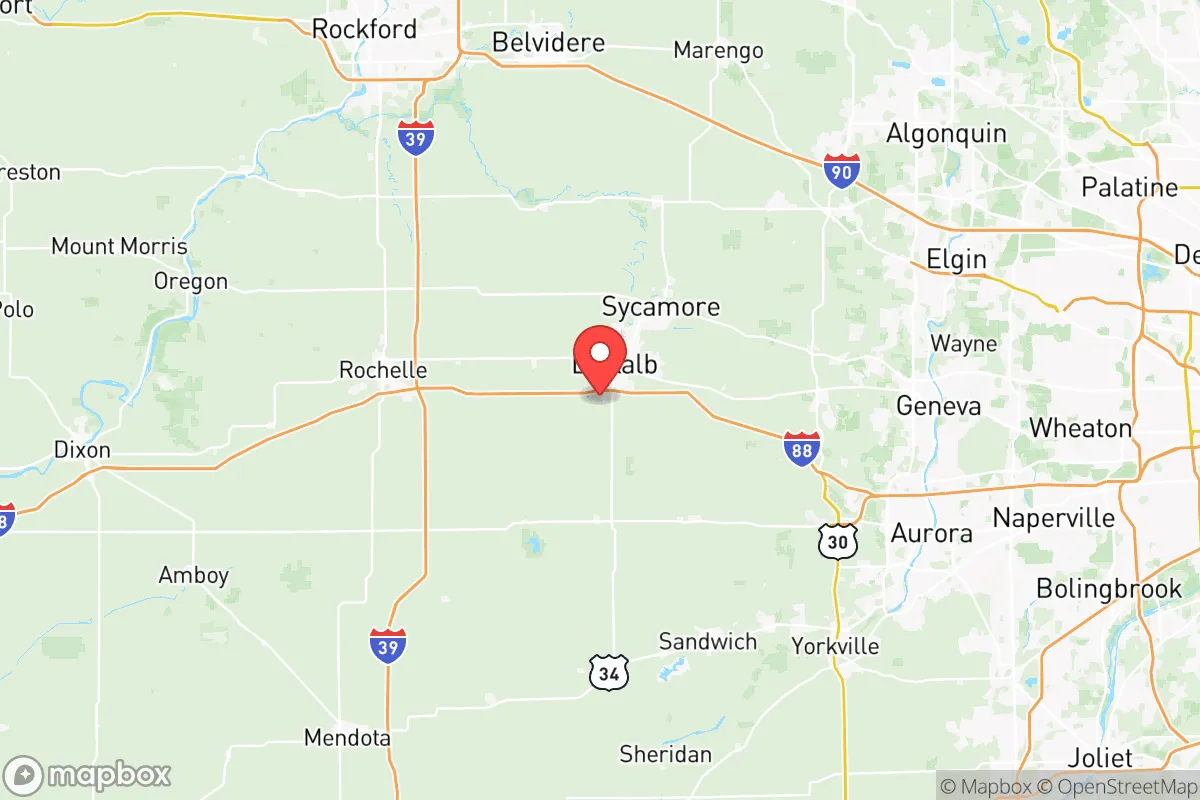
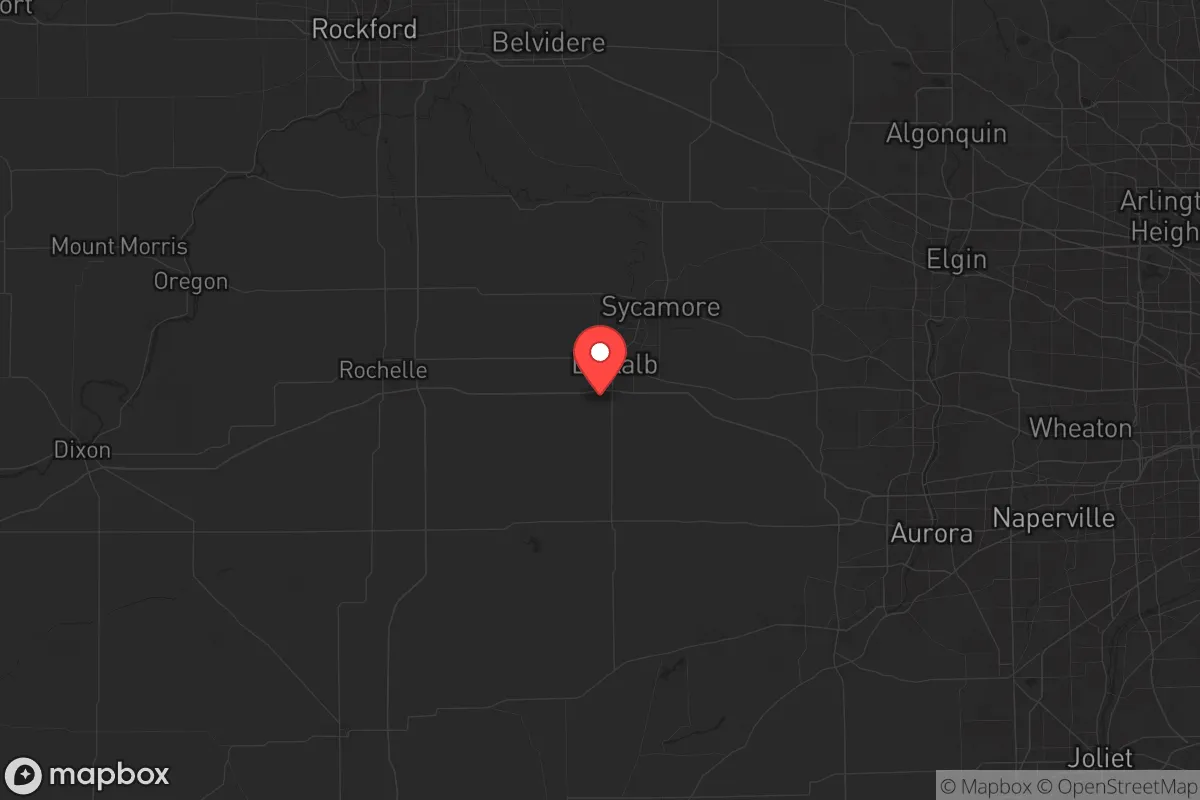
DeKalb County, Illinois, sits in a precarious but potentially advantageous position for those prioritizing resilience and strategic relocation. Located roughly 60 miles west of Chicago, the county offers a buffer from the immediate chaos of a major metropolitan collapse while still providing access to critical supply routes and infrastructure. The area’s agricultural base, anchored by the city of DeKalb and the broader Kishwaukee River valley, provides a foundation for local food security that many suburban or exurban counties lack. For a conservative-leaning individual or family looking to weather civic unrest, natural disasters, or supply chain disruptions, DeKalb County presents a mixed bag—solid geographic insulation from the worst fallout zones, but with real exposure to risks that demand careful planning.
Geographic position and natural advantages for long-term stability
DeKalb County’s location is its strongest card. It sits squarely in the heart of the northern Illinois corn and soybean belt, with the city of DeKalb itself acting as the county seat and economic hub. The county is bordered by the Fox River to the east (a natural barrier and water source) and the rolling moraines of the Wisconsin glaciation to the west, offering defensible terrain without the isolation of deep rural areas. The Kishwaukee River, which runs through the county, provides a reliable freshwater source that isn’t dependent on municipal treatment plants—critical if grid water fails. The county’s flat to gently rolling topography means fewer choke points for movement, but also fewer natural ambush zones, which is a trade-off. For a relocator, the key advantage is the 45-mile distance from Chicago’s O’Hare International Airport and the city’s core—far enough to avoid the initial blast radius of a major event (whether a terrorist attack, EMP, or civil unrest), but close enough to tap into regional medical and logistical resources if they remain functional. The county also sits near Interstate 88, a major east-west artery that connects to the Quad Cities and the Mississippi River, offering a secondary escape route if Chicago becomes a no-go zone.
Risks, exposures, and proximity to fallout-relevant landmarks
No strategic assessment is complete without a hard look at the threats. DeKalb County’s biggest exposure is its proximity to Chicago’s sprawling suburban and industrial corridor. The county is within 50 miles of the ExxonMobil Joliet Refinery (one of the largest in the Midwest) and the Will County nuclear plant (Braidwood Generating Station), both of which are prime targets for sabotage or accident. A major event at either could send fallout—chemical or radiological—southwest toward DeKalb County depending on wind patterns. The county also lies within 70 miles of the Rockford area, which hosts a major airport and industrial base, and 90 miles from the Davenport-Moline corridor, a Mississippi River transit hub. For a prepper, these are not just dots on a map—they are potential sources of refugee flows, supply chain disruptions, or secondary disasters. The county itself has no major military bases, but the Illinois Army National Guard’s DeKalb Armory in the city of DeKalb could become a focal point for state-directed response or, in a worst-case scenario, a target for looters. The county’s flat, open farmland also means limited natural cover for those trying to avoid detection or movement during unrest. On the plus side, the county’s population density is low (roughly 100,000 people across 635 square miles), which reduces the risk of mass panic and disease spread compared to denser areas like DuPage or Cook counties.
Practical resilience for a relocator: food, water, energy, and defensibility
For a family or individual serious about self-sufficiency, DeKalb County offers a workable but not ideal baseline. Food security is the strongest suit: the county is part of the nation’s most productive agricultural region, with thousands of acres of corn, soybeans, and wheat. Local farmers’ markets in DeKalb, Sycamore, and Genoa are operational from spring through fall, and the county has a robust network of grain elevators and processing facilities. For a relocator, establishing relationships with local farmers before a crisis is critical—don’t wait until shelves are empty. Water is less of a concern than in arid regions: the Kishwaukee River and its tributaries (like the South Branch) provide surface water, and the county sits atop the Cambrian-Ordovician aquifer, which means private wells are viable for those with the land and drilling budget. Municipal water in DeKalb and Sycamore is treated and reliable, but a well with a hand pump is the gold standard for resilience. Energy is a mixed picture: the county is served by ComEd’s grid, which is vulnerable to cyberattacks and weather events (ice storms, derechos). Solar potential is moderate—the county gets about 200 sunny days per year, enough for a modest off-grid system, but not for heavy winter loads. Natural gas is available in towns, but rural properties may rely on propane or wood. Defensibility is the weak point: the open farmland offers little natural cover, and the county’s road network (grid-like section roads) makes it easy for outsiders to move in. A rural property with a long driveway, tree lines, and a creek or pond for water is far more defensible than a suburban lot in DeKalb proper. The county’s gun laws are Illinois—which means a FOID card is required, and the state has restrictive carry laws—so preppers should factor in legal hurdles for firearms and ammunition storage.
The overall strategic picture for DeKalb County is one of cautious viability for a conservative relocator. It’s not a bunker location—you’re not in the remote Rockies or the Ozarks—but it offers a realistic middle ground for those who want to stay within striking distance of the Midwest’s economic core while maintaining a buffer from its worst risks. The agricultural base is a genuine asset, and the county’s low population density reduces the odds of being caught in a mass evacuation or riot. But the proximity to Chicago’s refinery and nuclear corridors, the flat terrain, and Illinois’ restrictive gun laws are real liabilities. For a single individual or family willing to invest in a well, solar panels, and a rural property with good sightlines, DeKalb County can work as a long-term fallback position. Just don’t mistake it for a fortress—it’s a place to ride out a storm, not to disappear from the map entirely. If you’re serious, focus on the western half of the county (toward Waterman or Hinckley) where population density drops further and you’re farther from the I-88 corridor’s traffic. And keep a bug-out bag ready for a move south or west if the Chicago metro area truly unravels.

* Values derived from national, state, county, city and local statistics and may differ in a specific area. Last updated: 2026-05-29T18:24:21.000Z
Narrative content on this page is AI-generated and may contain mistakes. Verify any details that matter before acting on them.
ReloMaps may earn a commission from affiliate links at no extra cost to you.

