Photo: Wikipedia
Political ClimatePolitical Climate in Dekalb County
Showing district-level results — no local-only data available.
Local Political AnalysisPolitical Analysis of Dekalb County
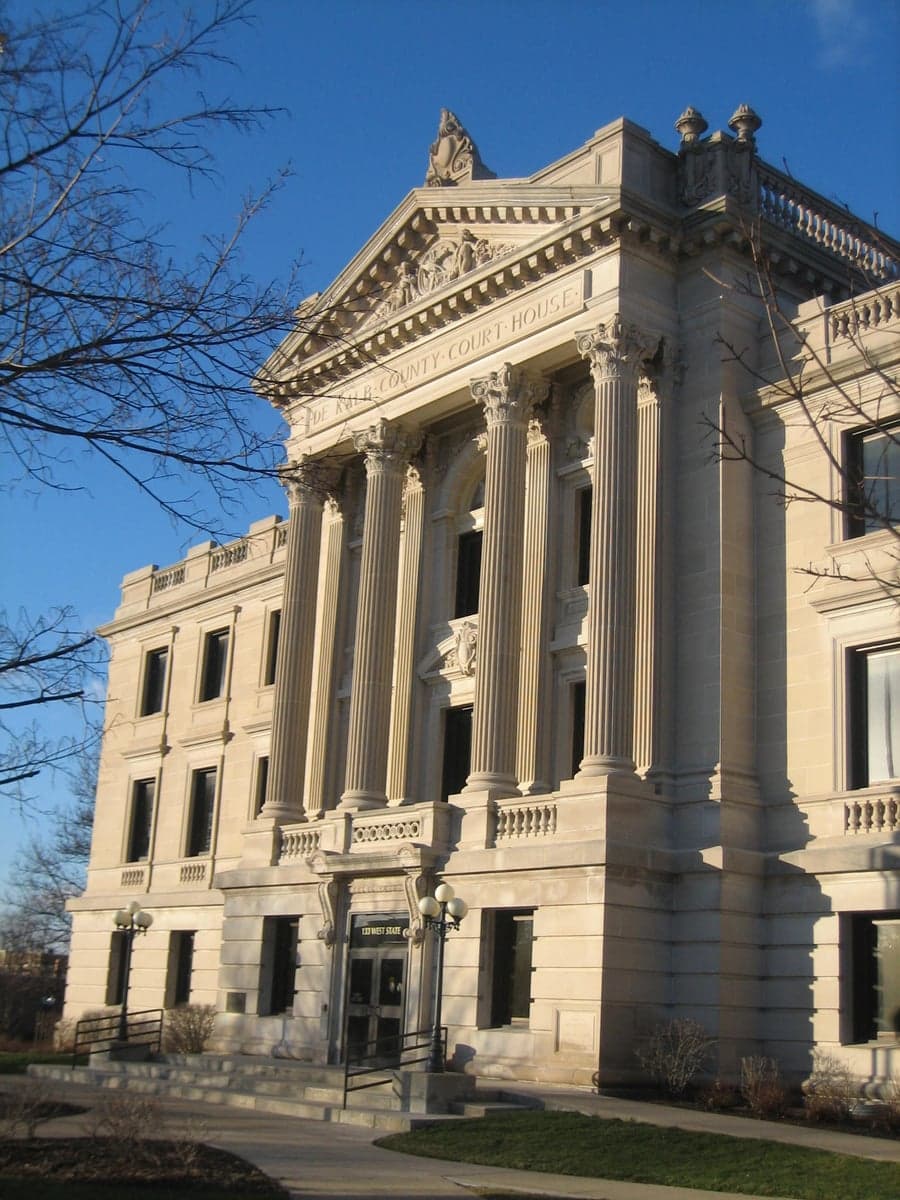
Dekalb County has been shifting leftward for years, and the numbers back it up. The county’s Cook PVI of D+3 means it leans Democratic by three points, but that’s a far cry from the state’s D+7 rating. Don’t let the countywide number fool you, though—this place is a patchwork of political tribes. Sycamore and the rural stretches still hold onto conservative roots, while DeKalb city and the Northern Illinois University campus have turned into progressive strongholds. The county went for Biden in 2020, but the margins were tighter than you’d expect, and a lot of us remember when this area was reliably purple.
How it compares
Compared to Illinois as a whole, Dekalb County is a relative moderate. The state’s D+7 PVI reflects Chicago and Cook County’s overwhelming Democratic machine, which drives policies on taxes, gun control, and education that often feel like they’re written for the city, not for us. Here in Dekalb County, you’ve got a real split. In the 2022 governor’s race, the county went for JB Pritzker by about 10 points, but that was carried by DeKalb city’s precincts—some of which voted 70% Democratic. Meanwhile, out in Malta, Kingston, and Waterman, you’ll find precincts that went 60% Republican. The swing precincts are in places like Cortland and Genoa, where independent voters decide things. That’s where the real battle is, and it’s where you see the tension between wanting local control and getting steamrolled by Springfield’s one-size-fits-all mandates.
What this means for residents
For folks who value personal freedoms, the trend is concerning. The county board has leaned more progressive in recent years, pushing resolutions on climate action and diversity initiatives that feel performative and costly. Property taxes are already a headache here—Dekalb County’s rates are among the highest in the state outside of Cook County—and every new mandate from the state or county adds another layer of bureaucracy. The Second Amendment is a live wire: while rural residents still carry without much fuss, the city of DeKalb has its own ordinances that create a patchwork of rules. If you’re a conservative, you’re not silenced, but you’re definitely outnumbered in local elections. The school boards in Sycamore and Genoa-Kingston are still sane, but DeKalb’s school board has adopted progressive curriculum changes that have parents worried about what their kids are being taught.
The cultural divide is real. You’ve got the NIU crowd pushing for more bike lanes, affordable housing mandates, and “equity” programs, while the farmers and small business owners in the county’s unincorporated areas just want to be left alone. The county’s Democratic Party is well-organized, but the GOP still holds seats on the board and in township offices. Long-term, if the state keeps passing laws that override local zoning or gun rights, you’ll see more people moving to the far western edge of the county—places like Hinckley or Steward—where the rural character still holds. For now, it’s a place where you can still find your people, but you’ve got to know where to look.

State Political ClimatePolitical Climate in Illinois
State Political AnalysisPolitical Environment in the State
Illinois is a solidly Democratic state with a Cook PVI of D+7, meaning it votes about seven points more Democratic than the national average in presidential elections. Over the last 10-20 years, the state has shifted leftward, driven by the massive population and political weight of Chicago and its inner suburbs, while the rest of the state has grown more Republican in response. For a conservative considering a move here, the bottom line is that your vote for statewide office is effectively drowned out by Cook County, but your local community—especially if you choose wisely—can still feel like a different country.
Urban vs. rural divide
The political map of Illinois is a tale of two worlds. Cook County, anchored by Chicago, delivers roughly 40% of the state's total vote and leans about D+30. The city itself is a progressive stronghold, with a Democratic machine that has controlled the mayor's office for decades. Surrounding suburban counties like DuPage and Lake have shifted from reliably Republican to competitive or even lean-Democratic in recent cycles, driven by an influx of younger, college-educated voters and a growing Asian-American population. Meanwhile, downstate Illinois—places like Effingham, Quincy, and the Metro East area across from St. Louis—votes as red as any rural county in the South. The divide is stark: in 2024, Cook County went for Biden by 40 points, while rural counties like Jasper and Wayne went for Trump by 50+. The collar counties (Will, Kane, McHenry) are the true battlegrounds, with McHenry still holding a conservative tilt but trending purple. If you're looking for a conservative community, your best bets are the far western exurbs like Yorkville or Oswego, or any town south of I-80.
Policy environment
Illinois's policy environment is a mixed bag that leans heavily toward government intervention. The state has the second-highest property tax burden in the nation, with effective rates often exceeding 2% of home value, and a flat income tax of 4.95% that is unlikely to be lowered given the state's massive pension debt (over $140 billion unfunded). The regulatory posture is business-unfriendly: Illinois is one of only a handful of states with a "right-to-work" ban, and the minimum wage is set to hit $15 an hour. On education, the state funds schools through local property taxes, creating massive disparities between wealthy suburbs and struggling rural districts. Illinois also has some of the most permissive election laws in the country, including automatic voter registration, no-excuse mail-in voting, and same-day registration—a boon for turnout but a concern for those who prioritize election integrity. Healthcare is heavily regulated, with the state running its own health insurance exchange and expanding Medicaid aggressively. For a conservative, the policy environment feels like a slow squeeze: higher taxes, more mandates, and less local control.
Trajectory & freedom
Over the past five years, Illinois has moved decisively toward less personal freedom in several key areas. The 2023 "Protect Illinois Communities Act" banned the sale of assault weapons and high-capacity magazines, making Illinois one of the strictest states for gun owners in the Midwest. This was passed despite strong opposition from downstate sheriffs who have pledged not to enforce it. On parental rights, the state passed a law in 2024 requiring schools to allow students to use bathrooms and locker rooms matching their gender identity, overriding parental notification policies in some districts. Medical autonomy has also been restricted: Illinois codified abortion rights into law in 2019 and expanded taxpayer-funded abortion coverage, while also passing a law that allows minors to receive gender-affirming care without parental consent in certain circumstances. The state's tax burden continues to rise, with no serious pension reform on the horizon, meaning property taxes will keep climbing to cover past promises. On the positive side for conservatives, Illinois has not imposed a statewide mask or vaccine mandate since 2022, and the state's "right to farm" law offers some protection for agricultural property rights. But overall, the trajectory is toward more government control, not less.
Civil unrest & political movements
Illinois has seen its share of political flashpoints. Chicago experienced widespread looting and property destruction during the 2020 George Floyd protests, with damages estimated at over $60 million, and the city's response—or lack thereof—became a national symbol of progressive governance failures. The state is a "sanctuary state" for illegal immigrants, with the TRUST Act limiting local law enforcement cooperation with federal immigration authorities. This has led to tensions in suburban communities like Elgin and Aurora, where immigrant populations have grown rapidly. On the right, the "Illinois Freedom Caucus" in the state legislature has been vocal in opposing gun control and tax hikes, but has little power to stop the Democratic supermajority. There have been serious secessionist movements in downstate Illinois, with several counties voting in non-binding referendums to explore leaving the state—though these are largely symbolic. Election integrity remains a hot-button issue: the state's widespread use of mail-in ballots and ballot drop boxes has drawn criticism from conservatives, though no major fraud has been proven. A new resident would notice the political tension most in the suburbs, where school board meetings have become battlegrounds over curriculum and parental rights.
Projection
Looking ahead 5-10 years, Illinois is likely to continue its leftward drift, but with growing internal resistance. Demographic trends favor Democrats: Chicago's population is stabilizing after years of decline, while the collar counties grow more diverse and liberal. Downstate will continue to shrink and redden, but its political power will wane as reapportionment after the 2030 census likely eliminates another congressional seat. The state's fiscal crisis is the wild card: if property taxes continue to rise, more middle-class families—including conservatives—will flee to Indiana, Wisconsin, or Tennessee, accelerating the rural exodus. Gun rights will likely face further restrictions, and parental rights battles will intensify in school boards. However, the state's strong economy in Chicago and its suburbs, anchored by finance, tech, and logistics, will keep it from collapsing. For a conservative moving in now, expect to live in a blue state with red pockets, where your local community might reflect your values but your state government will not. The best strategy is to choose your county carefully—McHenry, Kendall, and Ogle counties are likely to remain conservative strongholds—and get involved in local politics to protect your freedoms at the ground level.
For a new resident, the practical takeaway is this: Illinois offers economic opportunity and cultural amenities, but at the cost of high taxes and a government that is increasingly hostile to conservative values. If you're willing to fight for your freedoms at the local level and can stomach the property tax bill, you can find a good life here. But if you're looking for a state that aligns with your political principles, you'll be swimming against the current every election cycle. Choose your town wisely, and don't expect the state to change direction anytime soon.
* Values derived from national, state, county, city and local statistics and may differ in a specific area. Last updated: 2026-05-29T18:24:21.000Z
Narrative content on this page is AI-generated and may contain mistakes. Verify any details that matter before acting on them.
ReloMaps may earn a commission from affiliate links at no extra cost to you.

