
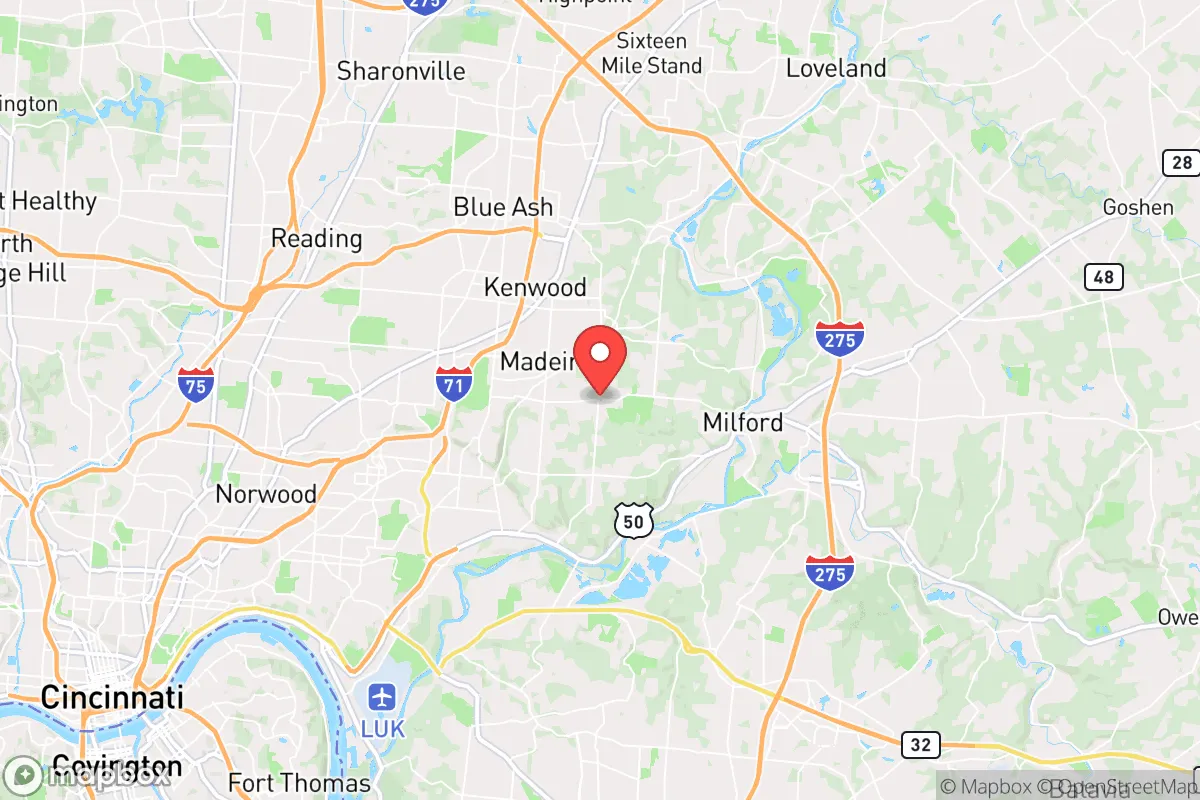
Photo: Wikipedia
Personal Sovereignty in Indian Hill, OH
Viable for self-reliance. Generally workable, though some barriers may limit total independence.
What does Personal Sovereignty tell us?
Personal Sovereignty measures your capacity for self-reliance and independence with minimal government friction. Higher scores mean fewer barriers between you and the way you want to live... but it assumes you have the space you need and good neighbors.
What does this tell us?
Personal Sovereignty measures your capacity for self-reliance and independence with minimal government friction. Higher scores mean fewer barriers between you and the way you want to live... but it assumes you have the space you need and good neighbors.
State Policy
Energy independence: Importer (40% of energy produced in-state)
Personal Liberty
Homesteading

Personal Liberty Analysis
Indian Hill, Ohio, offers a notably high degree of personal sovereignty for those who prioritize autonomy, self-reliance, and minimal government interference in daily life. As a wealthy, low-density village within Hamilton County, it combines the legal protections of a strong Second Amendment state with a local governance structure that historically favors property rights and limited zoning intrusion. For the strategic relocator—whether a single individual or a parent—this means a legal environment where the burden of proof for government overreach is higher than in many suburban or urban alternatives, though it is not without its constraints, particularly at the state level.
Tax burden and regulatory posture: How much the state and local government take
Ohio’s overall tax burden is moderate, but Indian Hill’s specific structure is favorable for those seeking to keep more of their earnings and assets. The state levies a flat income tax of 3.5% (as of 2025), which is lower than many neighboring states like Illinois or Pennsylvania. However, the village itself imposes a 1.5% local income tax on residents, which is standard for many Ohio municipalities and funds local services like police and roads. Property taxes in Indian Hill are high—around 2.2% of assessed value—driven by the excellent school district and village services, but the trade-off is that the village has minimal commercial zoning, meaning fewer intrusive business regulations and less traffic. The regulatory posture at the local level is generally hands-off for residential property owners: there are no onerous business license requirements for home-based enterprises, and the village’s zoning code is primarily focused on lot size and setback requirements rather than dictating what you can do on your own land. For the prepper mindset, this means you can operate a home workshop, store supplies, or maintain a substantial garden without needing a parade of permits, though any major structural changes (like a bunker or large outbuilding) will require a variance process that is neighbor-driven rather than bureaucratic.
Self-defense and gun law specifics: What you can legally own and where you can carry
Ohio is a constitutional carry state, meaning no permit is required to carry a concealed firearm for anyone legally allowed to possess one. This is a bedrock advantage for Indian Hill residents. The village itself has no local gun ordinances that exceed state law—no magazine capacity bans, no “assault weapon” restrictions, and no waiting periods. You can legally own suppressors, short-barreled rifles, and machine guns with proper federal tax stamps, and the state preempts local governments from passing stricter laws. Stand-your-ground laws are fully in effect, with no duty to retreat in any place you are lawfully present. For parents, this extends to the home: Ohio law explicitly protects the use of deadly force against intruders, and there is no “safe storage” mandate that would require guns to be locked away from children, though common-sense precautions are advised. The only practical limitation is that Indian Hill is a wealthy, low-crime area, so the local police are responsive but may not be as familiar with high-capacity firearms as in more rural counties. For the survivalist, the legal environment is permissive enough to build a serious armory, but you should be aware that transporting firearms across state lines (e.g., into Kentucky or Indiana) requires knowledge of each state’s laws, as reciprocity is not universal.
Self-reliance and homesteading viability: Lot sizes, zoning, and off-grid feasibility
Indian Hill’s defining feature for self-reliance is its large lot sizes—minimums are typically 1 to 3 acres, with many properties exceeding 5 acres. This provides ample space for a substantial garden, small orchard, or even a few chickens (which are allowed without a permit, though roosters may be restricted by noise ordinances). The village’s zoning code is explicitly designed to preserve a rural character, meaning you can install a greenhouse, build a root cellar, or set up a rainwater collection system without triggering a review, as long as structures are set back from property lines. Off-grid feasibility is mixed: the village requires connection to municipal water and sewer if available, but many homes are on private wells and septic systems, which gives you control over your water supply. Solar panels are permitted by right, though homeowners’ associations (HOAs) in some subdivisions may have aesthetic restrictions—check your deed restrictions carefully. For the prepper, the biggest limitation is that Indian Hill is surrounded by suburban development, so true off-grid living (e.g., no utility connections, living in a yurt) is not realistic. However, you can achieve a high degree of food and water independence on a 3-acre lot, and the village’s low population density means you are unlikely to have neighbors close enough to complain about a generator or a modest livestock operation.
Personal liberties: Parental rights, medical autonomy, speech, and property
Ohio has strong parental rights protections, including a law that requires schools to notify parents of any medical or mental health services provided to minors and to obtain parental consent for most non-emergency care. This is a significant advantage for parents who want to control their children’s education and healthcare decisions. The state also has a robust school choice program, including vouchers and charter schools, so you are not forced to send your child to the local public school if its curriculum or policies conflict with your values. Medical autonomy is generally respected: Ohio does not have a state-level vaccine mandate for adults, and while some employers may require them, the legal trend is toward allowing religious and philosophical exemptions. For the survivalist, this means you can stockpile prescription medications (within legal limits) and choose alternative treatments without state interference, though telemedicine restrictions may apply. Free speech is protected under the Ohio Constitution, and the village has no local ordinances restricting political signs, leafleting, or public assembly. Property rights are strong: Ohio is a “notice” state for easements, meaning you have clear legal recourse if a neighbor or utility tries to encroach on your land. The only notable limitation is that Indian Hill has a strict noise ordinance that could be used against generators or late-night construction, but this is rarely enforced against residential activities.
Overall, Indian Hill offers a sovereignty profile that is strong for a suburban environment but not as permissive as rural counties in southern Ohio or West Virginia. The tax burden is higher than in unincorporated areas, but the trade-off is excellent infrastructure, low crime, and a local government that respects property rights and personal liberties. For the strategic relocator who values self-defense, parental control, and the ability to live with minimal interference, Indian Hill is a solid choice—provided you are willing to pay the premium for the land and the schools. If your priority is absolute off-grid independence or minimal taxation, look farther south or west, but for a balance of security, autonomy, and access to urban resources, this village is one of the better options in the Cincinnati metro area.

* Values derived from national, state, county, city and local statistics and may differ in a specific area. Last updated: 2026-04-27T14:30:04.000Z
Narrative content on this page is AI-generated and may contain mistakes. Verify any details that matter before acting on them.
ReloMaps may earn a commission from affiliate links at no extra cost to you.

