
Photo: Wikipedia
Political ClimatePolitical Climate in Indian Hill, OH
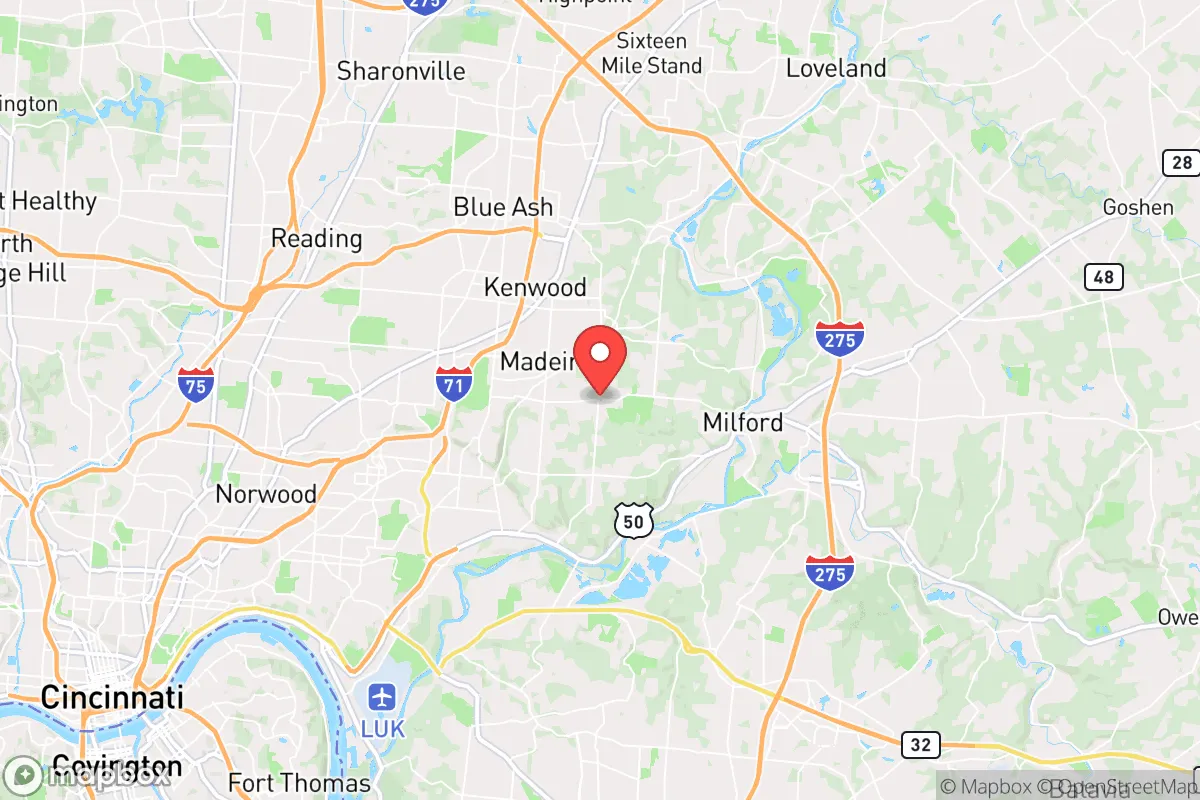
District shown is the primary district for this city’s centroid. Cities may span multiple districts.
Local Political AnalysisPolitical Analysis of Indian Hill, OH
Indian Hill, Ohio, has long been a bastion of conservative values in a region that’s slowly shifting left, but the political climate here is more nuanced than the raw numbers suggest. The Cook PVI rating of D+3 for the area might make you think this is a blue-leaning suburb, but that’s a county-level stat that gets skewed by Cincinnati’s urban core. In reality, Indian Hill itself votes reliably Republican—think 60-65% for GOP candidates in recent cycles—and the surrounding Hamilton County suburbs like Madeira and Terrace Park lean the same way. The trajectory, though, is concerning: as the county’s progressive machine pushes policies from the city outward, we’re seeing more pressure on local autonomy, from zoning to school curriculum. It’s not a full-on takeover yet, but the trend line is something every freedom-minded resident should watch closely.
How it compares
Drive ten minutes south to Norwood or east to Loveland, and you’ll find communities that still hold the line on fiscal conservatism and limited government, but they’re fighting the same headwinds. The real contrast is with Cincinnati proper, where the city council has embraced progressive tax hikes, sanctuary city rhetoric, and defunding police talk—none of which fly here. Indian Hill’s village council remains staunchly pro-business and pro-property rights, with low tax levies and a fierce independence from county overreach. Compare that to nearby Hyde Park or Oakley, which are increasingly adopting the city’s progressive vibe, and you see why Indian Hill feels like a last stand for common sense. The surrounding townships, like Symmes and Columbia, are similar to us, but they’re getting squeezed by county mandates on housing density and environmental regulations that feel like backdoor socialism. We’re holding the line better than most, but it’s a constant battle.
What this means for residents
For families and retirees here, the political climate translates directly into daily life—and that’s both good and worrying. On the plus side, our local schools still emphasize merit and parental rights over woke ideology, and the village government hasn’t caved to the “affordable housing” mandates that are gutting property values in other suburbs. You can still build a fence without a dozen permits, and the police focus on safety, not social justice experiments. But the long-term outlook is shaky. The county board of elections is increasingly partisan, and state-level redistricting has diluted our voice in Columbus. If the progressive wave keeps rolling, expect more pressure on our zoning laws, more unfunded mandates from the county, and a slow erosion of the local control that makes Indian Hill worth the premium. The next five years are critical—if we don’t stay engaged, we could end up like Montgomery, which is now fighting a bike lane and density plan nobody asked for.
Culturally, Indian Hill remains a place where people wave from their golf carts and leave their doors unlocked, but the policy distinctions are what keep it that way. We’ve resisted the county’s push for a “complete streets” program that would narrow roads for bike lanes—a classic government overreach that sounds green but actually hurts property access and emergency response times. The village council also voted down a proposal to adopt the county’s “equity” training for police, recognizing it as a Trojan horse for defunding. These aren’t partisan stunts; they’re practical stands against the kind of top-down control that’s ruining other communities. If you value your right to live without a bureaucrat telling you how to landscape or what to teach your kids, Indian Hill is still a safe harbor. But keep your ear to the ground—the tide is rising, and we need every vote to keep it from washing over us.

State Political ClimatePolitical Climate in Ohio
State Political AnalysisPolitical Environment in the State
Ohio has long been the quintessential bellwether state, but its political center of gravity has shifted noticeably over the past two decades. While it voted for Barack Obama twice, it swung hard for Donald Trump in 2016 and 2020, and the GOP now holds every statewide office and a supermajority in the legislature. The state’s overall partisan lean is now roughly R+6 to R+8, driven by a collapse of Democratic support in rural and exurban areas and a rightward shift among working-class voters in the industrial belt. For a conservative-leaning individual or family, Ohio offers a policy environment that has become markedly more aligned with limited government principles, though the major metros still present a stark contrast.
Urban vs. rural divide
The political map of Ohio is a tale of three distinct regions. The urban cores of Cleveland, Columbus, and Cincinnati are solidly Democratic, with Cuyahoga County (Cleveland) delivering a 2-to-1 margin for Biden in 2020. But these cities are surrounded by a sea of red. The real story is the collapse of Democratic strength in the once-reliable "Blue Wall" counties of eastern and southeastern Ohio—places like Mahoning County (Youngstown) and Trumbull County (Warren), which flipped from Obama to Trump and have stayed red. Meanwhile, the fast-growing exurbs of Delaware County (north of Columbus) and Warren County (north of Cincinnati) are now among the most reliably Republican counties in the nation, with GOP margins exceeding 60%. The Miami Valley region around Dayton and the Lima area are also deeply conservative, anchored by manufacturing and agriculture. The divide isn't just urban vs. rural—it's also a cultural and economic split between the thriving, professional-class suburbs and the struggling post-industrial towns that have embraced populist conservatism.
Policy environment
Ohio’s policy environment has become a model for conservative governance in the Midwest. The state has a flat income tax rate of 3.5% (down from a top rate of nearly 5% a decade ago), and the legislature is actively working toward eliminating the income tax entirely. Property taxes are moderate, and there is no estate tax. The regulatory climate is business-friendly, with right-to-work laws not on the books but a strong tort reform framework in place. On education, Ohio has a robust school choice program—the EdChoice scholarship system allows students in underperforming public schools to attend private or parochial schools, and the state has expanded charter school access. In 2023, the legislature passed a parental bill of rights requiring schools to notify parents of any changes to a child’s health or well-being. Election integrity has been a focus: Ohio requires photo ID to vote, has strict absentee ballot procedures, and conducts regular purges of voter rolls. The state also passed a constitutional amendment in 2023 to require a 60% supermajority for future citizen-initiated constitutional amendments, a direct response to the 2023 abortion rights amendment. For a conservative, the policy environment is largely favorable, though the 2023 abortion amendment (Issue 1) was a setback, enshrining a right to abortion up to viability in the state constitution.
Trajectory & freedom
Ohio’s trajectory on personal freedom is a mixed bag, but the trend is clearly toward more liberty in most areas. On gun rights, Ohio became a permitless carry state in 2022 (SB 215), meaning law-abiding adults can carry a concealed firearm without a license. The state also has strong Stand Your Ground laws and preempts local gun ordinances. On parental rights, the 2023 Save Adolescents from Experimentation (SAFE) Act bans gender-transition procedures for minors, a major win for medical freedom and parental authority. However, the 2023 abortion amendment (Issue 1) was a significant expansion of government overreach in the eyes of many conservatives, as it removed nearly all restrictions on abortion and overrode existing parental consent laws. The state also legalized recreational marijuana in 2023 via ballot initiative (Issue 2), which some see as a freedom issue and others as a social concern. On taxation, the trend is positive: the income tax has been cut repeatedly, and the legislature is debating a full phase-out. Property tax reform is also on the table, with a proposed 3.5% cap on annual increases. Overall, Ohio is moving in a direction that favors personal responsibility and limited government, with the notable exception of the abortion amendment, which remains a flashpoint.
Civil unrest & political movements
Ohio has seen its share of political turbulence. The 2020 protests in Columbus and Cincinnati over George Floyd’s death were large but largely peaceful, though there were instances of property damage and looting. The state has a strong and organized conservative grassroots movement, particularly around gun rights (Buckeye Firearms Association) and parental rights (Ohio Parents for Educational Freedom). Immigration politics are less heated than in border states, but there is growing concern in communities like Springfield and Dayton about the influx of Haitian migrants, which has strained local resources and sparked debates about federal immigration enforcement. There is no sanctuary city policy in Ohio; in fact, the state passed a law in 2024 requiring local law enforcement to cooperate with ICE. Election integrity remains a hot-button issue, with ongoing lawsuits over the 2020 election and the 2023 special election on Issue 1. The most visible flashpoint for a new resident would likely be the ongoing debate over abortion and parental rights, which plays out in school board meetings and local elections. The state also saw a high-profile case in 2023 when a school district in Mason (a conservative suburb of Cincinnati) was sued for allegedly hiding a student’s gender transition from parents—a case that galvanized the parental rights movement.
Projection
Over the next 5-10 years, Ohio is likely to become even more conservative at the state level, but with growing tension between the urban cores and the rest of the state. The demographic trends favor the GOP: the fastest-growing counties are the conservative exurbs (Delaware, Warren, Licking), while the Democratic strongholds of Cuyahoga and Franklin counties are losing population. In-migration from blue states like California and Illinois is modest but growing, and these new arrivals tend to settle in the suburbs of Columbus and Cincinnati, potentially shifting some of those areas toward the center. The 2023 abortion amendment will continue to be a rallying point for both sides, but the supermajority requirement for future amendments makes it harder for progressives to bypass the legislature. Expect further tax cuts, expanded school choice, and continued battles over medical freedom and parental rights. The wild card is the state’s economic transformation: as manufacturing declines and tech and logistics grow (especially in the Columbus-to-Cincinnati corridor), the political culture may become more suburban and less populist. But for the foreseeable future, Ohio will remain a reliably red state in statewide elections, with a policy environment that is broadly friendly to conservative values.
Bottom line for a new resident: If you’re a conservative looking for a state where your values are reflected in law and culture—outside the major cities—Ohio is a solid bet. You’ll find low taxes, strong gun rights, school choice, and a government that is generally on your side. Just be aware that the urban islands of Cleveland, Columbus, and Cincinnati are a different world, and the ongoing fight over abortion and parental rights will keep things interesting. Pick a suburb like Mason, Dublin, or West Chester, and you’ll feel right at home.
* Values derived from national, state, county, city and local statistics and may differ in a specific area. Last updated: 2026-04-27T14:30:04.000Z
Narrative content on this page is AI-generated and may contain mistakes. Verify any details that matter before acting on them.
ReloMaps may earn a commission from affiliate links at no extra cost to you.

