 Popular
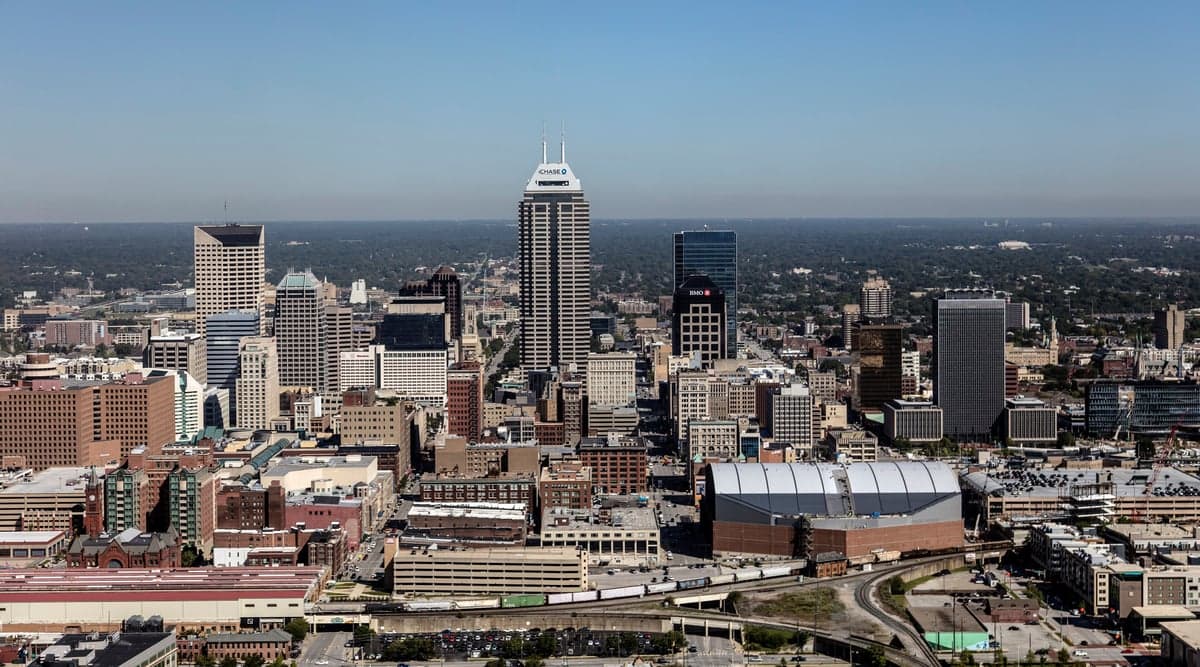
Photo: Wikipedia
Strategic Assessment of Indianapolis, IN
Multiple tactical vulnerabilities. Population density, target proximity, or disaster risk are likely compounding. A retreat property and exit planning is required.
What does the Strategic Assessment tell us?
Our Strategic Assessment grades tactical survivability of an area. Major population centers, military targets, fallout zones, natural disasters, and border exposure all drive risk — lower exposure means a more defensible position in a crisis.
This is heavily inspired by Joel Skousen's Strategic Relocation book. Highly recommended you checkout the book ($)What does this tell us?
Our Strategic Assessment grades tactical survivability of an area. Major population centers, military targets, fallout zones, natural disasters, and border exposure all drive risk — lower exposure means a more defensible position in a crisis.
This is heavily inspired by Joel Skousen's Strategic Relocation book. Highly recommended you checkout the book ($)Strategic Pillars

Key Distances
Regional Safe Places
Below is our recommended "safe zones" in Indiana and the surrounding area based on our strategic heuristics. For most people, it's unrealistic to live in a “safe zone” full-time due to work, family or other personal reasons. They tend to be more rural. However, many of these areas are perfect for second homes and retreat properties that double as a vacation home or even a short-term rental.

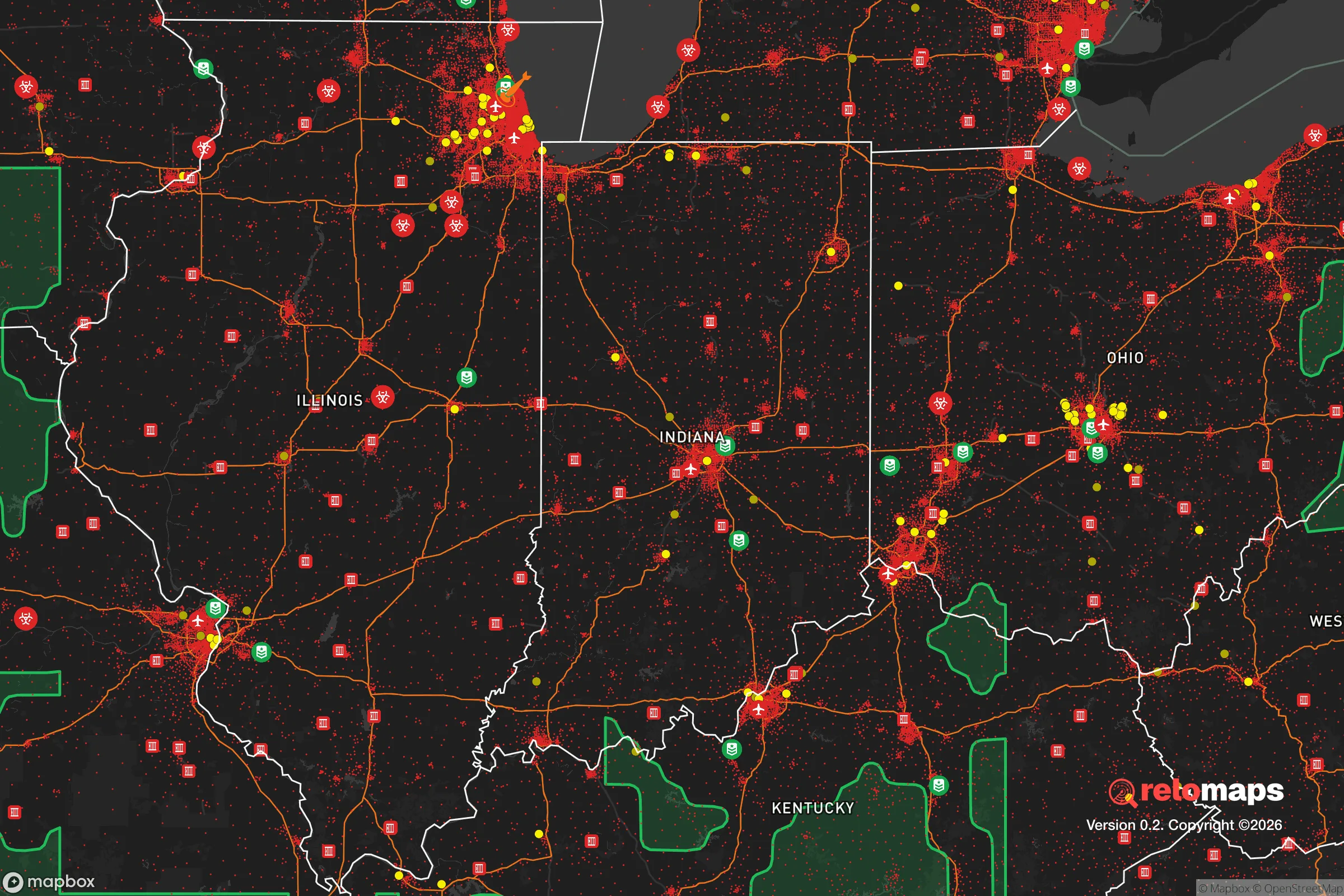


Important Note: For informational purposes only. This does not mean nothing bad ever happens in the green zones. Please use common sense. This is based on public data and modeled with AI. We tried to take a conservative approach but mistakes happen. We update this regularly as new information becomes available.
Solar Generator Recommendations
Backup power matters more here than in safer locations. We've picked three solar generators across budgets and capacity tiers — start with the budget unit if you only need a few essentials, or step up if you want to run a fridge and HVAC for days at a time.

Jackery Portable Power Station Explorer 300
Budget OptionPower on the Go: Weighing only 11 lbs, it's convenient to set up and store with book-sized foldable solar panels

BLUETTI Portable Power Station AC180
Designed for both indoor and outdoor scenarios, AC180 is highly capable as it has a robost capacity and continuous output power.

EF ECOFLOW DELTA Pro Ultra Power Station
Upgraded PickEcoFlow DELTA Pro Ultra is a whole-home energy system designed to grow with your family. Integrated with the Smart Home Panel 2, it scales to meet your evolving energy needs — keeping your home powered, intelligent, and secure through every stage of life.
We earn a commission, at no additional cost to you.
Strategic Assessment Analysis
Indianapolis sits at a strategic crossroads that cuts both ways for a prepper-minded relocator. Its central location offers unmatched logistical reach, but that same hub status makes it a prime target for cascading disruptions. For a conservative-leaning individual or family weighing long-term security, the Circle City presents a mixed bag: solid infrastructure and a resilient local economy offset by the vulnerabilities inherent in a major Midwestern population center. The key is understanding where the real risks lie and whether the area’s practical advantages outweigh its exposure to the kind of large-scale events that keep survivalists up at night.
Geographic position and natural advantages for long-term security
Indianapolis’s greatest strategic asset is its position at the heart of the Midwest, roughly equidistant from Chicago, St. Louis, Cincinnati, and Louisville. This central location means it’s a natural hub for transportation, logistics, and supply chain operations—think FedEx, Amazon, and a massive rail network. For a relocator, that translates to better access to emergency supplies, medical resources, and evacuation routes compared to more remote areas. The city sits on flat, arable land with ample groundwater from the White River and the extensive glacial aquifer system beneath the region. This makes long-term food and water security more feasible than in arid or mountainous states. The climate is temperate, with four distinct seasons but no extreme wildfire, hurricane, or earthquake threats. Tornadoes are a real risk—Indiana averages about 20 per year—but the flat terrain also means you can build a reinforced safe room or storm shelter without the geological headaches of the West Coast. The surrounding farmland is some of the most productive in the country, which is a quiet but powerful advantage if supply chains ever falter.
Risks, exposures, and proximity to fallout-relevant landmarks
The flip side of being a transportation hub is that Indianapolis is a high-value target for both natural and man-made disruptions. The city sits within 200 miles of several critical infrastructure nodes: the Newport Chemical Depot (now a Superfund site) in western Indiana, the uranium enrichment facility in Paducah, Kentucky, and the massive oil refining complex in Whiting, Indiana, just outside Chicago. A major incident at any of these could send fallout or hazardous material drifting across central Indiana. More immediately, the city’s own infrastructure—the Indianapolis International Airport, the I-65/I-70 interchange, and the rail yards—are choke points that would be overwhelmed in a crisis. The city’s population of roughly 900,000 (metro area over 2 million) means that any large-scale event—civil unrest, a pandemic, a cyberattack on the grid—would produce rapid congestion and resource scarcity. The 2020 protests and riots in downtown Indianapolis, which included damage to the City-County Building and nearby businesses, are a recent reminder that even a relatively stable Midwestern city can see sudden breakdowns in public order. For a survivalist, the proximity to these risks is a serious negative; you’re close enough to be affected but not close enough to be insulated by distance.
Practical resilience for a relocator: food, water, energy, and defensibility
On the practical side, Indianapolis offers some genuine advantages for a prepared household. The city’s water utility, Citizens Energy Group, draws from a combination of surface water (the White River and Morse Reservoir) and groundwater wells, providing redundancy that many cities lack. A well-equipped prepper could easily install a rainwater catchment system or drill a private well in the surrounding counties without the legal hurdles found in the West. Food security is also strong: the city is ringed by some of the richest agricultural land in the world, and local farmers’ markets and CSAs are plentiful. The Indiana State Fairgrounds, located just north of downtown, could serve as a central distribution point in a crisis. Energy-wise, Indianapolis is served by a mix of coal, natural gas, and renewables, with the coal-fired Petersburg Generating Station providing a significant baseload. However, the grid is aging and vulnerable to both cyberattacks and extreme weather—the 2023 ice storm left thousands without power for days. A serious prepper would want solar panels, a generator, and a battery bank as non-negotiable investments. Defensibility is the weakest link. The city is flat and sprawling, with few natural barriers. The suburbs—Carmel, Fishers, Zionsville—offer better defensible positions with larger lots and more community cohesion, but they’re also the first places to get gridlocked in an evacuation. Rural areas within an hour’s drive, like Shelbyville or Martinsville, provide more space and lower population density, but they lack the immediate resources of the city. The best strategy for a relocator is to live in a smaller satellite town with a direct route to the city’s resources, not in the urban core itself.
The overall strategic picture for Indianapolis is one of calculated trade-offs. It’s not a survivalist paradise—far from it. The city’s size, central location, and critical infrastructure make it a likely flashpoint in any major national crisis. But for a conservative-minded individual or family who wants to stay connected to the broader economy while maintaining a prepared lifestyle, it offers a rare combination of logistical access, agricultural abundance, and relatively low natural disaster risk. The key is to treat Indianapolis as a resource hub, not a refuge. Live on the periphery, build local networks in the surrounding counties, and keep a bug-out plan that heads south or west—away from the Great Lakes industrial corridor. If you can do that, the Circle City can be a solid base of operations. If you’re looking for true isolation and self-sufficiency, you’ll want to look further out into the rural Midwest. But for a strategic relocator who wants to be ready for the worst while still living a normal life, Indianapolis is a viable, if imperfect, option.

* Values derived from national, state, county, city and local statistics and may differ in a specific area. Last updated: 2026-09-21T19:36:35.000Z
Narrative content on this page is AI-generated and may contain mistakes. Verify any details that matter before acting on them.
ReloMaps may earn a commission from affiliate links at no extra cost to you.

