 Popular
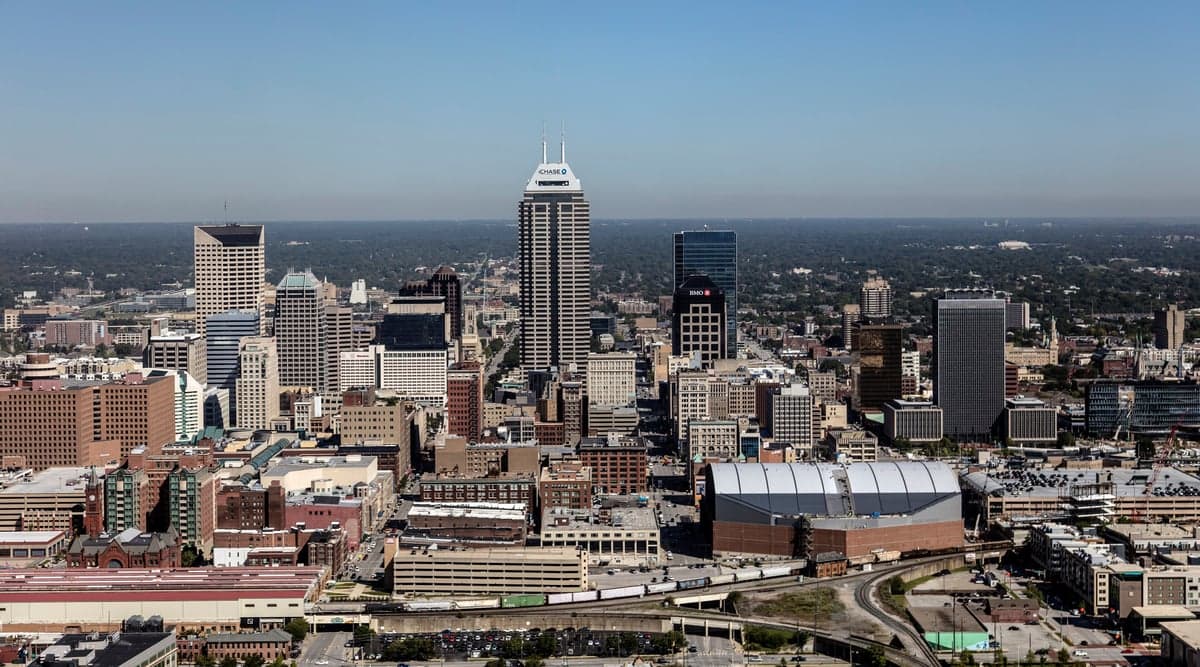
Photo: Wikipedia
Quality of Life in Indianapolis, IN
Above-average quality of iife. The area offers a reasonable cost of living, decent mobility, and a mix of neighborhood amenities.
What does Quality of Life tell us?
Quality of Life blends cost of living, nearby amenities, socioeconomic signals, and neighborhood character. City-level scores represent the whole municipality; individual neighborhoods can differ.
What does this tell us?
Quality of Life blends cost of living, nearby amenities, socioeconomic signals, and neighborhood character. City-level scores represent the whole municipality; individual neighborhoods can differ.
Cost of Living
The Real Cost of Living in Indianapolis, IN for 2026
| Tier | Individual | Family (4) |
|---|---|---|
| Survival | $16k | $31k |
| Comfortable | $39k | $58k |
| Luxury | $124k+ | $192k+ |
| Elite (Top 5%) | $146k+ | $226k+ |
109%
The Area Signal
A metric tracking the socioeconomic signals of the area.


Hobbies
Explore the areaGroceries
4 within 10 miles
Gas
0 within 10 miles
Hospital
3 within 20 miles
Airport
Indianapolis International Airport
Post Office
USPS — Carmel, IN
Critical Amenities
Quality-of-Life Analysis
Indianapolis offers a quality of life defined by Midwestern affordability and a steadily diversifying economy, attracting a broad mix of young professionals, growing families, and long-term residents. The city’s median household income hovers near the national average, but its cost of living remains significantly lower than peer metros like Chicago, Nashville, or Columbus, creating a lifestyle where disposable income stretches further. The population is a blend of native Hoosiers and newcomers drawn by the region’s job growth in logistics, life sciences, and tech, giving the city a pragmatic, unpretentious character.
Cost of living, housing affordability, and how Indianapolis compares to nearby suburbs
Indianapolis stands out for its housing affordability relative to both national averages and nearby suburban communities. The median home value sits at $207,000, roughly half the national median, while the median rent is $1,112 — well below the U.S. average of around $1,400. This price gap is stark when compared to the affluent northern suburbs like Carmel (median home value ~$450,000) or Zionsville (~$500,000), where home prices are more than double the city’s. For renters, downtown Indianapolis and the near-east side offer the most deals, though prices have risen 15–20% since 2020. The trade-off is that property taxes in Marion County are slightly higher than in surrounding counties like Hamilton or Hendricks, but the overall monthly housing cost remains a major draw for first-time buyers and remote workers. The average commute of 24.3 minutes is shorter than the national average of 27 minutes, making daily life less time-consuming than in larger metros.
Everyday amenities, schools, and the daily rhythm of life in Indianapolis
Daily life in Indianapolis revolves around a mix of urban amenities and accessible outdoor spaces, though the city’s layout is car-dependent outside of the downtown core. The Indianapolis Public Schools (IPS) system has seen recent investment, with magnet and innovation schools like the Center for Inquiry and Herron High School drawing families, though many middle-class households opt for charter or private options. The city’s cultural calendar is anchored by the Indianapolis 500, the Children’s Museum (the world’s largest), and a growing food scene that includes James Beard-recognized chefs at places like Bluebeard and Milktooth. The Monon Trail, a 27-mile paved path, connects downtown to Carmel and is heavily used for biking and running. Grocery access is generally good, though some near-east and far-south neighborhoods are considered food deserts. The city’s park system, including Eagle Creek Park (one of the largest municipal parks in the U.S.), provides ample green space, but public transit via IndyGo’s Red Line bus rapid transit is limited to a single north-south corridor.
Indianapolis is best suited for people who value affordability and a slower pace over the density and 24-hour energy of coastal cities. Young professionals in logistics, healthcare, or insurance will find strong job markets without the salary compression seen in pricier metros. Families on a budget can access good schools through charter or magnet options while owning a home on a single income. Retirees and remote workers benefit from the low housing costs and short commute times. However, those seeking robust public transit, walkable urbanism, or a vibrant nightlife scene may find the city’s sprawl and car-centric culture limiting. For anyone prioritizing financial breathing room and a straightforward, family-oriented lifestyle, Indianapolis delivers a quality of life that is hard to match at this price point.

Crime in Indianapolis, IN
Higher crime rates than 71% of comparable U.S. locations.
Violent CrimeViolent Crime Analysis
Property CrimeProperty Crime Analysis
Crime Analysis
Indianapolis faces a serious public safety challenge, with violent crime rates significantly exceeding both state and national averages. The city recorded a violent crime rate of 577 incidents per 100,000 residents, a figure that is roughly 1.5 times the national average and more than double the Indiana state average. Property crime is also elevated, with a rate of 2,073.4 per 100,000, placing Indianapolis well above the typical large metro area for theft, burglary, and motor vehicle theft. These numbers reflect a persistent pattern of elevated risk that potential residents should weigh carefully.
Crime in context
When compared to other large Midwestern cities, Indianapolis's violent crime rate is notably high—exceeding that of Columbus, Ohio, and nearly matching St. Louis's suburban-adjusted figures. The city's property crime rate is also elevated, though less extreme relative to its violent crime problem. A key factor driving these trends is the local justice system's ideological orientation. Marion County has consistently elected progressive prosecutors and judges who prioritize diversion programs, reduced sentencing, and bail reform. While these policies aim to reduce incarceration, they have demonstrably resulted in more repeat offenders on the street, shorter sentences for violent crimes, and a diminished deterrent effect. This approach directly undermines public safety by prioritizing offender rehabilitation over victim protection and community security.
What residents experience
For those living in Indianapolis, the risk is not abstract. Carjackings, armed robberies, and shootings occur regularly in many central and near-east-side neighborhoods. Property crime is a near-daily concern, with vehicle break-ins and package thefts common even in areas with private security. Residents report feeling unsafe walking alone after dark in many parts of the city, and businesses frequently cite theft and vandalism as operational burdens. The progressive judicial philosophy means that even when arrests are made, offenders often face minimal consequences, cycling back into the community quickly. This creates a sense of impunity that emboldens criminal activity and erodes trust in the justice system.
Neighborhood-level variation is significant, however. Suburban areas like Carmel, Fishers, and Zionsville—which are part of the broader Indianapolis metro but have their own conservative-leaning law enforcement and judicial systems—enjoy dramatically lower crime rates. Within Indianapolis proper, the safest pockets are typically the far-northside neighborhoods like Nora and the far-southside areas near Greenwood, where community policing and higher property values create a buffer. In contrast, neighborhoods like Haughville, Martindale-Brightwood, and parts of the Near Eastside experience violent crime rates that are two to three times the city average. Prospective residents should research specific police districts and consult local crime maps, as the difference between a safe block and a dangerous one can be just a few streets.
* Values derived from national, state, county, city and local statistics and may differ in a specific area. Last updated: 2026-09-21T19:36:35.000Z
Narrative content on this page is AI-generated and may contain mistakes. Verify any details that matter before acting on them.
ReloMaps may earn a commission from affiliate links at no extra cost to you.

